Top 10 Most Deadly Carnivorous Dinosaurs (Please Read Description Before Doing Anything On This Post)
Hey, this is a list of my personal opinion (backed up by facts) on the Top Ten Deadliest Carnivorous Dinosaurs. The deadliness factor will be based on one-on-one combat effectiveness.
I have done my research, so I know what I am putting on this list. Please don't hate on me. Also, please read my comment marked with a -_- before commenting.
-
Tyrannosaurus
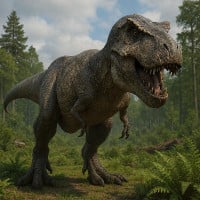
Tyrannosaurus, whose name means "tyrant lizard" in Ancient Greek, is a genus of coelurosaurian theropod dinosaur. It had an extraordinary bite force estimated at up to approximately 12,800 pounds, or 5,800 kilograms of force. This is considered the strongest estimated bite of any known terrestrial animal... read more
Unsurprisingly, Tyrannosaurus Rex takes the top spot. Tyrannosaurus had a bite force of 10,000 pounds. It was about 40 feet long and weighed 6-9 tons. Its small arms were surprisingly muscular, and it was very intelligent for a dinosaur. It was respectably fast and had amazing eyesight.
-
Giganotosaurus
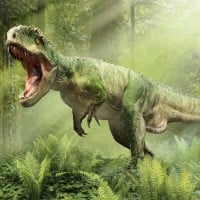
Giganotosaurus is a genus of theropod dinosaur that lived in what is now Argentina during the early Cenomanian age of the Late Cretaceous period, approximately 99.6 to 97 million years ago. It was one of the largest known terrestrial carnivores and may have rivaled or exceeded Tyrannosaurus rex in length... read more
Number 2, unsurprisingly, is the Giant Southern Lizard. Giganotosaurus was a force to be reckoned with. It had a powerful bite force (approximately 5,000 pounds), powerful front limbs, and weighed 6-10 tons.
It falls short of the T. rex because it was weaker, not as intelligent, and its vision was not as sharp. However, it would still give a Tyrannosaurus a run for its money.
-
Tarbosaurus
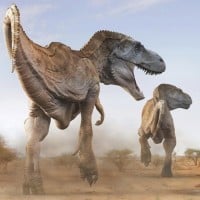
Tarbosaurus is a genus of tyrannosaurid theropod dinosaur that lived in Asia about 70 million years ago during the Late Cretaceous Period.
Its fossils have been found primarily in Mongolia's Nemegt Formation, where it is considered to have been the apex predator of its ecosystem. It is closely... read more
Tarbosaurus is basically just a smaller, slightly weaker Tyrannosaurus. It had a bite force of 8,000 pounds (this is an estimate, as I was unable to find sources that agreed), was about 36-39 feet long, and had similar vision and intelligence to Tyrannosaurus.
-
Carcharodontosaurus
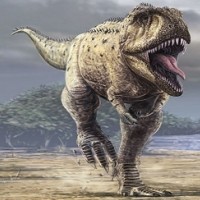
Carcharodontosaurus is a genus of carnivorous carcharodontosaurid dinosaurs that lived approximately 100 to 94 million years ago during the Cenomanian stage of the Late Cretaceous Period. It was among the largest known theropods and rivaled Tyrannosaurus rex in length. Its fossils have been found in... read more
Carcharodontosaurus, the shark-toothed lizard with a bite force of 4,000 pounds, is certainly not one to mess with. It had an average length of 40 feet and weighed 6-8 tons. It also had two very powerful arms and razor-sharp serrated teeth.
This was a strong dinosaur and a heavy contender in battle.
-
Acrocanthosaurus
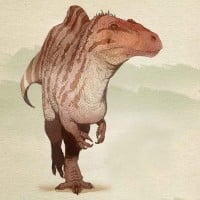
Acrocanthosaurus is a genus of theropod dinosaur that lived in what is now North America during the Aptian and early Albian stages of the Early Cretaceous. Fossils have primarily been found in the Antlers Formation of Oklahoma and Texas. It was one of the largest theropods of its time, recognized for... read more
Acrocanthosaurus could grow up to 40 feet and weigh 6-8 tons, making it one of the biggest theropods ever. It had razor-sharp teeth, an intimidating sail, and hunted very large prey. Its powerful limbs and strong bite definitely earned it a spot on this list.
Acrocanthosaurus could have ranked higher, but the limited information about this dinosaur keeps it lower on the list.
-
Mapusaurus
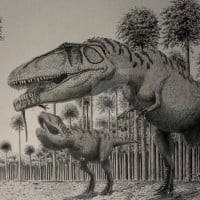
Mapusaurus was a large predatory dinosaur belonging to the carcharodontosaurid group that lived during the Late Cretaceous period. Its fossils were discovered in the Huincul Formation of Argentina. Mapusaurus may have reached roughly 40 feet in length, and the discovery of several individuals together... read more
Mapusaurus is one of the largest theropods ever, reaching up to 39 feet and weighing up to 3.5 tons. It had a formidable bite force and could run up to 30 miles per hour. Its sharp teeth would definitely come in handy in a one-on-one fight, hence its place on the list!
-
Spinosaurus
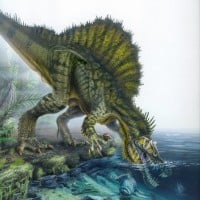
A carnivorous dinosaur from the Cretaceous period, Spinosaurus aegyptiacus is best known for its elongated neural spines, which formed a sail-like structure on its back. It was native to North Africa and is thought to have been semi-aquatic, primarily feeding on fish. It's widely considered to be one... read more
I know I am going to get a lot of hate for putting Spinosaurus this low, but hear me out. (This is going to be assuming Spinosaurus is a biped, as it might have been a quadruped). Spinosaurus was a massive dinosaur that could get well over 50 feet, and had a bite force of around 3,500 pounds. It had long front limbs and powerful legs, as well as needle-sharp teeth.
However, the reason it falls short is that it was adapted to hunt fish. Its claws and teeth evolved to grip slippery fish, not to chomp on other dinosaurs. In battle, it is not the killing machine everyone thinks it is. Its main advantage is just its size. But it is still extremely deadly and not a dinosaur to mess with.
-
Torvosaurus
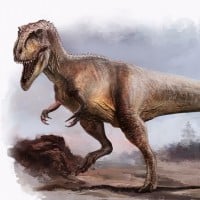
Torvosaurus is a genus of carnivorous megalosaurid theropod dinosaurs that lived approximately 165 to 146.5 million years ago during the Middle and Late Jurassic periods in what are now Colorado, Portugal, Germany, and possibly several other regions. It was among the largest predators of its time. Fossils... read more
-
Saurophaganax
-
Allosaurus
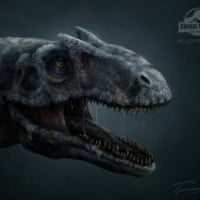
Allosaurus, one of the most well-known dinosaurs ever, is definitely a force to be reckoned with. It had giant teeth and powerful forelimbs. It could reach a max speed of 34 miles per hour and had amazing vision.
The problem is, it had a weak bite force, only about that of a leopard, and that is what keeps it lower on the list. But Allosaurus is still one deadly dino!
-
?
Gorgosaurus Libratus
-
?
Daspletosaurus
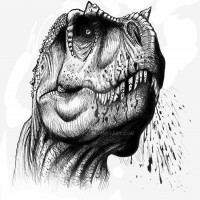
Daspletosaurus was a genus of tyrannosaurid dinosaur that lived in western North America during the Late Cretaceous Period, around 77 to 74.4 million years ago. The genus includes species such as Daspletosaurus torosus, Daspletosaurus horneri, and Daspletosaurus wilsoni. It was a close relative of Tyrannosaurus... read more
-
Yangchuanosaurus
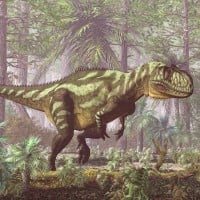
-
Albertosaurus
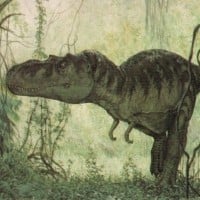
Albertosaurus is a genus of tyrannosaurid theropod dinosaurs that lived in western North America during the Late Cretaceous Period, about 70 million years ago. Fossils have been found primarily in Alberta, Canada. The genus was first described in 1905 by Henry Fairfield Osborn.
-
Carnotaurus
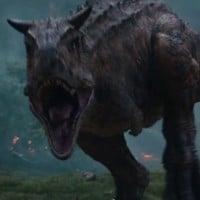
Carnotaurus, meaning "meat-eating bull" in Latin, is a genus of abelisaurid theropod dinosaur that lived in what is now South America about 70 million years ago during the Late Cretaceous period. It is known for its distinctive horns above the eyes and extremely reduced forelimbs. Its long, muscular... read more
-
Suchomimus
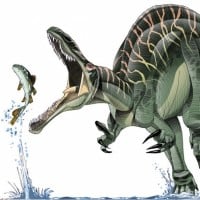
Suchomimus is a genus of large theropod dinosaur with a crocodile-like skull that lived in what is now Niger during the Aptian to Albian stages of the Early Cretaceous period, around 112 million years ago. Its fossils were discovered in Niger, Africa. The dinosaur's elongated snout and conical teeth... read more
-
Ceratosaurus
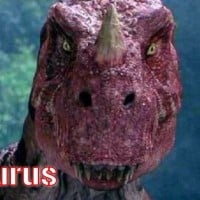
Ceratosaurus was a carnivorous theropod dinosaur that lived during the Late Jurassic period, approximately 153 to 148 million years ago. It existed during the Kimmeridgian to Tithonian stages and was known for its prominent nasal horn.... read more
-
Majungasaurus
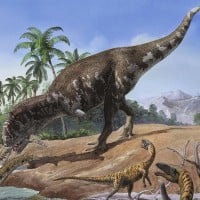
Majungasaurus is a genus of abelisaurid theropod dinosaur that lived in Madagascar from about 70 to 66 million years ago during the Late Cretaceous Period. The genus contains a single species, Majungasaurus crenatissimus. It was a top predator known for its short, thick skull and fossil evidence suggesting... read more
-
Metriacanthosaurus
-
Rajasaurus Narmadensis
