Top Ten Most Prehistoric Looking Birds
Birds are often called dinosaurs, and while many only give those vibes from their feet, others absolutely look prehistoric.
-
Shoebill
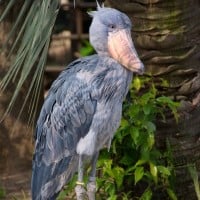
Quintessential "living dinosaur."
Massive shoe-shaped bill and an unblinking death stare.
Stands motionless like a Jurassic Park animatronic until it strikes.
-
Helmeted Hornbill
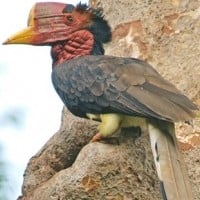
Bizarre ivory "casque" looks like a fossil plate.
Giant hooked beak with a face-shield forehead.
Sounds like an otherworldly cackle echoing through a rainforest lost in time.
-
Great Blue Heron
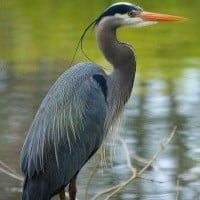
Tall, stalking predator with pterosaur vibes.
Slow wingbeats and a dagger bill give it primeval elegance.
Looks like it should be wading among stegosaurs.
-
Great Egret
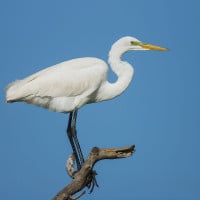
Lanky silhouette with a spear-like bill.
Those deliberate movements feel ancient, like a relic of wetland prehistory.
White plumage makes it ghostly, almost pterosaur-like.
-
Cassowary
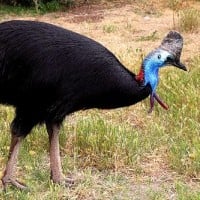
Cassowaries are ratites in the genus Casuarius and are native to the tropical forests of New Guinea, nearby islands, and northeastern Australia. They are large, flightless birds known for their striking blue and black coloring and helmet-like casques. Cassowaries can inflict serious injuries with their... read more
Often called "the most dangerous bird alive."
Helmet-like casque and deep, booming calls.
Looks exactly like a Velociraptor that traded claws for feathers.
-
Anhinga

Long serpent neck and dagger bill equal instant prehistoric silhouette.
Swims with its body submerged so only the snake-like neck sticks out.
Feels like a plesiosaur got downsized.
-
Marabou Stork
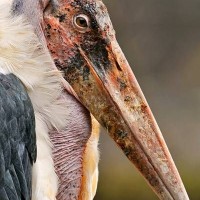
The marabou stork (Leptoptilos crumenifer) is a large wading bird in the stork family Ciconiidae, native to sub-Saharan Africa. It breeds in both wet and arid habitats, frequently near areas of human habitation, especially around landfills where it scavenges for food. This bird is sometimes referred... read more
Bald, leathery head, huge bill, and a ragged cloak of feathers.
Nicknamed "undertaker bird" because it looks like a fossil come to life.
Often hangs out with vultures, completing the "carrion dinosaur" vibe.
-
Smooth-Billed Ani
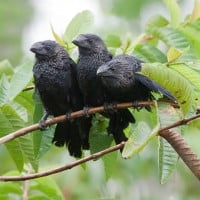
Smaller than most here, but screams "dinosaur skull on a blackbird."
Massive ridged beak equals raptor fossil vibes.
Croaky whistles and a communal lifestyle give it a primeval, pack-dino feel.
-
Seriema
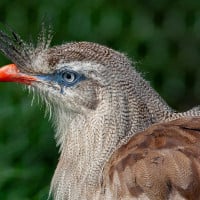
South American ground bird that hunts snakes by slamming them.
Crest, long legs, and predatory stride equal theropod cosplay.
Like a feathered raptor shrunk to turkey size.
-
Ostrich
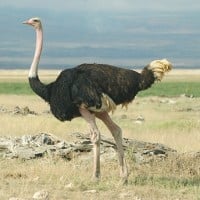
The ostrich, or common ostrich, is one of two extant species of large flightless birds native to Africa. It is the only extant member of the genus Struthio and belongs to the family Struthionidae. In 2014, the Somali ostrich was officially recognized as a separate species from the common ostrich.
The closest thing we have to a non-avian theropod in size.
Towering, long-legged, with a tiny head on a whip-like neck.
Runs like a dinosaur chasing prey.
-
?
Groove-Billed Ani
-
?
Frogmouth
-
Emu
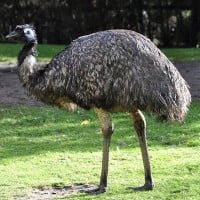
The emu is the second-tallest living bird after the ostrich and is native to Australia. It is the tallest native bird on the continent and the only extant member of the genus Dromaius. Emus are flightless and known for their speed and strong legs, which help them travel great distances.
-
Kiwi
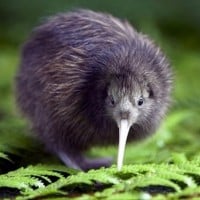
The kiwi is a flightless bird native to New Zealand, recognized for its small size and long, slender beak. It uses this beak to probe the ground for insects, which make up most of its diet. Kiwis also have a highly developed sense of smell, which is unusual for birds.
They look more like mammals with beaks because their feathers look like fur. Even their call sounds very demonic for an animal so small and cute.
They're even related to the extinct elephant bird.
-
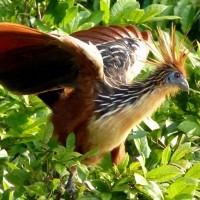
Hoatzin
-
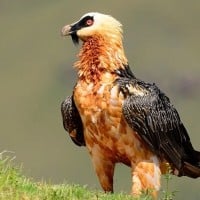
Bearded Vulture
-
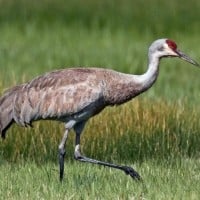
Sandhill Crane
-
Jabiru
-
Chinese Goose
-
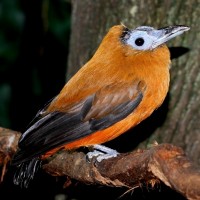
Capuchinbird
-
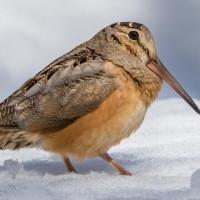
American Woodcock
-
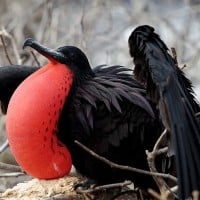
Frigatebird
-
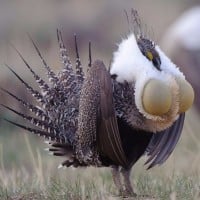
Greater Sage-Grouse
-
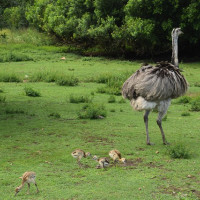
Rhea
-
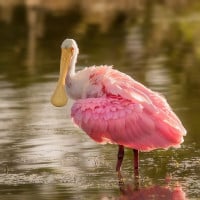
Spoonbill
-
Great Eared-Nightjar