Top 10 Facts About Mastodons
Mastodons, like mammoths, were large elephant-like creatures that lived during the Ice Age periods. These giants were slightly stockier than mammoths, though.
-
The name mastodon means "nipple tooth"
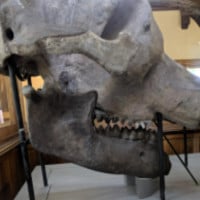
Their name "mastodon" comes from the Greek words "mastos" (breast) and "odous" (tooth), referring to the nipple-shaped projections on their molar teeth.
-
Mastodons were browsers rather than grazers
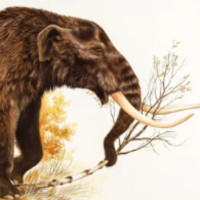
"Grazing" and "browsing" are important terms to know when you're talking about plant-eating mammals. While Woolly Mammoths grazed on grass, lots and lots of grass, Mastodons were primarily browsers, nibbling on shrubs and the low-lying branches of trees.
-
Males likely fought with their tusks like modern-day elephants do
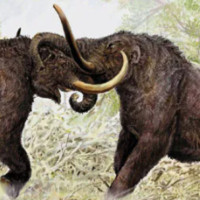
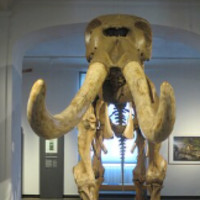
Mastodons were famous for their long, curved, dangerous-looking tusks, which still weren't quite as long, curved, or dangerous-looking as the tusks wielded by Woolly Mammoths.
-
Some mastodon skeletons have shown early tuberculosis
Not only human beings are susceptible to the ravages of tuberculosis. Many other mammals also perish from this slow-developing bacterial infection, which can scar bones as well as lung tissue when it doesn't kill an animal outright.
The discovery of Mastodon specimens bearing physical evidence of tuberculosis raises the interesting theory that these prehistoric elephants were doomed by exposure to the early human settlers of North America, who brought this disease with them from the Old World.
-
Mastodons, unlike mammoths and elephants, were likely solitary
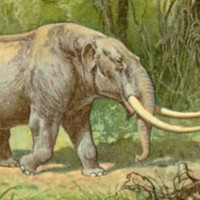
Woolly Mammoth fossils tend to be discovered in association with other Woolly Mammoth fossils, leading paleontologists to infer that these elephants formed small family units (if not larger herds).
By contrast, most Mastodon remains are completely isolated, which is evidence (but not proof) of a solitary lifestyle among full-grown adults.
-
There are four identified mastodon species
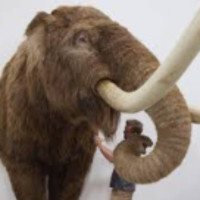
The most famous Mastodon species is the North American Mastodon, Mammut americanum. Two others, M. matthewi and M. raki, are so similar to M. americanum that not all paleontologists agree they even merit their own species designation. A fourth, M. capensis, was originally assigned as a species of the obscure Palaeomastodon.
-
Mastodons went extinct after the last ice age
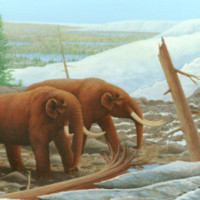
There is one unfortunate thing Mastodons share in common with Woolly Mammoths. Both of these elephant ancestors went extinct about 11,000 years ago, shortly after the last Ice Age.
-
The first American mastodon fossil to be found was in New York
In 1705, in the town of Claverack, New York, a farmer discovered a fossilized tooth weighing a whopping five pounds.
-
Mastodons, like mammoths, were covered in fur
Just like the Woolly Mammoth, Mastodons (and particularly the most famous member of the breed, the North American Mastodon) also had thick coats of shaggy hair to protect them from the intense cold of Pleistocene North America and Eurasia.
-
American mastodon likely was a forest dweller
The American Mastodon was adapted to living in cool woodlands, which were abundant in Pliocene Hagerman. Specialized teeth with high, pointed crowns worked well for chewing on leaves and twigs.