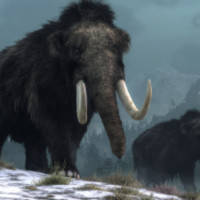
Top 10 Facts About the Woolly Mammoth
The mammoth we all know today was a giant, elephant-like creature with fur. It has been extinct for some time now, but we are still discovering more and more information about it.
-
Woolly mammoth tusks grew up to 15 feet long
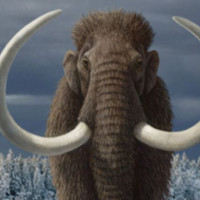
These giant tusks likely measured up to 15 feet on the biggest males. These huge appendages were most likely a sexually selected characteristic. Males with longer, curvier, more impressive tusks had the opportunity to pair up with more females during mating season.
They were probably also used as a defense mechanism against predators like the saber-toothed cat.
-
Woolly mammoths were not the only species of mammoth
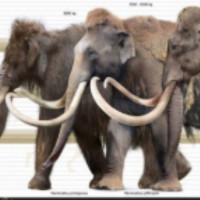
A dozen other mammoth species existed in North America and Eurasia during the Pleistocene epoch, including Mammuthus trogontherii, the steppe mammoth; Mammuthus imperator, the imperial mammoth. And Mammuthus columbi, the Columbian mammoth.
But none of them had as wide a distribution as their woolly relative.
-
Woolly mammoths went extinct about 10,000 years ago
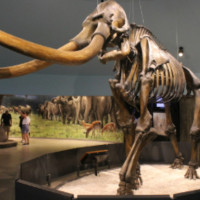
By the end of the last Ice Age, about 10,000 years ago, pretty much all the world's mammoths had succumbed to climate change and predation by humans.
The exception was a small population of woolly mammoths that lived on Wrangel Island, off the coast of Siberia, until 1700 BCE.
-
Some woolly mammoths were still alive when the Egyptian pyramids were being built
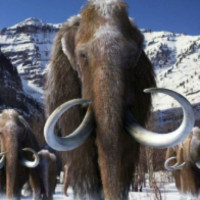
Only a small population survived on Wrangel Island as the pyramids were being built.
-
Cloning woolly mammoths might be possible
Because woolly mammoths went extinct relatively recently and were closely related to modern elephants, scientists might be able to harvest the DNA of Mammuthus primigenius and incubate a fetus in a living pachyderm, a process known as "de-extinction."
-
One of the oldest musical instruments was made of mammoth ivory
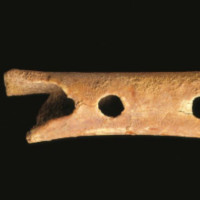
It's a small flute known as the Neanderthal flute that was made from the bones and ivory of mammoths.
-
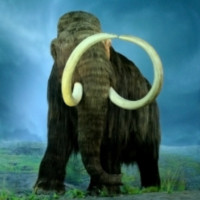
The scientific name of the woolly mammoth is Mammuthus primigenius
-
The closest living relative of the woolly mammoth is the Asian elephant

-
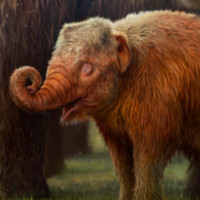
A baby woolly mammoth was called a calf
-
As many as 25,000 woolly mammoth carcasses have been found