Top 10 Facts About Newts
Newts are small, cute, and toxic amphibians who spend most of their time in water but are very fascinating creatures in my opinion.
-
In Medieval Europe, newts were associated with evil spirits
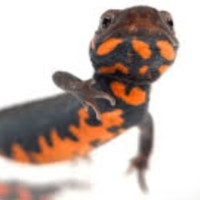
People used to believe that witches could summon demons with a newt.
That's kind of silly.
-
Some species can regrow their eye lenses at least 18 times
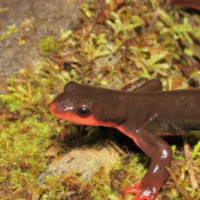
Not just their eye lenses but also their limbs, jaws, spinal cords, heart ventricles, and eyes. In a matter of weeks after losing an arm, they will be able to regrow it.
-
The eastern newt is New Hampshire's state amphibian

In 1985, New Hampshire became the first state to designate an official amphibian.
-
They make barely audible noises
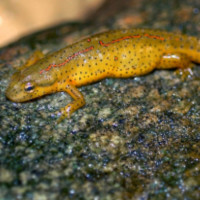
They may not be as vocal as frogs and toads, but they do make noises. They produce soft chatting sounds.
-
A single rough-skinned newt is poisonous enough to kill an estimated 25,000 mice

Rough-skinned newts may not look very threatening, but they're some of the most dangerous animals on Earth. These natives of the American West Coast produce a powerful substance called tetrodotoxin (TTX) that blocks the signals through which the victim's brain communicates with the rest of its body. Numbness, dizziness, spasms, and paralysis can follow.
The same toxin is found in pufferfish, and it's potent enough to kill up to 10 adult human beings.
-
Newts are members of the salamander family
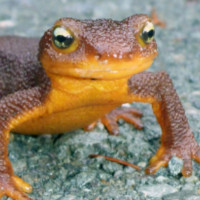
There are over 60 species of newt. All newts are salamanders, but not all salamanders are newts.
There are many differences between the two. Generally, with some exceptions, newts spend more of their adult lives in the water than salamanders.
And they are amphibians.
-
Newts are carnivores
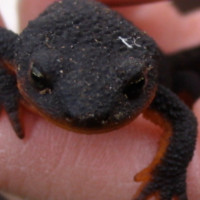
They eat slugs, worms, small invertebrates, amphibian eggs, and insects on land. Tadpoles, shrimp, aquatic insects, insect larvae, and mollusks are on the menu in the water. Baby newts, called larvae, can feed themselves small shrimp and insect larvae they find while swimming around.
-
They can live for 12-15 years
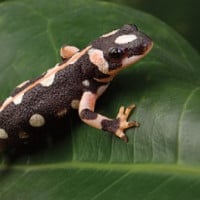
That's a long time!
-
The larvae have gills
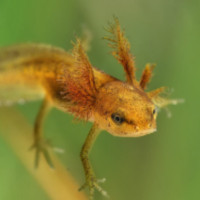
As larvae, they are born with gills. As they grow into adults, those gills disappear and they develop lungs, allowing them to breathe air.
It kind of looks like an axolotl.
-
They secrete tetrodotoxin (TTX)
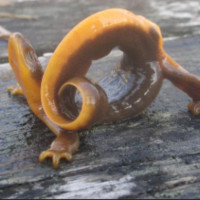
Tetrodotoxin is a potent neurotoxin found in newts along with pufferfish. It blocks nerve conduction by inhibiting sodium channels, which can lead to paralysis and potentially death.
There is no known antidote, and treatment is primarily supportive.