Top 10 Best Architects of All Time
You're surrounded by their work every day without even realizing it. The buildings you live in, the landmarks you travel to see, and the skylines that define entire cities were all shaped by people who turned imagination into steel, stone, and glass. Some of these architects worked centuries ago, sketching ideas by candlelight, while others shaped the modern world with bold new visions that pushed technology and style forward. What unites them is the ability to turn a simple concept into structures that have stood for generations.
When you look at a soaring cathedral, a sleek modernist home, or an iconic tower that dominates a cityscape, you're seeing more than walls and windows. You're seeing a designer's ability to blend artistry with engineering, to create a space that's not just functional but unforgettable. These architects challenged norms, influenced entire movements, and left buildings behind that became symbols of culture, history, and even national pride.
-
Frank Lloyd Wright
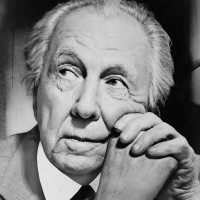
Frank Lloyd Wright was an American architect known for developing the concept of organic architecture. He designed more than 1,000 structures during his career, including Fallingwater and the Guggenheim Museum in New York. His work often integrated buildings with their natural surroundings.
As per the evolution of modern and contemporary architecture we studied, Frank Lloyd Wright is considered the father of modern architecture by many.
In the current world, where we adopt a contemporary style for all designs, it would not have been possible, or would have taken much longer, to reach this stage if he had not broken away from traditional styles. Great work, FLW!
Space Design Architects, Bangalore
No one can capture the beauty and form found in nature as Wright could in his designs. He proved to the world time and time again that he is the greatest architect that has ever lived.
-
Herzog & de Meuron
Herzog and de Meuron is a Swiss architecture firm founded in 1978 by Jacques Herzog and Pierre de Meuron. Their works include the Tate Modern in London and the Beijing National Stadium. The firm is known for innovative use of materials and textures across a wide range of building types.
Just look at their Memorial Museum. They know how to transcend you.
-
Le Corbusier
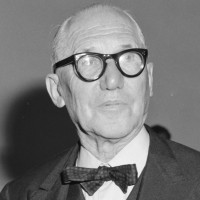
Le Corbusier was a Swiss-French architect and urban planner active in the 20th century. He developed the International Style and designed buildings such as Villa Savoye. His urban planning concepts, including the Radiant City, had a lasting impact on modern architectural and planning theory.
-
Frank Gehry
Frank Gehry is a Canadian-American architect known for his deconstructivist style. His notable works include the Guggenheim Museum Bilbao and the Walt Disney Concert Hall in Los Angeles. Gehry's designs often feature unconventional forms and innovative materials that challenge traditional architectural expectations.
-
Ludwig Mies van der Rohe
Ludwig Mies van der Rohe was a German-American architect associated with modernism and the International Style. He designed the Barcelona Pavilion and the Seagram Building in New York. His work emphasized minimalism and the use of modern materials such as glass and steel, summed up in his famous principle of less is more.
-
Léon Krier
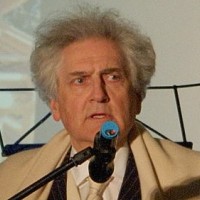
Léon Krier is a Luxembourgish architect and theorist known for advocating traditional urbanism. He has been a vocal critic of modernist planning principles. Krier worked on projects such as Poundbury, a planned community in England that reflects his urban theories.
-
Gustave Eiffel
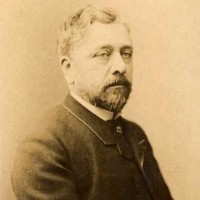
Gustave Eiffel was a French civil engineer and architect specializing in metal structures. He is best known for designing the Eiffel Tower in Paris, completed in 1889. Eiffel also contributed to the structural framework of the Statue of Liberty.
-
Philip Johnson
Philip Johnson was an American architect active in the 20th century. He designed the Glass House in New Canaan, Connecticut, as well as co-designing the AT&T Building in New York. Johnson's career spanned modernism, postmodernism, and multiple shifts in architectural philosophy.
-
Filippo Brunelleschi
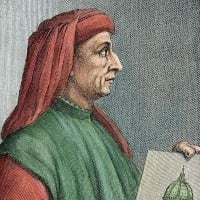
Filippo Brunelleschi was an Italian architect and engineer of the early Renaissance. He is best known for designing the dome of Florence Cathedral, completed in 1436. Brunelleschi also played a key role in developing linear perspective, which transformed architectural drawing.
-
Andrea Palladio
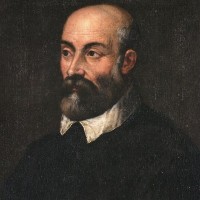
Andrea Palladio was an Italian Renaissance architect whose work strongly influenced Western architecture. His designs emphasized symmetry and classical forms, as seen in the Villa Rotonda. His treatise The Four Books of Architecture shaped architectural practice for centuries and remains a foundational text in architectural theory.
-
?
Quinlan Terry
-
?
Balthasar Neumann
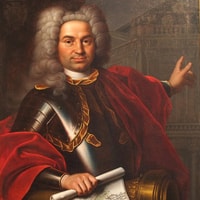
-
Antoni Gaudí
Antoni Gaudí was a Spanish architect associated with Catalan Modernism. His most famous work is the Sagrada Família in Barcelona, which remains under construction. Gaudí's designs often incorporated organic forms, complex geometry, and intricate detail.
One of the greatest ever, without a doubt!
I don't understand how he is below any of these guys I have never even heard of (except for Frank Lloyd Wright).
From the Casa Mila, Sagrada Familia, and much more, Antoni Gaudi has made some of the most famous buildings of all time!
-
Jacques-Germain Soufflot
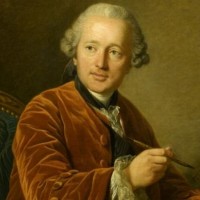
Jacques-Germain Soufflot was a French architect associated with neoclassicism. His most prominent work is the Panthéon in Paris, begun in 1758. Soufflot sought to combine classical purity with modern engineering techniques.
-
Karl Friedrich Schinkel
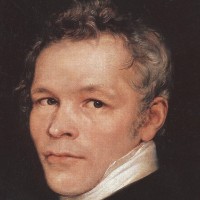
Karl Friedrich Schinkel was a German architect and city planner active in the early 19th century. His work, such as the Altes Museum in Berlin, helped define neoclassical architecture in Germany. Schinkel also contributed to urban development and stage design, influencing both architecture and the visual arts.
-
Gottfried Semper
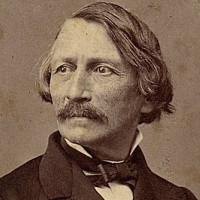
Gottfried Semper was a German architect and theorist of the 19th century. He designed the Semper Opera House in Dresden, first completed in 1841. Semper also wrote extensively on architectural theory, including influential ideas about the role of materials in design.
-
Apollodorus of Damascus
Apollodorus of Damascus was a Roman architect and engineer of the 2nd century CE. He designed Trajan's Forum, Trajan's Market, and Trajan's Column in Rome. Apollodorus was also involved in major bridge and military engineering projects for the Roman Empire.
-
Leo von Klenze
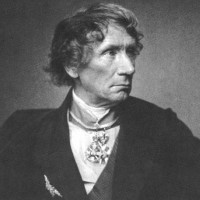
Leo von Klenze was a German neoclassical architect in the 19th century. He designed many buildings in Munich, including the Glyptothek and the Alte Pinakothek. Klenze also contributed to the development of museum architecture as a distinct building type.
-
Arne Jacobsen
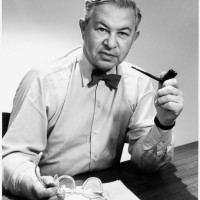
Arne Jacobsen was a Danish architect and designer recognized for his contributions to modernist architecture. He created notable buildings such as the SAS Royal Hotel in Copenhagen. Jacobsen was also known for his furniture designs, including the Egg and Swan chairs, which remain widely produced and influential.
-
Johann Bernhard Fischer von Erlach
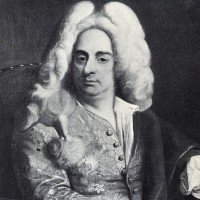
Johann Bernhard Fischer von Erlach was an Austrian architect of the Baroque period. He designed the Karlskirche in Vienna, one of his most recognized works. His projects often blended Italian and Central European Baroque traditions.
-
Christopher Wren
Christopher Wren was an English architect active in the late 17th and early 18th centuries. He is most famous for designing St. Paul's Cathedral in London after the Great Fire of 1666. Wren also worked on the reconstruction of many churches throughout the city, shaping London's architectural identity.
-
John A. Roebling
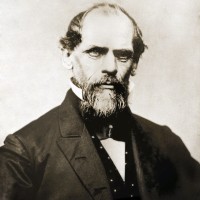
John A. Roebling was a German-American civil engineer and architect. He is best known for designing the Brooklyn Bridge, which was completed after his death. Roebling pioneered the use of wire rope in suspension bridges.
-
James Buchanan Eads
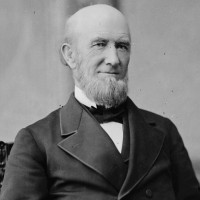
James Buchanan Eads was an American engineer and inventor. He designed the Eads Bridge in St. Louis, the first steel arch bridge over the Mississippi River. Eads also developed innovative salvage and diving technologies.
-
Vitruvius
Vitruvius was a Roman architect and engineer active in the 1st century BCE. He authored De Architectura, a treatise outlining principles of architecture, proportion, and construction. His ideas on symmetry and harmony strongly influenced Renaissance architects and later Western architectural theory.
-
Santiago Calatrava
Santiago Calatrava is a Spanish architect, engineer, and sculptor. His projects include the City of Arts and Sciences in Valencia and the Turning Torso in Sweden. Calatrava's works often incorporate organic forms inspired by natural and skeletal structures.
-
I. M. Pei
I. M. Pei was a Chinese-American architect known for his modernist designs. His notable works include the glass pyramid entrance to the Louvre in Paris and the Bank of China Tower in Hong Kong. Pei's style often combined geometric forms with innovative use of materials and careful attention to historical context.
-
Gian Lorenzo Bernini
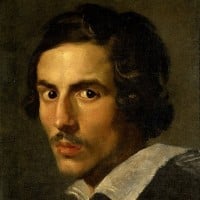
Gian Lorenzo Bernini was an Italian artist and architect of the Baroque period. He designed St. Peter's Square in Vatican City and contributed to the interior of St. Peter's Basilica. Bernini was also one of the most influential sculptors of his era.