Top 10 Greatest Indian Freedom Fighters
India's struggle for independence was not the work of one leader, one movement, or one method. It was built across generations by people who organized protests, wrote revolutionary literature, led armies, challenged colonial laws, rejected unjust taxes, and endured prison, exile, and execution. Some became global symbols of nonviolent resistance, while others took up arms against the British Empire.
The freedom fighters on this list came from different regions, languages, religions, and political traditions. Their approaches were often very different, but each played a role in weakening colonial rule and shaping the idea of an independent India. From mass movements led by the Indian National Congress to local rebellions, revolutionary networks, and cultural resistance, the independence struggle drew strength from many forms of action.
This list highlights some of the greatest Indian freedom fighters based on their historical influence, sacrifices, leadership, and lasting place in India's national memory. Vote for the figures you believe made the greatest contribution to India's fight for freedom.
-
Subhas Chandra Bose
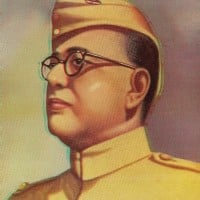
Subhas Chandra Bose was an Indian nationalist leader who served as president of the Indian National Congress in 1938 and 1939. He later formed the Forward Bloc and led the Indian National Army during World War II. His slogan "Give me blood, and I will give you freedom" became associated with armed resistance against British rule.
-
Mahatma Gandhi
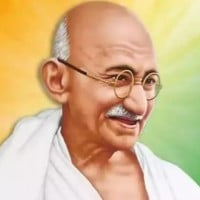
Mahatma Gandhi led mass movements against British colonial rule through nonviolent civil disobedience. He organized campaigns including the Non-Cooperation Movement, the Salt March, and the Quit India Movement. His political methods influenced independence movements and civil rights campaigns in other countries.
He is the best freedom fighter in the world.
-
Bhagat Singh
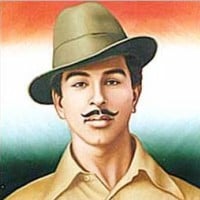
Bhagat Singh was a revolutionary who became involved with the Hindustan Socialist Republican Association. He participated in the killing of British police officer John Saunders in 1928 and later helped throw nonlethal bombs in the Central Legislative Assembly in 1929. He was executed by hanging in Lahore in 1931 at the age of 23.
A real hero of all time.
A real son of the nation.
-
Tipu Sultan
Tipu Sultan ruled the Kingdom of Mysore from 1782 to 1799. He fought the British East India Company in the Anglo-Mysore Wars and used military alliances with France against British expansion. He died during the Siege of Seringapatam in 1799.
-
Rani Lakshmibai
Rani Lakshmibai was the Queen of Jhansi and became a major figure in the Indian Rebellion of 1857. After the British refused to recognize her adopted son as heir, Jhansi became a center of resistance against annexation. She died in battle near Gwalior in 1858.
-
Jawaharlal Nehru
Jawaharlal Nehru was a leader of the Indian National Congress and spent years in prison during the independence struggle. He supported mass political mobilization against British rule and worked closely with Mahatma Gandhi. After independence in 1947, he became the first prime minister of India.
-
Abul Kalam Azad
Abul Kalam Azad was a scholar, journalist, and senior leader of the Indian National Congress. He served as Congress President during the Quit India Movement and opposed the partition of India. After independence, he became India's first Minister of Education.
-
Bahadur Shah II
Bahadur Shah II, also known as Bahadur Shah Zafar, was the last Mughal emperor. During the Indian Rebellion of 1857, rebel forces in Delhi declared him their symbolic leader. After the rebellion was suppressed, the British exiled him to Rangoon, where he died in 1862.
-
Chandra Shekhar Azad
Chandra Shekhar Azad was a revolutionary associated with the Hindustan Republican Association, later renamed the Hindustan Socialist Republican Association. He took part in anti-colonial activities including the Kakori train action and helped organize revolutionary networks in northern India. He died in a confrontation with police at Alfred Park in Allahabad in 1931.
-
Bal Gangadhar Tilak
Bal Gangadhar Tilak was a nationalist leader, teacher, and journalist from Maharashtra. He helped popularize the slogan "Swaraj is my birthright and I shall have it." He was associated with newspapers such as Kesari and Mahratta and played a major role in the early phase of the Indian independence movement.
He was a man who opposed the British. I think he was a greater freedom fighter than Mahatma Gandhi.
He is the greatest freedom fighter in India.
-
?
Vanchinathan
Vanchinathan was an Indian revolutionary from Tamil Nadu associated with anti-colonial activity in the early 20th century. In 1911, he assassinated Robert William d'Escourt Ashe, the British Collector of Tirunelveli, at Maniyachi railway station. He died by suicide immediately after the assassination.
-
?
K. Kamaraj
K. Kamaraj was an Indian independence activist from Tamil Nadu who joined the freedom movement as a young man. He participated in the Salt Satyagraha and the Quit India Movement and was imprisoned several times by British authorities. After independence, he became Chief Minister of Madras State and later President of the Indian National Congress.
-
J. B. Kripalani
J. B. Kripalani was an Indian independence activist and a senior member of the Indian National Congress. He participated in Gandhian movements and served as president of the Congress during the transfer of power in 1947. After independence, he remained active in Indian politics as a parliamentarian and critic of centralized authority.
-
Veerapandiya Kattabomman
Veerapandiya Kattabomman was an 18th-century chieftain of Panchalankurichi in present-day Tamil Nadu. He resisted taxation demands from the British East India Company and fought Company forces in 1799. He was captured and executed by hanging at Kayathar the same year.
-
Lala Lajpat Rai
Lala Lajpat Rai was a nationalist leader from Punjab and one of the three leaders known as Lal Bal Pal. He helped found institutions including the Servants of the People Society and wrote extensively on political and social reform. He died in 1928 after injuries sustained during a protest against the Simon Commission in Lahore.
-
Mohammad Ali Jouhar
Mohammad Ali Jouhar was a journalist, political leader, and one of the founders of the All India Muslim League. He became a leading figure in the Khilafat Movement and also supported the Non-Cooperation Movement against British rule. He presided over the Indian National Congress session at Kakinada in 1923.
-
Mangal Pandey
Mangal Pandey was a soldier in the 34th Bengal Native Infantry of the British East India Company's army. In 1857, he attacked British officers at Barrackpore, an incident later linked to the outbreak of the Indian Rebellion of 1857. He was executed by hanging in April 1857.
-
Vinayak Damodar Savarkar
Vinayak Damodar Savarkar was a political activist, writer, and proponent of Hindutva. He was associated with revolutionary networks against British rule and was sentenced to transportation for life in the Cellular Jail in the Andaman Islands. His writings included works on Indian nationalism, history, and political ideology.
-
V. O. Chidambaram Pillai
V. O. Chidambaram Pillai was a lawyer, nationalist, and labor leader from Tamil Nadu. He founded the Swadeshi Steam Navigation Company to challenge British shipping interests between Tuticorin and Colombo. He was arrested in 1908 after supporting workers during the Coral Mills strike and promoting the Swadeshi movement.
-
Subramania Bharathi
Subramania Bharathi was a Tamil poet, journalist, and nationalist writer. His poems and essays promoted Indian independence, social reform, women's education, and opposition to caste discrimination. He spent part of his life in Pondicherry, which was then under French rule, while continuing his anti-colonial writing.