Top 10 Smartest Bird Species
-
African Grey Parrot
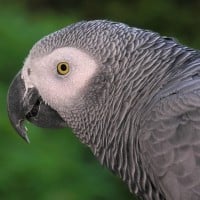
No bird has reshaped our understanding of avian intelligence like the African Grey. They don't just mimic, they comprehend.
Dr. Irene Pepperberg's work with Alex showed the species' grasp of concepts such as "same," "different," "bigger," and "none," indicating reasoning once thought exclusive to primates. Wild Greys in Africa form strong social bonds, mimic local predators to warn flocks, and can even apply logic to new situations.
Their emotional range is profound. They experience grief, frustration, and affection. In captivity, many owners describe them as "little professors" trapped in feathers.
-
New Caledonian Crow
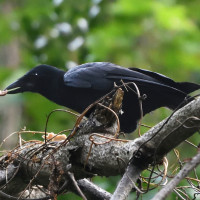
The New Caledonian Crow is nature's engineer. Found on the remote Pacific island of New Caledonia, this bird crafts hooks from twigs and leaves to fish out grubs, not through instinct but genuine understanding of cause and effect.
Scientists have watched individuals shape tools from multiple materials depending on need, a sign of abstract reasoning. They can solve puzzles requiring three or more sequential steps, demonstrating planning and insight. These mental abilities are comparable to a human toddler.
Their inventive culture even varies from valley to valley, suggesting regional "technological traditions."
-
Kea
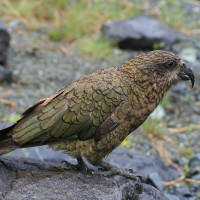
The Kea is the mountain prankster of New Zealand, but beneath the mischief lies formidable intelligence. Living in harsh alpine conditions, Keas must constantly innovate to survive.
They work together to solve puzzles, taking turns and sharing rewards. This is true cooperative cognition. Keas show curiosity beyond survival needs, exploring simply to learn. They can recognize unfairness, reacting negatively if another Kea gets a better reward for the same task, and even plan multi-stage actions.
Their humor is unmistakable. They'll unzip backpacks, steal GoPros, and dance in snow, revealing a bird that pairs wit with playfulness.
-
American Crow
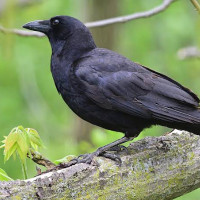
The American Crow is the urban philosopher of North America: calculating, communicative, and socially aware. They remember individual human faces for years, hold grudges, and teach their offspring who to trust.
Crows stage funerals, not just as instinctual gatherings but as risk-assessment meetings, observing what killed one of their own. They cache food and adjust their hiding behavior if they know they've been watched. This is a sign of "theory of mind."
They also adapt to human infrastructure, using traffic lights to crack nuts or riding thermals near highways. They're problem-solvers with an eerie memory for justice.
-
Blue-and-Yellow Macaw
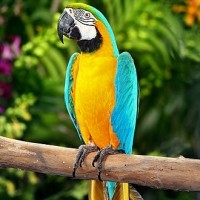
Macaws combine mechanical ingenuity with emotional depth. Their massive brains relative to body size support complex memory, allowing them to recall hundreds of calls and coordinate flock movements across vast distances.
In captivity, they form lifelong pair bonds with humans or other parrots and can distinguish colors, shapes, and even categories of materials. Some have shown empathy toward injured flockmates.
Their long lifespan, often exceeding 60 years, gives them time to develop wisdom and habits that resemble a long-term learning culture. Their playfulness masks a deep problem-solving instinct driven by curiosity.
-
Great Blue Heron

The Great Blue Heron represents a quieter, strategic intelligence. Rather than using tools or mimicry, this heron masters patience and environmental calculation. It reads water patterns, light angles, and fish behavior with near-surgical precision.
In different regions, individuals adapt their hunting style: stalking from shadows in urban lakes, freezing like statues in tidal shallows, or even using human docks to ambush prey. Herons remember successful fishing spots for years and can adjust to human presence, returning only when conditions are optimal.
Their intelligence is cold and deliberate, the stillness before the strike. Also, look at how they raid koi ponds. They figure out all deterrents.
-
Rock Pigeon
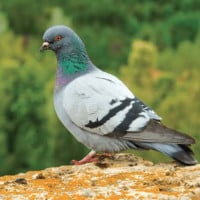
Mocked as "street birds," pigeons are actually mathematical prodigies. They can distinguish between different paintings, solve mirror recognition tests, and even understand abstract numerical concepts. This was a first for any non-primate animal.
Homing pigeons navigate using Earth's magnetic fields, infrasound, and visual landmarks across hundreds of miles, performing mental triangulation on the fly.
Their ability to learn categories and remember thousands of patterns makes them valuable in psychological studies. The humble pigeon reminds us that true intelligence often hides behind the ordinary.
-
Green Heron

This small heron is one of nature's most underrated geniuses. It's one of the few non-corvid birds known to use tools: dropping insects, feathers, or even bits of bread onto water to lure fish within striking distance.
The Green Heron's baiting shows planning, innovation, and the ability to predict another animal's behavior. These are hallmarks of advanced cognition. Even juveniles can learn this behavior through observation, suggesting a primitive cultural transmission.
Their quiet brilliance contrasts with flashier parrots and crows. They think like engineers hidden behind the reeds.
-
Woodpecker Finch
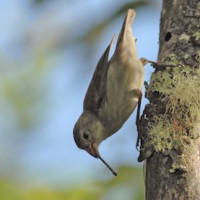
Native to the Galápagos, the Woodpecker Finch is a true innovator. Lacking woodpecker-style bills, it compensates by fashioning cactus spines or twigs into hooks to extract insects. Toolmaking is rare among wild birds. It selects, trims, and even reuses its favorite implements.
This mechanical creativity evolved independently from crows and parrots, a case of convergent intelligence born from necessity. In the finch's precise movements and patient experimentation, we glimpse evolution inventing problem-solving twice.
-
Blue Jay

The Blue Jay, whose scientific name is Cyanocitta cristata, is a passerine bird in the Corvidae family. It is also known as a jaybird and is recognized for its noisy calls. Native to North America, the Blue Jay is found throughout most of the eastern and central United States, with some populations migrating... read more
-
?
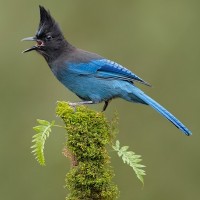
Steller's Jay
-
?
Eurasian Jay
-
Northern Mockingbird
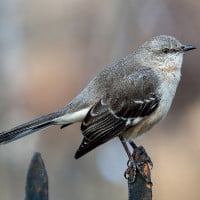
The Northern Mockingbird wields auditory genius. Capable of memorizing and reproducing over 200 distinct sounds, from other bird songs to car alarms and human whistles, it doesn't merely copy. It composes. Males arrange imitations into structured stanzas, showing an understanding of rhythm and phrasing.
They adapt songs to defend territories or impress mates, tailoring performances to context. Neuroscientists studying them find brain circuits akin to human improvisational centers. The Mockingbird's intelligence is creative and aesthetic. It's the art of thought made melody.
-
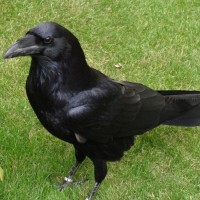
Common Raven
-
Bald Eagle
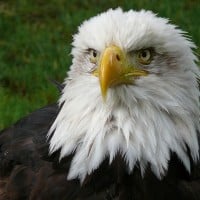
Eagle is the common name for many large birds of prey in the family Accipitridae. Eagles belong to several genera, some of which are closely related, and more than 60 species are found across much of the world. Most eagle species live in Eurasia and Africa.... read more
-
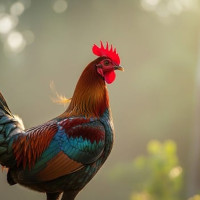
Red Junglefowl
-
Hawaiian Crow
-
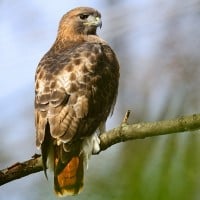
Red-Tailed Hawk
-
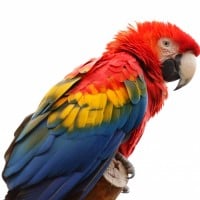
Scarlet Macaw
-
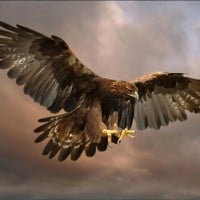
Golden Eagle
-
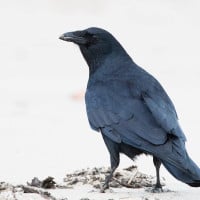
Fish Crow
-
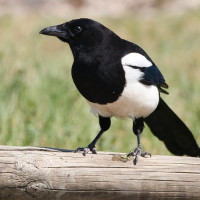
Eurasian Magpie
-
Canada Goose
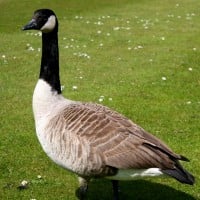
The Canada goose is a large wild goose species with a black head and neck, white cheeks, a white chinstrap, and a brown body. It is native to Arctic and temperate regions of North America and is well known for the seasonal migrations undertaken by many of its populations. Canada geese have also adapted... read more
-
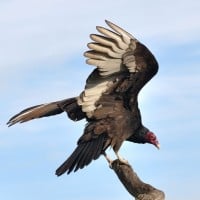
Turkey Vulture