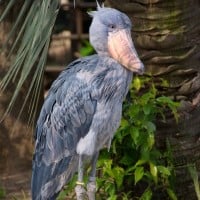
Top 10 Most Underrated Birds
-
Turkey Vulture
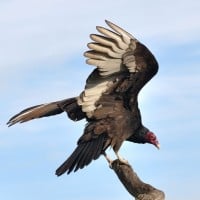
Caption: "The sky's silent janitor. Graceful, vital, and unfairly judged."
Why it belongs:
Though often dismissed as ugly or ominous, the Turkey Vulture is one of nature's unsung heroes. With its extraordinary sense of smell, it locates and cleans up carrion before disease can spread. Its effortless soaring conserves energy, embodying quiet efficiency.
Far from a grim omen, this bird is a symbol of ecological renewal. It proves that beauty and goodness aren't always wrapped in bright feathers.
-
Secretarybird
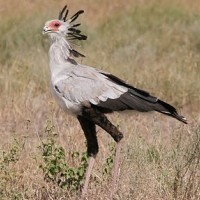
Caption: "The serpent-stomping diplomat. Elegance with a deadly kick."
Why it belongs:
The Secretarybird blends contradictions in the best way. It looks like a runway model but hunts like a martial artist. Towering on crane-like legs and crowned with dramatic plumes, it stalks the African savannahs, delivering precise, lightning-fast kicks that can kill venomous snakes in seconds.
Despite this mix of beauty, intelligence, and power, it rarely gets the spotlight compared to lions or eagles. The Secretarybird is a living emblem of grace meeting grit. It's a national treasure that deserves far more fame than memes about its "business-suit" appearance.
-
Ruppell’s Vulture
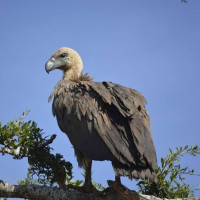
Caption: "The highest flier on Earth, unseen, unmatched, and underloved."
Why it belongs:
The Rüppell's Griffon Vulture should be a household name. It holds the record for the highest altitude ever recorded by a bird, soaring over 37,000 feet, higher than Mount Everest's summit. Yet few people even know it exists.
This African giant glides through the upper troposphere with lungs adapted to thin oxygen, quietly performing the same ecological miracle as its Turkey Vulture cousin: cleaning up the dead to protect the living. Despite its nobility, it's critically endangered due to poisoning and habitat loss. The Rüppell's Vulture deserves reverence as the silent sentinel of the skies, the true high priest of flight.
-
Marabou Stork
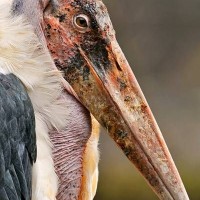
The marabou stork (Leptoptilos crumenifer) is a large wading bird in the stork family Ciconiidae, native to sub-Saharan Africa. It breeds in both wet and arid habitats, frequently near areas of human habitation, especially around landfills where it scavenges for food. This bird is sometimes referred... read more
Caption: "The undertaker of Africa, grotesque grace in perfect balance."
Why it belongs:
No bird captures "ugly elegance" quite like the Marabou Stork. Towering and bald-headed with a drooping air sac and cloak-like wings, it looks like something out of a Tim Burton sketch, yet it's one of Africa's most essential cleanup crews.
Sharing the skies and streets with vultures, it devours carrion, fish, and even garbage, quietly keeping disease at bay. Despite its unsettling looks, it has an immense wingspan and a majestic, almost biblical silhouette when airborne. The Marabou Stork is the grim reaper of hygiene, reviled by those who see only its face but revered by anyone who sees its purpose.
-
Waved Albatross
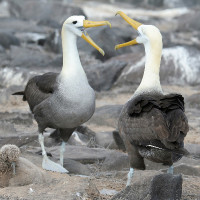
Caption: "The faithful drifter, love, loyalty, and loss on ocean winds."
Why it belongs:
The Waved Albatross, found almost exclusively in the Galápagos, is a living poem of devotion and endurance. It mates for life, returning year after year to the same rocky island to reunite with its partner through elaborate, tender dances, a rare spectacle of lifelong fidelity in the animal kingdom.
With its serene flight and understated beauty, it glides over vast ocean distances, unseen by most of humanity. Tragically, it's endangered due to longline fishing and climate shifts. The Waved Albatross reminds us that not all romance belongs to fairy tales. Some soar quietly on the wind, waiting to return home.
-
Martial Eagle
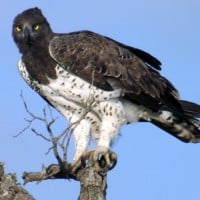
Caption: "Africa's silent titan, feared by all, known by few."
Why it belongs:
The Martial Eagle is one of the most formidable raptors on Earth, capable of taking down antelope, jackals, and even monkeys, yet it receives shockingly little global recognition.
With an eight-foot wingspan and piercing yellow eyes, it's the definition of dominance, but its strength hides a tragedy: populations are collapsing from persecution and habitat loss. While the Bald Eagle became an American icon, the Martial Eagle remains the unsung guardian of the African sky. Noble, misunderstood, and fading fast, it deserves the same reverence we give to lions and leopards, for it rules its realm with unmatched dignity.
-
Little Blue Heron
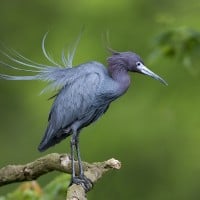
Caption: "The quiet minimalist. Subtle beauty in shades of calm."
Why it belongs:
The Little Blue Heron doesn't shout for attention. It earns it quietly. Often overlooked beside the Snowy Egret's flash or the Great Blue's grandeur, this heron embodies elegance in understatement.
Its soft slate plumage, lilac neck hues, and patient, monk-like hunting posture give it a contemplative aura rare among waders. Juveniles are stark white, symbolizing transformation and maturity as they molt into indigo adults. This bird is the introvert of the wetlands. It's graceful, composed, and quietly essential, yet seldom celebrated.
-
Imperial Amazon
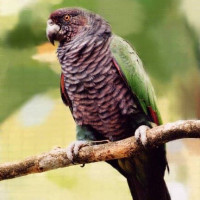
Caption: "Crown jewel of Dominica, beauty on the brink."
Why it belongs:
The Imperial Amazon (also called the Sisserou Parrot) is one of the rarest parrots on Earth and the national bird of Dominica, yet hardly anyone outside the Caribbean has heard of it.
Cloaked in iridescent greens, purples, and deep blues, it looks like a living gemstone, but its numbers have plummeted to mere dozens due to hurricanes and habitat loss. Despite its fragile status, it stands as a symbol of resilience for its island home, surviving storms that destroyed nearly everything around it. The Imperial Amazon isn't just a parrot. It's a living emblem of endurance, faith, and the quiet strength of small nations.
-
Helmeted Hornbill
-
American Oystercatcher
-
?
Green Heron
-
?
Great Egret
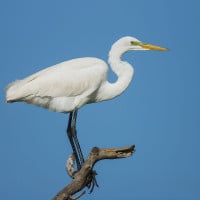
-
Anhinga

-
Brown-Headed Nuthatch
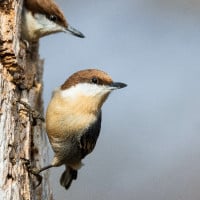
Caption: "Tiny voice of the pinewoods. Teamwork wrapped in a squeak."
Why it belongs:
The Brown-headed Nuthatch is the definition of overlooked charm. Endemic to the southeastern pine forests of the U.S., it's a pocket-sized problem-solver that uses tools (small bits of bark) to pry out insects, a behavior rarer than people realize.
Its rubber-ducky call brightens quiet woodlands, and its cooperative nesting, where extra birds help raise chicks, is pure family devotion. Yet few outside birding circles even know it exists. This little bird embodies the warmth and resourcefulness of the South's forests. It's proof that greatness can whisper rather than roar.
-
Red-Billed Oxpecker
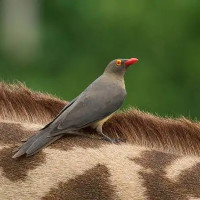
Caption: "Africa's little medic. Loyalty on the backs of giants."
Why it belongs:
The Red-billed Oxpecker lives in symbiosis with Africa's great mammals, plucking ticks and parasites from buffalo, giraffes, and rhinos. It's a living partnership: part cleaner, part companion, and occasionally even an alarm system.
Despite this extraordinary ecological role, it's rarely celebrated. Tourists photograph the mammal, not the bird clinging faithfully to its side. The Oxpecker embodies humility in nature, thriving through cooperation, not dominance. In a world obsessed with apex predators, this small red-beaked helper reminds us that survival often depends on service, not power.
-
Harpy Eagle
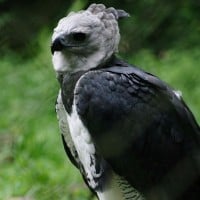
-
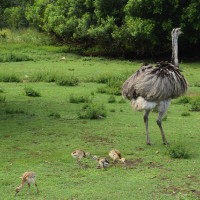
Rhea
-
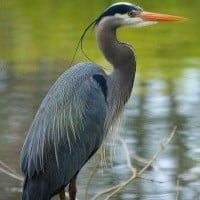
Great Blue Heron
-
Toucan
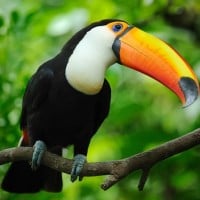
Toucans are members of Ramphastidae, a family of near-passerine birds native to the Neotropics. They are recognizable by their large, colorful bills, which are used for feeding and thermoregulation. Toucans are primarily frugivorous but also consume insects and small animals.
-
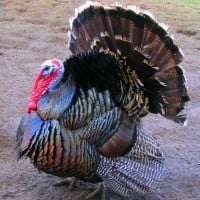
Turkey
-
Amazon Parrot
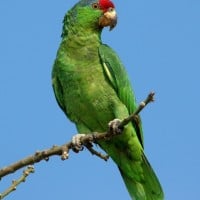
-
Blue and Yellow Macaw
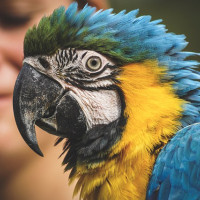
-
Emu
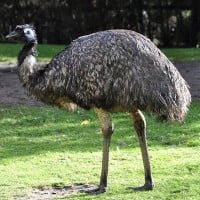
The emu is the second-tallest living bird after the ostrich and is native to Australia. It is the tallest native bird on the continent and the only extant member of the genus Dromaius. Emus are flightless and known for their speed and strong legs, which help them travel great distances.
-
King Penguin
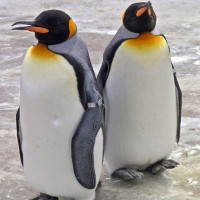
-
Snowy Albatross
-
Bearded Vulture
-
Shoebill