Top 10 Most Thought-Provoking Dystopian Novels
Dystopian fiction does not hand you a cozy escape. It grabs you by the collar, sits you under a flickering light, and asks what kind of world you are helping build right now. The best ones do not rely on cheap misery or piles of rubble. They get under your skin by taking familiar things like government, technology, family, school, religion, work, and even language itself, then twisting them just far enough that you can still recognize the shape of your own life inside the nightmare.
That is what makes these novels so unnerving. You are not just watching societies fall apart from a safe distance. You are watching rules harden, freedoms shrink, and ordinary people adapt to conditions that should have made them scream. Sometimes the horror comes from surveillance. Sometimes it comes from comfort, obedience, or the slow death of independent thought. The sharpest dystopian stories force you to ask an ugly question: how much of this would you accept before you finally pushed back?
-
1984 by George Orwell
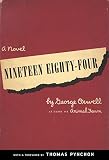
In a totalitarian superstate called Oceania, Winston Smith works at the Ministry of Truth, where he alters historical records to match the ruling Party's changing claims. He begins a secret relationship with Julia and explores forbidden thoughts, drawing the attention of the regime's surveillance and enforcement apparatus. After their arrest, Winston is subjected to torture and psychological conditioning until his resistance is destroyed.
-
Brave New World by Aldous Huxley
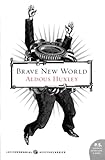
In a future society organized around genetic engineering, conditioning, and caste hierarchy, citizens are kept orderly through consumerism, entertainment, and the drug soma. Bernard Marx and Lenina Crowne travel to a Savage Reservation and return with John, a man raised outside the World State's system. John's values clash with the norms of this society, and the conflict leads to public spectacle and personal collapse.
-
Fahrenheit 451 by Ray Bradbury
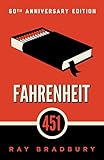
Guy Montag is a fireman in a society where books are outlawed and his job is to burn them. His encounters with a curious neighbor and a former professor lead him to question the anti-intellectual culture around him and the role he plays in it. As he turns against the system, he flees the city and joins a group committed to preserving literature through memory.
-
The Handmaid's Tale by Margaret Atwood
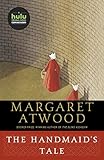
In the theocratic Republic of Gilead, fertile women are assigned as Handmaids and forced to bear children for elite households. Offred, placed in the home of a Commander and his wife Serena Joy, navigates rigid rules, surveillance, and shifting power within the household. Through memories of her previous life and her present choices, the novel traces her effort to survive under the regime.
-
Lord of the Flies by William Golding
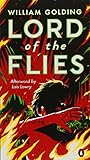
A group of British schoolboys becomes stranded on an uninhabited island after a wartime evacuation goes wrong. They attempt to organize themselves under Ralph's leadership, but fear, rivalry, and the desire for power drive the group into factional conflict. As order breaks down, violence escalates and the island becomes a scene of chaos and death.
-
A Clockwork Orange by Anthony Burgess
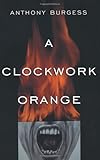
Alex, a teenage delinquent in a near-future society, spends his nights committing acts of violence with his gang. After he is imprisoned for murder, the state subjects him to an experimental aversion treatment intended to eliminate his capacity for violent behavior. The procedure leaves him unable to choose freely, placing him at the center of a struggle between criminality, punishment, and control.
-
The Giver by Lois Lowry
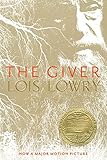
Jonas lives in a tightly regulated community where pain, conflict, and individual choice have been largely eliminated. When he is selected to receive the community's stored memories from the Giver, he learns about emotions, suffering, beauty, and the cost of his society's order. What he discovers leads him to question the system and make a dangerous decision about his future.
-
Animal Farm by George Orwell

After overthrowing the human farmer, the animals of Manor Farm establish their own government based on equality and shared labor. The pigs gradually assume control, with Napoleon consolidating power through propaganda, intimidation, and the rewriting of the farm's founding principles. The revolution's original ideals are replaced by a new form of oppression that mirrors the one the animals first resisted.
-
Do Androids Dream of Electric Sheep? by Philip K. Dick
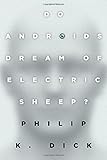
In a post-apocalyptic future, bounty hunter Rick Deckard is assigned to track down and retire escaped androids hiding among humans. As he pursues increasingly advanced models, he confronts questions about empathy, authenticity, and the boundaries between human and artificial life. His encounters with the androids and with other people unsettle his assumptions about identity and moral judgment.
-
The Man in the High Castle by Philip K. Dick
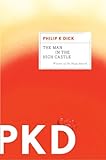
Set in an alternate history where the Axis powers won World War II, the novel follows several characters living in territories occupied by Imperial Japan and Nazi Germany. Their lives intersect through political tensions, trade in American artifacts, and the circulation of a banned novel that imagines a different outcome to the war. As the story unfolds, uncertainty about reality and history becomes central to the characters' choices and beliefs.
-
Unwind by Neal Shusterman
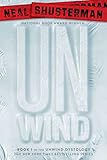
In a future United States, a compromise after a civil war over reproductive rights allows parents to have children between the ages of thirteen and eighteen "unwound," with their body parts harvested for transplantation. Three teenagers targeted for unwinding, Connor, Risa, and Lev, flee into a system built to process them. Their journeys expose the institutions, beliefs, and economic interests that sustain the practice.