Top 10 Dark Truths About the Salem Witch Trials
We have all had to acknowledge the Salem Witch Trials at one point or another in this place called the USA.
To put it simply, the Salem Witch Trials were essentially the American equivalent of the Dark Ages, although the United States was not yet a proper sovereign nation at the time. The trials lasted for over a year, during which people were accused of practicing witchcraft.
Let me just say that that is like saying George W. Bush caused the September 11 attacks. It is just plain ridiculous to anyone with common sense.
-
If the accused pleaded guilty to practicing witchcraft, they lived, but if they denied it, they were executed
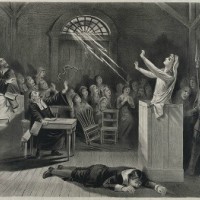
One of the morbidly interesting aspects of the Salem Witch Trials is that if someone suspected of practicing witchcraft denied it, they were executed. However, if they confessed that they were witches, they lived.
In the present day, that would never happen, given the law of the land is that you are innocent until proven guilty. But considering people were trying to stomp out witches and witchcraft, shouldn't those who confessed be the ones killed, and those who denied, live on, if we had to pick a scenario in which a certain group has to die?
Doesn't make any sense, honestly.
-
Animals were accused of being witches
If you're thinking, "Well, that's just plain ridiculous!" I agree, but read on, and it kind of makes sense. Humans were the majority of the accused, but it was thought that witches had accomplices, which could take the form of humans or animals. So, felines, canines, and vermin, as well as other animals, were put on trial. This played a large role in black cats being considered bad luck.
In one instance, a woman said she was being stalked by a red cat and a black cat, which threatened to harm her if she didn't harm children. Two dogs were accused of being witches for unknown reasons. One of them was found innocent, but that was after it was shot.
-
"Witch cakes" were used to determine whether someone was guilty
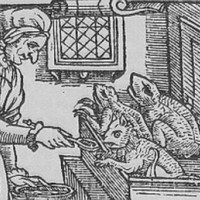
If we're being honest, if something has the keyword "witch" in it, odds are it's really unnerving. Proceed at your own risk. These cakes were made with flour and the urine of the person accused of witchcraft or one of the very symptoms that convinced people to start the witch hunt.
The cake was then fed to a dog. If the dog showed the same symptoms as the accused, that person was considered a sorcerer or sorceress. The dog would then "point" to the person who had given him the symptoms. This is a messed-up justice system, not to mention that it sounds like witchcraft itself.
-
People looked for the Devil's Mark on witches
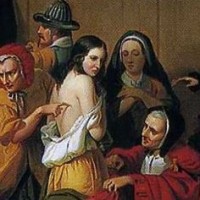
If you were accused of practicing witchcraft, you had to strip and be searched for the Devil's Mark. If you had it, you died. The Devil's Mark could be anything from birthmarks, blemishes, scars, or tattoos. Witches supposedly got a mark when they made their pact with Satan. The mark was thought to be numb, so it wouldn't hurt if touched, and it could change shape and color.
Some people were so determined to avoid inspection that they started burning or hacking off blemishes. This backfired, as the burns or hacks created more scars, which were then considered the Devil's Mark.
-
You could be accused of witchcraft for anything
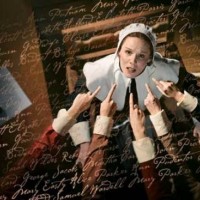
Anyone could accuse anyone of anything. Given the smallpox outbreak and poor medical knowledge, paranoia about witches was rampant in Salem. Some of the accused were targeted for being sarcastic, slamming the church door, lifting heavy things, making witch cakes (despite being instructed to do so), or laughing at how absurd the Salem Witch Trials were.
All these were taken as serious signs that someone was a witch and had to die. As a Christian with more intelligence than those who ran the Salem Witch Trials, I see those reasons as nonsense. Unfortunately, four hundred years ago, expressing such views would have likely started a witch hunt against me.
-
Torture was a primary method used to force a witch to confess
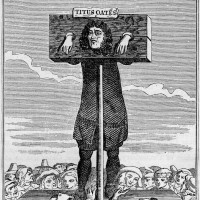
This aspect of the Salem Witch Trials was not too different from the Dark Ages. One form of torture involved piling sandbags on someone to force a confession. It didn't work, but it was just one method used. Other torturing methods in Massachusetts included the Heretic's Fork, which felt like a pitchfork on your neck, the Pillory, where your hands and head hung out of holes, and sleep deprivation.
There are more examples, but I'd rather not mention them. Plenty of innocent men and women ended up admitting to practicing sorcery just to end the pain.
-
The smallpox outbreak played a role in the trials
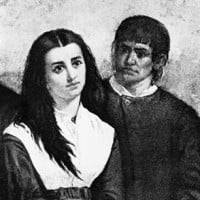
Smallpox played a large role in the Salem Witch Trials, though it's possible nobody realized it at the time. The disease is very lethal and covers the infected person's body with warts. In Salem 1692, multiple people died of smallpox. An epidemic caused symptoms in two girls that people believed were caused by witches.
Paranoia about smallpox was so intense that it led to crazy allegations about witches and a need to find a source of blame larger than the epidemic itself. At the end of the day, there are several possible causes for what happened in Salem, and it makes sense that these strange fits people attributed to witches were actually caused by smallpox.
-
The Touch Test was used to identify witches
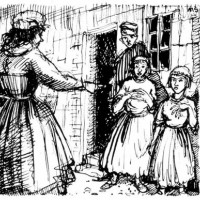
The concept behind this test was that victims of witchcraft would have a physical reaction to being touched by the person, or witch, who had cursed them. So, the person suspected to be a witch had to lay a hand upon a possessed person who was delusional. If no reaction occurred, the accused was deemed innocent.
On the other hand, if the "possessed" person suddenly got better or came to somehow, it was deemed that the witch had put them under a spell, and she was found guilty. I can't say I would have come to the same conclusion as those nutjobs who ran the Salem Witch Trials.
I remember reading about this in the book The Sacrifice by Kathleen Benner Duble, where anyone who calmed the "afflicted" girls would immediately be arrested as a witch.
-
A total of 19 victims were hanged
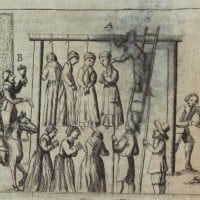
-
Those who were found guilty were later pardoned by the governor
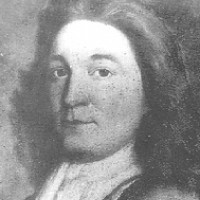
When William Stoughton, a judge during the Salem Witch Trials, wrote the warrants for the execution of a good number of the alleged witches, Governor Phips issued pardons, sparing their lives. I don't know whether I should be glad or disturbed by this.
-
One man was pressed to death
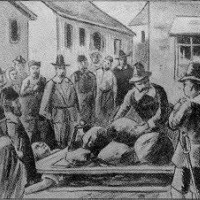
During the Salem Witch Trials, a total of 20 people were put to death for the crime of witchcraft. Giles Corey was unique, and his death was much worse than others. He refused to plead either innocent or guilty. According to the law at the time, he could not be tried without a plea. Instead, he was stripped naked, and a heavy board was laid on top of his body, followed by boulders.
After two days of this torture and still refusing to plead guilty to witchcraft, the 81-year-old Corey would simply ask for more weight each time he was asked to plead. It is said that the sheriff would even stand on top of him from time to time, adding more weight. Corey suffered in silence for two days. It's thought he did so to prevent the government from forfeiting his estate upon his death. He died in full possession of his estate, which went to his sons-in-law. Brave way to do things, I gotta say.
-
It was not the first witch trials