Top 10 Animated Movie Villains of the 21st Century
-
Tai Lung (Kung Fu Panda)
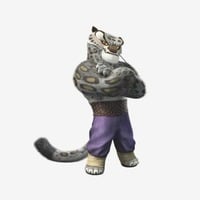
Tai Lung is a tragic villain whose greatest strengths—discipline, talent, determination, and ambition—have been distorted into entitlement. He does not believe he merely wants greatness. He believes greatness was promised to him, and that the world committed an unforgivable injustice by failing to deliver it.
His physical presence reinforces that emotional history. Tai Lung moves with extraordinary speed and precision, and his combat style feels almost surgical. He is not a chaotic fighter. He is focused, efficient, and capable of identifying weaknesses immediately. Every movement suggests years of training transformed into a single-minded need to prove himself.
What makes him compelling is that his anger is understandable without being excusable. He has experienced disappointment and rejection, but rather than process them, he turns them into evidence that the world is corrupt. He believes that if he was not recognized as exceptional, then the people who denied him must be punished.
Tai Lung embodies the destructive side of destiny narratives. He has been taught to see himself as someone chosen for greatness, but he has not learned that greatness also requires humility, patience, and the ability to accept limits. His identity is so closely tied to achievement that failure becomes indistinguishable from annihilation.
He is therefore more than a powerful martial-arts opponent. He is a portrait of what happens when talent becomes fused with entitlement and when the desire to be worthy mutates into the demand to be worshiped.
-
Other Mother (Coraline)
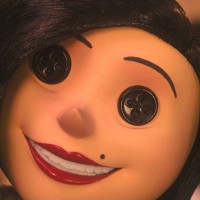
The Other Mother is one of the defining villains of modern animated horror because she understands that temptation is more powerful than intimidation. She does not initially present herself as a monster. Instead, she creates an alternate home filled with the things Coraline longs for: attention, excitement, elaborate meals, entertainment, and adults who appear to care about her interests.
Her effectiveness comes from the precision of that imitation. The Other Mother does not offer a completely unfamiliar fantasy; she improves upon familiar people and ordinary surroundings. She knows that the most persuasive trap is one that resembles home closely enough to feel comforting while changing just enough to seem magical.
The button eyes are her most recognizable feature, but they also summarize her entire character. They represent imitation, surveillance, and the replacement of genuine individuality with something manufactured. The Other Mother can reproduce appearances, but she cannot provide real freedom. Her affection is conditional, and her generosity always contains an expectation of obedience.
She is ultimately a villain of possessiveness. She does not merely want to be loved; she wants to control the object of that love completely. Her greatest horror lies in the way she transforms care into ownership. The story’s unsettling question is not whether she can create a beautiful world, but what she expects in exchange for allowing someone to remain in it.
-
Lord Shen (Kung Fu Panda 2)
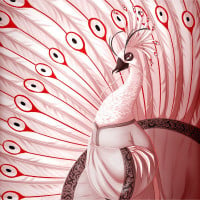
Lord Shen is one of DreamWorks’ most visually distinctive villains, combining aristocratic elegance with technological ambition and profound insecurity. He is a peacock who has turned refinement into armor. His clothing, posture, and movements communicate the image of someone determined to remain composed even when surrounded by fear and violence.
His defining trait is the desire to control the future. Shen is not satisfied with inherited status or traditional authority. He wants to use innovation and military power to make himself impossible to challenge. His interest in machinery and weaponry reflects a broader rejection of humility: he believes the old order is something to be surpassed, not understood.
Yet Shen’s ambition is haunted by fear. He is deeply concerned with prophecy, legacy, and the possibility that his future may already be determined. His efforts to defeat that possibility become increasingly extreme, revealing the paradox at the center of his character: the more he tries to control destiny, the more completely he becomes controlled by fear of it.
Shen’s relationship to the past gives him emotional depth. He is not simply trying to conquer territory; he is trying to erase a threat to his self-image. His cruelty grows from the conviction that survival requires eliminating every reminder of vulnerability.
He is a villain of elegance and panic. The graceful exterior never quite conceals the frightened individual beneath it, making his violence feel less like confidence than an increasingly desperate attempt to prevent the world from proving him powerless.
-
Syndrome (The Incredibles)
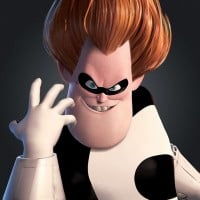
Syndrome is one of Pixar’s most sharply motivated villains. His identity is built around rejection, resentment, and the desire to prove that ordinary people can overcome the advantages of naturally gifted superheroes. At first glance, his philosophy sounds almost egalitarian: if anyone can become powerful through technology, then no one person should have a monopoly on heroism.
However, Syndrome’s idealism is inseparable from personal bitterness. His worldview is not simply about fairness; it is about forcing the world to acknowledge him. He has turned an old humiliation into an all-consuming project, and every invention becomes part of his attempt to rewrite the meaning of his past.
His appearance reflects his personality. Syndrome is polished, theatrical, and highly self-conscious, with a carefully designed public persona that feels more like a brand than a private identity. He understands presentation, marketing, and spectacle. For him, heroism is not just about saving people; it is about controlling the story that surrounds the saving.
What makes him dangerous is his combination of intelligence and emotional immaturity. He can design extraordinary technology, anticipate opponents, and construct elaborate plans, but he still reacts to old resentment as though the original injury happened yesterday. His genius does not free him from insecurity; it gives that insecurity more powerful tools.
Syndrome represents the danger of turning admiration into entitlement. He begins with the desire to participate in a heroic world and gradually becomes obsessed with proving that he deserves to dominate it.
-
Fairy Godmother (Shrek 2)
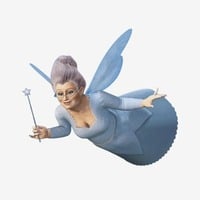
The Fairy Godmother is a sophisticated parody of the benevolent magical helper. She has the appearance, voice, and musical presentation of a traditional fairy-tale benefactor, but beneath that polished image is someone highly skilled at manipulation, negotiation, and social influence.
Her power comes from controlling expectations. She understands that people are willing to accept extraordinary transformations if those transformations are presented as part of a familiar romantic story. She does not need to force everyone around her to obey; she simply makes her preferred outcome appear natural, inevitable, and desirable.
Unlike a villain who acts from open rage, the Fairy Godmother operates through charm and social performance. She is gracious when it benefits her, warm when she needs cooperation, and intimidating when someone threatens her plans. Her apparent kindness is strategic rather than selfless.
The character is also a critique of fairy-tale perfection. She represents the machinery behind idealized romance: beauty standards, social status, royal expectations, and the belief that happiness must take a particular outward form. Her magic can alter appearances, but the deeper issue is that she treats identity as something to be redesigned for public approval.
Her villainy is especially effective because she rarely seems sinister in the traditional sense. She is cheerful, polished, and entertaining. That makes her manipulation more dangerous. She demonstrates how control can arrive wrapped in encouragement, optimism, and promises of a “happily ever after.”
-
Madame Gasket (Robots)
-
Big Jack Horner (Puss in Boots: The Last Wish)
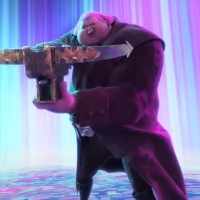
Big Jack Horner is a particularly effective modern villain because he combines childish presentation with adult-level greed and cruelty. His name, appearance, and exaggerated manner suggest a nursery-rhyme character, but his ambitions are aggressively materialistic. He wants magical objects, legendary power, and status on an enormous scale.
The character is built around entitlement. Jack believes that the world’s wonders should belong to him simply because he wants them and has the resources to pursue them. He has no meaningful reverence for magic, myth, or history. He treats extraordinary things as collectibles and turns the fantastic into an extension of his personal hoard.
His villainy is made funnier—and more disturbing—by his lack of self-awareness. Jack does not see himself as a dark figure. He views his greed as confidence and his selfishness as ambition. He is surrounded by people who reinforce his sense of importance, allowing him to behave as though cruelty is merely another form of business leadership.
Visually, he is broad, colorful, and deliberately excessive. His design evokes the imagery of a wealthy storybook magnate, someone who has accumulated so much that ordinary possessions no longer satisfy him. The comedy comes from the mismatch between his childish enthusiasm and the seriousness of the power he seeks.
Big Jack Horner represents greed stripped of shame. He does not want to understand the magic he pursues; he wants to own it. His villainy is a critique of consumption taken to its most absurd extreme: the belief that every beautiful or powerful thing becomes more valuable once it belongs to you.
-
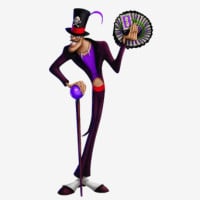
Dr. Facilier (The Princess and the Frog)
-
Jimmy Crystal (Sing 2)
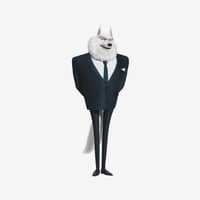
Jimmy Crystal is a villain of entertainment-industry power. He is a wealthy, influential entertainment executive who has built his authority on intimidation, image management, and the expectation that everyone around him will obey. His world is one in which creative dreams are valuable only when they can be converted into profitable spectacles.
Jimmy’s charm is inseparable from his status. He can appear generous, sophisticated, and supportive when doing so benefits his reputation or business interests. But the warmth disappears when someone challenges his authority. His friendliness is conditional on compliance.
What makes him threatening is the imbalance of power surrounding him. The performers and creators under his influence may have talent and passion, but Jimmy controls access, money, publicity, and opportunity. He understands that people who are desperate to succeed can be pressured into accepting unfair conditions.
His character also reflects the darker side of the entertainment business: the idea that art must be packaged, controlled, and made safe for investment. Jimmy is not opposed to creativity in principle. He is opposed to creativity that cannot be managed. He wants performers to be exciting onstage but obedient behind the scenes.
The film treats him with comic exaggeration, but his behavior reflects recognizable abuses of authority. Jimmy is frightening because he can make coercion look like professionalism. He represents the executive who believes that providing an opportunity gives him the right to control the person receiving it.
-
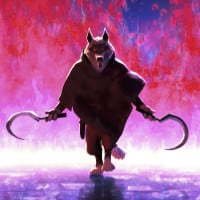
Death (Puss in Boots: The Last Wish)
-
?
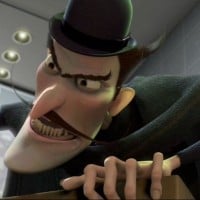
Bowler Hat Guy (Meet the Robinsons)
-
?
Lots-o'-Huggin' Bear (Toy Story 3)
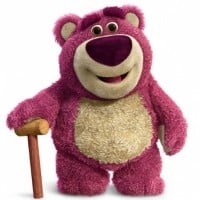
Lots-o'-Huggin' Bear, commonly known as Lotso, is the main antagonist in Toy Story 3 (2010). He takes control of Sunnyside Daycare and forces the other toys to follow his rules. Despite his cuddly appearance, he is portrayed as a ruthless and manipulative character.
-
Enmu (Demon Slayer: Kimetsu no Yaiba - The Movie: Mugen Train)
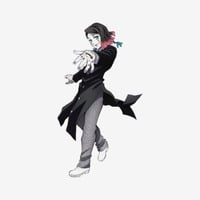
Enmu is a villain of psychological invasion. His power is connected to sleep, dreams, and the vulnerability of the unconscious mind, allowing him to attack characters not only through physical force but through their private hopes and emotional weaknesses.
His personality is unsettlingly calm. Enmu often speaks with a soft, detached politeness that contrasts sharply with the cruelty of his intentions. He does not behave like someone driven by ordinary rage. Instead, he appears fascinated by suffering, particularly the moment when a person’s most comforting fantasy becomes a trap.
Dreams are central to Enmu’s appeal as a villain because they blur the boundary between desire and danger. He understands that people may willingly surrender themselves to a beautiful illusion, especially when reality is painful or exhausting. His methods exploit the fact that emotional comfort can be more difficult to resist than physical threats.
His design reinforces this quality. Enmu appears elegant and composed, but his eyes, expressions, and mannerisms create a sense of something fundamentally unnatural beneath the surface. He is not simply a monster attacking from outside; he is an intruder within the mind.
Enmu’s villainy is therefore built around the corruption of refuge. Sleep should provide rest, and dreams can offer hope or escape. He turns both into instruments of control. His most frightening quality is his understanding that people are often most defenseless when they are receiving exactly what they want.
-
Vector (Despicable Me)
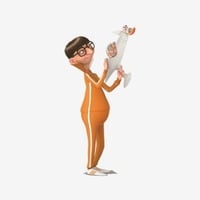
Vector is an energetic, comedic villain whose entire identity is built around youthful arrogance and competitive showmanship. He wants to be seen as brilliant, technologically advanced, and impossible to outsmart. His constant confidence is part genuine ability and part performance designed to keep everyone else from noticing how immature he is.
His orange jumpsuit, oversized goggles, gadgets, and eccentric weapons make him look like a walking science-fair project upgraded into a criminal operation. The visual design captures his personality perfectly: inventive, colorful, boastful, and incapable of behaving with restraint.
Vector’s rivalry is driven less by a grand ideology than by status. He wants to establish himself as the most impressive criminal in the room, and he measures success through spectacle. Every device and scheme is a way of announcing that he is smarter, faster, and more modern than his competitors.
That makes him a humorous contrast to more experienced villains. Vector has technical skill, but he lacks emotional maturity. He frequently mistakes having a clever tool for having a complete plan. His confidence allows him to act boldly, but it also prevents him from recognizing when he is being reckless.
As an antagonist, he represents the childish side of villainy: the desire to win, show off, and humiliate rivals. His comedy comes from the fact that he treats criminal competition like an elaborate game, but his persistence gives him enough competence to remain a genuine obstacle.
-
Lord Business (The Lego Movie)
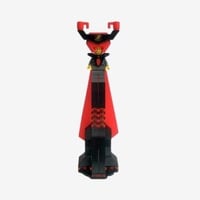
Lord Business is a villain of order, standardization, and absolute control. He wants the world to function according to a single approved design, with every object, person, and action placed exactly where it belongs. His vision is clean, efficient, and visually impressive—but it leaves no room for improvisation or individual expression.
His character is built around the contrast between creativity and control. LEGO itself represents endless possibility: pieces can be rearranged into countless forms. Lord Business sees that flexibility as a problem. To him, unpredictability creates disorder, and disorder threatens the stability of the world he has constructed.
His authoritarianism is presented through corporate language, branding, schedules, rules, and polished public messaging. He does not initially appear like a traditional tyrant. He appears organized, professional, and reassuring. That is what makes him effective: he presents total control as convenience and obedience as happiness.
Lord Business is also a villain of anxiety. His obsession with perfection suggests that he fears the messiness of genuine creativity. If everyone follows instructions, nothing unexpected can happen. If every piece remains fixed, nothing can break—but nothing new can be created either.
His appeal comes from the fact that his worldview is understandable. Most people want some degree of order, predictability, and security. Lord Business becomes dangerous when those reasonable desires expand into the belief that all difference must be eliminated. He embodies the idea that a perfectly controlled world may also be a lifeless one.
-
AUTO (WALL-E)