Top 10 Best War Planes of All Time
There's something undeniably human about the machines we send into battle. You see it in the lines of a Spitfire's wings, in the purposeful growl of an F-14's twin engines. War planes aren't just hardware. They're ideology wrapped in steel and swept into the sky. Each one tells a story not only about how a nation fights, but how it imagines itself winning.
Some were built for speed, others for stealth. Some turned the tide of global conflict. Others flew high and fast enough to outrun a missile but never dropped a bomb. These machines carried pilots into enemy airspace with the weight of history riding shotgun. One aircraft might win a dogfight. Another might win a war. But only a few ever earn the title of the best plane ever used by the armed forces of any country.
So what does best mean to you? Maybe it's raw numbers: kills, missions flown, years in service. Maybe it's about elegance in engineering, or the impossible combination of agility and durability. Maybe you care about the plane that ended wars or the one that never fired a shot but scared the world stiff.
This list is built on your judgments. You vote. You decide.
-
North American P-51 Mustang
The P-51 Mustang was an American long-range, single-seat fighter used during World War II and the Korean War. It was equipped with a Packard-built Rolls-Royce Merlin engine. Its range and performance made it effective as a bomber escort.
Hmm... best war planes of all time? Definitely the Mustang over the Spitfire. Why don't we look at facts? The P-51 has been in service much longer than the Spitfire, has many more variants, has greater range, is much faster, could dive better, could climb better, and was much more durable (though not extremely durable).
Overall, the P-51 was much better in combat, yet some people think the Spitfire is better just because of maneuverability? Laugh out loud. I am not saying that the Spitfire is a bad plane because it was great, but it was definitely not as good as the Mustang.
The Mustang had a greater range than the Spitfire and was a very stable platform, but some of your comments are plain wrong. The Spitfire could outclimb a Mustang, and it wasn't even close. The Spit wasn't as stable as the P-51, but this had the advantage of making it more agile.
As far as speed is concerned, as developments were made, they kept up with each other. By the end of WWII, the Spit was faster because the Brits stopped using the Merlin and moved on to the more powerful Griffon (2050 hp). From the Mk14 onwards, the Spits were faster.
-
Supermarine Spitfire
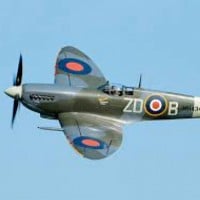
The Supermarine Spitfire was a British single-seat fighter used extensively during World War II. It featured elliptical wings and was powered by Rolls-Royce Merlin or Griffon engines. Its design allowed for excellent agility and high-altitude performance.
The Spitfire was actually of all-metal monocoque construction and was designed as a point-defense fighter. This was a role it accomplished with ease. I have looked at the comments made about the Mustang, and some of them are fundamentally untrue.
The Spitfire was more maneuverable, had a much better rate of climb, and a much tighter turn. All around, it was a much better dogfighter. The Mustang (and let's not forget it was originally built for our friends across the pond) had radically different design criteria and was pretty much the world's first MRCA. It was a fantastic airplane but not an out-and-out fighter.
Yes, we all know the Spitfire drill (beautiful on the ground or in flight, a pilot's dream, etc.). Yes, everyone says it was such a great aircraft. Then WHY, prior to and during the Battle of Britain, did Great Britain purchase the P-40 Warhawk (called the Tomahawk by the RAF) in such large numbers?
Well, it was actually very sturdy. Secondly, it was available in large numbers. Now, newer fighters, including the P-38, P-47, and P-51, did overshadow it. Yes, its faults (and it had some, all aircraft do) were exaggerated to the point that it seemed impossible for the P-40 to succeed against any enemy aircraft.
Although it couldn't outmaneuver the Zero (the Warhawk's main foe in the Pacific Theater), neither could the Spitfire, Hurricane, Lightning, Thunderbolt, Mustang, Wildcat, or Corsair, but that is never mentioned.
It was a rugged, formidable fighter in the right hands. Better than the Spit? No. Greater than the Spit? Yes.
-
Lockheed SR-71 Blackbird
The SR-71 Blackbird was a high-altitude, long-range reconnaissance aircraft developed by Lockheed. It could fly at speeds exceeding Mach 3 and altitudes over 85,000 feet. The aircraft was in service from 1966 to 1998.
An engineering marvel. Everything but the engines was built from scratch. Also, they never lost a plane or a crew member on a mission. No other aircraft can claim that.
Fastest fighter ever and stealth technology make it the best.
It is the fastest jet, has long range, and never lost a plane or crew member. These make it the best.
-
Lockheed Martin F-22 Raptor
The F-22 Raptor is a fifth-generation, single-seat, twin-engine stealth fighter developed by Lockheed Martin. It combines stealth, supercruise, and advanced avionics. The aircraft entered service with the U.S. Air Force in 2005.
The F-22 was in simulated actual maneuvers against a ratio of six to one. The F-22 took all others out, some without even knowing the Raptor was there. This plane is cutting-edge and will most likely be the last fighter jet to be manned, as it can fly past what a human can endure in G-forces. Its capability, stealth, and abilities are far above what any other country has or can produce in numbers.
For those who say the F-15 is faster, you're obviously uneducated on your jets. This is the fastest jet and most maneuverable. It is worth the cost.
-
McDonnell Douglas F-15 Eagle
The F-15 Eagle is an American twin-engine, all-weather tactical fighter aircraft developed by McDonnell Douglas. It first flew in 1972 and has maintained a high kill-to-loss ratio in combat. The F-15 is still in active service in several air forces worldwide.
Different eras spurred different favorites. I was surprised there was no love for the P-38 here at all. All in all, the record speaks across all eras: never shot down is an amazing stat and must be acknowledged. That is what superiority is all about!
Yes, the other guys have stealth, super maneuverability, all the best gadgets and gizmos, but when it comes down to getting in a knife fight with the other guy, the Eagle will always come out on top. Its record speaks for itself.
The best fighter jet ever. Never lost in air-to-air combat, has the ability to fly with only one wing after an accident (I'm not kidding, it actually can fly and land after that), and looks really, really great.
-
Messerschmitt Bf 109
The Messerschmitt Bf 109 was a German World War II fighter aircraft. It first flew in 1935 and was the backbone of the Luftwaffe's fighter force. The aircraft saw continuous development and extensive service throughout the war.
IL-2 Sturmovik experience
Me 109 G2 - The best climb rate (except probably the Spitfire Mk IX). The incredibly low stall speed (the best ever). The low-speed turning. The cannon was good against bombers, and in the hands of an expert, it was good against fighters too, but I would prefer the wing-mounted machine guns without the cannon against fighters. Its high-speed performance seems to be bad, although later models corrected this to some extent, but not incorporated in the G2. (I can always turn the G6 as well as the P-51 above 500 km/h speed, but not with the G2.) That was an easy fix and could have been incorporated in the G2.
In IL-2 Sturmovik, I (Me 109 G2) outclimbed and outstalled the P-51B at 12 km altitude. What more is there to say? The G2's redline was also lower than the later models.
-
Grumman F-14 Tomcat
The F-14 Tomcat was a twin-engine, variable-sweep wing fighter developed by Grumman for the United States Navy. It entered service in 1974 and was equipped with the AN/AWG-9 radar and AIM-54 Phoenix missiles. The aircraft was retired by the U.S. Navy in 2006.
The F-14 Tomcat with TF-30 was tested at about Mach 2.44-2.46. The F-15 Eagle has rarely gone that fast and is limited to Mach 2.3 due to safety concerns with the wings and airframe. The Tomcat, because of its variable geometry wings, even with the older TF-30 engines, is theoretically capable of the same top speed as the F-111, Mach 2.5+, due to its variable geometry wings, but is about 10,000 pounds lighter than the F-111.
With the new GE-F110 engines that provided the Tomcat with a 30% increase in thrust, it certainly surpassed its theoretical limit of Mach 2.4. However, due to a lack of funding for testing and other upgrades that were planned for the simplification of maintenance, no one knows the top speed of the F-14B and F-14D Tomcats. I would imagine Mach 2.65?
-
Lockheed F-117 Nighthawk
The F-117 Nighthawk was a U.S. Air Force stealth attack aircraft developed by Lockheed. It was the first operational aircraft designed around stealth technology. The aircraft was in service from 1983 to 2008.
-
Sopwith Camel
The Sopwith Camel was a British World War I biplane fighter. It was armed with twin synchronized machine guns and entered service in 1917. It was credited with more aerial victories than any other Allied aircraft of the war.
The best British fighter plane of WWI.
-
General Dynamics F-16 Fighting Falcon
The F-16 Fighting Falcon is a single-engine multirole fighter aircraft originally developed by General Dynamics. It first flew in 1974 and has been widely exported. The aircraft is known for its agility and versatility.
If I was in a close dogfight, that's the plane I would want to be in.
The Tomcat at #2? It doesn't have near the record of the F-15 or near the capabilities. It's the oldest fighter in service and the most expensive to keep flying. (It'll be retired next year.)
The P-40 Warhawk at #8? That plane was barely used once the P-51, P-47, and Corsair entered the war.
The Harrier at #9? Other than the Falkland Islands, it's never done anything and is going to be surpassed by the F-35 soon.
The Blackbird wasn't a warplane. It was a reconnaissance airplane. It was a camera that could fly at Mach 3.5.
The A-10, the F-15 Eagle, the Bf 109, the Camel, F-117, and the F-22 should all replace the Blackbird, P-47, Vulcan, Harrier, Tomcat, and Fokker in the top ten. The Spitfire was a great plane. It would have been greater if it wasn't made of wood.
-
?
Airco DH.1
The Airco DH.1 was a British two-seat pusher biplane used during World War I. It was designed by Geoffrey de Havilland and first flew in 1915. The aircraft served mainly in training and reconnaissance roles.
-
?
Nieuport 16
The Nieuport 16 was a French World War I fighter aircraft. It was an improved version of the Nieuport 11 with a more powerful engine and larger airframe. The aircraft was introduced in 1916 and used by several Allied nations.
-
Avro Lancaster
The Avro Lancaster was a British four-engine heavy bomber used during World War II. It was designed by Avro and entered operational service in 1942. It was capable of carrying the largest bomb loads of the war, including the Grand Slam bomb.
The introduction of this plane in 1942 changed the bombing campaign for the RAF. The bombsights fitted were far superior to anything that went before. All the best bombing accuracy figures in WWII were obtained using the SABS bombsight in the Lanc. This was a semi-computerized electromechanical sight that was developed because the Americans wouldn't give the RAF their Norden bombsight (which was highly overrated).
Think of Peenemünde, the St. Nazaire submarine pens, the Renault factory, Tirpitz, the Coupole, the viaducts after D-Day. The list goes on and on. The bomb-carrying capacity was also far greater than any other Allied bomber.
-
Mitsubishi A6M Zero
The Mitsubishi A6M Zero was a long-range carrier-based fighter aircraft used by the Imperial Japanese Navy. It was introduced in 1940 and was known for its maneuverability and range. The aircraft saw extensive use throughout the Pacific War.
Stanley Winfield "Swede" Vejtasa shot down Zeros by dogfighting them in a Dauntless dive bomber! He could out-turn the Zeros because anything over a six G turn would rip the Zeros' wings off. So would a high-speed dive. See the Dogfights episode "Long Odds" on YouTube for Swede's dogfight.
Zeros sucked at everything except rolling fights because of their high roll rate. Stay in high G turns, and they'd lose.
When this was built, it was far ahead of any other fighter around. It could outmaneuver anything it went up against. Even at the end of WWII, it achieved an amazing kill ratio of 12-1 over China. It was the first ideal superiority fighter. The Mitsubishi A6M Reisen should most definitely be in the top ten.
-
Fairchild Republic A-10 Thunderbolt II
The A-10 Thunderbolt II is a ground-attack aircraft developed by Fairchild Republic for the United States Air Force. It is known for its durability and its GAU-8 Avenger rotary cannon. The aircraft was introduced in 1977 and is optimized for close air support.
Without a doubt, this plane is the most feared by many countries. In Afghanistan, they call it the "Death Machine" and say, "When you see it, don't bother running away or else you'll die tired."
This plane is also "the most survivable plane ever built." It's beautiful, and tanks are more scared of this weapon of destruction than anything else. This thing did phenomenally in the first Gulf War.
Go on Google and search "23 tanks destroyed in one day" and guess which plane did that. Oh, the A-10 Thunderbolt II, and it was just one of them. Everyone knows it would take multiple F-22 Raptors to destroy that many.
If this plane was designed for shooting other jets, it would be number one on this list. This jet is the best, with an additional 30 mm cannon too, so yeah, NUMBER 1!
-
McDonnell Douglas AV-8B Harrier II
The Harrier II is a family of second-generation vertical/short takeoff and landing (V/STOL) jets. Developed jointly by McDonnell Douglas and British Aerospace, it entered service in the 1980s. It is used primarily for ground-attack missions.
Fascinating. Third-world countries like ours would get coloring books about this plane. It's underrated and was named Widowmaker because it used to crash when balancing, or at least older versions did.
It's a very smart design and shouldn't be forgotten. If not for its engineering, then maybe for its place in education. It's become iconic in a way similar to the Toyota Camry in the world of cars. Design and function can work well in different combinations.
Gravity-defying multi-purpose aircraft with the ability to take off from anywhere.
-
Fokker Dr.I
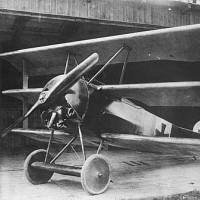
The Fokker Dr.I was a German World War I triplane fighter made famous by Manfred von Richthofen, the "Red Baron". It featured three wings for enhanced maneuverability. It entered service in 1917 and faced temporary grounding due to structural issues before being phased out in 1918.
This was the plane that the Red Baron flew!
The plane used by the infamous Red Baron of WWI.
-
Avro Vulcan
The Avro Vulcan was a British delta-wing strategic bomber operated by the Royal Air Force from 1956 to 1984. It was part of the UK's nuclear deterrent force during the Cold War. The aircraft featured a distinctive tailless design.
A beautiful soaring bird. The noise those engines make is amazing.
British nuclear bomber used as a deterrent against the USSR in the Cold War.
-
Sukhoi Su-30MKI
The Sukhoi Su-30MKI is a twin-engine, multirole air superiority fighter developed jointly by Russia's Sukhoi and India's HAL. It features thrust-vectoring control and advanced avionics. The aircraft serves as a major component of the Indian Air Force.
The Su-30MKI is the best. The flying birds have the most skilled pilots in the world, i.e., Indian pilots.
-
Curtiss P-40 Warhawk
The P-40 Warhawk was an American single-engine fighter and ground-attack aircraft. It was used during World War II, notably by the Flying Tigers in China. It was produced by Curtiss-Wright and first flew in 1938.
This warrior stood up to the Axis powers when later fighters were still on the drawing board and not in combat. The P-40 was thought to have been obsolescent from its inception. Its naval contemporary, the F4F Wildcat (which is described as being a better opponent for the Zero by World War II magazine) was based on a biplane design! Of course, few authorities mention that.
The P-36 airframe wasn't obsolete, merely proven successful. It was actually very sturdy. Newer fighters, including the P-38, P-47, and P-51, overshadowed it. Finally, its faults (and it had some - all aircraft do) were exaggerated to the point that it seemed impossible for the P-40 to succeed against any enemy aircraft.
Although it couldn't outmaneuver the Zero (the Warhawk's main foe in the Pacific Theater), neither could the Spitfire, Hurricane, Lightning, Thunderbolt, Mustang, or Wildcat. It had an excellent kill ratio. Enough said about its effectiveness.
It is a travesty of justice that it is ranked this low.
-
Boeing B-17 Flying Fortress
The B-17 Flying Fortress was a four-engine heavy bomber developed by Boeing. It was primarily used by the United States Army Air Forces during World War II. The aircraft was equipped with multiple machine guns for defensive armament.
All the people hating on this for being outdated just stop. People don't like this because of the bomb load or the speed. They like it because of the name. Its name is what makes it iconic. Have you ever heard a name like the Flying Fortress? I don't think so.
Take the Mosquito, for instance. Mosquitoes are the most irritating bugs of all time, and they named a plane after them. Flying Fortress sounds big and grand, like an indestructible (and it was rather durable) plane. That's why people like it.
The most well-built and strongest plane of all time. You can cry all you want that the Avro Lancaster is better (the bomb load was better), but the B-17 had 13 .50 BMGs all over in all directions and an undying armor. I think it should find work as a gunship even in modern days.
-
Republic P-47D Thunderbolt
The Republic P-47D Thunderbolt was a World War II American fighter-bomber. It was powered by a radial engine and featured heavy armor and eight .50 caliber machine guns. The aircraft was effective in both air combat and ground attack missions.
The Spitfire was never a plane famed for its durability. If a cooling hose was shot through, it burned. If a couple of 20mm rounds went into the wing, bye-bye wing. It was not a tough plane.
Sure, it could turn on a dime, and this made it an excellent dogfighter, possibly the best of all time. But what this other person was trying to express was that the "Jug" was a veritable flying tank compared to the Spitfire. The P-47s sometimes came back to their bases with shot-off cylinder heads and 20mm hits all over the wings and fuselage.
Not to mention that at high altitude, where most other engines were sputtering and gasping for air, the Pratt and Whitney R-2800 with the turbo was still at full power. It also had incomparable firepower in 8 .50 cals. It was also the only WWII plane that could do it all. Dogfight? Sure. Escort? Look at the range. Ground attack? How many pounds of ordnance can it carry?
As you can see, the P-47 is an excellent fighter and deserves a higher place on this list.
-
Mikoyan-Gurevich MiG-21
The MiG-21 is a supersonic jet fighter and interceptor aircraft developed by the Soviet Union. It first entered service in 1959 and became one of the most widely produced jet fighters in history. The aircraft saw service with over 60 countries.
-
McDonnell Douglas F-4 Phantom II
The F-4 Phantom is a tandem two-seat, twin-engine jet developed by McDonnell Aircraft. It served with multiple branches of the U.S. military and several allied nations. The aircraft was introduced in 1960 and had a top speed over Mach 2.
Last plane in service to score an "Ace." Brought in a new era of jet-powered fighters.
-
PAC JF-17 Thunder
The PAC JF-17 Thunder is a multirole combat aircraft developed jointly by Pakistan and China. It is designed for air-to-air and air-to-ground operations. The aircraft entered operational service with the Pakistan Air Force in 2007.
-
Junkers Ju 87 Stuka
The Junkers Ju 87 Stuka was a German dive bomber and ground-attack aircraft. It featured fixed landing gear and dive brakes, enabling precision bombing. The aircraft became notorious for its wailing siren and effectiveness in early WWII campaigns.
-
de Havilland DH.98 Mosquito
The de Havilland Mosquito was a British multi-role combat aircraft constructed primarily of wood. It was used as a fighter, bomber, and reconnaissance plane during World War II. The aircraft first flew in 1940 and was noted for its speed and versatility.
As Herman ze German said:
"In 1940 I could at least fly as far as Glasgow in most of my aircraft, but not now! It makes me furious when I see the Mosquito. I turn green and yellow with envy. The British, who can afford aluminum better than we can, knock together a beautiful wooden aircraft that every piano factory over there is building, and they give it a speed which they have now increased yet again.
What do you make of that? There is nothing the British do not have. They have the geniuses and we have the nincompoops. After the war is over, I'm going to buy a British radio set - then at least I'll own something that has always worked."
An astonishingly original and unique plane, cleverly designed to win by flying higher and faster than anything that could be flung into battle against it. And not only that: it could perform as a fighter, a bomber, in a ground attack role, and as a reconnaissance plane and pathfinder.
That it could combine this operational performance and versatility with a cunning plan to circumvent shortages of aluminum by being made in wood (!) is the finishing touch that makes this the most amazing warplane ever to take to the skies.