Top 10 Most Aggressive Animals
By aggressive, I mean animals which can be provoked easily and will attack without warning. Not necessarily toward humans. It can be any animal, including others of its own species.
-
Hippopotamus
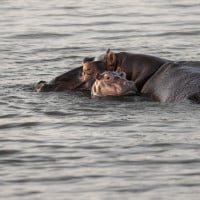
The common hippopotamus, or hippo, is a large, mostly herbivorous mammal native to sub-Saharan Africa. It is one of only two extant species in the family Hippopotamidae, the other being the pygmy hippopotamus. Hippos are known for their massive size, semi-aquatic lifestyle, and territorial behavior in... read more
People think rhinos are dangerous, but people forget how deadly hippos are. They are tougher than sharks, alligators, lions, and tigers, and their bite can literally crush a watermelon.
Hippos are extremely territorial. Don't get close, or they may charge at you and impale you on their 2-foot-long canines.
Males will often lock mouths with each other in a fight for a pod of females, and females will fight to protect their calves. Hippos kill over 500 people per year due to their short tempers.
-
Wild Boar
-
Saltwater Crocodile
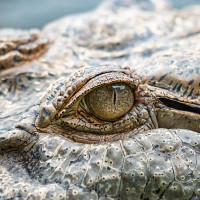
The saltwater crocodile, also known as the estuarine crocodile, Indo-Pacific crocodile, marine crocodile, sea crocodile, or informally as a saltie, is the largest living reptile. It is also one of the world's largest living predators. Adult males can exceed 20 feet in length and weigh more than 2,200... read more
Don't go near their eggs, or risk having one bite you in half.
-
Black Mamba
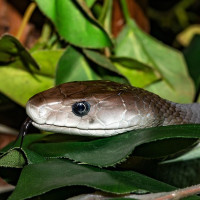
The black mamba is a species of extremely venomous snake in the family Elapidae, native to parts of sub-Saharan Africa. It is known for its speed and potent venom, which can be fatal without treatment. Despite its name, the snake's coloration is usually brown or olive, with a dark, inky mouth that gives... read more
-
Tasmanian Devil
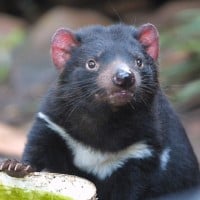
The Tasmanian devil is a carnivorous marsupial native to the Australian island of Tasmania. It has a stocky body, black fur, and powerful jaws capable of crushing bones and cartilage. Tasmanian devils are known for their aggressive feeding behavior and loud vocalizations, including screeches and growls... read more
They will fight to the death to defend their food. Unless you want a challenge, keep away.
-
Sun Bear
-
Wolverine
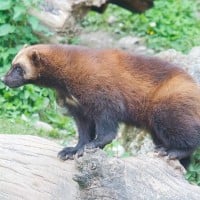
The wolverine, Gulo gulo, also referred to as the glutton, carcajou, skunk bear, or quickhatch, is the largest land-dwelling species in the family Mustelidae. It inhabits remote boreal forests and tundra across the Northern Hemisphere. Wolverines are known for their strength, endurance, and ability to... read more
This animal should be #1 on the list, easily. First off, hippopotamuses only attack if you invade their territory, most commonly water. Wolverines, on the other hand, will actively hunt for prey instead of staying in their territory waiting for something to enter, which in the hippo's case would be a crocodile, big fish, zebra, or anything else that might enter its territory in search of water, such as a bison.
A shark would only attack you if it smelled blood, you were making noise, or you attacked it - specific reasons that make it easy to avoid a shark. Also, if you weren't doing any of these things, the chance of a shark attacking you is less than the chance of being struck by lightning.
Lastly, and most specifically, a wolverine is obviously more aggressive and territorial than a grizzly. If a wolverine encountered a grizzly (a wolverine is nearly one-third the size of a grizzly), the wolverine would be the first to attack, although it probably wouldn't win.
-
Cassowary
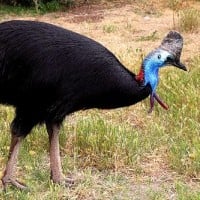
Cassowaries are ratites in the genus Casuarius and are native to the tropical forests of New Guinea, nearby islands, and northeastern Australia. They are large, flightless birds known for their striking blue and black coloring and helmet-like casques. Cassowaries can inflict serious injuries with their... read more
-
Human

Humans (Homo sapiens) are the most abundant and widespread species of primate, characterized by habitual bipedalism and comparatively large, complex brains. These traits have enabled the development of advanced tools, culture, and language. Humans are highly social and live in complex structures, ranging... read more
By far the most aggressive and deadly animal on this Earth. It is also the only animal that destroys its own habitat and is known to be very cruel towards every other living species.
We are mammals, which makes us animals. We kill and rob each other, so we are the most aggressive.
What have we done to this world?
-
Cape Buffalo
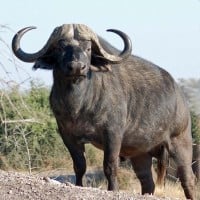
The African buffalo, or Cape buffalo, is a large African bovine. Syncerus caffer caffer, the Cape buffalo, is the largest subspecies and is found in Southern and East Africa. Cape buffaloes are known for their strength and defensive behavior, which can make them dangerous when threatened.
These animals are extremely unpredictable! Have you seen the battle from Kruger? These Buffaloes nearly killed a pride of lions. Not to mention that a baby Buffalo had around 8 lions trying to suffocate it, and it still survived. This animal needs to be at least in the top 2.
This is the animal that makes lions look like cowards. They may unexpectedly start charging at their target, horns forward, and attack. This especially happens if there are calves nearby. They can kill up to 200 people a year. They also fight for dominance in a herd.
-
?
Cat

The cat (Felis catus) is a domesticated small carnivorous mammal. It is the only domesticated species in the Felidae family and is commonly called the domestic cat to distinguish it from wild felines.
Cats can be house pets, farm cats, or feral cats. They are often valued for companionship and... read more
-
?
King Cobra
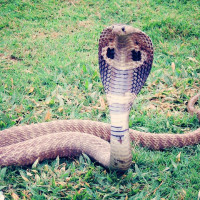
The king cobra (Ophiophagus hannah) is a large elapid snake found primarily in the forests of South and Southeast Asia. It is the longest venomous snake in the world, with adults capable of growing to around 19 feet (5.8 meters) in length. Although very long, it is relatively slender for its size, typically... read more
-
Rhinoceros
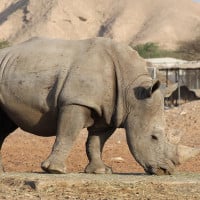
A rhinoceros, commonly abbreviated to rhino, is a member of any of the five extant species, or numerous extinct species, of odd-toed ungulates in the family Rhinocerotidae. The term can also refer to extinct species in the superfamily Rhinocerotoidea. Two of the extant species are native to Africa, while... read more
Armed with a large horn that can grow up to 5 feet long, if something gets impaled on it, it'll know about it.
-
Elephant Seal
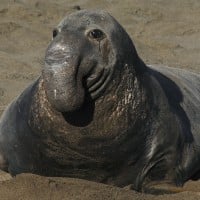
Elephant seals are large, oceangoing earless seals in the genus Mirounga. The two species, the northern elephant seal (Mirounga angustirostris) and the southern elephant seal (Mirounga leonina), are known for their size and the large, trunk-like noses of adult males. They inhabit coastal waters in the... read more
The power of lust gives these beasts the aggression that sends them absolutely insane when a rival male wanders into their territory. Armed with a 4-tonne body and sharp canines, they don't mess around. Fights between these animals are a daily occurrence during breeding season.
-
Elephant
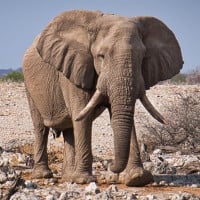
Elephants are the largest land animals alive today. There are three recognized species: the African bush elephant (Loxodonta africana), the African forest elephant (Loxodonta cyclotis), and the Asian elephant (Elephas maximus). These are the only surviving members of the family Elephantidae. Extinct... read more
Similar to the hippo, just bigger, slower, and lacking the canines, preferring tusks that can grow up to 3 meters long.
-
Honey Badger
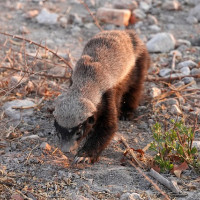
The honey badger, also known as the ratel, is a mammal native to Africa, Southwest Asia, and the Indian subcontinent. It is known for its strength, fearlessness, and ability to fend off much larger predators. Despite its small size, the honey badger has a reputation for toughness and resilience.
This reckless creature will dive into bee nests for sweet honey. Fearless by nature, the Honey Badger is not one to be messed with.
One of these can take down two lions!
-
Killer Whale
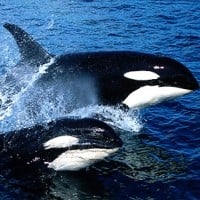
The orca, or killer whale (Orcinus orca), is a toothed whale belonging to the oceanic dolphin family and is its largest member. Recognizable by its distinctive black-and-white coloring, the orca is a cosmopolitan species found in every ocean, from polar to tropical regions.... read more
Sharks seem to fear the Killer Whale for a good reason. Killer Whales have been known to kill sharks. They will try extremely hard to catch seals, even beaching themselves (and then getting back in the water). They are very enduring, known to chase their prey for many hours in an attempt to exhaust them. Then it's time to rip them apart.
-
Golden Eagle

I don't know if they just like to scare grizzly bears "for the lulz" or what. But you know what they have done? They've attempted many challenges, including against honey badgers and grizzly bears. These birds don't seem to believe in the rule of predation. It seems they will try to kill anything.
The only case of one attacking a human was in Golden Eagle Snatches Kid.
-
Lion
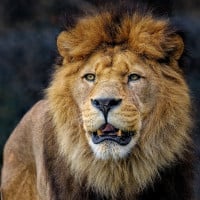
The lion (Panthera leo) is a large cat in the genus Panthera, native to sub-Saharan Africa and a single isolated population in western India. It has a muscular, broad-chested body, a short rounded head, round ears, and a hairy tuft at the end of its tail. Adult males are larger than females and have... read more
-
Chimpanzee
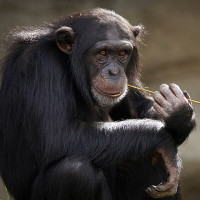
Chimpanzees and bonobos are primates of the genus Pan. They are part of the tribe Hominini, which also includes humans, and belong to the family Hominidae, which encompasses the great apes.
Like humans, chimpanzees are social and intelligent animals capable of solving problems, using tools, and... read more
Travis the Chimp can explain everything. Chimps also wage war and occasionally eat baby chimps.
-
Swan

Swans are large waterfowl belonging to the family Anatidae and the genus Cygnus. They're closely related to geese and ducks. Swans are known for their grace, strong pair bonds, and migratory behavior in many parts of the world.
-
Monkey
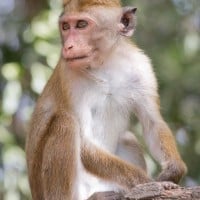
Monkeys are haplorhine primates that form a paraphyletic group. Most monkeys have tails and are distinct from apes. There are more than 260 known living species of monkeys.
They are divided into two groups: New World monkeys, or platyrrhines, found in Central and South America, and Old World monkeys... read more
How were they not added yet? Nothing against them, but they're definitely aggressive.
-
Africanized Honey Bee
-
Tiger
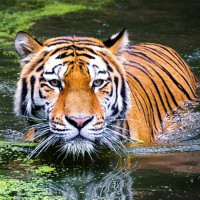
The tiger (Panthera tigris) is the largest living cat species and a member of the genus Panthera. It is immediately recognisable by its dark vertical stripes on orange fur and white underside. An apex predator, it primarily hunts ungulates such as deer and wild boar. It is generally solitary and territorial... read more
-
Dog

The dog, or domestic dog (Canis familiaris or Canis lupus familiaris), is a domesticated descendant of wolves. Dogs and modern gray wolves share a common ancestor from an ancient, now-extinct wolf population. Dogs were the first species to be domesticated by humans more than 14,000 years ago, before... read more
-
Goat
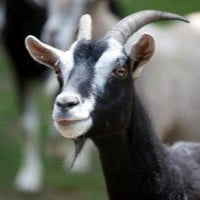
The domestic goat (Capra hircus) is a domesticated animal species that is part of the goat-antelope group. It was domesticated from the wild goat (Capra aegagrus) in Southwest Asia and parts of Eastern Europe. Goats belong to the family Bovidae and the tribe Caprini, making them close relatives of sheep.... read more
-
Polar Bear

The polar bear is a carnivorous bear whose native range lies largely within the Arctic Circle, encompassing the Arctic Ocean, its surrounding seas, and surrounding land masses. It is the largest land carnivore and is well adapted to life on sea ice. Polar bears primarily hunt seals and are classified... read more