Top 10 Characters Who Most Deserve to Be the Face of a Certain Country's Comics Scene
-
Garfield (Garfield) - United States of America
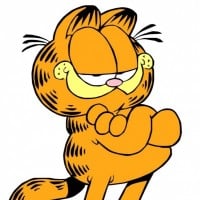
Garfield is an American comics icon because he turns ordinary dissatisfaction into a complete comic philosophy. Created by Jim Davis, he is a heavy orange tabby whose central ambitions are food, sleep, comfort, and avoiding unnecessary effort. His favorite meal is lasagna, his least favorite day is Monday, and his preferred response to obligation is usually sarcasm.
The strip’s humor depends on the contrast between Garfield’s enormous self-regard and the modest scale of his world. He is not trying to conquer a kingdom or save civilization. He is trying to obtain more food, avoid exercise, manipulate Jon Arbuckle, torment Odie, escape a diet, or find a more comfortable place to sleep. These small objectives are treated with the seriousness of epic quests, which gives the strip its distinctive comic energy.
Garfield’s personality combines laziness with intelligence. He understands the weaknesses of everyone around him and often interprets domestic life more clearly than Jon does. His thoughts, usually presented in thought bubbles rather than spoken dialogue, create a private commentary track over the household. This allows the reader to share his cynical observations while the other characters remain unaware of what he is thinking.
Jon functions as the anxious, socially awkward human center of the strip, while Odie supplies physical comedy and uncomplicated enthusiasm. Garfield’s relationship with both characters is antagonistic but strangely affectionate. He may ridicule or inconvenience them, but the domestic trio works because their conflicts occur within a stable, familiar environment.
Garfield is also a particularly effective representative of the American newspaper comic tradition. The strip favors clear designs, recurring situations, accessible humor, and jokes that can be understood quickly while still rewarding familiarity with the characters. Its popularity comes from the way Garfield gives exaggerated form to universal feelings: wanting to stay in bed, resenting routines, overvaluing comfort, and finding humor in the petty frustrations of daily life. Garfield became one of the most widely syndicated comic strips of its era, while Garfield and Friends expanded the character’s reach through television.
-
Doraemon (Doraemon) - Japan
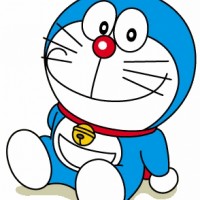
Doraemon is one of the clearest symbols of Japanese manga’s ability to combine imaginative science fiction with intimate, everyday comedy. He is a robotic cat sent from the future to help Nobita Nobi, a kind-hearted but accident-prone boy whose school troubles, family life, friendships, and insecurities form the emotional center of the series.
His most recognizable feature is his four-dimensional pocket, from which he produces futuristic devices that can solve—or seemingly solve—almost any problem. These inventions give the stories an extraordinary visual and conceptual range. A single episode may involve teleportation, time travel, miniature worlds, memory alteration, language barriers, or devices that transform ordinary household situations into fantastic adventures. Yet the stories usually remain grounded in familiar childhood experiences: jealousy, embarrassment, laziness, curiosity, rivalry, fear of failure, and the desire to impress others.
Doraemon himself is not a flawless technological savior. He can be impatient, gluttonous, fearful, vain, and easily frustrated. His relationship with Nobita therefore feels less like that of a perfect guardian and more like a bickering friendship gradually shaped by affection and responsibility. Doraemon often provides the tool, but Nobita’s choices determine whether the situation improves or becomes more complicated.
That structure reflects one of the series’ defining ideas: technology can expand human possibilities, but it cannot replace judgment, maturity, or empathy. The futuristic gadgets are exciting, but the emotional lessons usually come from learning how people treat one another.
Visually, Doraemon is exceptionally direct: a round blue body, white face, red nose, expressive eyes, bell, and pocket. His simple silhouette is immediately recognizable across languages and generations. He represents Japan not only through manga’s inventive visual storytelling, but also through the country’s enduring fascination with technology, childhood imagination, social harmony, and the tension between modern convenience and personal responsibility.
-
Asterix (Asterix) - France
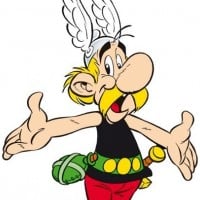
Asterix is an ideal face for French comics because his adventures combine historical fantasy, verbal wit, national self-awareness, political parody, travel comedy, and a highly distinctive visual style. Created by writer René Goscinny and artist Albert Uderzo, he debuted in 1959 and became one of the most important characters in French popular culture.
Asterix is a small Gaulish warrior living in a village that has resisted Roman occupation. His size is central to his characterization: he is not physically imposing, but he is exceptionally clever, observant, resourceful, and quick to exploit the weaknesses of larger opponents. His courage is rarely presented as solemn heroism. Instead, it is woven into the series’ cheerful, mischievous, and often absurd approach to conflict.
His closest companion, Obelix, creates a perfectly balanced comic partnership. Where Asterix is strategic and tactically minded, Obelix is immense, impulsive, literal-minded, and physically overwhelming. Their differences generate much of the series’ comedy, but their friendship also gives the stories warmth. The wider village community provides a complete comic society, populated by strong personalities whose rivalries, habits, romances, professions, and arguments are as important as the external adventures.
The series’ humor operates on several levels. Younger readers can enjoy the action, exaggerated characters, visual gags, and battles with Roman soldiers. Older readers can appreciate puns, historical references, caricatures of national stereotypes, satire of bureaucracy, and jokes about French social behavior. Asterix’s journeys allow the creators to play humorously with different cultures while also making the Gauls themselves objects of satire.
The artwork gives the series an unusually expressive visual language. Uderzo’s characters are instantly identifiable, and the crowded village scenes feel both chaotic and carefully choreographed. Every figure has a recognizable silhouette, gesture, and comic rhythm.
Asterix represents French comics through the balance of intelligence and accessibility in his storytelling. He is proudly local but internationally readable, historically inspired but not bound by historical realism, and politically observant without becoming a political tract. His world celebrates resistance, friendship, food, argument, independence, and the pleasure of laughing at one’s own culture.
-
Goku (Dragon Ball) - Japan
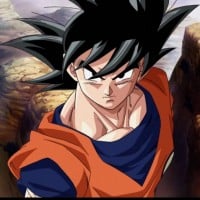
Son Goku, whose Saiyan name is Kakarot, is the main protagonist of the Dragon Ball franchise created by Akira Toriyama in 1984. He possesses many powerful abilities, including super strength, ki control, flight, teleportation, super speed, enhanced reflexes, and Super Saiyan transformations that increase... read more
-
Batman (DC Comics) - United States of America
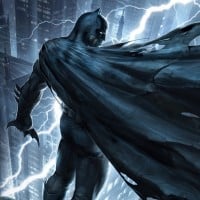
Batman, also known as Bruce Wayne, is a fictional superhero who appears in American comic books published by DC Comics. The character was created by artist Bob Kane and writer Bill Finger and first appeared in Detective Comics #27 in 1939. Unlike many superheroes, Batman traditionally fights crime without... read more
-
Lucky Luke (Lucky Luke) - Belgium
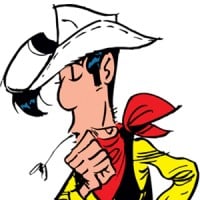
Lucky Luke is Belgium’s great contribution to the mythology of the American West. Created by Belgian cartoonist Morris, he is a wandering cowboy whose defining claim is that he can shoot faster than his own shadow. That impossible skill immediately establishes the series’ tone: this is not a realistic Western, but a playful, highly stylized comedy built from Western conventions.
Lucky Luke is calm, capable, and morally dependable, but he is not presented as an emotionally tortured gunslinger. He is a professional problem-solver who moves through a world of train robberies, jailbreaks, frontier towns, crooked schemes, military misunderstandings, and eccentric outlaws. His competence provides the stable center around which chaos develops.
The series’ famous antagonists, particularly the Dalton brothers, are less frightening villains than engines of repetition and comic failure. Their schemes are ambitious, their tempers are explosive, and their internal rivalries often undermine them before Lucky Luke needs to do much at all. Other recurring figures contribute different types of humor: the dim-witted dog Rantanplan, the extraordinarily capable horse Jolly Jumper, and a rotating cast of historical or fictionalized Western personalities.
One of Lucky Luke’s great strengths is his use of historical material as comic architecture. Real events, frontier legends, famous outlaws, migration stories, and Western clichés are transformed into exaggerated adventures. Readers may recognize the broad outline of a familiar Western story, but the series reshapes it through visual timing, wordplay, caricature, and reversal.
Morris’s art gives the character a clean, energetic appearance. Lucky Luke’s narrow figure, hat, red scarf, horse, and relaxed posture make him identifiable even in silhouette. The panels are designed for clarity and movement, allowing action sequences to remain readable while leaving room for subtle background jokes.
Lucky Luke deserves to represent Belgium because he demonstrates the country’s immense influence on European comics: polished linework, strong character design, album-based storytelling, sophisticated humor, and a willingness to blend literary, historical, and popular influences. Though his setting is American, his comic identity is unmistakably European—and specifically rooted in the Belgian tradition.
-
Monica (Monica and Friends) - Brazil
Monica is the central figure of Monica and Friends, the hugely influential Brazilian comics universe created by Mauricio de Sousa. She is energetic, assertive, emotionally intense, and often treated by the other children as the unofficial leader of the neighborhood. Her personality combines determination with vulnerability, making her more than a simple “bossy child” archetype.
At the heart of Monica’s characterization is her refusal to be diminished. She is frequently teased about her appearance, temper, authority, or treasured stuffed rabbit, but she does not quietly accept insults. Her famous physical strength and readiness to retaliate turn her into a comic embodiment of resilience. At the same time, the stories often show that her anger is connected to hurt feelings, insecurity, loyalty, or a desire to be respected.
Her group of friends forms a miniature social world. Cebolinha is endlessly inventive in his attempts to take control of the neighborhood, but his speech difficulties and elaborate plans often cause them to collapse. Cascão is defined by his comical aversion to bathing, while Magali is warm, friendly, and seemingly capable of consuming enormous quantities of food. Their conflicts are usually small-scale—arguments over toys, games, leadership, teasing, or possessions—but they express recognizable childhood negotiations about friendship and status.
Monica’s stuffed rabbit, Sansão, is especially important as a visual and emotional symbol. It is both a beloved toy and an object repeatedly used in the series’ physical comedy. Her relationship with it helps soften her tougher image, revealing a child who is capable of enormous affection even when she is also quick to become furious.
The series’ Brazilian identity comes from its lively neighborhood setting, playful dialogue, accessible humor, and broad representation of childhood experiences. It does not require fantasy worlds or superheroes to create adventure. A sidewalk, school, home, or playground can become the stage for rivalry, imagination, embarrassment, and reconciliation.
Monica is a powerful representative of Brazil because she is recognizable as both a universal child and a specifically Brazilian cultural figure. She is funny, combative, affectionate, imperfect, and impossible to overlook. Her greatest strength is not that she always wins, but that she remains vividly herself.
-
Dennis the Menace (Dennis the Menace and Gnasher) - Scotland
Dennis the Menace is the defining troublemaker of The Beano and one of the most enduring figures in British children’s comics. Created for the Dundee-based publishing tradition associated with DC Thomson, he first appeared in 1951 and became one of The Beano’s most recognizable characters.
Dennis is not a misunderstood child who gradually becomes well behaved. His defining feature is that he remains committed to mischief. His schemes may involve pranks, confrontations, competitions, rule-breaking, neighborhood chaos, or attempts to outwit adults and “softies.” The comic does not treat his rebelliousness as a temporary moral error. It treats it as an inexhaustible source of energy.
His appearance is as important as his personality: spiky hair, a red-and-black striped jumper, a mischievous expression, and an attitude that seems permanently prepared for trouble. The design communicates his character before he speaks. He looks like someone who has just had an idea—and that idea is unlikely to improve the situation.
Gnasher, his loyal and equally chaotic dog, completes the partnership. The two operate as a comic unit, with Dennis providing plans and Gnasher providing teeth, speed, noise, and unpredictable physical comedy. Their bond gives Dennis’s rebelliousness a sense of loyalty and companionship rather than simple selfishness.
Walter the Softy serves as Dennis’s principal opposite. Walter is orderly, polite, tidy, and well behaved—the exact kind of child Dennis finds intolerable. Their rivalry turns social differences into slapstick. Dennis represents noise, dirt, spontaneity, and rule-breaking; Walter represents neatness, propriety, and conventional respectability.
The strip’s humor is rooted in British working-class comic traditions, exaggerated facial expressions, absurd punishment, visual destruction, and an affectionate suspicion of authority. Adults, teachers, neighbors, and other children are rarely all-powerful. Dennis may not always succeed, but he ensures that the people around him cannot remain comfortable for long.
He deserves to represent Scotland and the wider British comics tradition because he embodies the unruly, anti-authoritarian spirit of The Beano. Dennis is not polished, sophisticated, or heroic in the conventional sense. He is loud, vivid, persistent, and gloriously inconvenient—the perfect mascot for comics built around the belief that childhood should contain a little rebellion.
-
Spider-Man (Marvel Comics) - United States of America
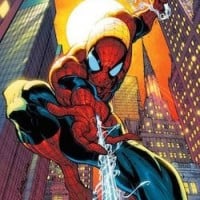
Spider-Man is a fictional superhero appearing in American comic books published by Marvel Comics, set within its shared universe. The character was created by writer-editor Stan Lee and writer-artist Steve Ditko and first appeared in the anthology comic book Amazing Fantasy #15 (August 1962) during the... read more
-
Superman (Action Comics) - United States of America
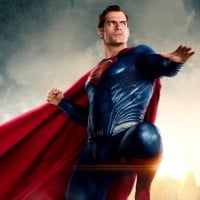
Superman is arguably the most influential character in American comics history and the clearest representative of the country’s superhero tradition. Debuting in Action Comics in 1938, he helped establish the modern model of the costumed superhero: a visually striking figure with extraordinary abilities, a strong moral code, a secret civilian identity, and a commitment to protecting ordinary people.
His appeal lies in the contrast between his two identities. As Superman, he is powerful enough to reshape the balance between humanity and danger. As Clark Kent, he is associated with modesty, observation, journalism, awkwardness, and everyday social life. The dual identity allows the character to explore both fantasy and responsibility: the wish to possess limitless ability, and the need to use that ability carefully.
Superman’s powers—flight, immense strength, speed, endurance, heightened senses, and resistance to injury—make him visually spectacular, but his morality is more important than his abilities. He is generally defined by restraint. The central question is not whether he can defeat a threat, but how he can act without becoming a tyrant, how he can respect human freedom, and how he can remain compassionate while confronting overwhelming danger.
His costume is one of the most recognizable designs in popular culture: a bold primary-color palette, cape, emblem, and athletic silhouette. The design is simple enough to be understood instantly and iconic enough to function as a symbol even when the character himself is absent.
Superman also embodies several American cultural ideals at once: optimism, reinvention, immigrant identity, civic responsibility, technological modernity, and belief in the possibility of moral progress. His alien origin gives him an outsider’s perspective, while his adoption of human values allows him to become a protector of the society that receives him.
As the face of the United States’ comics scene, Superman represents the medium’s capacity for mythmaking. He transformed the superhero from a novelty into a dominant comics genre, influenced generations of creators, and established a visual vocabulary that continues to shape comics, film, television, animation, and popular culture.
-
?
Old Master Q (Old Master Q) - China
Old Master Q, or Lao Fu Zi, is one of the defining figures of Hong Kong manhua. Created by Alfonso Wong, the character first appeared in the early 1960s and became closely associated with the changing social world of Hong Kong. The series follows Old Master Q and his friends as they navigate daily life, modernity, social ambition, cultural change, and the absurdity of ordinary behavior.
Old Master Q is a deliberately imperfect central figure. He can be vain, gullible, stubborn, opportunistic, lazy, and petty. Yet he is not simply cruel or foolish. His flaws are balanced by a degree of warmth and humanity, which makes him recognizable as an ordinary person trying to survive in a rapidly changing society.
His appearance is instantly distinctive: a thin, elderly man dressed in an old-fashioned Qing-era outfit. That costume creates a visual tension between tradition and modern urban life. He looks as though he belongs to an earlier social order, yet he is constantly forced to confront new fashions, technologies, commercial pressures, social expectations, and changing ideas of respectability.
His close companions, Big Potato and Mr. Chin, provide contrasting personalities and help turn the series into a social comedy rather than a one-character gag strip. The group’s interactions allow the comic to explore friendship, rivalry, romance, work, class, consumerism, and generational differences.
The humor of Old Master Q often depends on visual timing and social observation. Many strips can communicate their joke with minimal dialogue, making the series accessible across language barriers. Its scenarios may be realistic, surreal, satirical, or unexpectedly fantastical, but they are usually anchored in recognizable human behavior: trying to impress others, avoiding responsibility, chasing money, misunderstanding social rules, or attempting to appear more sophisticated than one really is.
Old Master Q is particularly suited to represent Hong Kong because the character’s world reflects the city’s experience of rapid modernization and cultural transition. He is caught between inherited traditions and a fast-moving urban environment. His failures and compromises become a comic record of everyday life.
He is also a powerful symbol of Hong Kong’s ability to produce comics that are locally rooted yet broadly relatable. Through satire, body language, visual economy, and social humor, Old Master Q turns the ordinary frustrations of city life into an enduring portrait of Hong Kong popular culture.
-
?
Cerebus the Aardvark (Cerebus) - Canada
Cerebus is one of the most ambitious and unconventional characters in Canadian comics. Created by Dave Sim, he began as a short, sharp parody of sword-and-sorcery heroes but developed into the central figure of an expansive, formally experimental, politically charged, and often philosophically challenging comic-book saga.
At first glance, Cerebus appears to be a comic contradiction: an aardvark standing upright, wearing armor, carrying weapons, drinking heavily, and moving through a world populated by humans and other anthropomorphic figures. His appearance creates immediate absurdity, but the character is not merely a joke. He possesses ambition, intelligence, resentment, self-awareness, and a constant desire to control the circumstances around him.
Cerebus is frequently driven by political calculation. He wants status, influence, money, recognition, and security, but his attempts to obtain them reveal how unstable power can be. He is clever enough to manipulate others yet impulsive enough to undermine himself. He can be perceptive about institutions and human weakness while remaining spectacularly blind to his own flaws.
The comic’s importance extends beyond its protagonist. Cerebus the Aardvark became known for its evolving visual style, dense dialogue, literary references, parody of fantasy and superhero conventions, shifting narrative structures, and willingness to treat comics as a medium for sustained formal experimentation. It helped demonstrate that an independently produced comic could develop an unusually long-term artistic identity outside the mainstream publishing system.
Cerebus is also a difficult character. He is not designed to be universally admirable or emotionally comfortable. His ambition, vanity, anger, and ideological conflicts are part of what makes him significant. The series uses him to examine power, authorship, masculinity, religion, politics, storytelling, and the consequences of treating other people as instruments.
As a representative of Canada, Cerebus highlights a different aspect of the country’s comics culture: independent creation, artistic risk, self-publishing, long-form experimentation, and the ability to move between satire and serious literary ambition. He is not a simple national mascot. He is an unruly, intellectually demanding figure whose very difficulty helped expand the perceived possibilities of Canadian comics.
-
Diabolik (Diabolik) - Italy
Diabolik represents the darker, more stylish, and more psychologically sophisticated side of Italian comics. Created in 1962 by sisters Angela and Luciana Giussani, he is a master thief, strategist, impersonator, and escape artist whose adventures occupy the space between crime fiction, thriller, mystery, and pulp fantasy.
Unlike a conventional hero, Diabolik operates outside the law. He is motivated by intelligence, control, personal codes, and an intense commitment to his own freedom. His criminal activities are not presented merely as random acts of greed. They are carefully planned operations involving disguises, false identities, ingenious mechanisms, surveillance, deception, and elaborate psychological manipulation.
His iconic black costume and featureless mask give him an immediately recognizable visual identity. The mask is more than a disguise: it transforms Diabolik into an almost abstract symbol of secrecy and fear. His face becomes a blank surface onto which other characters project uncertainty, suspicion, or terror.
Eva Kant is essential to Diabolik’s identity. She is not simply a romantic companion or passive assistant. She is an intelligent, capable partner who contributes to the planning and execution of their schemes. Their relationship is based on loyalty, mutual competence, and shared danger. Together, they form a partnership unlike the ordinary hero-and-sidekick structure.
The world of Diabolik is elegant but threatening. Wealthy interiors, expensive objects, night-time streets, hidden compartments, laboratories, cars, jewelry, and sophisticated criminal devices create an atmosphere of glamour under pressure. The stories often derive suspense from the gap between Diabolik’s preparation and the risks he cannot fully control.
Diabolik is an ideal representative of Italy because the series has a distinctive visual and editorial identity that differs from both American superheroes and traditional European adventure comics. Its compact format, dramatic pacing, severe artwork, morally ambiguous protagonist, and fascination with fashion and design helped establish a uniquely Italian form of crime comics.
He is not a symbol of conventional virtue. He represents style, ingenuity, independence, and the seductive power of the outlaw—a darker but highly influential aspect of Italian comics culture.