Top 10 People Who Unsuccessfully Ran for United States President
Ever wonder what would've happened if Goldwater had beaten Johnson in 1964? Ever wonder what would've happened if Gore had beaten Bush in 2001?
Well, here's the ten best people who unsuccessfully ran for president.
-
Bernie Sanders (D)
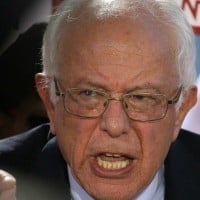
Bernie Sanders, a U.S. Senator from Vermont and a member of the Democratic Party, ran for president in 2016 and 2020 but did not secure the nomination. He is well known for his progressive policies, including advocating for universal healthcare and free college tuition.
Sanders, who labeled himself a Democratic Socialist, was really more like a Social Democrat. He supported positions that many Nordic countries have successfully taken, such as implementing universal healthcare, making public college free, and implementing some sort of basic income. He lost the Democratic nomination to Hillary Clinton.
He is doing better in the 2020 primary. I don't think he should have lost the 2016 primary. Hillary was an awful neoliberal candidate that cost the Democrats an election for 4 years.
-
Robert Kennedy (D)
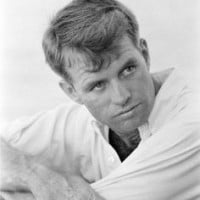
Robert Kennedy, a Democratic senator from New York and former Attorney General, ran for the presidency in 1968 but was assassinated during the primary campaign. He was a vocal advocate for civil rights and social justice. Kennedy's legacy remains influential in American political history.
Bobby Kennedy ran for president with a platform similar to his brother's. He wished to extend civil rights, win the war in Vietnam, and oppose the spread of communism, among other things. He was probably the most popular candidate at the time and had the highest chance of victory. Unfortunately, he was assassinated before the race was over. Nixon ended up being the next president.
It's a shame. I say he was as good as JFK when it came to being a good person. He would've been great.
This was really unfortunate. He met the same fate as his brother before he could even win.
-
Mitt Romney (R)
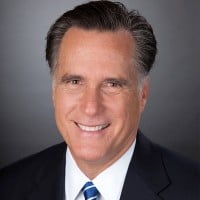
Mitt Romney, a Republican and former Governor of Massachusetts, ran for president in 2008 and was the party's nominee in 2012, but he lost to incumbent President Barack Obama. Romney served as a U.S. Senator from Utah until January 2025. He remains known for his long career in public service.
He would have been much better than Obama on every level. Ironically, his winning would probably have meant Hillary Clinton would be in the White House now, since there would not have been such a pushback against Democrats and liberals in particular.
-
Al Gore (D)
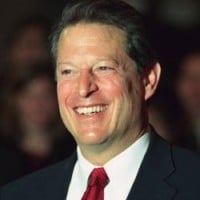
Al Gore, the Democratic nominee and former Vice President under Bill Clinton, narrowly lost the presidential election in 2000 to George W. Bush in a contested result decided by the Supreme Court. He is also known for his environmental activism and won the Nobel Peace Prize in 2007 for his work on climate change. Gore has continued to advocate for climate policy through international initiatives and public outreach.
Gore ran against Bush in 2000 and actually won the popular vote but still lost the election. Do I have to even mention his platform? I mean, the guy ran against Bush. He can't be that bad. Anyways, he supported tax relief, paying off the national debt, and environmentalism. Pretty much the polar opposite of his opponent.
If he had won, we could've avoided the Iraq War.
-
Barry Goldwater (R)
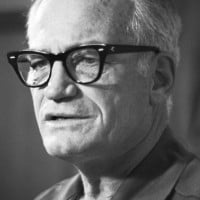
Barry Goldwater, a Republican Senator from Arizona, lost the presidential election to Lyndon B. Johnson in 1964. He is considered a pivotal figure in the conservative movement and is known for his staunch libertarian views. Goldwater's 1964 campaign reshaped the future direction of American conservatism.
Goldwater unsuccessfully ran against LBJ in 1964. His platform included cutting taxes and federal spending, leaving more power to the states, and restricting government power, among other things. Unfortunately, the Johnson administration ran a pretty dirty campaign against Goldwater.
Goldwater claimed that he was open to using nuclear weapons to help end the Vietnam War. Johnson ran commercials showing nuclear warfare and altered Goldwater's slogan "In your heart, you know he's right" to "In your gut, you know he's nuts." To be completely fair, Johnson greatly expanded the war and used chemical warfare, so he was a bit hypocritical.
Arguably, by using nuclear weapons and ending the war quickly, more lives could have been saved under Goldwater than under Johnson. Also, Goldwater opposed the Civil Rights Act of 1964, so Johnson labeled him as a racist. Goldwater voted against the bill not because he was racist, but because he believed that the federal government did not have the right to regulate and control private businesses. He actually supported voting rights for blacks and desegregation.
While it's not set in stone that Goldwater would have made a better president than Johnson, at least he was honest.
-
Ron Paul (L)
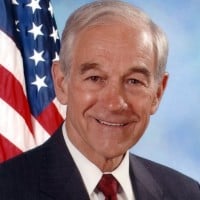
Ron Paul, a former Republican Congressman from Texas, ran for president three times, once as the Libertarian nominee in 1988 and as a Republican in 2008 and 2012. He is known for his libertarian views and his advocacy for a smaller federal government. Paul has continued to promote limited government through writing and public speaking.
Ron Paul ran for president many times, sometimes for the Republican nomination and sometimes for the Libertarian nomination. He constantly ran on a platform that included conservative positions of cutting taxes, deregulating private business, and states' rights, while also holding liberal positions such as decriminalizing drug usage, cutting the military budget, leaving the Middle East, and legalizing gay marriage.
-
Nelson Rockefeller (R)
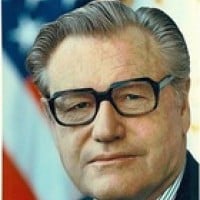
Nelson Rockefeller, a Republican and four-term Governor of New York, sought the presidential nomination several times but never secured it. He later became Vice President under Gerald Ford from 1974 to 1977. Rockefeller was known for his centrist and pragmatic approach to governance.
Rockefeller ran as a Republican but held some pretty liberal views for the time. This led to the term "Rockefeller Republican," which is another name for a moderate or liberal Republican. Rockefeller, along with Goldwater, constantly called out the religious extremists of the Republican party and feared that the party was moving too far to the right. He lost the Republican primary to Goldwater in 1964, so history never got to witness a Rockefeller presidency.
-
John McCain (R)
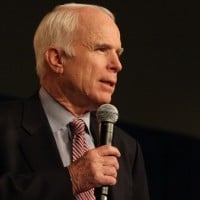
John McCain, a Republican Senator from Arizona and a war hero, was the party's nominee in 2008 but lost to Barack Obama. McCain was respected for his willingness to reach across the aisle and his dedication to public service. His long Senate career left a lasting influence on American politics.
-
Rand Paul (R)
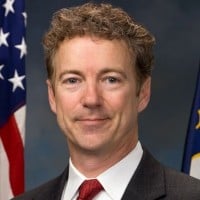
Rand Paul, a Republican Senator from Kentucky, ran for the Republican nomination in 2016 but did not secure it. He is recognized for his libertarian-leaning views and his emphasis on individual liberty and limited government. Paul continues to serve in the Senate and advocate for these positions.
Like his father, he supports many libertarian positions but distinguishes himself by supporting U.S. intervention in the Middle East and supporting economic sanctions on Iran.
-
Eugene Debs (S)
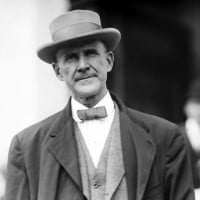
Eugene V. Debs, a five-time presidential candidate for the Socialist Party of America, never won but was a leading figure in the American socialist movement. He was notable for his advocacy for workers' rights and was imprisoned for his opposition to World War I. Debs' campaigns helped shape the early twentieth century labor movement.
Eugene Debs ran as a Socialist, which stirred lots of controversy. To be fair, during the time he was running, workers would work 12 hours a day, have poor working conditions, and be paid little. He ran on a platform of socialism, but also supported civil rights legislation, equal pay, and unemployment benefits.
-
?
Nikki Haley (R)
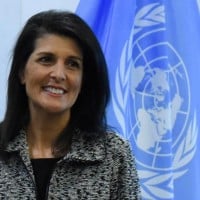
Nimarata Nikki Randhawa Haley (born January 20, 1972) is an American politician and diplomat who served as the 116th governor of South Carolina from 2011 to 2017 and as the 29th U.S. ambassador to the United Nations from January 2017 to December 2018.... read more
-
?
Mike Gravel (D)
Mike Gravel, a Democrat and former Senator from Alaska, sought the Democratic nomination for president in 2008 and 2020 but was unsuccessful both times. Gravel was known for his anti-war stance, including his efforts to end the draft during the Vietnam War, and his advocacy for direct democracy measures.
-
Bob Dole (R)
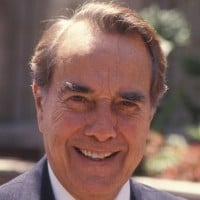
Bob Dole, a Republican and former Senator from Kansas, was the party's nominee in 1996 but lost to incumbent President Bill Clinton. He was respected for his lengthy public service career and his work on behalf of veterans. Dole remained a prominent figure in public life for many years.
-
Walter Mondale (D)
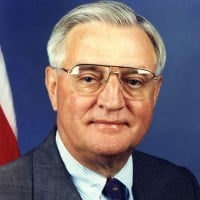
Walter Mondale, a Democrat and former Vice President under Jimmy Carter, was the party's nominee in 1984 but suffered a landslide defeat to incumbent Ronald Reagan. He is recognized for his work on civil rights and environmental issues. Mondale continued to serve as a diplomat and public policy figure later in his career.
-
Hillary Clinton (D)
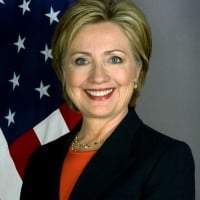
Hillary Clinton, former Secretary of State and First Lady, was the Democratic nominee for president in 2016 but lost to Donald Trump. She has been recognized for her work on women's rights and healthcare reform.
Brilliant, compassionate, beyond competent. She would have been amazing!
The best president we ever could have had! So brilliant and experienced.
-
Ross Perot (Independent)
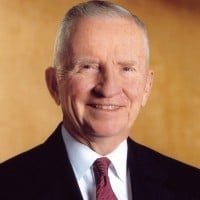
Ross Perot, an independent candidate, ran for president in 1992 and 1996, achieving significant support but ultimately not winning. He was known for his focus on fiscal responsibility and his opposition to the North American Free Trade Agreement. Perot's campaigns influenced later discussions on government spending.
-
William Jennings Bryan (D)

William Jennings Bryan, a three-time presidential candidate, ran as a Democrat and later as a Populist but never won the presidency. He is best known for his eloquent oratory, his advocacy for the silver standard, and his role in the Scopes Trial. Bryan remained an influential voice in early twentieth century American politics.
He ran on the populist ticket of bimetallism and more support for poor farmers. While economists debate whether he was right in supporting bimetallism, many poor farmers of the time worshipped him, similar to the way that FDR was worshipped during the Great Depression.
-
Thomas Dewey (R)
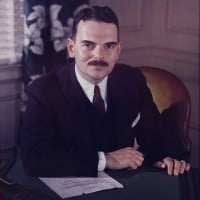
Thomas E. Dewey, a Republican and former Governor of New York, ran for president in 1944 and 1948, losing to Franklin D. Roosevelt and Harry S. Truman respectively. He is known for the erroneous "Dewey Defeats Truman" headline in 1948. Dewey influenced the moderate wing of the Republican Party during his career.
Dewey, like Rockefeller, helped lead a coalition of moderate Republicans. He supported capitalism and small government but separated himself from the conservative coalition of Republicans by supporting parts of the New Deal, Social Security, and unemployment insurance. He ran for president twice but lost both times to FDR and Truman. His upset loss to Truman is seen in the famous photo of Truman, grinning triumphantly, holding up a newspaper with the caption that Dewey won.
-
Marco Rubio (R)
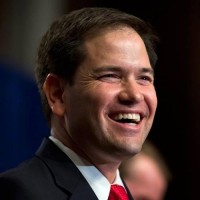
Marco Rubio, a Republican Senator from Florida, sought the Republican nomination for president in 2016 but was unsuccessful. He is known for his focus on immigration reform and foreign policy issues. Rubio continues to serve in the Senate.
-
John Kerry (D)
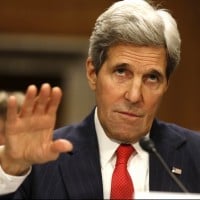
John Kerry, a Democrat and former Senator from Massachusetts, was the party's nominee in 2004 but lost to incumbent George W. Bush. He later served as Secretary of State under Barack Obama and worked on international climate agreements. Kerry has remained active in global climate diplomacy.
-
John Kasich (R)
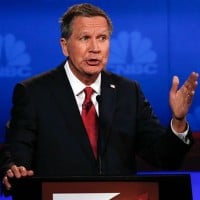
John Kasich, a Republican and former Governor of Ohio, ran for the Republican nomination for president in 2016 but did not secure it. He is recognized for his bipartisan approach and focus on balanced budgets. Kasich remained active in national political commentary after his campaign.
-
Gary Johnson (L)

Gary Johnson, a Libertarian and former Republican Governor of New Mexico, ran for president as the Libertarian nominee in 2012 and 2016 but was not successful. He is known for his advocacy for limited government and fiscal conservatism. Johnson also promoted socially liberal positions within the Libertarian platform.
-
Kamala Harris (D)
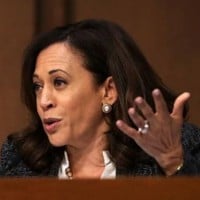
Kamala Harris, a Democrat and former Senator from California, sought the Democratic nomination for president in 2020 but withdrew before the primaries. She later became the Vice President of the United States under Joe Biden. Harris has worked on issues including voting rights and immigration policy.
-
Vermin Supreme (L)
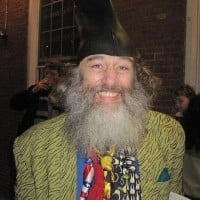
Vermin Supreme, a perennial candidate often associated with the Libertarian Party, is known for his satirical presidential campaigns, which include proposals such as offering free ponies to all Americans. Despite his humorous approach, he uses his campaigns to highlight issues related to civil liberties and governmental overreach.
The boot on his head says it all.
-
Jeb Bush (R)
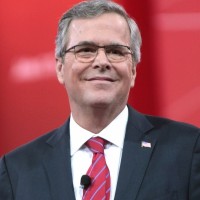
Jeb Bush, a Republican and former Governor of Florida, sought the Republican nomination for president in 2016 but did not secure it. He is known for his focus on education reform and is a member of the Bush political family. Bush remained involved in public policy work after his campaign.
-
Elizabeth Warren (D)
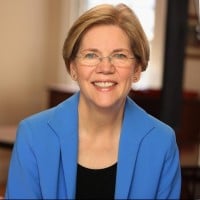
Elizabeth Warren, a Democrat and Senator from Massachusetts, sought the Democratic nomination for president in 2020 but did not secure it. She is known for her focus on economic inequality and financial regulation. In the Senate, she continues to advocate for consumer protection and structural reforms in financial and corporate governance.
-
Joseph Smith (Independent)
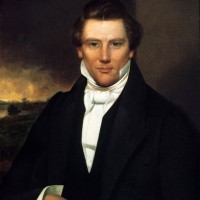
Joseph Smith, the founder of the Latter Day Saint movement, ran for president in 1844 as an independent candidate and was assassinated during his campaign. He promoted the concept of a "theodemocracy", which described a system intended to blend democratic participation with divinely guided governance. Smith's political platform included positions on issues such as abolition, economic reform, and national expansion.