Top 10 Albums by Artists from England
-
Paranoid - Black Sabbath
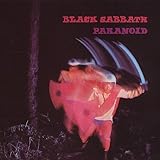
Paranoid is a foundational heavy-metal album built from weight, repetition, distortion, and unease. Its riffs are simple in structure but enormous in impact. Black Sabbath create heaviness not only through volume, but through the physical sensation of slow-moving guitar figures, thick bass, forceful drums, and Tony Iommi’s distinctive use of dark intervals.
The album’s emotional world is tense and distrustful. Its lyrics address war, mental distress, addiction, social instability, death, and the destructive consequences of human behavior. Even when the songs move quickly, there is often a grim quality beneath the momentum.
Ozzy Osbourne’s voice is central to the record’s identity. His delivery is less polished than that of many later metal singers, but that roughness makes the performances feel vulnerable and immediate. He often sounds like a witness trapped inside the situations the songs describe.
Tony Iommi’s guitar work gives the album its architecture. His riffs are memorable enough to function almost like hooks, but they also create oppressive atmospheres. The guitar tone is thick and abrasive without losing clarity, allowing each central figure to remain immediately recognizable.
Geezer Butler’s bass and lyrics deepen the album’s darkness. The bass often reinforces the guitar while adding weight to the low end, and the lyrics give the music a sense of social and psychological urgency. Bill Ward’s drumming brings energy and swing, preventing the album from becoming rigid or monotonous.
Despite its ominous reputation, Paranoid is not uniformly slow. It includes fast, aggressive material alongside heavier, more spacious passages. That variation makes the album feel dynamic and helps emphasize the contrast between panic, anger, reflection, and resignation.
The record’s influence is difficult to overstate. Its combination of dark riffing, distorted tone, direct songwriting, and bleak subject matter helped define the basic language of heavy metal. Later genres such as doom metal, stoner metal, sludge, and extreme metal would all draw from elements already present here.
-
The Dark Side of the Moon - Pink Floyd
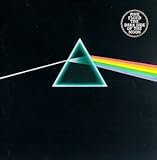
The Dark Side of the Moon is an immersive examination of the pressures that shape modern human life. It explores time, money, work, conflict, mortality, mental strain, ambition, and the difficulty of finding emotional balance in a demanding world. Rather than behaving like a collection of unrelated songs, the album is designed as one continuous experience, with transitions and recurring sounds linking its ideas together.
Its atmosphere is both cosmic and intensely personal. The music may suggest vast outer space, but the subject matter is largely inward: anxiety, exhaustion, memory, greed, fear, and the passing of time. Everyday sounds such as clocks, cash registers, heartbeats, and voices become part of the album’s musical architecture, transforming familiar experiences into something unsettling and psychologically vivid.
The record’s greatest strength is its balance between accessibility and experimentation. Its melodies are memorable, but the arrangements are unusually sophisticated. Keyboards, synthesizers, tape loops, saxophone, layered vocals, sound effects, and carefully edited transitions all contribute to a seamless sonic environment.
David Gilmour’s guitar playing is expressive rather than excessive. His solos often function as emotional release, appearing after sections filled with tension or philosophical reflection. Richard Wright’s keyboards add spaciousness and dreamlike color, while Roger Waters’ bass and lyrics provide the album’s conceptual foundation. Nick Mason’s percussion is frequently integrated into the atmosphere rather than simply used to maintain a conventional rock beat.
The album’s emotional journey alternates between calm and anxiety. Gentle passages can suddenly become tense, while dramatic sections eventually dissolve into quiet reflection. That contrast reflects the instability of everyday life: moments of peace can be interrupted by pressure, and moments of fear can give way to clarity.
The Dark Side of the Moon remains one of the clearest examples of the studio being used as a creative instrument. Every transition, echo, vocal layer, and sound effect contributes to the album’s unified identity.
-
Revolver - The Beatles
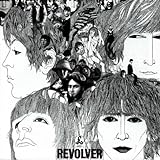
Revolver captures The Beatles at a point where their songwriting, studio experimentation, and willingness to abandon familiar formulas were developing rapidly. It is an album of constant contrast: bright and playful in one moment, introspective or surreal in the next. Its compact running time contains an unusually broad range of musical ideas.
The album moves comfortably between energetic rock, baroque pop, psychedelic experimentation, folk-influenced writing, soul, chamber music, and Indian-inspired textures. This variety does not make the record feel disjointed. Instead, the sequencing creates a lively sense of movement, as though the band is exploring several possible futures for popular music at once.
One of the album’s defining features is its curiosity. The Beatles treat the recording studio as a place for invention rather than simply documentation. Vocal effects, reversed sounds, unusual instrumental combinations, tape manipulation, orchestral color, and unconventional arrangements expand the possibilities of what a pop-rock album can contain.
The record’s lyrics are equally varied. Some songs are humorous and character-driven, while others examine loneliness, uncertainty, aging, love, compassion, and altered states of perception. The album can feel deeply personal without remaining solemn. Its emotional intelligence is often concealed beneath wit, memorable melodies, or playful arrangements.
John Lennon brings a rougher, more abstract energy to the record, while Paul McCartney contributes polished melodic writing and a strong interest in unusual instrumentation. George Harrison’s compositions introduce spiritual and philosophical dimensions, and Ringo Starr’s drumming helps keep the more experimental arrangements grounded.
What makes Revolver especially impressive is how naturally its innovations are presented. The record rarely sounds like it is trying to prove how inventive it is. Strange ideas are treated as part of the musical language, and experimental production is placed alongside direct, immediately understandable songwriting.
It is both a landmark of 1960s pop and a remarkably cohesive album. Its songs are concise, but the ideas behind them are often large enough to suggest entire worlds.
-
The Wall - Pink Floyd

-
Abbey Road - The Beatles
-
OK Computer - Radiohead
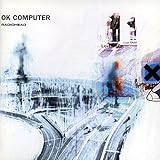
OK Computer is an album about alienation in an increasingly technological, commercial, and mechanized world. Its characters often seem overwhelmed by systems larger than themselves: corporations, machines, traffic, media, consumer culture, routine, and social expectations. The album does not present technology as a simple villain; instead, it examines the anxiety of living in a world where human beings are expected to behave with mechanical efficiency.
The record’s sound is spacious but uneasy. Guitars can be jagged and aggressive, yet they often sit inside arrangements filled with electronic textures, strange vocal effects, atmospheric keyboards, and abrupt structural changes. Radiohead combine alternative rock with progressive ideas, art rock, electronic music, and experimental production.
Thom Yorke’s voice is central to the album’s emotional identity. He often sings with a mixture of vulnerability, detachment, panic, and accusation. His performances can sound fragile one moment and eerily impersonal the next. That tension reflects the album’s concern with people who feel disconnected from their own surroundings.
Jonny Greenwood’s guitar work is especially important. Instead of relying solely on traditional riffs, he uses sharp textures, unusual harmonies, sudden bursts of noise, and carefully controlled dissonance. The band’s arrangements frequently change direction without losing their emotional focus.
Although the album is often described as futuristic, its central concerns are deeply human. It is about exhaustion, embarrassment, fear, disorientation, emotional numbness, and the desire to escape from systems that appear unavoidable. Its futuristic qualities come less from science-fiction storytelling than from the feeling that ordinary life has become strangely impersonal.
The album’s sequencing creates a sense of movement through different forms of modern anxiety. Some tracks feel like frantic urban scenes, while others are quieter and more isolated. The contrast between these sections gives the record its psychological depth.
OK Computer is not simply a gloomy rock album. It also contains beauty, tenderness, dark humor, and moments of melodic clarity. Its bleakest ideas are made more powerful by the elegance of the music surrounding them. Radiohead’s ability to make discomfort sound beautiful is one of the album’s defining achievements.
-
Deep Purple in Rock - Deep Purple
-
The Number of the Beast - Iron Maiden
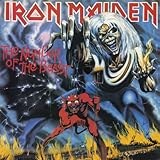
The Number of the Beast is one of heavy metal’s great statements of scale, momentum, and theatrical imagination. It combines driving guitar harmonies, galloping bass lines, powerful drumming, dramatic vocals, and lyrics inspired by history, literature, religion, war, mythology, and horror.
The album’s sound is forceful but highly melodic. Iron Maiden do not treat heaviness as mere distortion or volume. Their music is built around memorable guitar lines, harmonized leads, rhythmic movement, and arrangements that constantly push forward. The guitars often operate as a pair, creating a sense of motion and grandeur that distinguishes the band from more bluntly aggressive metal acts.
Bruce Dickinson’s voice gives the record a distinctly theatrical quality. His delivery can shift from controlled and melodic to commanding and explosive, making the songs feel larger than ordinary hard-rock performances. He does not simply sing over the music; he helps turn each composition into a dramatic scene.
Steve Harris’ bass playing is another major feature. Rather than remaining hidden beneath the guitars, the bass often supplies a galloping rhythmic identity. This gives the album its characteristic forward drive and helps make even complex arrangements feel immediate.
The record’s lyrical world is broad. Some songs draw on historical conflict, others on literary or supernatural imagery, while several explore fear, violence, belief, and moral uncertainty. The album uses these subjects for atmosphere and dramatic tension rather than presenting one narrow worldview.
Its production preserves the energy of a live band. The instruments sound powerful and direct, allowing the riffs and rhythm section to remain central. Despite its elaborate themes, the album never loses its physical connection to rock performance.
The album is also important because it helped establish a vocabulary that would influence generations of metal: harmonized guitars, epic song structures, dramatic vocal delivery, historical storytelling, and a balance between aggression and melody.
-
A Momentary Lapse of Reason - Pink Floyd

-
The Division Bell - Pink Floyd
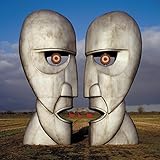
-
?
Help! - The Beatles
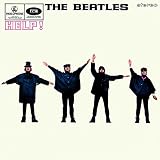
-
?
Sgt. Pepper's Lonely Hearts Club Band - The Beatles
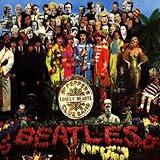
-
Ants from Up There - Black Country, New Road

Ants from Up There is an emotionally expansive album that combines post-rock intensity, chamber-pop arrangements, art rock, folk influences, and elements of klezmer and contemporary composition. Its songs often begin with a feeling of intimacy before gradually opening into elaborate instrumental passages.
The album’s defining feature is its emotional scale. Small observations and personal anxieties can grow into huge arrangements involving strings, brass, saxophones, violin, piano, and swelling guitar parts. The band creates the impression that every emotional detail is connected to something much larger and more difficult to contain.
The arrangements are unusually dense but rarely feel crowded. Different instruments enter and withdraw with dramatic timing, creating a sense of escalation. A violin line may sound fragile and exposed before being joined by percussion and brass. A quiet vocal phrase may lead into an expansive instrumental climax.
Much of the album’s impact comes from its tension between sincerity and absurdity. The lyrics can be funny, awkward, grandiose, romantic, self-critical, and surreal within the same song. This prevents the record from becoming conventionally sentimental. Its vulnerability is often filtered through strange images and unexpected turns of phrase.
The vocal performances are intentionally expressive and imperfect. Rather than aiming for smoothness, the singing often sounds as if it is struggling to keep up with the emotions being described. That quality gives the record a sense of immediacy and makes the quieter passages especially affecting.
Black Country, New Road also have a strong sense of theatrical pacing. Many songs feel like miniature dramas, with recurring motifs, abrupt shifts, and carefully timed climaxes. The album rewards attentive listening because its emotional force comes from accumulation rather than instant simplicity.
Its sound is simultaneously old-fashioned and contemporary. Orchestral instruments, folk melodies, and traditional band arrangements coexist with post-rock crescendos and unconventional song structures. The result is an album that feels rooted in several musical traditions without belonging neatly to any one of them.
-
The Final Cut - Pink Floyd

-
Made in Japan - Deep Purple
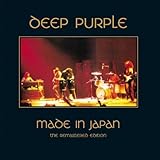
Made in Japan captures Deep Purple as a formidable live rock band. Unlike a carefully controlled studio album, it presents the group’s music as an event shaped by improvisation, interaction, volume, and instrumental risk. The performances are expansive, giving the band room to stretch beyond their studio arrangements.
The album’s core sound is built around the tension between heavy rock force and instrumental virtuosity. Ritchie Blackmore’s guitar playing is fast, dramatic, and highly expressive, while Jon Lord’s organ gives the music a distinctive mixture of church-like grandeur, blues phrasing, and hard-rock aggression.
Ian Gillan’s vocals add another layer of spectacle. His voice can move from melodic phrasing to powerful, high-register intensity, contributing to the feeling that the performances are being pushed to their limits. Roger Glover’s bass and Ian Paice’s drumming keep the longer arrangements grounded while allowing the music to expand.
One of the album’s greatest strengths is the way it documents group chemistry. The members do not sound like isolated virtuosos taking turns. They respond to one another, build tension, leave space, and then re-enter with greater force. The performances feel conversational even when they become technically demanding.
The live setting also changes the character of the songs. Familiar riffs become launch points for extended instrumental passages. Sections may slow down, accelerate, or transform as the band explores the structure in real time. That sense of unpredictability is central to the album’s appeal.
The sound is loud, dramatic, and physical, but it is not crude. Deep Purple’s musicianship allows the performances to remain coherent even when they become expansive. Their arrangements contain enough melodic and rhythmic identity to keep the listener oriented.
Made in Japan is best understood as a document of a band reaching maximum live intensity. It demonstrates how hard rock can become improvisational, theatrical, and technically adventurous without losing its direct impact.
-
Technical Ecstasy - Black Sabbath
-
Master of Reality - Black Sabbath
-
Sabbath Bloody Sabbath - Black Sabbath
-
Sabotage - Black Sabbath
-
The Piper at the Gates of Dawn - Pink Floyd
-
A Saucerful of Secrets - Pink Floyd
-
A Hard Day's Night - The Beatles
-
Let It Be - The Beatles
-
Never Mind the Bollocks, Here's the Sex Pistols - Sex Pistols
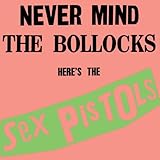
Never Mind the Bollocks, Here’s the Sex Pistols is a confrontational, abrasive, and highly concentrated punk-rock album. Its songs reject polish, restraint, and social politeness in favor of speed, repetition, provocation, and direct emotional impact.
The album’s energy comes from its refusal to overcomplicate the basic rock format. The guitars are loud and distorted, the drums are forceful, and the arrangements are structured around riffs that hit quickly and return with relentless insistence. Yet the record is more carefully constructed than its chaotic reputation might suggest. Its songs are tightly arranged and engineered for maximum immediacy.
Johnny Rotten’s vocal performances are a major part of the album’s identity. He sings with sarcasm, contempt, mockery, and barely contained anger. His delivery often sounds deliberately abrasive, but it is also rhythmically precise. The vocals function as both lyrics and attack, turning phrasing and tone into instruments of confrontation.
The album’s themes include political frustration, class resentment, consumer culture, media manipulation, social control, and the feeling that established institutions have failed ordinary people. Its anger is broad rather than narrowly ideological, aimed at the systems and attitudes that make life feel controlled, hypocritical, or meaningless.
Steve Jones’ guitar playing is direct and powerful, combining punk urgency with the influence of earlier hard rock. Paul Cook’s drumming keeps the songs moving at a relentless pace, while Glen Matlock’s bass work contributes to the tightness and drive of the arrangements.
The record’s importance is not limited to its musical simplicity. It helped establish punk as an attitude toward creation: music did not require technical perfection, elaborate mythology, or institutional approval in order to matter. A strong point of view, a memorable riff, and the willingness to challenge conventions could be enough.
At the same time, the album is not simply noise or rebellion for its own sake. Its strongest songs are remarkably memorable, and their hooks are part of why the record remains influential. The shock value may have introduced it to listeners, but the songwriting keeps it alive.
-
Mob Rules - Black Sabbath

-
Pink Moon - Nick Drake
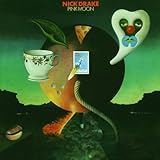
Pink Moon is an exceptionally intimate and restrained album. Built primarily around Nick Drake’s voice and acoustic guitar, it creates a private atmosphere that feels almost closer to a whispered confession than a conventional studio performance.
The album’s minimalism is central to its impact. There are few instruments and very little excess production. The guitar is carefully picked and harmonically rich, while Drake’s singing remains understated and emotionally controlled. The lack of large arrangements places enormous weight on small details: the movement of a chord, the space between vocal phrases, and the subtle changes in his delivery.
Its lyrics are impressionistic rather than explanatory. They evoke loneliness, uncertainty, natural imagery, passing time, distance, and emotional disorientation without spelling out one fixed interpretation. The songs feel like fragments of thought—brief, vivid, and difficult to reduce to a single meaning.
The record’s darkness is quiet rather than dramatic. There are no large climaxes or theatrical gestures. Instead, the emotional tension comes from the contrast between the beauty of the guitar playing and the heaviness of the atmosphere. The music can sound calm while suggesting feelings that are much less settled beneath the surface.
Drake’s guitar technique is unusually sophisticated. His tunings and chord voicings create an elegant, suspended quality, allowing the songs to feel harmonically unusual without becoming inaccessible. The guitar provides both rhythm and melody, making the sparse arrangements sound fuller than they initially appear.
Because the production is so stripped back, the album rewards close listening. It is not designed to overwhelm the listener immediately. Its power grows through repetition and familiarity, as the understated performances gradually reveal their emotional depth.
Pink Moon has influenced generations of singer-songwriters because it demonstrates how little a great album may need. There is no reliance on spectacle, virtuoso display, or elaborate production. The music depends on voice, guitar, atmosphere, and the suggestive power of carefully chosen words.
-
Born Again - Black Sabbath