Top 10 Genres that Helped in the Development of Guitar
These genres are the most important for the development of the guitar.
This doesn't necessarily mean they are the best genres for guitar playing. Rather, they are simply the most influential in its evolution.
-
Rock

Rock music is a genre that originated in the late 1940s and early 1950s, evolving from styles such as blues and rhythm and blues. It gained widespread popularity from the 1960s through the early 2000s and became one of the most influential music genres of the 20th century.... read more
Rock is a pivotal genre for distorted music on guitar. As distortion technology progressed, so did rock music. Rock guitarists experimented with various types of tube distortion and were instrumental in the fusion of different musical genres. Rock also popularized many guitar techniques and rock guitarists are often seen as the most charismatic.
It's true that guitars were never the same after rock came around. They live in fear of rock from all the casualties.
-
Jazz

Jazz is a music genre that originated in the African American communities of New Orleans, United States, in the late 19th and early 20th centuries. It developed from roots in blues and ragtime. Jazz is seen by many as "America's classical music" and has influenced a wide range of other musical styles... read more
Jazz is the most important genre for the development of the guitar. Jazz evolved from blues but with more technical proficiency. It originated at a time when only acoustic guitars were available. Since then, guitarists have continually experimented with their instruments, contributing to the development of the electric guitar as well.
Jazz popularized techniques such as sweep picking, alternate picking, and tapping. Jazz guitarists experimented with distorted sounds and were pioneers in both lead and rhythm guitar. They also introduced complex ascending and descending patterns. Therefore, I believe jazz deserves the number one spot. However, when we talk about jazz, many think of it as boring music.
-
Blues

Blues is a music genre and musical form that originated among African Americans in the Deep South of the United States around the end of the 19th century. It developed from roots in African musical traditions, African American work songs, and spirituals. Blues has influenced many other genres, including... read more
Blues has had a significant impact on guitar, especially influencing rock. Blues musicians developed their unique styles, evolving from traditional music. This genre was also pivotal in popularizing the electric guitar, with some of the earliest records of distorted guitar found in blues. Additionally, blues popularized techniques like strumming and harmonics and introduced a distinctive scale.
-
Classical

Classical music also contributed significantly to the development of the guitar, mostly in technical ways. However, it did not become as famous as blues because classical guitar was considered difficult to play, leading most guitarists to choose blues instead.
Classical was largely ignored by rock musicians, though not by pianists. It started to gain popularity when guitarists like Steve Hackett, Ritchie Blackmore, Uli Jon Roth, and Steve Howe incorporated classical elements into rock.
-
Punk Rock
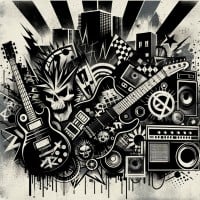
Punk rock is a subgenre of rock music that emerged in the mid-1970s. It is typically characterized by rebellious lyrics and down-stroked power chords played on electric guitars. Bands such as Bad Religion, the Sex Pistols, and Green Day, which leans toward pop-punk, are examples of the genre.... read more
Punk had its own importance for rhythm guitar. It helped in the development of highly distorted music and non-technical rhythmic sound, which later inspired Thrash Metal, Death Metal, Black Metal, alternative rock, new wave, and others.
-
Metal

Heavy metal music is a genre of rock that emerged in the late 1960s and early 1970s. It is known for heavily distorted guitars, powerful vocals, and themes that often explore darker or more intense subject matter. Bands such as Black Sabbath, Iron Maiden, and Metallica helped bring the genre to mainstream... read more
I ranked metal quite low on this list because the title is about genres that helped in the development of the guitar. Metal is a more recent genre, not as old as blues, rock, jazz, or classical. It evolved from various genres and has influenced guitar playing in many ways, including shredding, fast playing, heavy rhythms, and technical precision.
-
Folk
Folk had a significant impact on guitar, especially for soft music. Folk is also one of the earliest genres of music. I don't know much about old musical scales, but people back then used many different types of guitars.
-
Country

Country made an impact on genres like blues, rock, jazz, and others.
-
Experimental
Mostly with different types of playing.
-
Psychedelic Rock
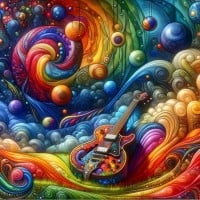
Psychedelic rock is a style of rock music that emerged in the mid-1960s. It was influenced by psychedelic culture and the mind-altering effects of hallucinogenic drugs. The genre is characterized by improvisation, electronic sound effects, and extended solos.
Psychedelic rock helped in the development of distortion guitar, especially with the proper equipment. Before that, people sometimes used to break their amps to create distortion.