Top 10 Greatest Hits Albums Before 1980
The greatest hits album: rock's most quietly revolutionary invention. Before the CD era turned compilations into record-label cash grabs, these records served a genuine purpose — capturing lightning in a bottle and preserving an artist's peak years on a single slab of vinyl. Elvis' Golden Records essentially invented the format in 1958, and within a decade nearly every major act had followed. But the very best pre-1980 comps weren't mere cash-ins; many defined careers, introduced entire genres to new audiences, and outlasted the studio albums they drew from. From Dylan's folk-rock explosion to Hendrix's electric sermons, from Motown's sweetest harmonies to funk's wildest family affair, these are the ten greatest hits collections released before 1980 — ranked by cultural impact, tracklist strength, and sheer listening pleasure.
-
Bob Dylan's Greatest Hits - Bob Dylan

The album that proved the greatest hits format could be an event in itself. Released in March 1967 while Dylan was in seclusion recovering from his motorcycle accident, with no new material forthcoming, Columbia cannily assembled the definitive document of his explosive 1962-1966 run.
The sequencing plays like a guided tour through the Sixties themselves: "Blowin' in the Wind" and "The Times They Are a-Changin'" for the protest era, "Subterranean Homesick Blues" and "Mr. Tambourine Man" for the turn inward, and "Like a Rolling Stone," "Positively 4th Street," "Just Like a Woman," and "I Want You" for the blazing electric years.
The collection even ends with a rarity-hungry fan bonus: a scorching live "Just Like Tom Thumb's Blues" from his legendary 1966 world tour, included simply to give completists one thing they couldn't get anywhere else. All of this is wrapped in one of the decade's most iconic packages (Rowland Scherman's Grammy-winning cover photo of Dylan, paired with Milton Glaser's swirling psychedelic gatefold art). It became one of Dylan's best-selling records and, decades later, remains the single best one-disc argument ever made for the greatest songwriter of the rock era.
-
Smash Hits - The Jimi Hendrix Experience

How do you summarize an artist who burned brighter and shorter than anyone in rock history? While the Experience was still technically together, Reprise answered with Smash Hits, a concentrated dose of pure electricity that packs the singles era of Jimi Hendrix into one devastating package. "Purple Haze" opens proceedings with one of the most recognizable guitar riffs ever committed to tape, followed by the sensual swagger of "Foxey Lady," the aching beauty of "The Wind Cries Mary," and the kinetic fire of "Fire" and "Hey Joe." The crown jewel is Hendrix's seismic overhaul of Dylan's "All Along the Watchtower," widely considered one of the greatest cover versions ever made, so definitive that even Dylan began performing it Hendrix's way. The U.S. tracklist sweetened the pot with cuts like the eerie "Burning of the Midnight Lamp" and non-LP B-sides that sent collectors digging for years. Clocking in lean and mean, Smash Hits captures why, in just a handful of years, Hendrix permanently rewrote the grammar of the electric guitar. No filler, no fat, just the fiercest six-string résumé in rock.
-
A Collection of Beatles Oldies (But Goldies!) - The Beatles
A gap-filler that became a collector's holy grail. Released in the UK in December 1966, while the Beatles were busy reinventing music in Abbey Road with sessions for Sgt. Pepper's Lonely Hearts Club Band, Parlophone needed a Christmas release and raided the vaults, packaging the singles, B-sides, and EP tracks that British fans had never been able to buy on a proper LP.
That quirk of British album culture makes Oldies (But Goldies!) extraordinary even today: this was the only way, in 1966, to own "She Loves You," "I Want to Hold Your Hand," "I Feel Fine," "Day Tripper"/"We Can Work It Out," "Paperback Writer," and the ferocious "Rain" on one record. Add in the quiet devastation of "Yesterday" and "Michelle," plus deep-cut treasures like "Matchbox," "Bad Boy," and "This Boy," and you have a portrait of the band's hit-making machine at full sprint.
The playful title and Alan Aldridge's surreal, candy-colored cover art gave the set a wink and charm all its own. Never issued in America and overshadowed by the band's studio masterpieces, it remains the Fab Four's most underrated official release, the rare Beatles record that doubles as a time capsule.
-
Greatest Hits - The Byrds
The founding document of folk-rock, distilled to perfection. Though the Byrds' studio albums hold untold riches, it's this 1967 Columbia collection that most listeners first fell in love with, and for good reason.
Every pillar of the band's early career stands tall here: the glistening, epochal reading of Dylan's "Mr. Tambourine Man" that announced the jangle-pop sound countless bands still chase, Pete Seeger's scriptural-turned-generational anthem "Turn! Turn! Turn!," the proto-psychedelic flight of "Eight Miles High," and the ringing "I'll Feel a Whole Lot Better," arguably Gene Clark's finest songwriting hour.
From there the set tours the Byrds' restless evolution, including the cosmic novelty "Mr. Spaceman," Dylan's rebellious "My Back Pages" (featuring Roger McGuinn's shimmering Rickenbacker trills), and the biting satire of "So You Want to Be a Rock 'n' Roll Star," aimed straight at the Monkees.
Early pressings even tucked in genuine rarities like "It Won't Be Wrong" and the unreleased-at-the-time "Why," giving longtime fans a reason to double-dip. Gorgeous harmonies, twelve-string heaven, and a tracklist with barely a wasted moment: this is the album that taught a generation how folk and electricity could fall in love.
-
The Four Tops Greatest Hits - Four Tops
The definitive Motown singles collection, bar none. During the mid-Sixties, the combination of the Four Tops' velvet vocals and Holland-Dozier-Holland's production genius was simply unstoppable, and this collection gathers the whole imperial run in one place. Levi Stubbs' gravel-and-honey baritone thunders through "Reach Out I'll Be There," Motown's answer to "Satisfaction" and one of the greatest singles of the decade, while "Baby I Need Your Loving," "I Can't Help Myself (Sugar Pie, Honey Bunch)," "It's the Same Old Song," and "Bernadette" showcase a group that made heartbreak sound like triumph.
Then there's "Standing in the Shadows of Love," an ominous, dramatic masterpiece of late-Sixties soul that proved this "sweet" vocal group could deliver pure menace. What elevates the Tops above even their Motown peers is the ache Stubbs brings to every line. He never coasts, even on records by a quartet marketed for smoothness, singing every ballad like his livelihood depends on it. Powered by Funk Brothers instrumentation and stacked with more timeless hooks per square inch than virtually any compilation of its era, this is Motown's machine running flawlessly, captured at its absolute peak.
-
Elvis' Golden Records - Elvis Presley
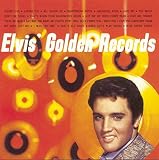
The album that started it all, quite literally. Before Elvis' Golden Records arrived in 1958, the "greatest hits" LP barely existed as a concept in rock music. RCA assembled this collection of Presley's 1956-1957 singles and, in doing so, wrote the template the entire record industry would follow for the next seven decades.
The tracklist reads like a detonation: "Heartbreak Hotel," "Hound Dog," "Don't Be Cruel," "Love Me Tender," "All Shook Up," "Too Much," "(Let Me Be Your) Teddy Bear," and "Jailhouse Rock," an almost absurd density of Number Ones from the two years when Elvis exploded rock 'n' roll into a national mania. Filling out the record, gems like "I Want You, I Need You, I Love You," "Mean Woman Blues," and the gospel closer "(There'll Be) Peace in the Valley" revealed an artist who could shift from raunch to reverence without losing conviction.
So successful it spawned four sequel volumes, Golden Records demonstrated something every label executive quickly learned: for artists working in the fast-burning singles format, the compilation could immortalize the hits long after the charts moved on. Every other album on this list owes its existence to this one. The King didn't just invent rock superstardom. He invented the greatest hits album along the way.
-
Hot Rocks (1964-1971) - The Rolling Stones

The ultimate Rolling Stones primer, and one of the best-selling double LPs of all time. Assembled in 1971 by ABKCO after the Stones had broken free of their Decca contract and with no love lost between band and label, Hot Rocks nonetheless delivered a tracklist so overwhelming it became the definitive statement of the band's first golden age. Twenty-one tracks trace the evolution from Beat-boom upstarts ("Time Is on My Side") to the menacing swagger of their imperial phase: "(I Can't Get No) Satisfaction," "Paint It, Black," "19th Nervous Breakdown," "Get Off of My Cloud," "Ruby Tuesday," "Jumpin' Jack Flash," and "Street Fighting Man," before closing with the apocalyptic majesty of "Gimme Shelter," the sinuous seduction of "Honky Tonk Women," the sacrilege of "Sympathy for the Devil," and the weary grandeur of "Wild Horses" and "You Can't Always Get What You Want."
What makes Hot Rocks endure isn't just the quantity of classics. It's the sequencing, which plays like a masterclass in tension and release across four sides of vinyl. Decades on, it remains the record most casual fans own, the one that reveals why the Stones were called "the greatest rock 'n' roll band in the world," and proof that the Brian Jones-and-then-Mick Taylor years constitute one of the richest creative streaks in rock history.
-
Chronicle Vol. 1 - Creedence Clearwater Revival

Perhaps the most flawless tracklist ever assembled on a single record. By 1976, CCR had been broken up for four years, but Fantasy Records' distillation of their 1968 to 1972 output accomplished something remarkable: twenty songs, nearly every one a radio staple to this day, zero filler. It's all here, the bayou-fueled swamp rock that John Fogerty conjured from a Berkeley garage: "Proud Mary," "Bad Moon Rising," "Green River," "Lodi," "Down on the Corner," "Lookin' Out My Back Door," "Who'll Stop the Rain," "Have You Ever Seen the Rain," "Up Around the Bend," "Run Through the Jungle," and the primal "Susie Q" rendition that started it all. And crowning the set, the great American protest single, "Fortunate Son," two minutes and twenty seconds of class resentment that still sound like a punch to the sternum, alongside the searching "Someday Never Comes."
Fogerty's genius was compression: two-and-a-half-minute songs with choruses built like freight trains, lyrics drawn from mythic Americana he mostly imagined from afar. That concentrated perfection is why Chronicle works so completely. It's not a highlights package so much as a textbook of American roots rock. Now certified Diamond and perpetually among the best-selling catalog albums in history, it is the rarest kind of compilation: one with a legitimate claim to being the band's single essential album.
-
ChangesOneBowie - David Bowie

The shape-shifter, freeze-framed. In 1976, David Bowie had already completed one of the most breathtaking reinventions in pop history (folk-space oddity to alien glam messiah to slick Philly-soul dandy), and ChangesOneBowie captured the whole shape-shifting arc in ten songs. "Space Oddity" drifts in on lonely acoustic melancholy; "Starman" and "Ziggy Stardust" document the glam explosion; "Changes" remains one of the great anthems of self-transformation. While "Rebel Rebel" and "Diamond Dogs" carry the dystopian glitter of 1974.
Then the record swivels to the so-called "plastic soul" pivot: the gritty "Young Americans" and "Fame," the jittery groove Bowie co-wrote with John Lennon that became his first American Number One. Closing with the then-brand-new "Golden Years," a sleek preview of the Station to Station era, the album functioned simultaneously as retrospective and prophecy.
Wrapped in Guy Peellaert's stylish artwork and named after the song that practically narrates Bowie's entire ethos, ChangesOneBowie isn't just a compilation. It's a guided tour through the idea that identity itself could be art. For decades it served as the gateway drug to the Bowie catalog, the single disc that convinced you this chameleon was actually one of rock's most essential voices.
-
Greatest Hits - Sly and the Family Stone

Funk's finest hour, pressed onto a single record. By 1970, Sly and the Family Stone had rewritten the rules of popular music, becoming an interracial, mixed-gender band fusing soul, funk, rock, and psychedelia into something utterly new, and this collection caught them at their joyful apex. The dance floor holy trinity opens the party: "I Want to Take You Higher," "Everybody Is a Star," and "Dance to the Music" still detonate on contact, while "Stand!" and the gritty, self-empowering "You Can Make It If You Try" show the band's message of unity delivered with muscle. Pop masterpieces abound: the sunny perfection of "Everyday People," the simmering tension and release of "Fun," and the irresistible bounce of "M'Lady."
Then the album closes with the final word in funk evolution: "Thank You (Falettinme Be Mice Elf Agin)," the thumping, bass-slapped new single that pointed straight at the decade ahead, while also featuring the feel-good summer anthem "Hot Fun in the Summertime." Certified multi-platinum and a fixture on the album charts for years, this is the rarest of things: a greatest hits record where the hits genuinely are the history, because these songs taught everyone from Stevie Wonder to Prince to Michael Jackson how modern funk should sound. Uplifting, radical, and relentlessly groovy, it's the perfect closer to the pre-1980 compilation canon.