Top 10 Animals People Own but Shouldn't
Have you ever wanted a crazy pet? Maybe a venomous snake?
Many exotic animals are kept as pets, ranging from your sweet little puppy to a full-grown pet tiger.
However, these animals should not be owned unless you are a trained professional, have the proper licenses, and ensure that the animal is legal in your state or country.
-
Wolfdogs
Wolfdogs are a common exotic pet in the animal trade, though they are not suitable for everyone. They are hybrids bred from domestic dogs and wolves, so they may retain wild instincts and behaviors that make them challenging to keep as pets. Wolfdogs are legal in many states, though some require permits. They are allowed in states such as Arizona, Colorado, Alabama, Idaho, Iowa, Kansas, Kentucky, Montana, Nevada, New Hampshire, South Carolina, Oregon, and others. If your state is listed, you are likely allowed to own a wolfdog.
-
Bison
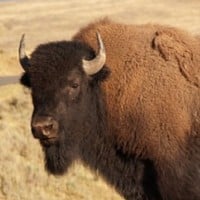
Bison are large bovines commonly raised in agricultural industries, valued for their lean and flavorful meat. They are farmed in many of the same ways as cattle, though they tend to be less docile and larger in size. Bison ownership is permitted in many states, including Kansas, Arizona, Missouri, Nebraska, South Dakota, Texas, Utah, Wisconsin, and Wyoming.
-
Zebras
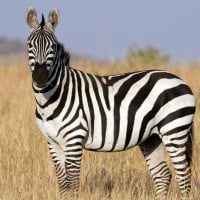
Zebras, members of the subgenus Hippotigris, are African equines with distinctive black-and-white striped coats. There are three living species: the Grévy's zebra (Equus grevyi), plains zebra (E. quagga), and mountain zebra (E. zebra). Stripe patterns vary among individuals and species, with most evidence... read more
Zebras are not common animals to own as pets or simply own, but they do make poor pets and are not a horse to ride. They are unpredictable and will kick and bite, and are pretty much untrainable. Though people still choose to keep them as pets in many states.
-
Lemurs
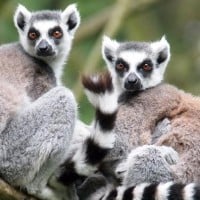
Lemurs are a clade of strepsirrhine primates endemic to the island of Madagascar. The word "lemur" derives from "lemures," meaning ghosts or spirits in Roman mythology. It was initially used to describe a slender loris because of its nocturnal habits and slow movements but was later applied to the primates... read more
Lemurs are also on the list of crazy animals kept as pets due to their aggressive nature toward humans. They have sharp nails and teeth and tend to bite and scratch their caregiver. That's why most people go out to spay and neuter their pets. Again, they are not domesticated and make terrible pets.
-
Alligators
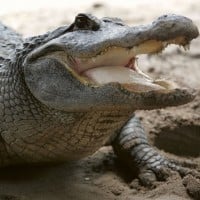
An alligator is a crocodilian in the genus Alligator, part of the family Alligatoridae. The two extant species are the American alligator and the Chinese alligator. Several extinct species are known from fossil remains, and alligators have existed since the Oligocene epoch, about 37 million years ago.... read more
Alligators make poor pets. Even the best-trained gator is not a pet. Though people do train them to be more docile and accept us, they are not pets and are, again, wild animals that are unpredictable in many cases.
Alligators also eat a lot. They need loads of food to keep them happy.
-
Reticulated Pythons
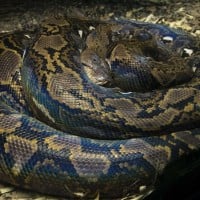
These are huge snakes. Sometimes it's more snake than people think and can handle, since they can reach a whopping 32 feet and are constricting snakes.
They are also strong and most likely can outweigh you. That's not a good thing.
-
Leopards

The leopard is one of the five living big cat species in the genus Panthera. It is among the most adaptable and widespread big cats due to its camouflaged fur, opportunistic hunting behavior, broad diet, and strength that allows it to carry heavy carcasses into trees.... read more
Big cats are not pets! This includes leopards. These cats are huge and powerful and have the potential to kill you.
Leopards are cautious animals, meaning they are always on the lookout, know when to back down, and when not to mess with something.
-
Hawks
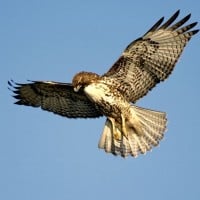
Hawks are a group of medium-sized diurnal birds of prey in the family Accipitridae. They're widely distributed and vary greatly in size. Hawks have keen eyesight, strong talons, and curved beaks that help them capture and consume prey.
-
Monkeys
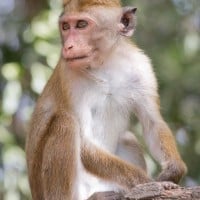
Monkeys are haplorhine primates that form a paraphyletic group. Most monkeys have tails and are distinct from apes. There are more than 260 known living species of monkeys.
They are divided into two groups: New World monkeys, or platyrrhines, found in Central and South America, and Old World monkeys... read more
Monkeys make terrible pets. They like to bite, and when they do, it's nothing good and it hurts. Monkeys can become bored when not enriched with what they need and can become aggressive and dangerous.
-
Spiders
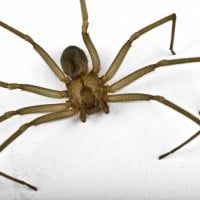
A venomous spider native to the central and southern United States, the brown recluse is known for its reclusive habits and preference for dark, undisturbed places. It is commonly found in basements, closets, and woodpiles, where it generally avoids human contact. Its venom can cause necrotic skin lesions... read more
-
?
Goat
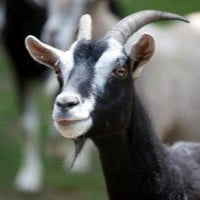
The domestic goat (Capra hircus) is a domesticated animal species that is part of the goat-antelope group. It was domesticated from the wild goat (Capra aegagrus) in Southwest Asia and parts of Eastern Europe. Goats belong to the family Bovidae and the tribe Caprini, making them close relatives of sheep.... read more
-
?
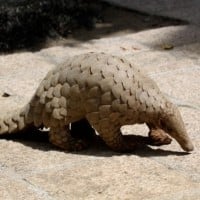
Pangolins
-
Bears

Though most bears are omnivores, they will still take a meal that consists of meat. Bears are massive and take up space. They constantly need things to enrich themselves and, if not, like primates, they can become dangerous.
Again, a wild animal and dangerous.
-
Tigers
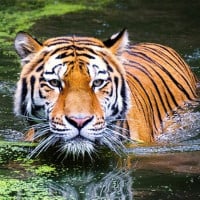
The tiger (Panthera tigris) is the largest living cat species and a member of the genus Panthera. It is immediately recognisable by its dark vertical stripes on orange fur and white underside. An apex predator, it primarily hunts ungulates such as deer and wild boar. It is generally solitary and territorial... read more
-
Lions
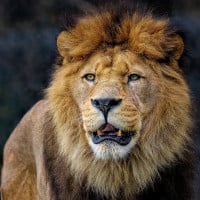
The lion (Panthera leo) is a large cat in the genus Panthera, native to sub-Saharan Africa and a single isolated population in western India. It has a muscular, broad-chested body, a short rounded head, round ears, and a hairy tuft at the end of its tail. Adult males are larger than females and have... read more
-
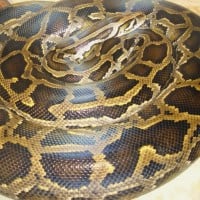
Burmese Pythons
-
Slow Lorises
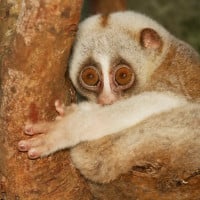
Found across South and Southeast Asia, slow lorises are small nocturnal primates notable for their deliberate movements and distinctive facial markings. They have glands on their arms that produce a secretion which becomes toxic when mixed with saliva, giving them a rare venomous bite. Slow lorises are... read more