Top 10 Animated Series Villains of the 20th Century
One hundred years of animation produced countless antagonists, but only a handful achieved the kind of permanence that lets a villain outlive their era and colonize the popular imagination outright. This list gathers the ten animated series villains whose reigns of menace spanned, defined, or bookended the 20th century itself: pioneers from the earliest days of theatrical shorts, royalty from the golden age of Hollywood cartoons, the founding fathers of made-for-television villainy, titans of the Japanese anime revolution, treasures of the Disney renaissance's small-screen empire, and the dusk-of-the-century masterpieces that closed the millennium in style. Criteria weighed longevity, cultural saturation, craftsmanship, psychological complexity, and raw villainous staying power — with special weight given to characters whose careers crossed decades rather than mere seasons. As before, every entry is written spoiler-free: legacies and reputations are fair game, but no twists are spoiled here.
-
Peg Leg Pete (Mickey Mouse)
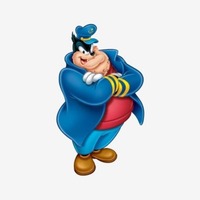
The longest-tenured villain in all of American animation. Debuting in 1925 during the silent Alice Comedies era, years before Mickey Mouse himself existed, Peg Leg Pete marched through the entire 20th century as Disney's premier heavy: riverboat bully in Steamboat Willie (1928), child-snatching gypsy kidnapper, ghost in The Haunted House (1929), outlaw in Two-Gun Mickey, and relentless antagonist across decades of theatrical shorts. Few characters in the medium's history can claim a résumé stretching from the silent era through Technicolor, television, and beyond, always retooled to fit the prevailing style. The classic-era Peg Leg gave way to "Black Pete," then to Pete, Disney's very own continuing-purpose villain.
Physically, he is an animation original: hulking, swaggering, peg-legged (most of the time), and sporting a walrus mustache and a baritone sneer that made him instantly recognizable in silhouette. What secures his crown is consistency matched with range: a villain capable of being genuinely menacing as a kidnapper and extortionist while remaining family-friendly, terrifying toddlers in 1930 and delighting them ninety years later. Every animated villain who followed, at Disney and beyond, walked a trail Pete blazed first. When ranking the century's animated villains, the character with the earliest debut, the longest continuous run, and the deepest bench of classic confrontations against Mickey, Donald, Goofy, and Pluto is not merely a candidate. He's the incumbent.
-
Butch the Bulldog (Pluto)
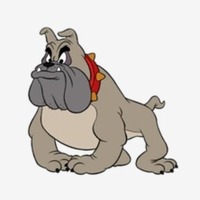
The great understudy of Disney villainy and the perfect comedy antagonist. Butch, Pluto's hulking bulldog nemesis, began his campaign of canine-king-of-the-castle tyranny in the 1940s and spent the golden age of Disney shorts making Pluto's life a special circle of hell: stealing his bones, muscling in on his romantic prospects with the dainty dachshund Dinah, and generally embodying every playground bully ever animated. Conceptually, Butch is a masterstroke of economy, a villain defined almost entirely by silhouette and appetite, needing no dialogue whatsoever to communicate his menace. Voiced by legendary Disney stalwart Billy Bletcher (who also gave Peg Leg Pete his growl), Butch radiated gruff, rumbling intimidation through sheer vocal presence.
His duels with Pluto represent a distinct branch of cartoon villainy: the rival-as-villain, an antagonist whose goals are petty in scale but absolute in stakes, such as a bone, a girl, or a patch of sunlight, pursued with outsized ferocity. What makes him list-worthy is craft: the Pluto shorts were masterclasses in pantomime storytelling, and Butch's brutish blocking, double-takes, and slow-burn frustration supplied the friction that let Pluto's elastic body comedy sing. Decades of duels later, Butch remains the gold standard for the mute, muscle-bound cartoon antagonist, proof that a villain needs neither grand schemes nor spoken threats, just an implacable frown and a stolen bone.
-
Tom Cat (Tom and Jerry)

Animation's most enduring antagonist isn't a cackling tyrant or a brilliant criminal. He's a gray-and-white housecat with a nearly impeccable track record of failure. Created by William Hanna and Joseph Barbera for MGM, Thomas "Tom" Cat spent the heart of the 20th century locked in what may be the most famous rivalry in animation history, a decades-spanning campaign against a brown mouse named Jerry that repeatedly carried the franchise to Academy Award victories. What makes Tom such a fascinating "villain" is that the format itself keeps him perpetually in the wrong: he is the aggressor, the scheme-hatcher, the one brandishing mallets, mousetraps, dynamite, and garden implements, while Jerry operates almost entirely in self-defense (with considerable sadistic flair of his own).
Tom's villainy is thus almost entirely physical comedy, an ongoing masterclass in slapstick escalation where every clever trap backfires catastrophically upon its builder. Rendered in nearly every house style American animation ever produced, from the Tex Avery-inflected early years to the Chuck Jones era at the close of the 1960s, Tom has been yowling, scheming, and being flattened since 1940 with no loss of momentum. His high ranking on this list speaks to villainy's oldest truth: sometimes the greatest antagonist is the one audiences secretly root for.
-
Dudley Nightshade (Crusader Rabbit)
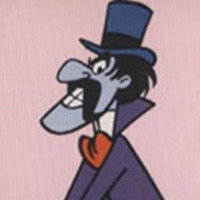
History demands a place for the man who was, quite literally, first: the inaugural recurring villain of the first animated series ever produced for television. Created by Alex Anderson and Jay Ward (the latter destined for greater infamy with Rocky and Bullwinkle), Crusader Rabbit debuted in 1950 on Los Angeles station KNBH, and alongside its pint-sized Don Quixote-esque hero came Dudley Nightshade, a mustache-twirling, melodrama-soaked schemer whose name, a play on the poisonous "deadly nightshade," announced his villainy with the subtlety of a stage whisper.
Voiced by Russ Coughlin, Dudley became the template for everything TV-animation villains would become: the sneering plot-starter of serialized, cliffhanger-driven adventure storytelling, hatching schemes across four-minute episodes that demanded children tune in tomorrow to see justice done.
His genius lies in his shamelessness. He was a silent-film serial villain transplanted wholesale into the brand-new medium of television, complete with theatrical mugging, dastardly plotting, and total lack of self-awareness. Every scheming TV villain who followed owes their format to this poisonously named pioneer. He is a founding father of the craft, five decades ahead of nearly everyone else on this list simply by arriving first.
-
Dr. Tenma (Astro Boy)

From the pen of Osamu Tezuka, the artist universally honored as the "God of Manga" and the father of modern anime, comes perhaps the medium's most quietly devastating antagonist: Dr. Tenma, the towering, brooding silhouette of grief given form. Introduced in the Astro Boy saga that ignited Japan's animation industry in the 1960s, Tenma is a scientific genius of the first order operating in a gleaming future where robots and humans coexist uneasily, and his motivations place him in a moral category far removed from cartoon thuggery. Without venturing into spoiler territory, it is safe to say that Tenma's descent begins in profound personal loss and curdles into something cold, exacting, and aristocratic. He is a man of extraordinary brilliance whose emotions metastasize into a stern, unforgiving worldview that shadows the entire saga from its very foundations.
What makes him remarkable as a villain is how human the core of his darkness is. Anime antagonists before him wanted treasure, conquest, or destruction, but Tenma's villainy is rooted in mourning, pride, and thwarted love, a template that would echo through decades of anime to come. In a list crowded with conquerors and criminals, Tenma stands apart: the villain whose true weapon is the human heart, broken.
-
Lepka (Future Boy Conan)
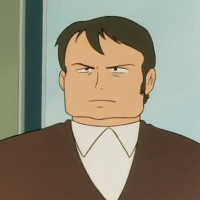
Before Hayao Miyazaki became one of the most celebrated filmmakers in animation history, he made his directorial debut with the 1978 series Future Boy Conan and gave its world one of anime's most chilling allegorical tyrants: Lepka, the iron-fisted administrator of the techno-industrial state of Industria. Operating in a post-apocalyptic world scarred by ecological collapse, Lepka is a study in ideologically driven menace: a strutting, uniformed authoritarian whose obsession with rebuilding industrial civilization's lost might, including the relentless pursuit of forbidden solar-energy technology, drives him to mobilize armies, gunships, and orbital-scale threats against children, scientists, and peaceful survivors alike.
What makes him such a striking entry is how directly he embodies themes Miyazaki would spend his entire career exploring: the catastrophic arrogance of technology divorced from nature, the pathology of power, and the terrifying banality of a bureaucrat commanding doomsday hardware. Lepka is physically unremarkable, a wiry, screeching functionary with a scheme, and that is precisely the point. With piercing eyes, bulging intensity, and an operatic temper matched by genuine strategic cunning, he pursues young Conan and his companions across an entire series with escalating desperation. As the antagonist of a landmark series now enshrined among the masterworks of world animation, Lepka remains one of the great unsung tyrants of the anime canon.
-
Kaiser Rudolf von Goldenbaum (Legend of the Galactic Heroes)
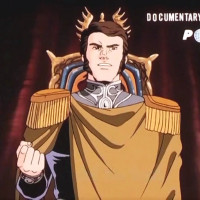
Prestige animation has produced few political minds as formidable as Rudolf von Goldenbaum, the founding Kaiser of the Galactic Empire in Yoshiki Tanaka's epic, adapted into the sprawling OVA masterpiece that ran from 1988 through the late 1990s and remains a gold standard for literary science fiction in animation. Though his rise unfolds within the historical backstory of the series' vast space-opera stage, his ideology casts a shadow over every political event that follows across thousands of star systems. Rudolf is that rarest species of animated villain: a self-made sovereign whose transformation from ambitious populist reformer to absolute autocrat charts one of fiction's most meticulous studies of how democracies die and empires are born.
A former military hero who parlayed public adoration into legal authority through elections, emergency powers, bureaucratic purges, and an aristocratic reshaping of society, his regime is constructed brick by ideological brick. What makes him irresistible as a list entry is his plausibility: armed with classical rhetoric and the historical playbook of real-world authoritarianism, he is animation's answer to the cautionary political histories of the twentieth century. Voiced and framed with stately, imposing gravity, Rudolf doesn't merely menace the heroes. He is the argument the entire series pushes against. The greatest villainy here is not a scheme or a weapon. It is a philosophy, and Rudolf is its Kaiser.
-
Bushroot (Darkwing Duck)

Disney's 1991 superhero spoof Darkwing Duck assembled one of the deepest rogues' galleries in Saturday-morning history, and its most beloved resident is also its most heartbreaking: Dr. Reginald Bushroot, the mild-mannered botanist whose scientific ambitions leave him permanently "rooted" in tragedy, transformed into a half-plant, half-duck creature who turns to villainy with trembling petals and genuinely sympathetic motives. This is the small screen's definitive "reluctant villain": a lonely misfit scientist whose schemes usually revolve around a singular, aching desire for love, acceptance, friendship, and botanical vengeance upon those who mocked him, rather than wealth or world domination.
What elevates Bushroot to greatness is the emotional paradox he creates in viewers: his crimes are undeniable, yet his unhappiness is so sincere that audiences root for his redemption even while cheering for Darkwing to stop his mutant-plant-of-the-week plans. Comedically, he's a gift: his chlorophyll-based physiology fuels endlessly inventive gags, while his timid stammer and doomed romantic gestures make him the rare Disney villain who is simultaneously threatening, funny, and genuinely pathetic. Five decades after television villains learned to twirl mustaches, Darkwing Duck demonstrated they could also make you feel sorry for them, and Bushroot is that triumph embodied in mossy green.
-
Blight (Batman Beyond)
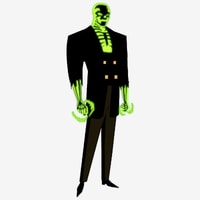
The turn of the millennium's most prescient villain arrived wearing a corporate suit. Derek Powers, the ruthless CEO whose transformation into the glowing, radioactive horror known as Blight powers the conflict at the heart of Batman Beyond, Warner Bros.' futuristic 1999 reimagining of the Batman mythology, stands as animation's definitive satire of the age of unchecked corporate power. Set in the neo-Gotham of decades hence, the series recast Batman as a new, young successor under the tutelage of an aging Bruce Wayne, and its premier archenemy embodies everything rotten about that future: a pharmaceutical-and-weapons magnate smiling through press conferences while ordering espionage, chemical warfare, and cover-ups behind them.
His eventual metamorphosis into the translucent, luminously radioactive Blight, a walking radiation hazard with a skull-like face and burning teal glow, literalizes what the character always was underneath: toxicity given a boardroom and a body. As the first true archenemy of a successor Batman, Blight carries thematic weight few villains can match: he is the embodiment of everything his nemesis fights, the moment a young hero's righteous fury first finds its target. Sleek, modern, and chilling in a way Saturday mornings rarely dared, he closes out the 20th century's roster by pointing a glowing finger straight at the one to come.
-
Emperor Zurg (Buzz Lightyear of Star Command)

The grand capstone of the century's animated villainy arrived in the year 2000 itself, when Disney's Buzz Lightyear of Star Command gave Toy Story's beloved toy-box tyrant an expanded role in animated-series form, with Wayne Knight lending the galactic despot his sneering voice. Zurg is villainy rendered as loving parody: every thundering cliché of the sci-fi galactic emperor, including the throne-room taunts, the swarm of robot Hornets, the ion blaster firestorms, and the endless pursuit of the heroic, square-jawed title character, delivered with theatrical relish, cape swishes, and that glorious infernal-machine bellow of "Curse you, Buzz Lightyear!" Into him are distilled four decades of sci-fi cinema villainy: the masked imperial warlord, the breathing-apparatus menace, the fallen-father-figure archetype, and the tongue-in-cheek self-awareness that made late-century pop culture sing.
As ruler of a vast chunk of the galaxy, he commands dreadnoughts, brain-draining technology, and hordes of minions, yet suffers the eternal indignity of a nemesis who refuses to fear him, turning every confrontation into a symphony of spitting outrage. What secures his legacy is the meta-wonder of it all: a villain conjured as a mass-produced action figure in one franchise, then granted a "real" mythology in another, somehow surviving the transition as a legitimately formidable threat. Zurg proved that the grand old archetype of the cackling galactic tyrant could still rule, gloriously un-self-corrected, right up to the century's final curtain.