Top 10 Greatest Admirals in History
Exploring the lives and legacies of the greatest admirals in history offers a unique look at some of the most skilled and strategic military leaders the world has ever seen.
These figures come from different nations and eras, and each left a remarkable influence on naval warfare. They led with bold decisions, unmatched tactical skill, and often at a time when control of the seas meant global power.
-
Yi Sun-sin
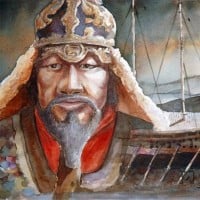
Korean Admiral Yi Sun-sin (1545-1598) is renowned for his victories against Japanese invasions during the Imjin War, particularly at the Battle of Myeongnyang. Known for innovative naval tactics, he used the famed "turtle ships" to achieve strategic dominance.
While outnumbered more than any other admiral in history, he won all major battles without losing a ship. He saved his nation, which was ravaged by the Japanese invasion. He singlehandedly saved the whole country. No other admiral can claim all that and saving his whole country.
He was a heaven-sent savior, who, on his last battle while fighting a fleeing Japanese army and navy, died at the helm as he fought till the end. No one can claim those feats in history.
General Yi Sun-sin was very loyal to his country, Joseon. While every other general and commander of Joseon (an ancient Korean empire) lost in both land and ocean battles, Yi Sun-sin won the first battle of the Imjin War.
Due to his victory at sea, Koreans found hope to fight against Japan and eventually drove Japanese soldiers from the Korean Peninsula. Yi Sun-sin also never gave up on battle.
-
Horatio Nelson
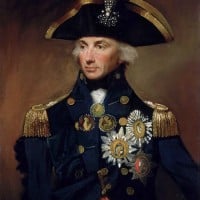
British Admiral Horatio Nelson (1758-1805) was a prominent figure during the Napoleonic Wars and secured victory at the Battle of Trafalgar. His bold tactics and leadership solidified Britain's naval supremacy during the period.
Not only an outstanding tactician, but a leader who could inspire his people to rise to great heights. His personal courage inspired his entire generation. He put his life on the line for his country, died doing it, and made his last words an inspiration to others.
The first naval commander in history to fully train his subordinate officers and then trust them to make the right decisions in the height of battle. Nelson invented the 20th-century Western model of victory.
One arm, one eye, a tendency to be seasick, and a sense of duty strong enough to corral an elephant. Nelson served his country successfully right until the end.
-
Togo Heihachiro
Japanese Admiral Togo Heihachiro (1848-1934) commanded the Imperial Japanese Navy to victory over Russia in the Russo-Japanese War, most notably at the Battle of Tsushima. His success marked Japan's emergence as a naval power.
The perfect model for a 19th-century admiral. His detailed reports covering his observations of other navies show high intelligence and attention to all aspects of his potential opponents. Starting as a samurai with a sword in his hand, he rose to be a modern commander who was the first to use radio telegraph communications to successfully position his fleet at Tsushima.
If Beatty had applied the same lesson at Jutland, he may not have lost contact with his fast battleships. A master of his craft, he proved to be better than his Royal Navy teachers.
He started his seagoing combat career under the command of the great Tsuboi Kozo as a ruthless but decisive cruiser captain, fighting at the great Battle of the Yalu in 1894.
Admiral Togo later applied the lessons of his first war and showed a great willingness to take his battlefleet to sea, actively seeking out the enemy and displaying an ability to fight under the most advantageous conditions possible. He understood the importance of asymmetric warfare in the form of torpedoes. His perfectly realized ambush and destruction of the Russians at Tsushima in 1905 is one of the most decisive naval battles of all time and marks Togo out as one of the all-time greats.
-
Karl Dönitz
German Admiral Karl Dönitz (1891-1980) led the Kriegsmarine's U-boat fleet in World War II and later succeeded Hitler as Germany's head of state briefly in 1945. His strategy intensified the Battle of the Atlantic.
The greatest naval admiral of all time must be on no one's list. First, create wolf pack tactics like him and then compare this legend with other novices.
Karl Dönitz was a German admiral who played a major role in the naval history of World War II. Dönitz briefly succeeded Adolf Hitler as the head of state of Germany. He began his career in the Imperial German Navy before World War I.
-
Hayreddin Barbarossa
Ottoman Admiral Hayreddin Barbarossa (c. 1478-1546) was a major figure in establishing Ottoman naval dominance in the Mediterranean. He secured the Ottoman Empire's position through victories against European fleets.
The greatest tactician and admiral of all times. He defeated much larger fleets composed of the Holy Alliance of Europe with his comparably smaller (one fifth in numbers) fleet. He was not only a great soldier but a very admirable human being who ruled some of the most difficult tribes in Algeria and Tunisia.
He was the most successful pirate and later admiral in the Ottoman Navy. He ruled his own country, which is now called Algeria. His success against the Venice navy with a small fleet made the Mediterranean Sea a Turkish lake in history.
-
Isoroku Yamamoto
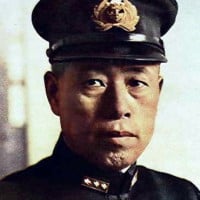
Japanese Admiral Isoroku Yamamoto (1884-1943) orchestrated the Pearl Harbor attack in 1941 and commanded forces in the Pacific during World War II. His strategies heavily influenced the initial successes of the Imperial Japanese Navy.
Isoroku Yamamoto was a Japanese Marshal Admiral of the Navy and the commander-in-chief of the Combined Fleet during World War II until his death.
The best admiral. He already predicted that Japan couldn't fight for more than seven months, although that is still controversial.
Brilliant tactician, unfairly blamed for the demise of the Japanese navy.
-
Francis Drake
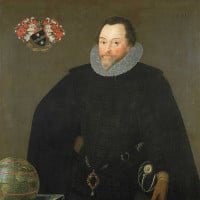
English Admiral Francis Drake (c. 1540-1596) was a key leader in defeating the Spanish Armada in 1588 and is famous for his circumnavigation of the globe. As a privateer, he raided Spanish possessions, impacting Spain's maritime interests.
-
Michiel de Ruyter
Dutch Admiral Michiel de Ruyter (1607-1676) is noted for his role in the Anglo-Dutch Wars, including his daring raid on the Medway. His leadership preserved Dutch interests and naval strength against England and France.
Without him, the Netherlands would probably belong to the French or the British now. With a smaller number of ships, he was able to beat many hostile fleets multiple times. Even though he was born as a normal citizen, he worked his way up through the ranks and obtained the highest position in the Dutch marine.
In the third Dutch-Anglo war, he defended the Dutch from a French-English fleet four times, even though he had a smaller number of ships. De Ruyter used tactics that, for example, Nelson later reinvented (on his own, of course, but still).
The most important admiral ever, when you disregard Themistocles, you know, from the Battle of Salamis, which was probably the most important sea battle in history.
De Ruyter beat the combined French-English fleet four times in 1672 and 1673 with brilliant maneuvers and flagging signals, even though half his fleet had to stay at home because the Netherlands had 300,000 French soldiers in its territory, plus a lot of soldiers from the Bishop of Münster. This was the so-called Holland War. D'Artagnan, well known from Dumas' Musketeers, really died in the Siege of Maastricht, as is also well known from the third book. France never had the resources for this kind of campaign again, and France went bankrupt in 1787 and 1789. Without Michiel de Ruyter, this would never have happened.
The Holland War was the decisive moment between the old order of Catholic kings of France, England, the German bishops, and others, while only helped by Dresden in Saxony and Brandenburg. It was the confrontation between the Enlightenment of the Dutch Republic, where the microscope and telescope were invented, and the Middle Ages of France, England, and others. Without Michiel de Ruyter, Europe would still be in the Middle Ages. Without De Ruyter's victories, the so-called Glorious Revolution of 1688, the French Revolution, and the independence of the U.S. would never have happened.
After Holmes's Bonfire in 1666, an English slaughter in the Netherlands, Michiel de Ruyter sailed into Kent with his fleet and burned down the English fleet in Chatham. It was the biggest humiliation for England ever, but it was the only option to get peace.
-
John Paul Jones
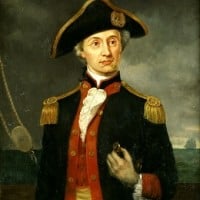
American naval commander John Paul Jones (1747-1792) is celebrated for his actions during the American Revolutionary War, especially his victory in the Battle of Flamborough Head. Known as a "Father of the American Navy," he gained a formidable reputation.
I think of John Paul Jones as a real hero to the American colonies. He proved himself as the bravest man when his ship was in danger. Despite the danger, he won the battle and showed he doesn't give up. As soon as he won the battle...
Not only was he the most formidable Brit in history, John Paul Jones was also very skilled and, to be honest, handsome.
John Paul Jones was the United States' first well-known naval commander in the American Revolutionary War.
-
Andrea Doria
Italian Admiral Andrea Doria (1466-1560) played a central role in the Mediterranean as a Genoese commander, often allied with the Holy Roman Empire. His naval strategies helped preserve Genoa's independence and influence.
-
?
Alfred von Tirpitz
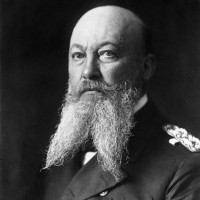
German Admiral Alfred von Tirpitz (1849-1930) was the architect of the German Imperial Navy's expansion before World War I. His naval policies and shipbuilding initiatives aimed to challenge British naval supremacy, intensifying the naval arms race.
-
?
Niels Juel
Danish Admiral Niels Juel (1629-1697) commanded forces in the Scanian War, achieving victories such as the Battle of Køge Bay. His leadership fortified Denmark's naval position in the Baltic Sea during the 17th century.
-
Chester W. Nimitz
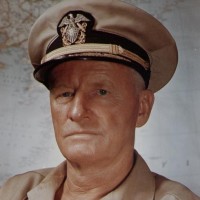
American Admiral Chester W. Nimitz (1885-1966) commanded the U.S. Pacific Fleet during World War II, overseeing key battles like Midway and Guadalcanal. His leadership contributed to the Allied victory in the Pacific theater.
As Commander in Chief in the Pacific, he victoriously commanded the largest fleet ever assembled in history during the largest naval actions in history.
Chester William Nimitz, Sr., was a fleet admiral of the United States Navy. He played a major role in the naval history of World War II as Commander in Chief, United States Pacific Fleet, and Commander...
Should be ranked way higher. This man was a legend in maneuver and rightfully defeated the Japanese Navy. Losers should not rank so high.
-
Peter Tordenskjold
Norwegian-Danish Admiral Peter Tordenskjold (1690-1720) gained renown for his exploits in the Great Northern War, especially during the Battle of Dynekilen. He became a national hero for his contributions to the Danish-Norwegian navy.
-
Louis-René Levassor de Latouche Tréville
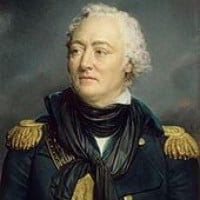
French Admiral Louis-René Levassor de Latouche Tréville (1745-1804) served during the American Revolutionary War and the Napoleonic Wars. His engagements helped secure French interests and resist British naval forces.
Louis-René Madelaine Le Vassor, Comte de La Touche-Tréville, was a French vice-admiral. He fought in the American War of Independence and became a prominent figure of the French Revolutionary Wars and of the Napoleonic Wars.
-
Zheng He
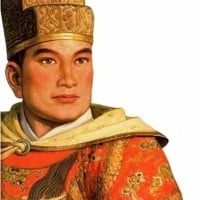
Chinese Admiral Zheng He (1371-1433) led seven major expeditions to Asia, Africa, and the Middle East during the Ming Dynasty. His voyages expanded China's trade influence and diplomatic presence abroad.
-
Fyodor Fyodorovich Ushakov
Russian Admiral Fyodor Ushakov (1745-1817) served in the Russo-Turkish Wars, securing Russian victories in the Black Sea. His innovative tactics made him a revered figure in Russian naval history.
The most renowned and revered Russian admiral in the 18th century and one of the most competent officers in the Napoleonic Wars, his talent was often overlooked by the internet community. He had scored multiple victories against the Ottoman Empire in the face of larger opponent fleets, many of them with an unbelievable loss exchange ratio, the likes that can be matched by Yi Sun-Sin at times.
He devised maneuver tactics that Horatio Nelson would later use in Trafalgar, the most famous victory of the legendary British admiral. While putting him in the first spot might bring about great debate, Ushakov definitely deserved a Top 3 or Top 5 on this list.
-
Henry Morgan
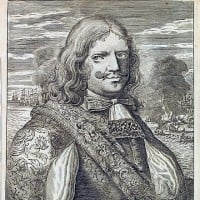
Welsh Admiral and privateer Henry Morgan (c. 1635-1688) conducted successful raids in the Caribbean on behalf of England. Known for his capture of Panama, he was later appointed Lieutenant Governor of Jamaica.
I mean, he was pretty darn successful... just saying.
-
Afonso de Albuquerque
Portuguese Admiral Afonso de Albuquerque (1453-1515) expanded Portugal's influence in the Indian Ocean through a series of military campaigns. His conquests helped establish a Portuguese colonial presence in Asia.
Beat the Ottoman Empire's navy multiple times in the 15th century. Led the first European expedition into the Persian Sea. Conquered parts of India. Was known to engage larger armies and navies and beat them. Pioneered sea trade with the Ming Dynasty (China), Thailand, Malaysia, and Indonesia. Nicknamed "the Great," "the Terrible," "the Caesar of the East," "the Lion of the Seas," and Portuguese Mars.
-
Raymond A. Spruance
American Admiral Raymond A. Spruance (1886-1969) commanded U.S. forces at the Battle of Midway and later at the Battle of the Philippine Sea. His strategic acumen was crucial in securing key victories in the Pacific.
The admiral who led the US forces during the Battle of Midway, the turning point in the war against the Japanese. His thinking and leadership skills are amazing, always keeping calm during situations of crisis.
Architect of Midway and his choice of a defensive stance in the Philippine Sea destroyed the rebuilt Japanese air power.
Brains behind the turning point of World War II, the Battle of Midway.
-
William Halsey Jr.
American Admiral William Halsey Jr. (1882-1959) was a key figure in the Pacific theater of World War II, particularly in battles like Leyte Gulf. Known for his aggressive tactics, he contributed to Allied dominance over Japan.
Best of the best. His tactics were outstanding. His men loved him and held him in high regard. Also a pilot. Although Spruance got the credit for Midway, a lot of the victory belonged to Halsey even though he was in the hospital.
Bill Halsey was aggressive, unlike many other US Navy admirals during World War II.
-
Samuel Hood
British Admiral Samuel Hood (1724-1816) served during the American Revolutionary War and later in the Napoleonic Wars. His tactical skill influenced British naval operations in the Caribbean and Mediterranean.
HMS Hood was named after him, and that ship has an entire cult to it. If not, then Google "the Mighty Hood".
-
Arthur Phillip
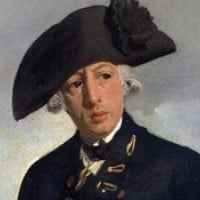
British Admiral Arthur Phillip (1738-1814) was the first Governor of New South Wales and led the First Fleet to Australia. His leadership established the first European settlement on the continent.
Admiral Arthur Phillip was a Royal Navy officer and the first Governor of New South Wales, who founded the British penal colony that later became the city of Sydney, Australia.
-
Anne Hilarion de Costentin, Comte de Tourville
French Admiral Anne Hilarion de Costentin, Comte de Tourville (1642-1701), commanded forces in the Nine Years' War, notably at the Battle of Beachy Head. His naval strategies secured French victories in the English Channel.
Versatile, courageous, and cunning, Tourville was one of the few French admirals who could get the best of the Royal Navy time and again. He made the English Channel into the French Channel after the Battle of Beachy Head. He fought a numerically superior allied fleet almost to a standstill at Barfleur and, though subsequently defeated, was able to change his strategy afterwards. The very next year, he outsmarted the British to fall upon the Smyrna Convoy and took a hundred enemy ships with ease.
-
Maarten Tromp
Dutch Admiral Maarten Tromp (1598-1653) was a prominent commander in the Anglo-Dutch Wars, noted for his victory at the Battle of Dungeness. His leadership bolstered Dutch maritime power during the 17th century.
-
Piet Hein
Dutch Admiral Piet Hein (1577-1629) captured a Spanish treasure fleet in 1628 during the Eighty Years' War. This significant victory bolstered Dutch resources in their fight for independence.
-
Pierre André de Suffren
French Admiral Pierre André de Suffren (1729-1788) led campaigns in the Indian Ocean against the British during the American Revolutionary War. His naval battles impacted French colonial interests in the region.