Top 10 Best Styles of Architecture
-
Neoclassical

Neoclassical architecture emerged in the mid-18th century as a revival of classical Greek and Roman styles. It emphasizes symmetry, grand scale, and the use of columns and domed roofs. The style often features clean lines and minimal ornamentation compared to earlier Baroque influences.
Absolutely the most beautiful style of architecture ever made. It brings beauty to any city through great aesthetic and good design. Although I admit modern interiors are way better than classical interiors, Neoclassical exteriors are completely incomparable to modern architecture, putting every new building to shame.
The architectural style that began in the mid-18th century is a more modern form of ancient Greek and Roman architecture. The buildings in this style are so awesome. It's my favorite architectural style.
-
Modern

Modern architecture developed in the early 20th century and emphasizes function, simplicity, and the rejection of ornament. It often incorporates industrial materials such as steel, glass, and concrete. The style is associated with movements such as Bauhaus and the International Style.
My favorite architecture style by miles, and definitely the best looking.
I disagree with another person who commented on this item and described it as 'boring'. Modern architecture is often simple, but that definitely doesn't mean it's boring. Simple things can be nice.
I dislike traditional architecture because it's so fussy and complex, making it look and feel unpleasant.
Modern architecture is great and aesthetically pleasing.
-
Renaissance
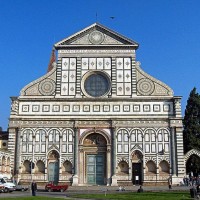
Renaissance architecture originated in Italy during the 15th century and marked a return to classical Roman principles. It features symmetrical layouts, domes, and columns inspired by antiquity. Architects such as Brunelleschi and Alberti were key figures in its development.
Architecture from the 1400s to the 1700s is a very beautiful style.
-
Gothic
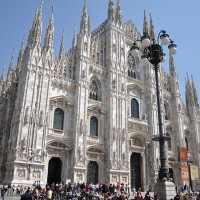
Gothic architecture first appeared in 12th-century France and is characterized by pointed arches, ribbed vaults, and flying buttresses. It was primarily used in the construction of cathedrals and churches. The style often includes stained glass windows and intricate stone carvings.
This style features many churches and castles from the medieval ages found all across Germany, France, the Czech Republic, etc.
-
Classical

Classical architecture is based on the principles and structures developed in ancient Greece and Rome. It includes the use of columns, proportion, and symmetry rooted in mathematical harmony. The three main orders are Doric, Ionic, and Corinthian.
Also known as classical architecture, the ancient Greeks and Romans had lots of great buildings.
-
Victorian

Victorian architecture refers to a range of styles that emerged during Queen Victoria's reign from 1837 to 1901. These buildings often include decorative trim, asymmetrical facades, and steeply pitched roofs. The style encompasses subtypes such as Queen Anne, Gothic Revival, and Italianate.
Many impressive buildings were built from the mid-1800s to early 1900s. This era is known as the Victorian era.
Assassin's Creed games make me fall in love with this type of architecture.
They had style and built sturdy structures.
-
Futuristic

Futuristic architecture emphasizes forward-looking designs that often feature unconventional shapes, high-tech materials, and advanced engineering. It aims to evoke innovation and frequently incorporates elements such as asymmetry and transparency. The style is commonly found in concept designs and experimental buildings.
Architecture that is very futuristic. Although it is very impressive, it is still in its early form, so we don't know what's to come yet.
Honestly, future architecture can be a combination of what's popular at the time.
-
Byzantine

Byzantine architecture developed in the Eastern Roman Empire and is known for its massive domes, mosaics, and centralized church plans. It often uses brick and plaster over concrete construction. The Hagia Sophia in Istanbul is a prominent example of this style.
Just like Islamic architecture, Byzantine architecture also has great domes. Many Byzantine-era and Byzantine-esque buildings are awesome, especially with their domes. It represents the crossroads of Eastern and Western cultures and civilizations.
-
Islamic
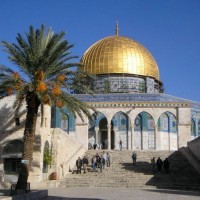
Islamic architecture spans from the 7th century onward and includes elements such as domes, minarets, and intricate geometric patterns. It frequently incorporates calligraphy and arabesques in its decoration. Notable examples include mosques, madrasas, and palaces.
Many buildings that were built during the Muslim Golden Age (8th century to 14th century) have really good domes. In fact, some of the best-domed buildings are found here.
-
Brutalist
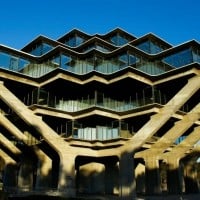
Brutalist architecture developed in the mid-20th century and is known for its use of raw concrete and block-like forms. The style often presents an austere, monumental appearance. It was commonly used for government buildings, universities, and housing complexes.
A style of architecture that became popular in the mid-20th century, it is a form of modernist architecture. Despite the gloomy and depressing nature of some of these buildings, as well as the odd features of some others, they are quite impressive.
-
?
Googie
Googie architecture emerged in post-World War II America and is associated with futuristic designs, upswept roofs, and bold use of glass, steel, and neon. It was popular in commercial buildings such as diners, motels, and gas stations. The style drew inspiration from car culture, space exploration, and the Atomic Age.
-
?
Streamline Moderne
Streamline Moderne is a late type of Art Deco architecture that emerged in the 1930s, emphasizing aerodynamic curves and horizontal lines. It often incorporates glass blocks, rounded corners, and nautical elements. The style reflects the influence of industrial design and modern transportation.
-
Art Nouveau
Art Nouveau architecture flourished in the late 19th and early 20th centuries and is characterized by flowing lines, organic shapes, and decorative motifs inspired by nature. It often incorporates stained glass, wrought iron, and ornamental tilework. The style aimed to break away from historical revivals.
-
Art Deco

Art Deco emerged in the 1920s and 1930s and features geometric patterns, bold colors, and lavish ornamentation. It often uses materials such as chrome, glass, and concrete. The style is associated with luxury, modernity, and technological progress.
-
Tudor
Tudor architecture refers to the final development of medieval architecture in England during the Tudor period from 1485 to 1603. It features steeply pitched gable roofs, half-timbering, and tall, narrow windows. Chimneys and brickwork are also prominent in this style.
-
Sudano-Sahelian
Sudano-Sahelian architecture is found in West Africa and is characterized by adobe construction and wooden support beams that protrude from the walls. It often features large, flat roofs and tapered towers. The Great Mosque of Djenné is a key example.