Top 10 Rock Albums of 1961
-
Roy Orbison Sings Lonely and Blue - Roy Orbison

Roy Orbison Sings Lonely and Blue is one of the defining statements of early rock’s dramatic and emotionally expansive side. Orbison had already developed an unmistakable vocal identity, but this album presents the full scale of his artistry: intense loneliness, romantic uncertainty, sweeping melodies, and performances that seem to grow larger than the songs themselves.
Orbison’s voice is the album’s central instrument. He could begin in a restrained, almost conversational register and gradually rise into a powerful high tenor that conveyed desperation without becoming melodramatic. His vocal range allowed him to turn heartbreak into something almost operatic while still remaining connected to rock ’n’ roll’s direct emotional language.
The album blends rockabilly, country, pop, and rhythm and blues. Its arrangements are not as stark as those of a small rockabilly combo, but they retain rhythmic movement and vocal urgency. Guitars, piano, backing vocals, and carefully shaped production support Orbison without competing with him.
What makes the record especially important is its emotional seriousness. Many early rock songs dealt with romance through excitement, flirtation, rebellion, or dance. Orbison focused instead on vulnerability, regret, emotional isolation, and the fear of losing someone. He helped establish the idea that rock music could be grandly tragic without losing its immediacy.
The songs are united by atmosphere rather than a single tempo or formula. Some performances are driving and rhythmically sharp, while others unfold as dramatic ballads. Orbison’s voice connects everything, giving the album a consistent emotional world.
Lonely and Blue deserves the top position because it expands the emotional vocabulary of rock. It demonstrates that rock could be cinematic, vulnerable, and vocally ambitious while remaining rooted in the music’s original directness. The album is not merely a collection of sad songs; it is an early example of rock becoming a vehicle for personal drama on a large scale.
-
Bo Diddley Is a Lover - Bo Diddley
Bo Diddley Is a Lover shows Bo Diddley exploring romantic and personal themes without abandoning the rhythmic identity that made him unique. His music remains grounded in the insistent Bo Diddley beat, but the album demonstrates that this rhythm could support more than bravado, novelty, or confrontation.
Bo’s approach to romance is rarely sentimental. His songs have movement, wit, confidence, and a sense of negotiation. Love is presented as something energetic and unpredictable rather than soft and passive. His voice can sound teasing, self-assured, suspicious, or warmly persuasive, often within the same performance.
The guitar remains central. Bo’s playing is dry, percussive, and rhythmically aggressive, functioning almost like another drum. He uses the instrument to reinforce the groove, create tension, and mark the structure of a song. The guitar lines are often simple in outline but powerful in effect because they are integrated so completely with the percussion.
The album also reflects Bo’s skill as an arranger and producer. The music is tightly organized around repetition, vocal exchanges, rhythmic accents, and instrumental color. The performances may sound spontaneous, but they possess a strong internal discipline. Every pause and guitar hit contributes to the record’s personality.
Bo Diddley’s music occupies an unusual space between rhythm and blues, rock ’n’ roll, blues, and experimental sound. He could take a limited rhythmic framework and make it feel constantly new through changes in vocal emphasis, guitar tone, pacing, and lyrical attitude. His work at Chess Studios helped establish a sound that was immediately recognizable yet difficult for other musicians to imitate convincingly.
Classic Rock History
Bo Diddley Is a Lover earns its place near the top because it proves that originality does not require abandoning simplicity. Bo takes a foundational beat, a distinctive guitar sound, and a commanding personality, then uses them to create an album that feels both familiar and completely unlike anyone else’s work.
-
Jerry Lee's Greatest! - Jerry Lee Lewis
Jerry Lee’s Greatest! presents Jerry Lee Lewis as one of rock’s most explosive performers. His music is built around the piano, but the instrument is not used in a polite or restrained manner. Lewis attacks it with pounding chords, rapid runs, rhythmic accents, and sudden bursts of energy.
His vocal style matches the piano. He can sound boastful, playful, lustful, defiant, desperate, or almost recklessly amused. Even when performing familiar rock ’n’ roll material, he gives the impression that he might push the song beyond its limits at any moment.
The performances have a strong physical quality. Lewis’s piano playing creates the sense that the music is being propelled from the stage rather than carefully assembled in a studio. The instrument becomes percussion, rhythm guitar, bass reinforcement, and lead voice all at once.
A major strength of the collection is its variety of moods. Lewis could deliver hard-driving rockers, country-influenced songs, blues-based performances, and more emotionally direct material while maintaining his distinctive identity. The common thread is his sense of attack: every song feels like an event.
His charisma is inseparable from his musicianship. Lewis did not simply play the piano well; he made the act of playing part of the performance. The pounding, vocal interjections, rhythmic shifts, and moments of apparent danger all contribute to his stage persona.
The album represents the volatile side of early rock: theatrical, rebellious, humorous, technically demanding, and emotionally excessive. It is music that refuses to behave. Even when the arrangements are straightforward, Lewis’s delivery makes them unpredictable.
Jerry Lee’s Greatest! belongs in the top three because it captures the piano-driven force of rock ’n’ roll at one of its most intense points. It demonstrates why Lewis was not merely a successful singer but one of the genre’s great musical personalities.
-
Runaround Sue - Dion
Runaround Sue is Dion’s defining album and one of the clearest expressions of early-1960s street-corner rock. It combines doo-wop harmonies, rhythm and blues, pop songwriting, and a distinctly urban vocal personality.
Dion’s singing is conversational and charismatic. He does not sound distant from the listener; he sounds like someone telling a story directly, with humor, irritation, charm, and a touch of self-protective swagger. His phrasing gives the songs a sense of movement, as though the narrative is unfolding in real time.
The album’s vocal arrangements are especially important. Dion’s lead voice is supported by tight harmonies associated with New York doo-wop and neighborhood singing groups. These backgrounds add both musical richness and a strong sense of place. The sound is polished enough for pop radio but retains the communal feeling of voices gathered around a street corner.
The title song exemplifies the album’s appeal. It is catchy and danceable, but its character comes from the tension between affection and distrust. Dion’s narrator is attracted to the person he is describing yet also frustrated by her reputation and behavior. That mixture of humor, warning, and emotional involvement gives the material more personality than a simple romantic song.
The album also shows Dion’s ability to move between energetic rockers and more reflective performances. His music is not defined by one tempo. Instead, it is unified by his voice, his storytelling instincts, and the sound of his vocal world.
Runaround Sue represents the urban, melodic, and socially observant side of early rock. It is less aggressive than Jerry Lee Lewis, less experimental than Bo Diddley, and less operatic than Roy Orbison, but its directness is its strength. Dion turns neighborhood language, vocal-group harmony, and teenage romance into a highly distinctive rock identity.
-
There's a Party Goin' On - Wanda Jackson
There’s a Party Goin’ On captures Wanda Jackson at the intersection of rockabilly, country, and dance-oriented rock ’n’ roll. The album’s title accurately reflects its atmosphere: lively, communal, fast-moving, and full of the sense that the listener has entered an already active celebration.
Jackson’s voice gives the record its force. She can be playful, flirtatious, aggressive, teasing, or commanding, but she is never passive. Her delivery has a physical sharpness that makes the music feel ready for dancing. Even when the arrangements are relatively compact, her vocal attack gives them extra voltage.
The album’s country roots remain clearly audible. Fiddle, guitar, rhythm section, and vocal phrasing retain a connection to honky-tonk and Western swing, while the tempo and attitude push the material toward rockabilly. Jackson’s music demonstrates how naturally country and rock could interact before later genre categories became more rigid.
The record is also significant because of Jackson’s position as a female rock performer during a period often described too narrowly through male artists. She does not imitate the posture of male rockabilly singers; she establishes her own. Her toughness, humor, and emotional directness give the songs a distinctive authority.
There is a strong sense of performance throughout the album. Jackson sounds like someone who understands an audience and knows how to keep its attention. She can exaggerate a lyric for comic effect, sharpen a phrase into a challenge, or let a melody carry a more vulnerable feeling without losing control.
There’s a Party Goin’ On deserves its ranking because it combines celebration with personality. It is not simply a collection of dance songs. It is a showcase for Jackson’s ability to make rockabilly sound energetic, feminine, country-rooted, and fiercely independent all at once.
-
The Ventures - The Ventures
The Ventures’ self-titled album is a major statement from one of the most important instrumental rock groups of the early 1960s. Without relying on a lead vocalist, the band creates a complete musical identity through electric guitars, bass, drums, arrangement, and tone.
Their playing is precise but not sterile. One guitar generally carries the principal melody while another supplies harmony, rhythmic reinforcement, or answering phrases. This creates a clear, layered texture in which each instrument has a defined function.
The Ventures’ sound is especially effective because it is both accessible and technically impressive. Their melodies are memorable, their rhythms are direct, and their arrangements can be followed easily by casual listeners. At the same time, the tightness of the ensemble provides musicians with a model of how to play instrumental rock as a coordinated group rather than as a loose collection of guitar parts.
The album also reflects the early-1960s fascination with movement and modern life. Instrumental rock suggested cars, beaches, television, dancing, travel, and youth culture without requiring lyrics to explain those associations. Listeners could attach their own images and stories to the music.
Compared with the rougher sound of Link Wray, The Ventures are cleaner and more controlled. Their guitar tone is bright, articulate, and carefully recorded. Yet the music still retains the excitement of rock because the rhythm section is firm and the arrangements are designed for momentum.
The album’s importance extends beyond its original period. The Ventures helped establish an international template for guitar bands, surf-rock groups, garage musicians, and aspiring instrumentalists. Their music was highly adaptable, which helped it travel across national and cultural boundaries.
The Ventures ranks highly because it demonstrates that instrumental rock could be melodic, commercial, technically disciplined, and genuinely exciting without sacrificing its identity.
-
The Shadows - The Shadows
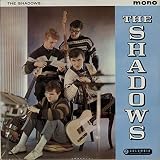
The Shadows is one of the foundational albums of British instrumental rock. The group’s music is defined by clean electric-guitar lines, strong melodic hooks, precise rhythm playing, and a polished atmosphere that differs from the rougher sound of many American rockabilly records.
Hank Marvin’s guitar is central to the group’s identity. His playing uses clarity, sustain, echo, and carefully shaped melodic phrases rather than sheer distortion or aggression. The result is a sound that can feel spacious, dramatic, and almost cinematic.
The Shadows understand the value of memorable melody. Their instrumental pieces often function like vocal songs, with the guitar taking the role of the singer. The melodies are easy to follow, but the arrangements give them enough color and movement to remain compelling over repeated listens.
The band’s rhythm section is equally important. The drums and bass do not merely support the guitar; they establish the controlled pulse that allows the melodies to sound confident. The group’s precision gives the music a sense of elegance while retaining a rock foundation.
The album also helped define a specifically British approach to instrumental guitar music. Although The Shadows were influenced by American rock ’n’ roll, country, and rhythm and blues, they transformed those influences into something more polished and atmospheric. Their sound would influence countless British guitarists and bands.
The Shadows’ music is less rhythmically primitive than Bo Diddley’s, less abrasive than Link Wray’s, and less dance-oriented than The Ventures’ work. Its strength lies in mood and melodic shape. A guitar phrase can suggest distance, motion, romance, suspense, or open space without a single lyric.
The album deserves its position because it shows the emergence of a major British guitar tradition. It is foundational not only as early rock but also as a blueprint for the instrumental sound that would shape British pop and rock throughout the decade.
-
Runaway With Del Shannon - Del Shannon
Runaway With Del Shannon is one of the most distinctive debut-era statements in early-1960s rock. Its centerpiece is Del Shannon’s dramatic voice, but the album’s originality also comes from its unusual electronic keyboard textures and its combination of rockabilly urgency with pop atmosphere.
Shannon’s vocal style is emotionally exposed. He could sound wounded, anxious, urgent, and almost haunted, particularly when he shifted into his famous high register. His voice does not simply deliver the lyrics; it seems to embody the emotional instability of the songs.
The music is built around a striking combination of familiar and futuristic elements. Guitar, drums, and rock ’n’ roll rhythms provide the foundation, while Max Crook’s Musitron adds an unusual electronic sound that gives the material an eerie, modern edge. The instrument’s tone helps distinguish Shannon from other singers of the period.
The album’s appeal comes partly from its atmosphere of emotional motion. The songs often suggest walking, leaving, searching, remembering, or trying to understand a relationship that has broken down. This gives the record a restless quality, as though the narrator is unable to remain emotionally still.
Shannon’s melodies often combine direct pop hooks with darker harmonic and vocal inflections. The music is accessible, but it does not sound entirely comfortable. There is tension between the commercial clarity of the arrangements and the emotional unease in Shannon’s performances.
The title track became a major 1961 hit and reached number one on the Billboard Hot 100, helping define Shannon’s public identity.
But the album is more than a vehicle for one successful single. It documents a singer and producer discovering a distinctive sound at the precise moment when rock was becoming more technologically and emotionally adventurous.
Runaway With Del Shannon ranks eighth because it points toward a future in which rock could be dramatic, electronic, psychologically intense, and commercially melodic at the same time.
-
New Juke Box Hits - Chuck Berry
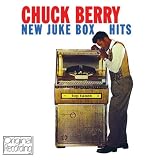
New Juke Box Hits shows Chuck Berry continuing to refine the songwriting and guitar style that had already become fundamental to rock ’n’ roll. By 1961, many musicians had borrowed his riffs, rhythms, themes, and storytelling techniques, but Berry still sounded unmistakably individual.
His guitar playing is economical and instantly communicative. A few sharp notes can establish a song’s identity, while his rhythmic chords keep the performance moving forward. Berry was not interested in guitar solos that existed merely as displays of technique. His guitar parts are integrated into the narrative and rhythmic structure of the songs.
The album’s songwriting remains one of its greatest strengths. Berry writes about communication, romance, youth, social behavior, performance, and everyday complications with a combination of wit and precision. His lyrics often contain a sense of observation: he notices what people do, how they speak, what they desire, and how they try to present themselves.
His vocal delivery is controlled rather than explosive. Berry’s cool, articulate phrasing allows the words to remain prominent. He sounds amused by the situations he describes, but he is also clearly in command of the music.
The album belongs to a mature phase of Berry’s work. It does not have to introduce the basic vocabulary of rock; that vocabulary is already established. Instead, the record demonstrates how effectively he could continue using it. His rhythms remain danceable, his guitar parts remain distinctive, and his lyrics remain full of movement and character.
New Juke Box Hits earns its place because it reminds listeners that rock’s foundations were not only built by singers with dramatic voices or guitarists with unusual sounds. Berry helped define the genre through structure, language, rhythm, persona, and songwriting craft. This album shows the durability of that approach.
-
At the Rock House - Roy Orbison
At the Rock House offers a valuable view of Roy Orbison before the fully developed orchestral and dramatic style associated with his later work. The album is rooted more directly in rockabilly, country, and early rock ’n’ roll, giving listeners a chance to hear the foundations of the voice that would soon become one of the most distinctive in popular music.
Orbison’s early singing is already remarkable. Even in a more energetic rock setting, he possesses unusual control and emotional focus. His voice can sound youthful and direct, but it also hints at the dramatic range he would later develop.
The album’s connection to Sun Studio and producer Sam Phillips is important. The performances retain the lean, rhythm-centered character associated with the Memphis sound, with guitar, bass, drums, and vocal kept close to the listener. The music is less expansive than Lonely and Blue, but it is full of movement and youthful confidence.
The rockabilly foundation gives Orbison room to experiment with rhythmic phrasing. He does not yet sound entirely like the grand ballad singer of his later career. Instead, he works within a more compact format, emphasizing groove, guitar interplay, and direct hooks.
The album is also historically valuable because it documents artistic development. Orbison’s later style did not emerge from nowhere. It grew out of this earlier mixture of country feeling, rock ’n’ roll rhythm, emotional vulnerability, and vocal ambition.
At the Rock House ranks tenth because it provides a vivid counterpart to Lonely and Blue. Together, the two Orbison albums on this list show both ends of his early artistic identity: the raw, youthful rockabilly performer and the deeply dramatic singer capable of turning loneliness into widescreen rock music.