Most Powerful Countries In 1914
Which powers were the most powerful in 1914, at the onset of WWI?
Please only answer if you are knowledgeable in world affairs during this time period.
-
British Empire
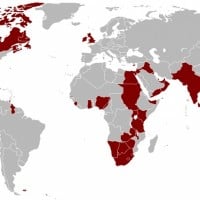
Britain was in the unique position of having worldwide dominance in naval transport, boasting a navy unmatched by any other nation. Their status as an island nation allowed them to outproduce all other nations navally, while still reaping the benefits of their extensive colonial and dominion systems.
As for the British Army, it was weak, but this was compensated for by a massive manpower reserve. With a huge economy backing them, massive available manpower, and total dominance of sea lanes, they could engage in a war of attrition that few other nations could match.
The British Empire was the largest empire in the world and benefited economically from its colonies. As a result, it had the biggest economy in the world. Although it had a relatively small army, it possessed the strongest navy in the world. Given that the United Kingdom is an island, it would have been extremely difficult to invade. Their naval superiority was demonstrated when they won the naval arms race against Germany and imposed a naval blockade on Germany, which led to severe food shortages in the country.
-
German Empire
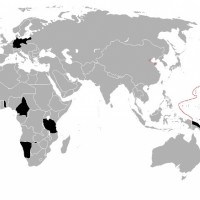
Germany was landlocked and outgunned by opponents with superior numbers and positions. Yet, Germany held on, fighting on two fronts: one against the Russian Bear and another against France and Britain. The start of the war also didn't follow their war predictions.
If that wasn't bad enough, Germany had allies with superior numbers but inferior tactics, economies, and technology. And yet, Germany became a formidable opponent, holding off the Russians, British, and French while supporting inferior allies who had no idea what type of war they had marched into.
They faced economic and technological challenges at the same time. The only reason they lost was the influx of US troops. In perspective, it was a miracle that Germany held on so long and disposed of so many opponents.
-
United States
It wasn't just 10,000 men. It was 150,000 before World War II. Plus, this is 1914, not 1941. World War I, not World War II. Plus, the army before we entered World War I was around 400,000 before President Woodrow Wilson ordered an increase to 800,000 and allowed conscription in 1913 due to political tensions rising in Europe between Austria-Hungary and Serbia.
And what's all this about us being weak before World War II anyway? Our economy had recovered from the Great Depression and was the best in the world. Our Navy was also the biggest, with Great Britain just a little further ahead. Our country is several dozen times bigger than Germany or France, even with their empires. We were smaller than the British Empire and the Soviet Union, but most of Russia is a barren wasteland, and oil around India, the Arabian Peninsula, and Africa hadn't even been discovered yet. Our entry into the war turned the tide in both World War I and World War II.
-
French Empire
They had a large, well-trained, and well-equipped army and navy with the industry and population to back it. They also had an extremely powerful air force for the time. I don't get how they are not number 2, let alone behind the US, who were pathetically weak.
France didn't have a small, weak army like the Brits. It was giant. They were also very well-trained. They also did great in about the worst position in the world.
France should be ranked number 3. I can tell they had a well-trained army, and their generals had better strategies. They were powerful at the time.
-
Austro-Hungarian Empire
The Austro-Hungarian Empire was incredibly powerful. However, due to literally all of its enemies having significantly better generals, it had led to many stalemates. Still, though, it proved itself nothing to mess with by disintegrating Russia's army in 1914, winning (with some help) the battle at Caporetto, repelling 11 different Italian attacks at the Isonzo River, and making the enemy run away scared at the Battle of the Otranto Strait.
There was much help needed on many fronts, and Austria-Hungary's K/D resembles that of a 3-year-old playing GTA. Austria-Hungary proved itself as one of the most powerful empires.
I think that Austria-Hungary was not a very shaky empire, even though it had internal problems with its multinational ethnic groups. It was still a great power because it had a large army, many resources, and the fastest-growing economy of all the European powers.
-
Ottoman Empire
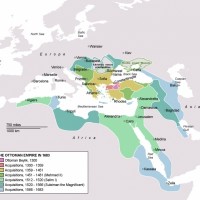
The Ottoman Empire was in a state of decay, with virtually no air force, a navy that was highly ineffective, and significant territorial losses in recent decades. However, the Ottoman Empire proved to be a formidable opponent, with superior generals and armies. After standing unfazed by the Gallipoli campaign and making a mockery of the British captors of Kut, it's easy to say that the Ottoman Empire, being the weakest of the three, pulled its weight. Thus, a vote for the Ottoman Empire for the #6 spot is well earned.
The Ottoman Empire was pretty strong, but due to multiple fronts, internal revolts, and foreign betrayals, they couldn't win the war during WWI. The Ottoman Empire was actually winning on all fronts except for Sarikamis, where they were pushed back for not being prepared for the cold weather. The Ottomans would have won in the Caucasus if it wasn't for the Armenian rebellions occurring in East Anatolia.
People say the Germans had a lot to deal with on two fronts, but look at the Ottomans. They had to deal with five fronts, such as Sinai in Egypt, Hejaz on the Red Sea coasts, Mesopotamia where their supply lines kept being interrupted, northeast Turkey in the Caucasus, and finally the Gallipoli Peninsula, where they fought nearly all the Western Allies combined.
-
Russian Empire
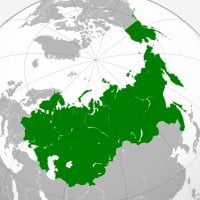
The Russian Empire had the largest army at the beginning of 1914, with 5 million men when fully mobilized. It also had a huge population for its time, so new recruits would never be a problem. Its economy was at the very least stronger than that of Austria-Hungary. I think it should at least take spot #4, if not #3.
The Russians had established the largest country the world has ever seen, dominating lands from northeast Asia to Eastern Europe. Their economy was flourishing, and their productivity was also high, though it was very backward compared to other European powers after centuries of Tsarist rule.
-
Japanese Empire
The Japanese had taken Taiwan, Port Arthur, and Korea during a war with China in 1894-1895 and also defeated Russia during the Russo-Japanese War (1904-1905). The Japanese were at this stage a dominant force in the Pacific, militarily-oriented, and had a booming labor force.
Yes, Japan lacked a lot to make them the best. But they had a great navy and good force overall. Japan in the 1890s captured some of China, Taiwan, and Korea. They could easily crush the German navy in the Pacific since they took down Germany's colonies in the Pacific. Japan was also a naval superpower.
-
Italy
In 1914, Italy had already conquered Libya. In the four years 1914-1918, the belligerent nations produced a total of over 195,000 aircraft and flying boats of all kinds. Italy alone produced over 12,000 airplanes, most of Russia and Austria-Hungary combined. Italy was the first nation in the world to use airplanes during World War I.
Enough with this nonsense about Italy as a "new country". Germany was born in 1871, 10 years after the birth of the Kingdom of Italy. Italy is much more ancient than its official birth date reveals.
Italy was a relatively new country and lacked an empire. Its production was extremely low compared to Germany and France.
-
Bulgaria
The Kingdom of Bulgaria participated in World War I on the side of the Central Powers from 14 October 1915, when the country declared war on Serbia, until 30 September 1918, when the Armistice of Thessalonica came into effect.
Y'all are sleeping on Bulgaria. They did really well against Greece and fully collapsed Serbia. They were definitely the strongest of the small Balkan states.
Underestimated country that won the Battle of Dojran against Greece and Britain while they were outnumbered!
-
?
Norway
-
?
Germany
-
Spain
Spain had a decent army that was pretty average but had a very good navy.
-
Canada
At one point, after World War II, Canada had the fourth-largest military in the world. Sure, our military is pathetically small for a country of our size, but we still make a great impact on the world today.
Why are we fourteenth? Sure, we had a small army, but we had the best.
The Canadians and some other Commonwealth countries created all-arms warfare, and they were much feared.
-
Romania
Romania was able to hold off three armies as well as make huge advances. It easily beat back the Central Powers when it started to get cornered. It took three armies to do it, and it didn't even fully work.
The Romanian military overall was a force of havoc. It earned the name "home of defense" by many soldiers from both sides. Most notably, the Russian soldiers called it this the most.
-
Serbia
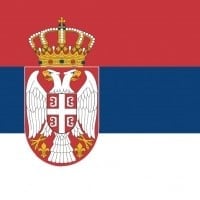
Serbia was fast-growing after the first Balkan war, even more so than Bulgaria. They were able to hold off one of Europe's greatest powers for years, despite their size.
The Serbians had bravery and were willing to fight to the end. That makes them a formidable force.
-
Sweden
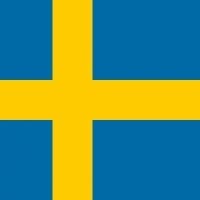
Sweden was so great we did not lose a single battle during the war.
-
Australia
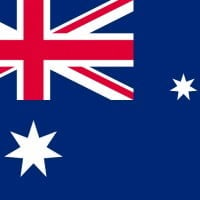
Monash - combined arms, fire, and maneuver. One of the most important figures in modern combat history. Late in the war, the Australians and Americans under his command showed how set defenses could be defeated without hideous casualty figures.
If you think the Japanese were powerful, we were the first to send them back.
-
Belgium

Belgium is actually severely underestimated during this period because they didn't stand up to Germany. However, they had a huge industrial capability for their size, notably in steel, a relatively large army, and large overseas possessions in the Congo. They were considered close enough to a great power to receive concessions in China after the Boxer Rebellion.
Belgium had a pretty good industry and a large population for its size. They also had a pretty decent army that was well-equipped.
-
Netherlands
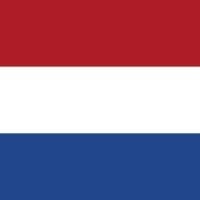
Neutrality and not having a large landmass in Europe made the Netherlands look less powerful than they actually were worldwide.
They had a great navy and a globally spanning empire. They certainly had the capability to win a war.
At the time, the Dutch Empire (other countries are also including colonies in the list) was way bigger than the Ottoman Empire, Italy, Japan, and Canada. It had approximately 51 million inhabitants and huge economic power. But as they remained neutral, they are perhaps overlooked in this list.
-
Portugal
Although its economy was a total disaster by 1914 and its foreign trade had been destroyed at least ten years earlier, its army was reasonably strong and its colonies were hubs for important resources. It had a strong relationship with Britain and a rapidly improving industry and navy.
Although there was a problem after Brazil's independence, it was WAY TOO dependent on the colonies.
-
India
Although not independent, India played a very important part in World War I. British Raj (or British India) was called "The Jewel in the Crown of the British Empire" for a very good reason. India was Britain's most populous colony. It helped fuel the empire economically. During the war, it helped supply troops in Africa, the Middle East, and Europe with food and supplies. Thousands of Indians died in Africa and the Middle East fighting the Ottomans and Germans.
India provided a lot of troops and supplies during both World Wars.
-
Greece
Greece was one of the main causes of Ottoman defeat in the First Balkan War, and unlike Serbia, they were on the offensive in the Second Balkan War and were more successful than the Serbian Army. It was also the only Balkan military with a formidable navy (Greece had a navy comparable to that of the Ottomans) and was also technologically the most advanced Balkan military in World War I. Its only downside is its small size.
Greece had a very good army that was well-trained, and one can argue it was the best country in mountain warfare. It also had a great navy and dominated the east of the Mediterranean.
-
China
The Chinese had suffered after years of European dominance and were still very unstable. However, the Chinese did have a considerable labor force.
-
Persia
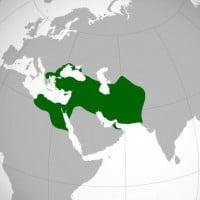
The Persian army in the Qajar era was quite strong. The main weapon in the army was an old rifle. They rode horses. They fought many wars and consumed a lot of their strength during the Qajar-British wars, the Russo-Persian, and Ottoman-Persian wars. Two million Persians died during the First World War. Against the Ottomans, Persia was against both the Allies and the Axis in the war.
-
Albania
-
Bhutan