Top 10 Most Influential Animals in Human History
-
Cat

The cat (Felis catus) is a domesticated small carnivorous mammal. It is the only domesticated species in the Felidae family and is commonly called the domestic cat to distinguish it from wild felines.
Cats can be house pets, farm cats, or feral cats. They are often valued for companionship and... read more
Heavily featured in memes, meows are cute, purring is soothing, they appear to be more space-efficient than dogs as they are small and can climb, effective hunters, a component of catgirls, and also terrible for endemic species in places where they are introduced. They multiply fast. Also, toxoplasmosis.
They are another significant pet, and they have influenced most of us at one point or another.
My cat is the only one that can make me happy sometimes.
-
Horse
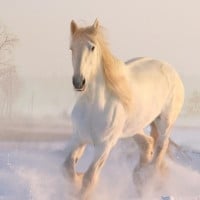
The horse is a one-toed, hoofed mammal of the family Equidae. Its domesticated subspecies is Equus ferus caballus. Horses evolved over 45 to 55 million years from the small, multi-toed Eohippus into the large, single-toed animal of today. ... read more
Horses are beautiful. They love you no matter what. I also read somewhere that when you meet a horse and they like you, that horse will miss you if you don't come back.
They are incredibly humane creatures and can actually understand more of the human language than most people think. They are amazing and definitely deserve to be number one.
By far the most important domestic animal, although mosquitoes may indeed have had more actual influence by simply killing people.
The horse was originally used for war, and then for the chariot. They were also a significant part of the Mongol army.
-
Cow
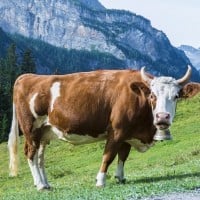
Cattle (Bos taurus) are large, domesticated, cloven-hoofed herbivores. They are prominent members of the subfamily Bovinae and the most widespread species of the genus Bos. Adult females are referred to as cows, while adult males are called bulls.... read more
Cows are my favorite animals. They are very useful in helping humans plow their fields and provide us with milk.
They are also extremely important for the rise of capitalism. They were used to carry cargo and were used as trams before the automobile and steam-powered tram were invented. They remain very influential and important for our modern society, and I want science and you to develop technology to make the cow more influential.
Cows are believed to be holy in the Hindu religion. Also, they were some of the first animals to be domesticated.
-
Mosquito
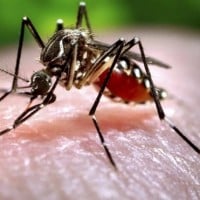
The word "mosquito" comes from Spanish and means "little fly." Mosquitoes are small flying insects known for transmitting numerous infectious diseases. These include malaria, yellow fever, chikungunya, West Nile virus, dengue fever, filariasis, and Zika virus, making mosquitoes one of the deadliest groups... read more
Oh, these little pests... they are an obstacle to humans. They have carried many diseases such as malaria and West Nile Virus and have helped kill off early European civilizations in America.
Oh mosquitoes! Why do you spend your days sucking blood, making me itch, and spreading malaria?
I think it's the only animal that needs to be exterminated on this planet.
-
Camel
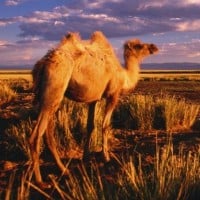
A camel is an even-toed ungulate belonging to the genus Camelus, known for the distinctive fatty humps on its back. These humps store energy in the form of fat, which camels can metabolize when food is scarce. Camels are native to arid regions of Asia and Africa and have been domesticated for thousands... read more
The camel was used in early attempts to cross the Sahara Desert. The Asian camel could store more water than the African camel. When used for the first time to attempt the crossing of the Sahara, Ibn Battuta found salt deposits and became very wealthy.
He explored African civilizations and saw institutions such as schools and universities. When he shared this knowledge with Europe, it helped Europe exit the Dark Ages.
-
Dog

The dog, or domestic dog (Canis familiaris or Canis lupus familiaris), is a domesticated descendant of wolves. Dogs and modern gray wolves share a common ancestor from an ancient, now-extinct wolf population. Dogs were the first species to be domesticated by humans more than 14,000 years ago, before... read more
These animals light up our days with their cute appearance and their little doggy kisses.
Called man's best friend for a reason. We're so useful to each other.
Without dogs, many of us wouldn't have a reason to live.
-
Flea
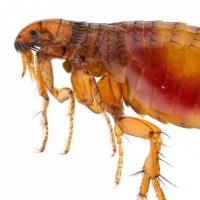
Fleas, classified under the order Siphonaptera, comprise about 2,500 species of small, wingless insects that are external parasites primarily of mammals and birds. These insects survive by feeding on the blood of their hosts using specialized mouthparts adapted for piercing skin and sucking blood. Adult... read more
They spread the Black Death, which killed off one-third of Europe's population.
-
Fish

Fish were a very early source of food. Without them, we possibly would have been extinct.
-
Rat
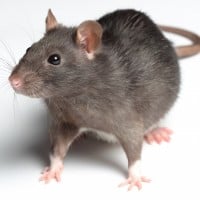
Rats are various medium sized, long tailed rodents of the superfamily Muroidea. "True rats" are members of the genus Rattus, with the black rat (Rattus rattus) and the brown rat (Rattus norvegicus) being the most significant to humans. These species are commonly found in urban areas and are known for... read more
They were another animal involved in the spreading of the Black Plague.
-
Pig
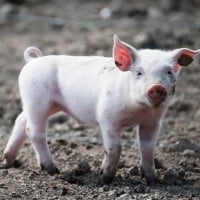
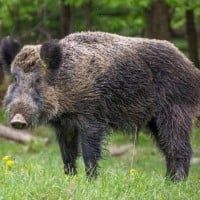
A pig is any animal in the genus Sus, within the Suidae family of even-toed ungulates. Pigs include the domestic pig and its ancestor, the common Eurasian wild boar, along with other species. Related creatures outside the genus include the peccary, babirusa, and warthog.
Pigs provide pork, and piglets are so cute.
-
?
Chicken
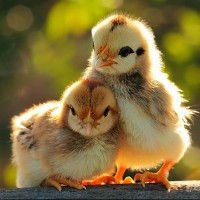
The chicken is a domesticated bird descended primarily from the red junglefowl. It is one of the most common and widespread domestic animals, with a global population exceeding 26.5 billion as of 2023. Chickens are kept primarily for their meat and eggs and are found in nearly every part of the world... read more
Iconic crest like their wild jungle fowl ancestors. They make great mascots. They make cute noises like trills and soothing clucks. Probably the most well-known bird. Chicken is commonly eaten and heir eggs are staples. It sounds like I'm talking to extra-terrestrials but I'm listing all the ways I can think of their influence on the world. Like other animals raised for meat, chicken is everywhere in restaurants. If you don't eat meat, you'd have to put in extra effort to have options, especially of you prefer trying new stuff. It's surprising considering that alpha-gal syndrome is becoming a bigger problem. It severely limits options. There are even more chickens than us, and our population is crazy for an animal our size. You can get terrible diseases from their droppings.
-
?
Boar
-
Rhinoceros
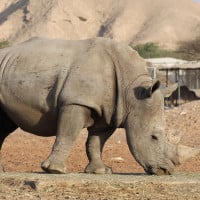
A rhinoceros, commonly abbreviated to rhino, is a member of any of the five extant species, or numerous extinct species, of odd-toed ungulates in the family Rhinocerotidae. The term can also refer to extinct species in the superfamily Rhinocerotoidea. Two of the extant species are native to Africa, while... read more
They may not be very influential overall, however, they are the main target of poaching, which is a worldwide crisis.
-
Elephant
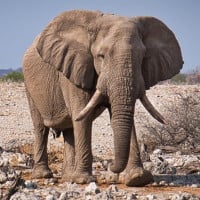
Elephants are the largest land animals alive today. There are three recognized species: the African bush elephant (Loxodonta africana), the African forest elephant (Loxodonta cyclotis), and the Asian elephant (Elephas maximus). These are the only surviving members of the family Elephantidae. Extinct... read more
-
Goat
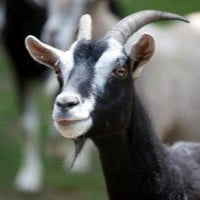
The domestic goat (Capra hircus) is a domesticated animal species that is part of the goat-antelope group. It was domesticated from the wild goat (Capra aegagrus) in Southwest Asia and parts of Eastern Europe. Goats belong to the family Bovidae and the tribe Caprini, making them close relatives of sheep.... read more
-
Sheep
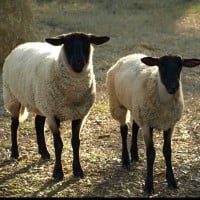
The sheep is a quadrupedal, ruminant mammal typically kept as livestock. Like all ruminants, sheep belong to the order Artiodactyla, the even-toed ungulates. They are commonly raised for their wool, meat, and milk across various parts of the world.
-
Bee
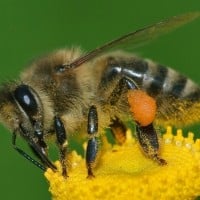
Bees are flying insects in the order Hymenoptera that are essential for pollinating flowering plants. They play a vital role in agriculture and natural ecosystems by facilitating plant reproduction. Bees also produce honey and beeswax, and some species live in complex social colonies.
-
Polar Bear

The polar bear is a carnivorous bear whose native range lies largely within the Arctic Circle, encompassing the Arctic Ocean, its surrounding seas, and surrounding land masses. It is the largest land carnivore and is well adapted to life on sea ice. Polar bears primarily hunt seals and are classified... read more
-
Owl
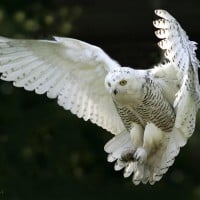
Owls are birds of prey from the order Strigiformes, which includes over 200 species. Most owls are solitary and nocturnal, and they are recognized by their upright stance, large heads, forward-facing eyes, excellent hearing, and feathers adapted for silent flight.... read more
-
Donkey
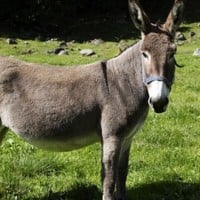
The donkey, also known as the ass, is a domesticated member of the horse family, Equidae. Its wild ancestor is the African wild ass, Equus africanus. Donkeys have been used as working animals for more than 5,000 years and are valued for their strength, endurance, and ability to navigate difficult terrain... read more
-
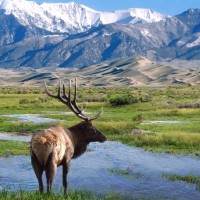
Elk
-
Zebra
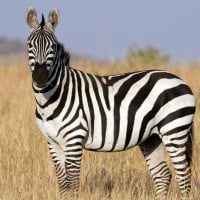
Zebras, members of the subgenus Hippotigris, are African equines with distinctive black-and-white striped coats. There are three living species: the Grévy's zebra (Equus grevyi), plains zebra (E. quagga), and mountain zebra (E. zebra). Stripe patterns vary among individuals and species, with most evidence... read more
-
Beaver
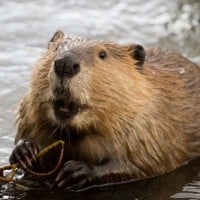
The beaver is a large, primarily nocturnal, semiaquatic rodent. The genus Castor includes two extant species: the North American beaver (Castor canadensis) and the Eurasian beaver (Castor fiber). Beavers are known for building dams, canals, and lodges, significantly shaping their ecosystems and creating... read more
They were responsible for us expanding out west in America. Fur trappers laid the path for the America we see today. It's hard to imagine an America limited to the east of the plains.
-
Tiger
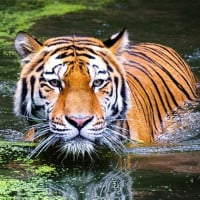
The tiger (Panthera tigris) is the largest living cat species and a member of the genus Panthera. It is immediately recognisable by its dark vertical stripes on orange fur and white underside. An apex predator, it primarily hunts ungulates such as deer and wild boar. It is generally solitary and territorial... read more
-
Cheetah
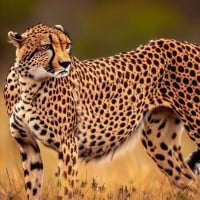
The cheetah (Acinonyx jubatus) is a large cat native to Africa and central Iran. It is the fastest land animal, capable of reaching reliably recorded speeds of 93 to 104 km/h (58 to 65 mph). The cheetah has adaptations for speed, including a lightweight build, long, thin legs, powerful hindlimb muscles... read more
-
Seagull
-
Hyena
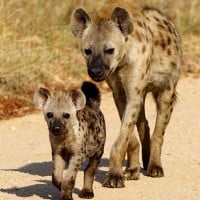
Hyenas, or hyaenas, are carnivorous mammals belonging to the family Hyaenidae. With only four extant species, they represent the fifth-smallest biological family in the order Carnivora. Despite their small number, hyenas play a vital role as both predators and scavengers in their ecosystems.