Top 10 Hardest Instruments to Play
What makes an instrument difficult to play? Several factors contribute to the challenge.
Some instruments, like the violin, require incredibly precise finger placement and bowing techniques. Without frets or other guides, even slight variations can result in off-key notes or unpleasant sounds. Other instruments, like the oboe, are known for their finicky reeds and complex fingerings. These instruments demand exceptional breath control and embouchure (the way the mouth is positioned on the instrument) to produce a clear, consistent tone.
Then there are instruments like the organ and harp, which boast a vast array of keys, pedals, and strings. Mastering these instruments often requires years of practice and a deep understanding of music theory. Even seemingly simple instruments like the bagpipes can be incredibly demanding, requiring a unique combination of breath control, finger dexterity, and physical stamina.
-
Violin
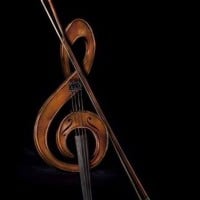
The violin is a wooden string instrument in the violin family. It is the smallest and highest-pitched instrument in the family that is in regular use. Typically played with a bow, the violin is used in a wide range of musical genres, from classical to contemporary music.
I have played the violin for 8 years. I was trained in classical music for 6 years and switched to fiddle 2 years ago. The violin is definitely the hardest! It is an art! If your finger is even slightly off, the whole song sounds bad. Techniques like vibrato, drones, double stops, and extremely fast fingering are involved - faster than electric guitar. Plus, you have to bow extra fast to match it.
I can also play some piano (it's easy. I never had a teacher), mandolin (taught myself, and it's similar to guitar with strumming and chords - easy), and flute (taught myself. Easy). I also play viola and cello. The cello is also very hard! It is difficult to play quickly and actually sound good. So, I would say the violin and then the cello. And believe me, I have experience! I am a teacher, I play at events, and I am starting a local band. You get the point!
-
Piano
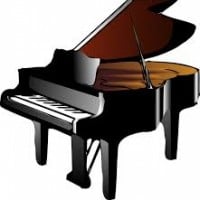
The piano is a musical instrument played using a keyboard, which consists of a row of keys pressed with the fingers and thumbs of both hands. It produces sound by means of hammers striking strings inside the instrument. The piano is widely used in classical, jazz, and contemporary music.
I have played the piano for 11 years, and it took a tremendous amount of time and effort to reach the level where I am now. There are two main reasons why:
1. There is so much competition in piano simply because so many people play it, and there are many talented pianists. You can almost never find a musician who does not play the piano, and many people who are not musicians also play. If you tell people that you play the piano, they will not be impressed until you sit down and perform. Even then, it's extremely difficult to stand out in competitions and, eventually, when applying for college. In the context of college applications, you are competing against hundreds or thousands of prospective students who are at the same level as you or higher.
2. Mastering difficult pieces by Beethoven, Chopin, Bach, and Mozart requires your full concentration. Judges look for various factors, including your tone, interpretation, dynamics, phrasing, tempo, posture, personality, and even the way you carry yourself. In advanced pieces, the rhythms are complex and require you to use every inch of your hands to reach all the notes. At the same time, you need the precision to hit the right notes and the control to achieve the desired sound.
3. In auditions, you play on a piano you've never played before. You get only a few minutes at most to try the piano and determine how to approach your piece with the instrument provided. It's this adaptability that makes piano so difficult.
-
French Horn
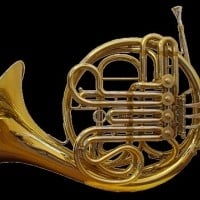
The French horn is definitely the hardest instrument to play. You can play practically every note without any keys down. The partials are extremely close together. A high F and a high G, notes right next to each other, have the same fingering, which means you have to use your mouth to move between them. This brings us to the lip trill, which is awful.
My student teacher said it best: horn players have to have an ego. If you're the least bit unconfident, you will crack on just about every single note. If you have confidence, you won't crack. You also have to hear the note before you play it, or it will be the wrong note or partial.
Additionally, the horn has the tiniest mouthpiece ever, which is smaller than a bottle's opening. The horn also plays a lot of the woodwind stuff, like trills and running sixteenth notes and thirty-second notes, which most of the time have to be tongued by double or triple tonguing.
Moreover, the fingerings for notes in different octaves aren't the same, and we have about seven octaves of range. You have to practice for hours on end, for years on end, to get a good warm sound. But when you do, all the effort is totally worth it. However, it becomes very difficult not to overplay and blare since it is a naturally loud instrument.
Also, the hand in the bell can just get annoying sometimes, although it can also save your butt. The horn probably also has the most jumping notes, where it's just a random high note followed by a random low note, since it's an awkward instrument to put a tune to.
-
Oboe
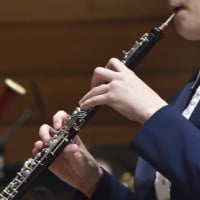
Oboes are classified as double-reed woodwind instruments. They are usually made of wood, though some oboes are made of synthetic materials. The instrument is known for its clear, penetrating sound and is often used in orchestras, chamber music, and solo performances.
I feel like this vote is off and too biased. Not everyone has played all of the instruments listed here, so they wouldn't know what to judge. They would only pick their own instrument, believing it to be the most difficult simply because it might be the only one they've played. I've played the oboe, flute, clarinet, and the piano. I have been playing the oboe the longest and still currently play it. I have to agree that the oboe has been the hardest instrument, especially to start out with.
Even after playing for five years and practicing daily, it is still very difficult. Reeds are always an issue. The $12 reeds you buy at your local music store just don't do justice. Most beginning players don't know this and will continue to buy those subpar reeds. A few venture online to look at custom-made reeds, which is what I did. I tried several online reed makers, with prices usually ranging from $15 to $25 per reed. I never found any of them to be even decent. They'll make the first few good ones to get your business, then the quality deteriorates.
I eventually settled on another reed maker, charging $35 per reed, and I've always been satisfied. That's right, $35 per reed! Reeds last about two to three weeks or around 10 hours of playing time. They are extremely finicky. They change every day depending on the weather and the environment you're in. The openings are only a few millimeters wide, and when you make them, they're crafted from thin pieces of special cane. Furthermore, the cane on reeds is measured in nanometers, not millimeters!
-
Western Concert Flute
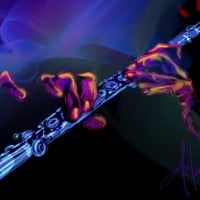
The flute is a family of musical instruments in the woodwind group. Unlike other woodwind instruments that use reeds, a flute produces sound by directing air across an opening. It is one of the oldest musical instruments in the world, with surviving examples dating back thousands of years.
The flute requires lots of air. It is so much air that many people, when playing incorrectly, can pass out from it. So many people say it's really easy. It's not. I think it deserves the number 5 or 6 place.
In band, I would place horn, oboe, and bassoon higher, but that's it. I'm in grade 7, and I've been playing for 4 years. I'm regularly 1st to 3rd chair, and our music program is extremely well funded, so I'm grateful.
I made the switch to French horn this year for around 3 months. I don't know if it was because I played the flute first, but it was much easier than the flute for me. I also used to play the violin in 3rd grade. I don't know why it's ranked so high. I really thought it wasn't that hard. In my opinion, it's easier than the flute.
The flute takes up more air than a tuba, and I think the embouchure is really hard to master as well. People think it's easy because of its dainty structure. I assure you, it's so hard. Around 70 percent of air goes to waste. When I played horn this year, I switched back to flute because I didn't like emptying the valves.
But I could play for around 2 minutes straight without a single breath. Most flute players, even experienced ones, can't play more than 30 seconds.
Sorry for my big rant.
-
Bagpipes

Bagpipes are a type of wind instrument that uses enclosed reeds fed from a constant reservoir of air in the form of a bag. They are traditionally associated with Scottish and Irish music, though different types of bagpipes are found in cultures across Europe, the Middle East, and parts of Asia. The Great... read more
I think it's telling that obscure instruments, such as the bagpipes and oboe, end up on this list.
I wouldn't say the pipes are the hardest. With good instruction and the obligatory practice, it is possible to become a very competent piper in a few years. The pipes only have nine notes, and there are no dynamics or rests, so in a way, they are a very simple instrument to play.
However, the pipes are incredibly hard to break into. They're not like a trumpet, clarinet, or piano, where you can play simple beginner tunes full of minims and crotchets. You're straight onto quavers and semi-quavers. Even slow tunes like Amazing Grace have short notes. This is made worse because pipes don't handle crossed notes well at all. So, fingering has to be perfect from the start. Because there are only nine notes, pipe music is decorated with embellishments - groups of up to six grace notes played very rapidly one after another. They require skill and precision to play properly.
Then there's the issue of blowing, air pressure, and tuning. The pipes have to be kept at a very constant pressure. Otherwise, they will be out of tune. This requires a lot of lung, lip, and arm strength, as well as endurance and coordination. Despite all this, the pipes are very temperamental with tuning anyway. Individual notes on the chanter fall in and out of tune and have to be adjusted by wrapping tape over the holes. Additionally, the drones often need readjusting.
Once you get this stuff sorted, it is easy to play very nice pipe music without mastering the instrument. But few people have the patience and discipline to make it to this point.
-
Electric Guitar
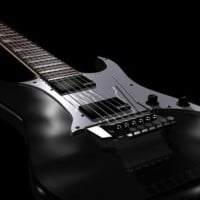
The electric guitar is a type of guitar that may have a solid, semi-hollow, or hollow body. It uses electronic pickups to convert string vibrations into electrical signals, which are amplified and sent through a loudspeaker. Electric guitars are central to rock and metal music, where they often serve... read more
While I agree that a piano might be one of the hardest instruments to master, the guitar requires you to manipulate strings to produce notes. A guitar is harder than most string instruments because it has six strings, whereas most others have only four. I don't think hitting notes with precision, as on a violin, really counts as being hard to do. Once you get good at any instrument, you should be able to hit a note perfectly without thinking about it.
With a guitar, it might not be as noticeable when hitting a note slightly off, but anyone who's any good considers this unacceptable. The violin has a small neck, making it easier to play faster. So, anyone who thinks that needing to play fast is a valid argument is wrong. Some of the best guitarists play just as fast and have to move a longer distance across the neck and stretch their fingers farther. Guitars have all the same elements, like vibratos.
Most of the people who are voting for the violin seem to know nothing about the guitar and just think that because it's an instrument they play, it should be deemed hardest. I have played a violin before. Picking with a guitar can also be challenging because most of the time you're only strumming halfway down the strings and have to stop perfectly in between strings. If you're strumming correctly, this should be pretty difficult because the pick slides almost effortlessly across the notes, making it incredibly difficult to stop mid-strum.
If you had to manipulate the notes on a piano, it would be hands-down the hardest of instruments to play. I definitely think the piano is a very close second, if not equivalent.
-
Piccolo
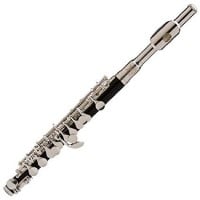
The piccolo is a half-size flute and a member of the woodwind family of musical instruments. It plays an octave higher than the standard concert flute, giving it a distinct and bright tone. The piccolo is frequently used in orchestras, wind ensembles, and military bands.
I play the flute, but I plan on playing the piccolo as well in ninth grade. My mom played the piccolo and told me how difficult it was. I've met people who play the piccolo, and my best friend from band camp shared the same thoughts.
I won't argue that the flute is harder. I've had the opportunity to play the piccolo once, and it is difficult.
To all piccolo players, I appreciate your hard work. I adore the sound of your instrument and was honored to play it for five minutes last summer. Yes, it should be rated above the flute. You are all amazing and often overlooked.
When I tried out the piccolo, the small keys weren't a problem. In fact, I liked them because I have small hands. I had to use a thinner airstream and about twice as much air as when playing the flute. Kudos to you for staying strong when playing such a challenging instrument!
-
Organ
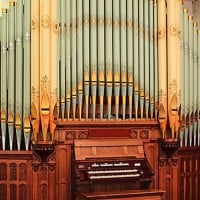
Separate rhythmical patterns occur at once, varying not only by hand but also by leg or even individual fingers. First, you master the keys at a pianist's level, then add the feet, then understand the stops and how to arrange them. You also have the ability to leap out and change them during performance, understand the thumb tabs and the toe tabs, and learn what the different keyboards do and how to arrange the various voices.
You have several keyboards to manipulate, with both hands and feet, and literally dozens to hundreds of voices to manage, as well as volumes to maintain.
Piano allows for some leeway when hitting keys slightly off. Try that on an organ and the note will ring out through the church, allowing for no error. The keys must be depressed properly, or a harsh chopping sound will burst from the pipes. I could go on.
-
Drums (Traditional Kit)
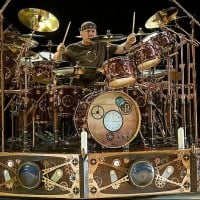
As a 50-year-old terrible guitarist, I started playing drums about a year ago because it has been relatively easy for me to keep time in my head and on the guitar. I quickly found that I had a knack for the drums and immediately enjoyed playing them.
As I have progressed, it is clear to me how difficult the drums really are to play well. I agree with everything said here about how challenging it is to play drums. Although I have listened to thousands of songs over and over, now that I play drums, I can really appreciate the incredible skill of so many professional drummers, even in types of music I dislike.
That's another thing. On the guitar, I would not think about trying to play styles of music I don't care for, but that is not the case with drums.
I would recommend the drums to anyone with an interest in playing instruments. Yes, they are difficult and impossible to master, but compared to some other instruments, they are way more fun! Plus, it can be a very good workout!
-
?
Timpani
Trying to tune three separate drums in a three-measure time frame is rather nerve-wracking.
It seems hard enough, except you also have to remember that you can't be heard when you tune, so you have to rely on one or two taps to get it right. Combine that with the numerous ways to hit the drumhead, and you've got a difficult instrument to master.
-
?
Mellophone
Mellophone is hard due to the fact that it is basically a marching French horn.
It has all the difficulties of a regular French horn, but with the added challenge of marching while playing.
-
Viola
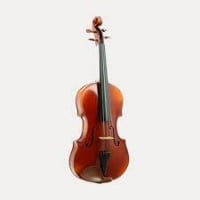
As a beginner violist, I still have a lot to learn, but I can tell you now it's NOT an easy ride! Violists often need bigger hands and fingers that can spread far, because playing the viola is pretty hard, and it has different strings than the violin.
Violas also need more pressure applied to the strings than the violin, and especially the bows.
I held a cello bow and compared it to the viola bow, and it was super light! I was surprised because you'd think a cello bow would be heavier. I could be wrong, but I was shocked. I have absolutely nothing against violins or cellos, but I think the viola just might be a little harder than them.
-
Cello
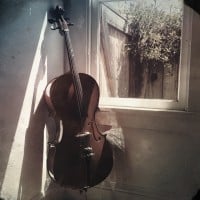
The cello, or violoncello, is a bowed string instrument with four strings tuned in perfect fifths. It is a member of the violin family and is larger than the viola and violin but smaller than the double bass. The cello is widely used in classical music, including orchestras, chamber ensembles, and solo... read more
Playing the cello is hard, but it has a rich, pleasing sound. Each instrument has its own challenges, but the cello presents two major difficulties that combine to create a very hard technique to master: playing the right notes in tune while holding it in an upright position against your front while sitting down.
This requires a special form of hand and arm positioning that can't be fully extended, unlike with the violin or viola, and can't be fully bent, unlike the bass. The cello also requires a bow stroke that extends your arm at a 90-degree angle but folds in like a wing while coming down.
I've played all the string instruments as a symphony conductor, and I think the cello is the hardest of all. I majored in oboe, though, and found that other than basic techniques and sound enhancement, there wasn't much to it. The violin requires a lot more technical effort that takes a while to master, and the cello even more so than the violin.
-
Trombone
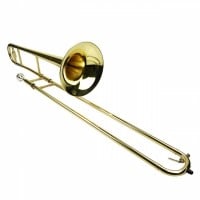
Honestly, it should be much higher than #14. The reason is that we can never really get it perfect all of the time. You have to constantly keep your ears in check with the band to see if you're really playing the right note. Sometimes we'll play just a little bit above position 3, or maybe just below position 6.
Keep in mind the things we have to do all at once while playing the trombone. We have to make the right buzz, tongue correctly, and may I mention that slurring is extremely hard? We must constantly be adjusting our slides and tuners, which requires quite a lot of air. After playing, I always find that my chest sometimes hurts, and my lips feel close to numb.
-
Bassoon
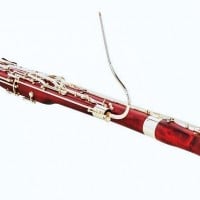
Bassoons are by far the most difficult instrument to play. Very few people play the bassoon, and finding teachers or help at all is almost impossible unless you live near a university or a big city with an orchestra. And unlike other instruments (except oboe and bagpipes), we have to make our own reeds specialized to our instrument! Buying reeds is also expensive, ranging from $10-40. The tools to make reeds can cost up to $400.
Oh, and don't forget that there are many different fingerings for each note! F-sharp has 17 different fingerings. You have sensitivity points on the reed depending on whether it's a low, middle, or high-range note. Once you get past second-octave G, you start using "flick keys" that you play with your left thumb. That's 9 keys for one thumb to continually flick for each note. There is no octave key. A bassoonist has to learn specific flick keys, thumb keys, and half-hole patterns to jump octaves.
All bassoons are handmade and therefore have different quirks depending on the brand you buy, since there is no universal bassoon set and make. All I'm getting at here is that bassoons are a beast to play and conquer. I recommend it for all.
-
Trumpet
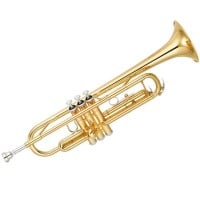
A trumpet is a brass wind instrument commonly used in classical and jazz ensembles. Trumpets have the highest register in the brass family. The instrument has been used for centuries in military and ceremonial contexts, as well as in modern music genres.
Wow, I'm stunned. I thought the trumpet would be up there as the number one hardest instrument. I have played and performed on several instruments in my life: accordion, piano, drums, guitar, bass. None of them has been as challenging as the trumpet, which I recently started about three months ago just to see how far I could go with it.
With my musical background, I was able to pick up the mandolin and violin, and within three to five months, I was able to play something for people and entertain in a professional situation, focusing on fiddle tunes rather than classical pieces. However, acquiring a usable range and stamina to play something performance-worthy as a solo on the trumpet is, as far as I can see at this time, a long way off for me - perhaps years.
I guess I agree that the violin and piano are probably the hardest at an advanced classical level. But the trumpet is the hardest from the get-go - just to produce a pleasing sound! It's not an instrument you can pick up and start jamming on within a few months, at least not for me. It makes sense to me now that they start kids off on the trumpet at an early age when they are not as result-oriented as we become when we are adults.
-
Harp
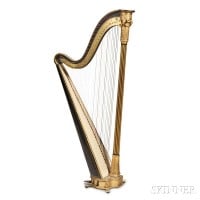
The harp is a stringed musical instrument that features multiple individual strings running at an angle to its soundboard. These strings are plucked with the fingers to produce sound. Harps have existed since ancient times and are found in various forms across many cultures, with the concert harp being... read more
The harp has all the complexity of a piano - two staves, multiple notes in both hands - but the additional plucking action really sets it apart from the piano. You have to be on the note and prepare before plucking. Then there are seven pedals, each with three positions to control the accidentals. However, you have to time them exactly right to avoid buzzing. If you're moving them quickly, you have to release them on the spring rather than placing them exactly where you need them to be.
You also have to build up callouses on your fingers by playing a lot, which is painful. Controlling the timbre of the strings is really hard too. I can hear how I want it to sound, but it's difficult to make it happen. There are 47 strings! Violins have 4! Why is the harp number 11 on the list? It's only because not many people play it and vote for it. It should be number 1! I played piano and oboe before starting the harp, but now I just play the harp because it's so challenging! But good.
-
Soprano Clarinet
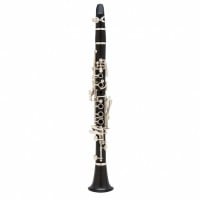
The clarinet is a musical instrument belonging to the woodwind family. It produces sound using a single-reed mouthpiece, similar to a saxophone. Clarinets are used in a wide range of musical genres, including classical, jazz, and military band music.
I've been playing the clarinet for 5 years now, and it's pretty difficult because you need to find a good reed, you need a lot of air, and you have to be able to articulate notes, change dynamics, and much more. It's a complicated instrument and definitely not easy.
It kind of annoys me that the clarinet is so low on the list of hard instruments to play. Apparently, the violin is the hardest to play, which I don't believe, but I wouldn't know because I only play the clarinet. I also think the clarinet is harder to play than the piano.
To play a note on the clarinet, you have to blow hard enough, hold the clarinet correctly, position your mouth properly, and do much more. In contrast, for the piano, all you have to do is push a key. Sorry for my rant.
-
Didgeridoo
I tried the didgeridoo when I was in Australia in 2000. I could get a sound out of it easily, but I couldn't for the life of me do the circular breathing. I also couldn't get it to sound anything as funky as the locals were doing.
The instruments I play to a certain degree:
PIANO: My main instrument. I got to Grade VI standard in less than a year when I was 18. Therefore, I consider it a fairly easy instrument to learn.
FLUTE: As I could already play the recorder from when I was a kid, my sister, who's an expert flautist, said the fingering was more or less the same. I could sight-read Grade IV pieces the first time I picked up her flute, including dynamics. Therefore, I consider it a very easy instrument to learn. Embouchure was incredibly easy.
DRUMS: I could sight-read a Grade IV piece within a week of taking up the drums. The main trouble I had was with demi-semi-quaver beats and fast triplet groups. Otherwise, it's a fairly easy instrument to pick up. If you can drive, you can play the drums.
GUITAR: The first song I attempted to fingerpick was "Yesterday" (the original transcription). I learned it in about two hours, having never taken lessons. A friend taught me to read tab, and it seemed easy enough. I'd say guitar is about on par with the drums for difficulty.
BASS GUITAR: Bass guitar is a little trickier than guitar for the very reason that the neck of the bass is longer than that of the guitar, so the jumps can be quite hard. Sure, people go on about the bass having "just four strings," but hey, the violin has "just four strings," and I'm pretty sure that doesn't make it easy. You might as well say the erhu is even easier, as it has just two strings.... read more
-
Tuba
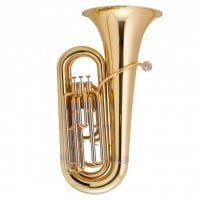
I haven't been playing the tuba for very long, but I did originally play the baritone and euphonium. The tuba requires a lot of air and greater focus on tonguing. As someone with asthma, it's a bit more challenging for me to play the instrument.
The tuba is more difficult than people think. After playing it, sometimes I have to make sure I don't pass out. Although it is similar to the baritone, there are notable differences.
The tuba has many more notes and partials than a baritone. Mastering these partials, especially the high notes, is challenging, but the low notes can be just as difficult.
-
Accordion

Accordions are a family of box-shaped, bellows-driven free-reed aerophones, colloquially referred to as squeezeboxes. They are used in various musical genres worldwide, including folk, classical, and popular music. The instruments produce sound by pushing air across reeds as the player presses buttons... read more
Being of Polish descent, learning to play the accordion growing up was a requirement of passage into adulthood. It was extremely difficult for the first two years, and then the "feel" became automatic: able to punch the buttons without seeing them, glancing at the keys, and pushing, pulling, and pumping the bellows while rocking them. It was heavy, and the straps pulled down on my shoulders and gave a constant aching. On top of that, when I played the accordion in school, I had to carry it a mile to school (no school buses back then), and I only weighed 80 pounds.
When I went to college, I stopped playing. It is like once you learn to ride your bike, you can pick it up at any time or age. I still pick it up at age 74, and the feel comes back, and I am on my way again. No more beautiful combination of sounds and melodies can come from one instrument than the accordion. You can play a one-man polka band or a one-man classical orchestra.
Difficult, yes, especially for someone as uncoordinated as I am, but possible if driven by the love of the sound that comes out. Playing the accordion is not a joke, as many make it out to be.
-
Euphonium
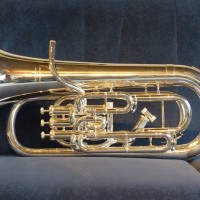
Ha! This is the hardest instrument I have written for and seen written for. I've written in five clefs for the euphonium (not including treble transposing down a major ninth), and I've seen a piece call for the widest octave jumps: a B0 to F5, or a four-and-a-half-octave jump. That's the entire harmonic series skipped in one jump. I haven't even seen a piano go that wide on an octave jump.
I don't remember who wrote the piece, but whoever attempts to play it is in for a challenge. Despite its difficulty, it's a very mellow instrument. Also, don't refer to the horn that a euphist is holding as a "baritone," or you'll find a sousaphone bell in your face very soon. I say this from experience.
-
Classical Guitar
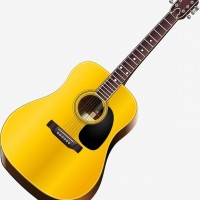
Although I believe the violin is the hardest instrument to learn - I've witnessed firsthand the difficulty in mastering the violin - I voted for classical guitar. I have abundant experience with different musical instruments. I have played the clarinet and recorder, but I did not find them all too difficult.
I study classical guitar and piano, and I can assert that, by far, the piano is much easier to play than the classical guitar. Playing Bach pieces on the classical guitar is much more difficult than when I attempt Bach on the piano. It takes much more effort to play, for instance, "Variations on a Theme of Handel" (Op. 107, Giuliani) on the guitar, as opposed to the ease of studying "The Harmonious Blacksmith" on the piano.
Classical guitar is difficult. I'm not talking about popular music or insipid chord-stroke music. The mistake people make when they assume that the "classical guitar is such an easy instrument to master" is that they think of the guitar used for mere chords and finger-picking pieces. This is a common mistake that, given the versatility of the guitar, is easy to make.
-
Acoustic Guitar
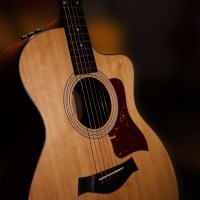
An acoustic guitar is a guitar that produces sound acoustically by transmitting the vibrations of its strings through the air. It does not rely on electronic amplification and typically has a hollow body that naturally amplifies the sound. Acoustic guitars are popular in a variety of music genres, including... read more
Okay, everyone here is saying that "mastering" a guitar means learning some chords and then learning a few riffs. No! Gosh, to learn flamenco or classical or really good bluegrass guitar. That's DIFFICULT. Most people couldn't self-teach that.
I remember when I was twelve or so, and I got my first acoustic guitar. I would play for hours, and my fingers would bleed sometimes. Building the strength to avoid buzzing, muted, or ringing strings was tricky at first, too.
I think that every instrument is equally difficult to learn, depending on how far you're willing to go with it. Acoustic guitar isn't easy, though. So this instrument gets my vote.
-
Banjo
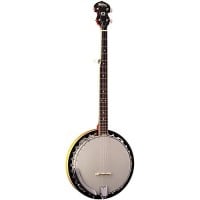
While I agree that other instruments may be harder to play, the 5-string banjo is definitely in the top 10. You have to memorize rolls and different ways to play the same chords, making it one of the hardest instruments to play. I have played bagpipes, harmonica, acoustic and electric guitar, and the bugle. I am convinced that the banjo is the hardest among these.
If you mess up a note, it's impossible to hide because it's so noticeable. Therefore, you have to perfect hammer-ons, pull-offs, and bends, and essentially play flawlessly, all while making sure you're wearing your finger picks correctly.
The banjo is the number one hardest instrument to play. You have to learn how to play a chord in different ways for each key. You also have to learn many rolls and really nail down your timing. The person who has the best timing in the world might be Earl Scruggs.
You also have to learn a song differently for each key. Most importantly, your fingers can't all be doing the same thing at once. Two have to be on the body while three are on the strings. The technique is impossible, and you sometimes have to go against the beat that people are clapping. All in all, the banjo is the hardest instrument in the world to play.
-
Saxophone
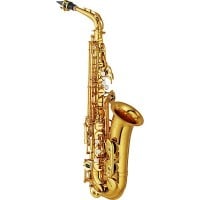
The saxophone is a family of woodwind instruments invented by Adolphe Sax in the 1840s. Saxophones are usually made of brass and played with a single-reed mouthpiece similar to that of the clarinet. They are commonly used in classical music, military bands, jazz, and contemporary music.
I have been playing alto saxophone since fourth grade. I'm now in seventh grade, so I've been playing alto saxophone for about 3 years now. I feel like some people underestimate saxophones. They think so many others are difficult and confusing, but they don't think the saxophone is that unique, special, and mesmerizing.
There are so many notes, high and low, along with the beautiful passing notes and the ability to play so many songs. One of the hardest parts about playing saxophone is your mouth and lungs. The finger and note section is difficult too, but the amount of breath necessary to play just one note is a lot.
Well, long story short, it's underestimated in its ability and difficulty to play.