Top 10 Greatest Explorers of All Time
The greatest explorers of all time: incredible personalities, intrepid spirits who've left footprints on the highest peaks, reached into the deepest seas, trekked through the thickest jungles, and sailed the vast, open oceans.
Just think about what exploration means. It's about pushing boundaries, seeking new horizons, and daring to venture into the unknown. From mapping uncharted territories and making contact with diverse cultures to achieving scientific breakthroughs and fostering global exchange, these explorers truly redefined our understanding of the world.
Who do you think deserves the crown for the greatest explorer of all time? Imagine having a dinner party with all these trailblazers. Who would captivate you with their tales? Would it be those who journeyed into the mysterious depths of the Amazon rainforest or those who braved the icy extremes of the poles? Or perhaps the astronauts who took a giant leap for mankind and ventured beyond our world?
-
Christopher Columbus
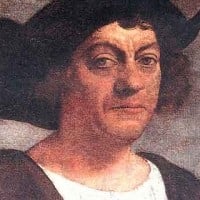
This Genoese explorer, under the auspices of the Spanish Crown, embarked on an ambitious voyage in 1492. His journey led to the inadvertent discovery of the Americas while he was seeking a western route to Asia, marking a significant turning point in global history and European exploration.
-
Neil Armstrong
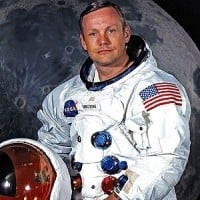
Making the "giant leap for mankind," Armstrong etched his name in history as the first human to set foot on the lunar surface during NASA's Apollo 11 mission in 1969. A seasoned test pilot and astronaut, he led a distinguished career that transformed our relationship with space.
-
Vasco da Gama
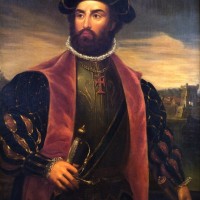
This Portuguese explorer, in the late 15th century, became the first European to reach India by sea, navigating around Africa's Cape of Good Hope. His voyages opened new avenues of trade between Europe and the East, reshaping the economic landscapes of the time.
He traveled with his crew from Lisbon, Portugal, to Goa, India, in the 15th century, in a wooden boat.
P.S.: Columbus, in fact, wasn't a great navigator. His mission was also to discover the maritime path to India, and he failed. He just got lucky to find another place on his travels.
-
Marco Polo
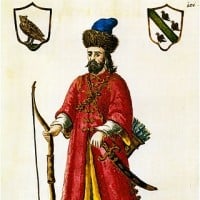
This Venetian merchant traveled the Silk Road to the farthest reaches of Asia in the late 13th century. His detailed chronicles opened up the unfamiliar Orient to Europe, impacting future generations of explorers and mapmakers.
-
Henry Hudson
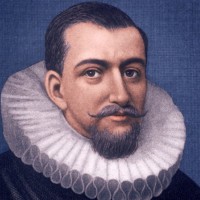
Venturing into the unknown in the early 17th century, Hudson, an English explorer, sought a northerly passage to the Orient. His explorations primarily around Northeast Canada and present-day New York left an enduring legacy, including the Hudson River named in his honor.
Henry Hudson is by far the best explorer. He should have a holiday instead of Columbus. It's just a fact. I don't care what all you Columbians say. Columbus was a terrible explorer. He discovered America by accident.
He discovered so much water that he has more places named after him in the world.
-
Leif Erikson
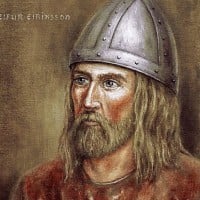
This intrepid Norse explorer ventured westward from Greenland, leading what is believed to be the first European expedition to North America, specifically present-day Canada, around 500 years before Columbus, a testament to his adventurous spirit.
-
James Cook
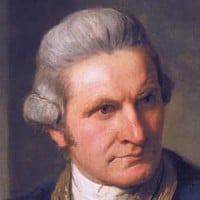
This British navigator and explorer charted numerous Pacific islands in the 18th century, including Hawaii, New Zealand, and the eastern coast of Australia. His accurate maps and meticulous record-keeping significantly advanced the understanding of the Pacific region.
-
Edmund Hillary
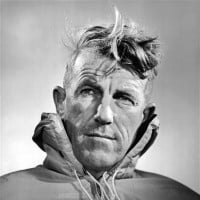
This New Zealand mountaineer and adventurer, along with Tenzing Norgay, ascended to the highest point on Earth by summiting Mount Everest in 1953. His extraordinary feat established a new zenith in high-altitude mountaineering.
-
Yuri Gagarin
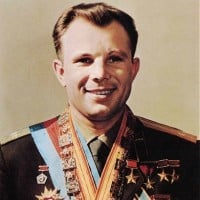
Rocketing into the annals of history, Gagarin, a Soviet cosmonaut, became the first human to orbit Earth in 1961 aboard Vostok 1. His pioneering journey, lasting 108 minutes, ushered in a new era of space exploration and solidified his status as a global icon.
Why is he so low?! He was the first in space! Without him, even Armstrong wouldn't have gotten to the moon!
-
Charles Darwin
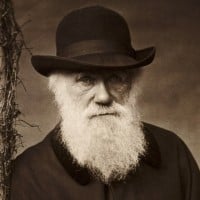
Aboard the HMS Beagle, this British naturalist journeyed to the Galápagos Islands and other regions, where he made observations that culminated in the development of the theory of evolution by natural selection, revolutionizing the world of biology.
-
?
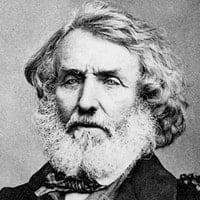
George Everest
-
?
Levison Wood
-
Roald Amundsen
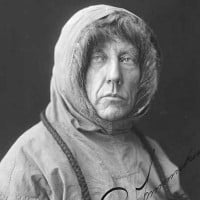
This Norwegian explorer became a key figure in polar exploration by leading the first successful expeditions to traverse the Northwest Passage and reach the South Pole during the early 20th century. His accomplishments in the harsh polar environments are legendary.
-
John Cabot
An Italian navigator sponsored by England's Henry VII, Cabot sailed westward in the 15th century and is credited with the first documented European exploration of North America since the Norse expeditions, creating a new chapter in the Age of Discovery.
One of Canada's first explorers.
-
Erik the Red
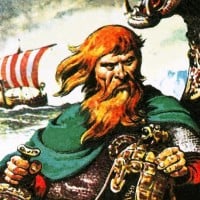
An audacious Norse explorer, Erik the Red established the first Norse settlements in Greenland in the late 10th century. His exploratory initiatives laid the groundwork for further Norse exploration in the North Atlantic.
-
Margaret Mee
An explorer and botanical illustrator, this British-born naturalist journeyed through the Brazilian Amazon multiple times during the mid-20th century. Her artistic representations and environmental advocacy brought international attention to the beauty and fragility of the Amazon rainforest.
-
Blackbeard

Edward Teach, better known as Blackbeard, was a notorious English pirate who operated around the West Indies and along the eastern coast of the American colonies during the early 18th century. Despite his infamous reputation, his activities contributed to our understanding of the sea routes of the time.
-
Ferdinand Magellan
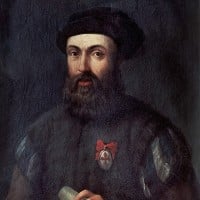
This Portuguese explorer, in the service of Spain, initiated the first circumnavigation of the Earth in the 16th century. Although Magellan himself didn't complete the voyage due to his death in the Philippines, his expedition significantly expanded the geographical understanding of the world.
-
Ibn Battuta
This Moroccan scholar and explorer undertook extensive journeys throughout Africa, Asia, and Europe in the 14th century, covering an estimated 75,000 miles. His detailed travelogue, "The Rihla," provides valuable insights into the cultures and societies of the medieval Islamic world.
The best explorer in history. How did he manage to walk from Morocco to Saudi Arabia, then all the way to Russia, followed by China, and then sail to Tanzania before walking back to Morocco?
Seriously, Google this guy. Enough said.
-
Kira Salak
-
Amerigo Vespucci
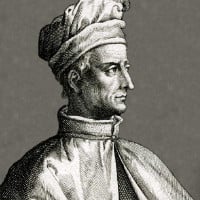
An Italian merchant, explorer, and navigator, Vespucci is best known for his voyages across the Atlantic in the early 16th century. The continents of America were named after him, recognizing his assertion that the lands discovered by Columbus were part of a separate New World.
-
Sacagawea
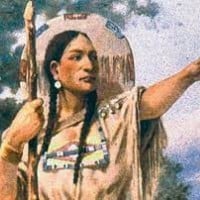
An invaluable guide and interpreter for the Lewis and Clark expedition, Sacagawea, a Lemhi Shoshone woman, facilitated the expedition's passage through the American West to the Pacific Ocean in the early 19th century, significantly aiding the expansion of the United States.
-
Thor Heyerdahl
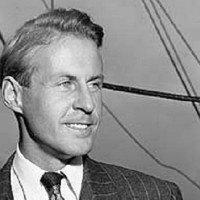
A Norwegian adventurer and ethnographer, Heyerdahl is known for his Kon-Tiki expedition in 1947. He and his crew sailed across the Pacific Ocean in a hand-built raft, demonstrating the possibility of ancient trans-oceanic contacts between distant civilizations.
-
Francis Drake
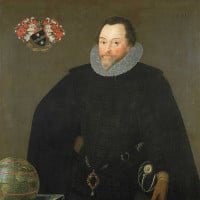
This English sea captain and privateer sailed around the globe from 1577 to 1580. Drake, known for his role in the Spanish Armada's defeat, played a pivotal role in the establishment of England's maritime empire in the 16th century.
Explorer and pirate, what a combo!
-
Walter Raleigh
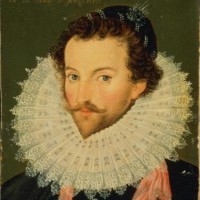
An English gentleman, writer, and explorer, Raleigh is known for establishing the Roanoke Colony, now present-day North Carolina, in the late 16th century. Though the colony famously disappeared, his expeditions paved the way for future English settlements in North America.
-
Robert Peary
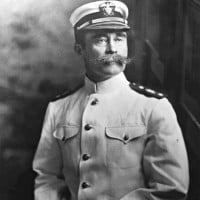
An American explorer who claimed to have reached the North Pole in 1909. Despite ongoing debates about the veracity of his claim, Peary's expeditions contributed significantly to the exploration of the Arctic regions.
-
Juan Ponce de León
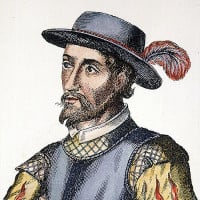
Known for his quest for the mythical Fountain of Youth, this Spanish explorer and conquistador led the first known European expedition to Florida in the early 16th century. His efforts significantly expanded Spanish influence in the New World.