Top 10 Most Powerful Countries in 1939
Which countries were the most powerful at the start of World War II?
-
Nazi Germany
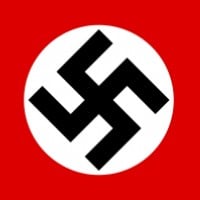
In 1939, Nazi Germany had established itself as a major European power with a highly mobilized military and advanced industrial base. Under the leadership of Adolf Hitler, it pursued aggressive expansionism in Europe, initiating the invasion of Poland and triggering World War II.
Since I was anonymous in a previous post, I will not say much here, but I can offer more facts about why Nazi Germany was the most powerful nation entering 1939. Nazi Germany was already a good-sized nation, stretching from Northern and Northern Central Africa into Germany. They were already pressing into the Soviet Union with little effort and were bombarding Britain with their air force.
Although some may say that Nazi Germany propaganda claimed it was the most powerful nation, the facts speak for themselves. People who have encountered World War II will tell haunting events of German invasions of Europe or Allies' defeats at the hands of Nazi Germany. Hitler did not support propaganda like the vast Soviet Union, but he did use it to some extent. Instead, he got the support of the German people, telling them that they are the greatest and the so-called 'inferior' Jews are troublemakers.
The Nazis lost World War II, but they left a vast trail of wreckage in their wake. The Nazis had advanced technology and they could have controlled nuclear power and most likely the world if they did not make racist laws.
-
United States
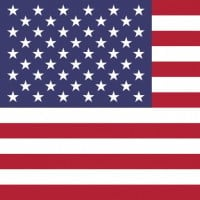
The United States was an economic powerhouse in 1939, possessing significant industrial capacity, a vast natural resource base, and a growing military presence. Though initially neutral, it maintained a global influence through economic and diplomatic channels.
Having been partly responsible for the Wall Street Crash, which led to an international depression, the United States was the most economically influential world power. Its population didn't grow as rapidly as in previous decades due to immigration restrictions, and the United States was still isolationist, not as military-oriented or imperialistic as the European powers. Nonetheless, the United States' massive economy meant it recovered completely from the greatest financial depression in human history.
As the head of the Japanese navy during WW2 once said about America, "You can't invade the US mainland. Behind every blade of grass would be a rifle." Or another quote, "To win a war against America, we can't simply stop at Hawaii nor San Francisco. We would have to march our Army into the White House and force surrender."
Like it or not, WW2 America was untouchable by any country during the time. You weren't fighting just the American Army, Navy, and Marine Corps. You were fighting 237 million pissed-off, freedom-loving patriots that brought all the US economical and industrial might to bear. In short, you were fighting a nation with enough manpower, resources, and determination to literally beat down any nation of the time.
-
Soviet Union
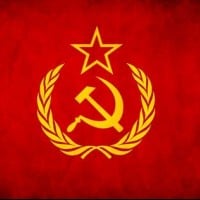
In 1939, the Soviet Union was under the rule of Joseph Stalin and had built a large, centralized military and economy. It maintained influence across Eastern Europe and Asia and signed a non-aggression pact with Nazi Germany just before the start of World War II.
They didn't have the best military technology or tactics (since Stalin had executed all his high-ranking generals), but the Soviets fought the Nazis with unmatched force by simply overwhelming them with their sheer numbers. The Battle of Stalingrad was easily the bloodiest battle in WWII, if not of all time, resulting in over 2 million casualties. The fact that Stalingrad still never surrendered really says something about the strength of the Soviet military.
Heck, without these guys, the Allies would've been complete toast facing up against the Axis. It was only after Hitler invaded Russia that things started to tip in the Allies' favor. Roosevelt and Churchill were willing to ally with Joseph "the Brutal and Paranoid Dictator" Stalin just to get the Soviets on their side. And don't forget, these guys kicked the Nazis' asses in Eastern Europe. These guys were not to be messed with, which is one of the main reasons why we were so afraid of them during the Cold War. There's a reason the USSR and USA emerged as the two global superpowers after the war ended.
And don't forget, these guys were the ones who ended up taking Berlin, not the USA or Britain. That puts them just a little ahead in my book (though Americans and British were still very strong against the Nazis).
-
British Empire
The British Empire, the largest empire in history, held territories across Asia, Africa, and the Americas, giving it substantial global influence in 1939. It controlled a powerful navy and held key strategic locations worldwide, positioning it as a dominant colonial and military force.
In 1939, Britain was the world's major superpower. It had by far the world's strongest navy, and it had an empire so large it was home to roughly a quarter of the world's population - the largest empire in history.
In 1939, Germany was still recovering from the Treaty of Versailles. The Red Army had proven itself ineffective, and the USSR was still recovering from the Russian Civil War. Most of the world hated this country. The United States did not yet have a substantial military or dominant political position, and like the rest of the world, its economy was struggling from the Great Depression. Japan's military was very effective, but it always suffered from various limitations and never really succeeded in making it onto the platform of major powers.
In terms of power status, the only country that rivaled the British Empire was France, a British ally and major victor of the previous world war. But the following year, France proved incapable of defending itself against a weakened Germany.
-
Japanese Empire
By 1939, the Japanese Empire had expanded across East Asia and the Pacific, driven by a powerful military and industrialization. Japan occupied territories in China and aimed to establish a dominant sphere of influence throughout the region.
Japan had one of the most powerful navies in the world, second only to the US and Great Britain, giving it unparalleled force projection in the Eastern Hemisphere. Isoroku Yamamoto lost Midway through bad tactical judgment, crippling the IJN carrier force. If Yamamoto had engaged the US with his full fleet and maintained air superiority, the lightly escorted US carriers would have been picked off by the battleships Yamato and Nagato, and the US Navy would not have recovered.
The Japanese Empire was now under a dictatorship, conquering Manchuria and annexing parts of China. The Japanese regime was extremely militaristic and imperialistic, greatly expanding in size from 1931-1939 as a result of a war with China. Japan also notably abandoned the Genoa Treaty, which agreed that the Japanese navy was to be three-fifths the size of the British and American navies.
-
Poland
Poland in 1939 had a relatively modernized army and was strategically located between Germany and the Soviet Union. It was invaded by both nations in September 1939, marking the beginning of World War II in Europe.
Poland fought even when occupied. Its government never surrendered, and it was attacked by the USSR and Nazi Germany. Poland fought for the survival of its fatherland and lost 1/6 of its inhabitants during the war. It also fought in foreign armies in North Africa, Britain, France in 1940 and after Overlord, Italy, and the USSR.
Poland didn't appear that strong, but they only really lost because both Germany and Russia were attacking. They previously beat Russia in the Polish-Russian war of the 1920s. If Russia hadn't attacked Poland in 1939, the progress of Germany would have been slowed.
-
French Empire
In 1939, France controlled a vast colonial empire across Africa, Asia, and the Caribbean, enhancing its global reach. Its military was substantial but ultimately unprepared for the rapid invasion by Nazi Germany in 1940.
As of 1939, the French Republic was considered to have the largest army in the world and the second-largest empire of the time. With colonies in the farthest stretches of the globe, from French West Africa to French Indochina, they were easily considered one of the most powerful nations of the time. Some people even considered tanks from France to be the best in the world. Although France was later conquered by Nazi Germany, this was due to poor leadership and strategies.
France still retained Indochina and African and Pacific colonies in 1939. World War I had affected France more profoundly than perhaps any other nation economically, as did the Great Depression. France's fragile economy was only beginning to recover when the Depression hit in 1929. France was still very much military-oriented, comparable to its 1914 levels, as they were still extremely wary of the growing power of Germany in the east.
-
China
China in 1939 was engaged in a prolonged war with Japan, which had invaded its eastern territories. Despite a large population and natural resources, the nation faced internal divisions and was vulnerable to foreign influence.
While China was going through a civil war at the time, combined they were still relatively powerful. While they didn't have a particularly powerful military compared to Japan, they were able to hold off their attacks decently well. Although China wasn't extremely developed and had an economy that was primarily centered around agriculture, it was still very powerful compared to other nations of the time.
When combined, China was still indeed a powerful country in 1939. The war with its more powerful neighbor and an ongoing civil war, though, deeply hurt China economically.
-
Canada
Canada, as part of the British Commonwealth, supported the Allies and contributed troops and resources in 1939. Its economy and military were growing, influenced by its proximity to the United States and connection to the British Empire.
Canada fought on all fronts of the war. She played a huge part in the Battle of the Atlantic and the invasion of Italy. Canada was on the beaches at Normandy and made major contributions in the air as well. Definitely made a larger contribution than France or Poland, which were defeated so early in the war, or India, Australia, or New Zealand who played very little roles in comparison. Pound for pound, Canada lost more men percentage-wise than the US. Canada is definitely more deserving to be in the top ten than a few of the nations that are already there.
Canada stood by Great Britain during its darkest hour and sent them the help they needed during the Battle of the Atlantic and the Battle of Britain. I really doubt that Britain would have survived were it not for Canada. Unlike the United States of America and the Soviet Union, Canada was fighting against the Nazis since the very beginning of World War Two.
-
Italian Empire
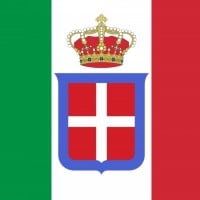
Led by Benito Mussolini, the Italian Empire pursued expansionist ambitions in North Africa and the Balkans. Italy was a key member of the Axis powers, with a sizable military presence in the Mediterranean.
The Italian Empire was an empire now that Mussolini had invaded and conquered Abyssinia (Ethiopia) at the start of 1936. Compared to the big five, though, Italy was an embarrassment industrially, barely keeping up with small European states such as Belgium and the Netherlands. Mussolini's officials were usually corrupt and disloyal, and Mussolini couldn't and didn't check whether they were doing what he told them. The Fascist regime was, however, extremely militarily oriented, like Nazi Germany, and Italy maintained a population of just under 50 million.
During the World War II period, Italy was considered one of the three Major Axis Powers. While they didn't gain any major victories during the war, they did conquer the two countries of Albania and Ethiopia. Although both of these attacks took place before the big action, they're still successful invasions. And compared to other nations of the time, they were still relatively powerful.
-
?
Finland
They were very prepared against the winter war and managed to outflank poorly camouflaged Russian divisions by utilising skis and thick snowsuits to move quickly through the otherwise thick snow. The only reason it lost was because the Russian military had far superior numbers. But yet Finland managed to humiliate Russia on the world stage, proving that even the largest armies can become incompetent if ill-prepared
-
?
Luxembourg
Luxembourg maintained neutrality in 1939 but was invaded and occupied by Nazi Germany in 1940. Its small size and lack of military resources limited its ability to resist occupation.
-
Turkey
Turkey remained neutral during most of World War II, positioning itself as strategically important between Europe and the Middle East. In 1939, it modernized its military and maintained independence while balancing pressures from surrounding powers.
Mustafa Kemal was one of the greatest leaders ever in Turkey.
-
India
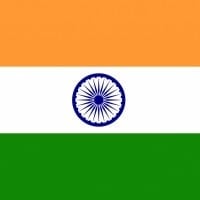
In 1939, India was under British colonial rule and contributed significant manpower and resources to the British war effort. Its economy was largely agrarian, but it served as a critical supplier and strategic location in Asia for the Allies.
Single-handedly, India defeated the oncoming Japanese Imperial Army and also fought on the European front, despite not having full control over the army. India played a major role in the Great War, perhaps second only to the Soviet Union. The freedom of the West owes a great deal to the contributions of Indian soldiers.
It is unclear why China is ranked above India, considering that there was no China during World War II, and Chinese soldiers did not fight in Asia or Europe, while Indians fought on both fronts.
Though India was not given any credit for its sacrifices, it did play a very important role in World War II.
-
Sweden
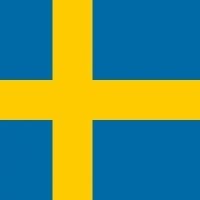
Sweden maintained a policy of neutrality during 1939, although it had a well-equipped defensive military. It played an important economic role by supplying iron ore to Germany, influencing regional dynamics.
-
Spain
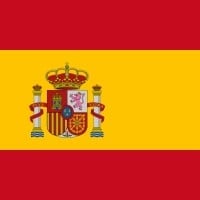
Spain had recently ended its civil war in 1939, which left the country weakened and under the dictatorship of Francisco Franco. Although officially neutral, Spain's government was sympathetic to the Axis powers.
Spain is cool, even if it did basically nothing in the war. I still love a country that had a huge empire. (Suck on that, America.)
Spain was the biggest empire a long time ago, and then they lost everything. Spain had a civil war. It was Spain vs. Republicans. Spain won, so Franco became Prime Minister of Spain. That's why Spain didn't join the Second World War.
-
Switzerland
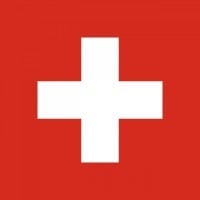
Switzerland maintained its long-standing neutrality in 1939, with a well-prepared defensive military strategy. Its neutral stance allowed it to remain unoccupied throughout World War II while serving as a center for diplomacy.
-
Romania
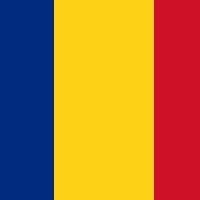
Romania held significant oil reserves, making it strategically valuable in 1939. It later became aligned with the Axis powers, supplying resources and military support during World War II.
-
Yugoslavia
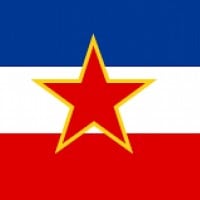
In 1939, Yugoslavia was a monarchy with a diverse population and a largely agrarian economy. It attempted to maintain neutrality but was later invaded and divided by Axis forces during World War II.
This country kind of broke into a ton of tiny pieces, but whatever, it was powerful while it lasted.
Only nation that freed itself from occupation.
-
Czechoslovakia

Czechoslovakia was an industrialized state with advanced military production, but it was occupied by Nazi Germany in 1939 following the Munich Agreement. This occupation marked the end of its independence until the end of World War II.
Czechoslovakia was, as many sources say, the 10th strongest economy in the world before the Munich Pact.
-
Norway
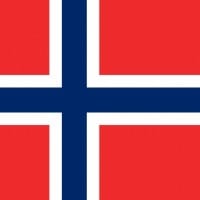
Norway maintained neutrality in 1939 and had a strong merchant fleet, which was essential for international trade. In 1940, it was invaded by Germany due to its strategic importance along the North Sea.
-
Ireland
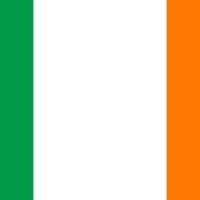
Ireland maintained a policy of neutrality during World War II, officially staying out of the conflict despite its proximity to the United Kingdom. The country's economy was primarily agrarian, with limited military capability at the time.
Initially an easy target for invasion, our main defense would be the fact we have good relations with all our neighbors. It would most definitely be impossible to have a successful and bloodless occupation of the Republic of Ireland and Northern Ireland (part of the U.K).
The fact of the matter is guerrilla warfare would be employed against any invading force, and it would be a resource-draining and costly affair for any occupying force.
Honestly shocked. Looking at Ireland today and looking at Ireland back then, I've got to say being neutral downgraded our military power. But it's what being neutral is, ya know?
-
Iran
Iran, then known as Persia, maintained neutrality in 1939 but became of strategic interest to both the Allies and Axis due to its oil resources. In 1941, it was occupied by Allied forces to secure supply routes and resources.
-
New Zealand
As a British Commonwealth member, New Zealand supported the Allies, contributing troops and resources to the war effort. Its military was active in multiple theaters, notably in the Pacific and North Africa.
Incredibly modernized economy with citizens that punch well above their weight in every category.
-
Netherlands
The Netherlands maintained a neutral stance in 1939, though it had a strong colonial presence, particularly in the Dutch East Indies. It was invaded by Nazi Germany in 1940, leading to occupation during World War II.
It was stronger than Nazi Germany, and Hitler knew it. He made a plan to force the Netherlands to give up. The plan was to bomb Rotterdam, and it was completely wiped off the map.
-
Greece
Greece had a relatively small military but held strategic importance in the Mediterranean. In 1940, it successfully resisted an initial Italian invasion, delaying Axis control in the region.
Greece fought back an Italian invasion in 1940 and launched a counterattack into Albania. Germany had to conquer them.
To do justice to history, I am obliged to state that, of the enemies confronting us, the Greek soldier fought with death-defying valor. He surrendered only after further resistance had become impossible and senseless. - Hitler
Greece showed Italy and Albania that they are weak (Albania was already not that strong). Greece had such a victory that Germany itself had to face this brave land. It also saved Russian lives by stopping the invasion for a while.
-
Vatican City
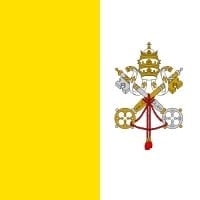
As an independent city-state, Vatican City remained neutral throughout World War II. Under Pope Pius XII, it played a diplomatic role and maintained communications with various nations involved in the conflict.
Come on, with an army of followers (one-eighth of the world's population) all over the place, it's a great place no matter how small.
It should be the strongest since it's the smallest, you know?