Top 10 Biggest Historical Misconceptions
We all grew up learning the same stories in school and hearing the same tales of explorers, pilgrims, colonization, and expansion. Many of those stories are not historically accurate, though. Some were taken from authors who intentionally used creative license to sell their works, while others resulted from mistranslations and misunderstandings.
Below are some of the biggest historical misconceptions, with the descriptions providing a more accurate account of what happened. Let's try to keep history accurate and historical instead of the propaganda it has become.
-
Napoleon Bonaparte was short
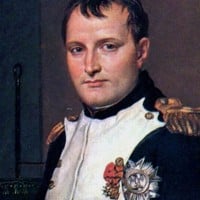
In fact, Napoleon was slightly taller than the average Frenchman of his time. The problem comes from the difference between French inches and English inches. He was actually about 5 foot 7 inches tall.
This comes from English (British) propaganda. You see, Napoleon was this scary military leader, right? So what do we do to make him less intimidating?
We call him short, of course!
The small problem with this was that we kinda started to believe it. He was actually the average height for his time.
This could be the result of so many tall men being used in the military, making him appear short in comparison.
Napoleon was actually around 5'6 or 5'7, which was pretty average for his time.
-
Christopher Columbus was the first European to visit the Americas

Leif Erikson and his crew reached North America roughly five hundred years before Christopher Columbus set sail. Archaeological evidence found at L'Anse aux Meadows in Newfoundland confirms the presence of Norse explorers long before the late fifteenth century. Millions of indigenous people were also already living on the continent when European ships arrived.
Besides the Vikings, it is probably true that the Phoenicians and Polynesians made it.
-
Dinosaurs and humans coexisted
Humans and dinosaurs did not coexist as depicted in movies and cartoons. Dinosaurs went extinct approximately 65 million years ago, while the earliest human ancestors did not appear until millions of years later. The only overlap between the two groups is with birds, which are the direct evolutionary descendants of theropod dinosaurs.
Nah. It's not that we fought against each other. It's that we weren't alive at the same time. It's hard to coexist with someone who's dead. I mean, unless you're in a room full of ghosts. Then. I don't know. I don't believe in ghosts. Not like that.
You have just offended all the silly creationists with this fact.
-
Humans evolved from chimpanzees
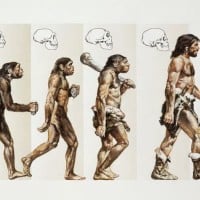
Evolutionary theory does not claim that humans evolved directly from the chimpanzees we see in zoos today. Humans and chimpanzees actually share a common biological ancestor that lived millions of years ago. Both species evolved separately from this ancient lineage to become the distinct primates that exist now.
We had a common ancestor, and chimps are our closest biological relatives.
Nope. We came from a common ancestor.
Saying humans evolved from chimpanzees is like saying English evolved from German.
-
Medieval Europeans believed the Earth was flat
Knowledge of a round Earth dates back to ancient Greek philosophers and was common knowledge among most intellectual Europeans.
It's just people from the pre-Columbus era and the Flat Earth Society nowadays.
-
Vikings wore horns on their helmets
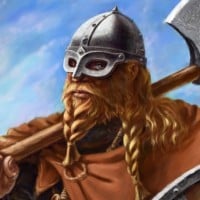
Vikings did not actually wear horned helmets into battle as popular culture suggests. There is no archaeological evidence of such headgear dating back to the Viking age. This image was likely popularized by costume designers for nineteenth-century operas who wanted to make the characters look more imposing.
If they actually did that in real life, it would be dangerous!
-
The Civil War was fought in order to abolish slavery
While slavery was a central issue, the Civil War was not initially fought to abolish it. President Abraham Lincoln's primary goal at the outset was to preserve the Union and prevent the Southern states from seceding. It was not until the Emancipation Proclamation in 1863 that the abolition of slavery became an explicit war aim.
Let's be real here, Lincoln didn't care whether or not slaves were freed as long as the Union held together. The war was really about the Northern and Southern elites fighting over which economic system would prosper. In contrast, Robert E. Lee was a far bigger opponent of slavery, who only sided with the Confederates because it was too painful to betray his homeland.
-
George Washington had wooden teeth
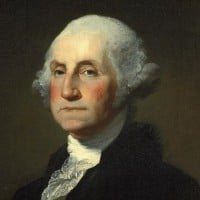
His dentures were made of gold, hippopotamus ivory, lead, animal teeth, and probably human teeth from slaves.
His dentures were made with animal teeth.
-
The average life expectancy during the Middle Ages was about half what it is now
While people did typically live shorter lives back then than we do now, the average age of 30 comes mainly due to infant mortality rates. Once a person survived childhood, their life expectancy was usually around 64 years total.
-
Marie Antoinette said, "Let them eat cake"

Marie Antoinette never said "Let them eat cake" when told that the French peasants had no bread. The phrase appears in the writings of Jean-Jacques Rousseau which were completed when the future queen was only a young child. Revolutionaries likely attributed the quote to her later as propaganda to make her seem out of touch with the poor.
-
?
The existence of "jus primae noctis"
-
?
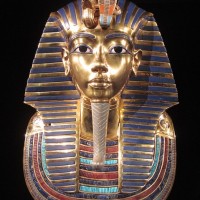
The existence of the "curse of King Tut"
-
Ancient Romans regularly vomited during meals
This came from use of the word "Vomitorium," which people assume meant a room for vomiting. In fact, it just means an entryway like those used at modern-day stadiums. You walk through a vomitorium every time you enter or exit a large stadium.
-
Iron maidens were used as torture devices in the Middle Ages
There is no evidence that Iron Maidens ever existed in the Middle Ages or that they were used for torture. Instead, they were pieced together in the 18th century from several artifacts found in museums in order to create spectacular objects intended for (commercial) exhibition.
-
Thomas Edison invented the light bulb
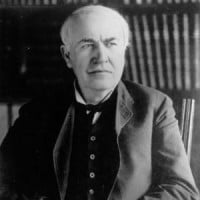
Thomas Edison did not invent the first light bulb but rather created the first commercially viable one. Inventors such as Joseph Swan and Humphry Davy had demonstrated earlier versions of electric light well before Edison secured his patent. Edison's major contribution was developing a long-lasting carbon filament and a complete electrical distribution system.
-
Jesus Christ was born on December 25
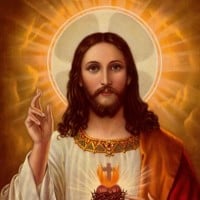
The Bible does not specify a date for the birth of Jesus and mentions shepherds tending their flocks in the fields, which implies a warmer season. Church officials likely chose December 25th to coincide with existing pagan winter solstice festivals such as Saturnalia. Historical evidence suggests early Christians did not even celebrate his birth.
Most theologians believe he was born in the spring.
Nope. That's just the time we choose to celebrate it.
-
Pirates said things like "Arrr" and "Shiver me timbers"

Pirates did not walk around saying "Arrr" or "Shiver me timbers" during the Golden Age of Piracy. These stereotypical phrases and the accent associated with them largely come from actor Robert Newton's portrayal of Long John Silver in a 1950 movie. Real pirates simply spoke with the natural accent of their home country or region.
I think the book Treasure Island established many modern stereotypes about pirates.
-
Albert Einstein failed math
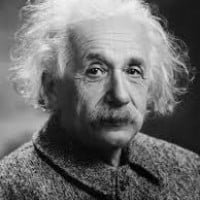
In fact, Einstein said, "I never failed in mathematics. Before I was fifteen I had mastered differential and integral calculus." He did fail the entrance exam to the Swiss Federal Polytechnic School his first time, but then again, he was 2 years younger than his peers and scored exceptionally well in math and science.
-
Guglielmo Marconi invented the radio
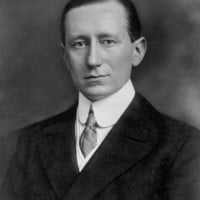
Guglielmo Marconi is often credited with inventing the radio, but Nikola Tesla had actually developed and patented the core technology years earlier. The U.S. Supreme Court eventually overturned Marconi's patent in 1943 in favor of Tesla's. While Marconi was the first to successfully transmit signals across the Atlantic, his work relied heavily on Tesla's prior innovations.
Another invention taken from Tesla. Tesla sued him for that, won the battle, and the ruling stated he is the true inventor of the radio.
-
Jesus Christ was white
Most historical scholars agree that Jesus would have looked like a typical Middle Eastern man of his time rather than a white European. The familiar image of him with pale skin and blue eyes emerged centuries later through Western artistic traditions. He likely had a darker complexion and hair texture consistent with the Jewish population of first-century Judea.
He was from the Middle East. He had olive skin. Does this mean he was white? Em. I guess? I don't consider him to be white though.
The thing is, he would have to blend in and look like everyone else. It was a sort of test, I believe. The people who lived where he was at the time had olive skin, brown hair, and brown eyes. It's kind of strange to see him depicted with goldenish blondish hair and blue eyes if you think of it this way.
-
The chastity belt was used to keep women chaste in medieval times
Most existing chastity belts are now thought to be deliberate fakes or anti-masturbatory devices from the 19th and early 20th centuries.
-
Jewish slaves built the pyramids

Archaeological findings indicate that the Great Pyramids of Giza were built by paid laborers and skilled artisans rather than slaves. Excavations of worker cemeteries show they ate a diet rich in meat and received proper burials near the pharaohs they served. The idea of slave labor comes largely from the accounts of the Greek historian Herodotus and later biblical interpretations.
Professional laborers built the pyramids.
-
The "witches" of the Salem trials were burned at the stake
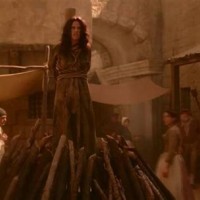
There are no records of people being burned at the stake during the Salem Witch Trials. The accused were either hanged or died while in prison.
More died in prison than were hanged.
-
Gautama Buddha was obese

The statue of the laughing and obese figure seen in many restaurants depicts a Chinese folkloric monk named Budai rather than the founder of Buddhism. Siddhartha Gautama is traditionally described in texts as having a normal build or even being quite thin due to his ascetic lifestyle. These two distinct figures are often confused in Western culture because they both bear the title of Buddha.
-
Coca-Cola invented the modern image of Santa Claus
By the time Coca-Cola began using Santa Claus's image in the 1930s, Santa Claus had already taken his modern form in popular culture and had been used extensively by other companies in their advertising.
-
Spanish influenza originated in Spain

The 1918 flu pandemic did not originate in Spain, but it was named the "Spanish Flu" because Spain was a neutral country during World War I and had a free press. Unlike the combatant nations, which censored news of the outbreak to maintain morale, Spanish newspapers reported openly on the illness. This created the false impression that Spain was the epicenter of the disease.
-
The moon landing was a hoax
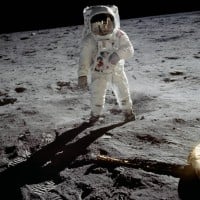
The moon landing was not a hoax filmed on a soundstage but a genuine historical achievement verified by vast amounts of evidence. Independent scientists, tracking stations from multiple countries (including the Soviet Union), and thousands of moon rocks brought back to Earth all confirm the event. Modern lunar orbiters have even photographed the landing sites and the equipment left behind by the Apollo astronauts.