Top 10 Biggest Geopolitical Events of the 2010s
With the 2019 Bougainville independence referendum having taken place several years ago and the 2010s now firmly behind us, it's a good time to look back at the biggest geopolitical events of that decade.
-
Russia annexes Crimea from Ukraine
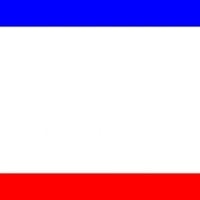
Without a doubt, one of the most talked-about geopolitical events. Prior to March 2014, Crimea was an autonomous republic of the Eastern European country of Ukraine. When Russia annexed it, it became a Russian republic under the name Republic of Crimea.
-
South Sudan becomes an independent sovereign state
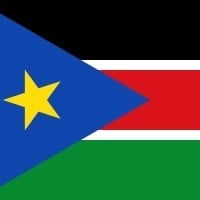
South Sudan is the newest country in the world as of October 28, 2019, the time this list is made. Prior to its independence in 2011, it was the southern third of the country of Sudan. It is different in nearly every aspect from its northern neighbor, including in geography, climate, demographics, etc. Because of that, I consider it to be the biggest geopolitical event of the decade.
A new country is definitely big news.
-
Burma changes its name to Myanmar and adopts a new flag
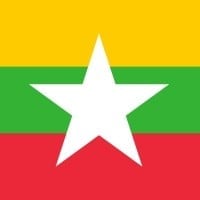
Prior to 2010, Myanmar was known as Burma and was led by an authoritarian military dictatorship. It had a flag that closely resembled the current Taiwanese flag but with a cogwheel and corn instead of a white sun. In 2010, the first free and fair elections took place, and the country changed its name to Myanmar and its flag to resemble the Lithuanian flag, but with a white star in the middle.
Definitely a big event.
-
India and Bangladesh exchange 162 enclaves to simplify their border
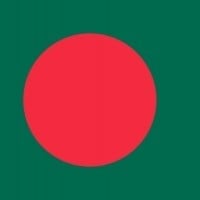
Prior to June 6, 2015, India and Bangladesh may or may not have shared the most complicated border in modern history. The reason for this was the hundreds, if not thousands, of enclaves and exclaves along their border. Sometimes, you had exclaves within an exclave, within another exclave in either Bangladesh or India. Yes, it was that complicated. Fortunately, the two countries exchanged 162 of their enclaves to somewhat simplify their border.
-
The State of Azawad proclaims independence from Mali for three months until it is reabsorbed by Mali
It was a self-proclaimed country that was declared independent in April 2012 by Tuareg rebels and it comprised the northern 66% of the country of Mali. Its proclaimed capital was Timbuktu, and its provisional capital was Gao. However, it was reabsorbed by Mali in February 2013 after being taken over by the terrorist group Ansar Dine.
-
Nursultan Nazarbayev resigns as President of Kazakhstan and the capital Astana is renamed Nur-Sultan
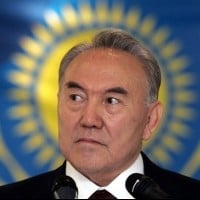
This was completely unexpected. Nazarbayev had been the president of Kazakhstan since its independence from the Soviet Union a few decades back. Among his notable actions was moving the capital city from Almaty to Astana. In March 2019, he resigned as president and was succeeded by Kassym-Jomart Tokayev. The capital was also renamed to Nur-Sultan in honor of Nazarbayev.
-
The Netherlands Antilles is dissolved
This was a constituent country from 1959 to 2010 under the Kingdom of the Netherlands and consisted of various islands in the Caribbean, such as the ABC islands (Aruba, Bonaire, Curaçao), Saba, Sint Eustatius, and Sint Maarten.
After the dissolution, Aruba, Curaçao, and Sint Maarten became their own constituent countries, while Bonaire, Sint Eustatius, and Saba became special municipalities.
-
Macedonia changes its name to North Macedonia
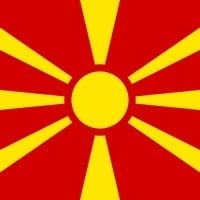
This name change is significant because it somewhat ended the bitter relationship between the countries of North Macedonia and Greece. Greece does not accept the name Macedonia for North Macedonia as they see it as a part of Greek history. It's fairly complicated but in January 2019, this issue was resolved when Macedonia changed its name to North Macedonia.
-
Burundi changes its capital from Bujumbura to Gitega
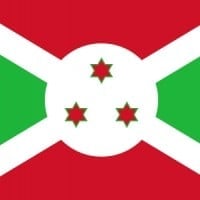
A fairly insignificant event to most, but significant to geography enthusiasts who plan to learn the names of every capital city in the world (like me). Before Christmas 2018, the capital of Burundi was Bujumbura, the largest city in the country, which is fairly close to the neighboring Democratic Republic of the Congo. On Christmas 2018, the capital was moved to Gitega, a city in central Burundi, but much smaller.
-
Swaziland changes its name to Eswatini
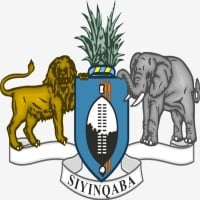
Another name change that happened in the 2010s. This one occurred in April 2019, and its reasoning, from what I heard, was to avoid confusion with Switzerland. These two countries have nothing to do with each other, so it was understandable.