Top 10 Greatest Paintings of All Time
You stand in a crowded gallery, shuffling your feet on squeaky hardwood floors, staring at a canvas covered in what looks like a toddler's temper tantrum. Someone next to you whispers about the artist's profound genius. You nod slowly. You just don't see it. Then, you turn the corner. A genuine masterpiece hangs on the wall, demanding your immediate attention. No pretentious explanations are necessary. The colors grab you by the collar. The brushstrokes tell a story so loud you can practically hear it.
Art historians estimate that humans have produced hundreds of millions of paintings since our ancestors first smeared crushed berries on cave walls. Yet, out of that massive visual pile, only a microscopic fraction achieves legendary status. Why? It comes down to a magical cocktail of technical brilliance, cultural timing, and pure emotional gravity. You look at these specific frames and suddenly understand the human condition a little better. They survive fires, thefts, and centuries of changing tastes. They hang around like stubborn ghosts refusing to be ignored.
-
Mona Lisa (Leonardo Da Vinci)
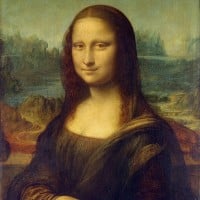
Mona Lisa is a portrait by Leonardo da Vinci that was painted in the early 16th century, most commonly dated to about 1503 to 1506, with some scholars suggesting later work on it. It is an oil painting on a poplar wood panel and is housed in the Louvre Museum in Paris. The work is widely identified as depicting Lisa Gherardini, the wife of Florentine merchant Francesco del Giocondo.
There is no doubt in my mind why this should take the crown. Famous for that barely-there smile.
But what I adore about this beautiful painting is how the artist has captured the untold story, a secret in her eyes that only she knows about, or maybe even the artist himself! No one will ever know. And that, for me, is what makes this masterpiece so alluring.
Beautiful.
It's just the best painting, like Bohemian Rhapsody is the best song. Not even Leonardo's best. For a lot of people, this is the only painting they know by title.
-
Starry Night (Vincent Van Gogh)
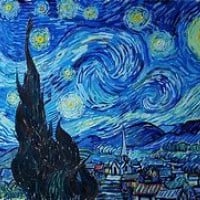
Starry Night is an oil-on-canvas painting created by Vincent van Gogh in 1889 while he was staying at the asylum of Saint-Paul-de-Mausole in Saint-Rémy-de-Provence. It shows a night sky with swirling forms above a village, with a cypress tree in the foreground. The painting is now part of the collection of the Museum of Modern Art in New York City.
I don't like landscape paintings, and I'm also not a very big Van Gogh fan, but this painting is so beautiful!
There is just something about this painting that is mesmerizing.
This painting is out of this world. Pure beauty!
-
The Last Supper (Leonardo Da Vinci)
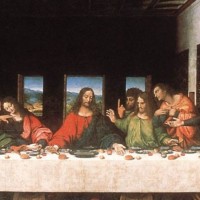
The Last Supper is a late 15th-century mural by Leonardo da Vinci painted on the wall of the refectory at Santa Maria delle Grazie in Milan. It depicts the moment when Jesus tells his disciples that one of them will betray him. Leonardo used an experimental technique for the work, which contributed to its early deterioration.
Hands down, the best painting ever. It depicts every single thing described in the Bible about the Last Supper.
-
The Scream (Edvard Munch)
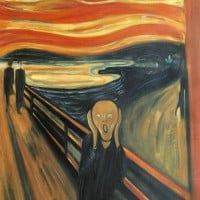
The Scream is a composition created by Edvard Munch in several versions, including paintings and prints, beginning in the 1890s. One painted version from 1893 is in the National Museum in Oslo, and another is in the Munch Museum. The image shows a figure with an agonized expression set against a landscape and sky inspired by the area around Oslofjord.
-
The Kiss (Gustav Klimt)
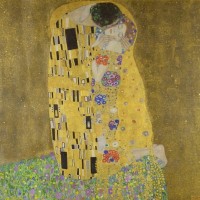
The Kiss is an oil painting by Gustav Klimt made between 1907 and 1908 during his so-called Golden Period. It portrays a couple embracing, with patterned robes and gold leaf applied across much of the surface. The painting is in the Österreichische Galerie Belvedere in Vienna.
-
The Birth of Venus (Sandro Botticelli)
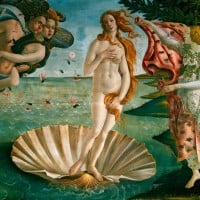
The Birth of Venus is a tempera-on-canvas painting by Sandro Botticelli that was made in the mid-1480s. It represents the goddess Venus arriving at the shore after her birth, standing on a shell. The painting is held in the Uffizi Gallery in Florence.
Love it so much!
-
The Weeping Woman (Pablo Picasso)
The Weeping Woman is an oil-on-canvas painting by Pablo Picasso completed in 1937 as part of his broader response to the Spanish Civil War. It portrays a crying woman with a handkerchief in an angular Cubist style using sharp planes and contrasting colors. The work is held by the National Gallery of Victoria in Melbourne.
-
The Night Watch (Rembrandt)
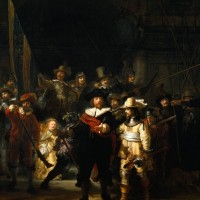
The Night Watch is a 1642 group portrait by Rembrandt van Rijn whose formal title is Militia Company of District II under the Command of Captain Frans Banninck Cocq. It depicts a civic guard company in motion rather than in a static arrangement that was common in militia portraits of the period. The painting is in the Rijksmuseum in Amsterdam.
-
A Sunday Afternoon on the Island of La Grande Jatte (Georges Seurat)
A Sunday Afternoon on the Island of La Grande Jatte is a large oil painting by Georges Seurat created between 1884 and 1886. It depicts people spending time in a park on the Seine River at La Grande Jatte, near Paris. The work is closely associated with Pointillism and is in the Art Institute of Chicago.
-
The Persistence of Memory (Salvador Dali)
The Persistence of Memory is a 1931 painting by Salvador Dalí executed in oil on canvas. It is known for its depiction of melting pocket watches arranged across a sparse landscape. The work is in the collection of the Museum of Modern Art in New York City.
-
?
The Shipwreck (J. M. W. Turner)
-
?
Expectation (Gustav Klimt)
-
The Swing (Jean-Honoré Fragonard)
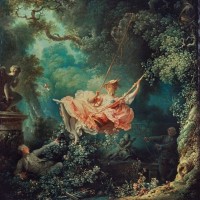
The Swing is an 18th-century oil painting by Jean-Honoré Fragonard, usually dated to 1767. It depicts a young woman on a swing, a man looking up from below, and an older figure positioned in the background. The painting is associated with the Rococo period and is housed in the Wallace Collection in London.
A pretty cool painting, if you ask me!
-
Love's Shadow (Frederick Sandys)
Love's Shadow is a painting by Frederick Sandys created in 1867. It depicts a woman with dark hair holding a viola while the shadow of Cupid appears on the wall behind her. The work is associated with the Pre-Raphaelite movement and is in the Manchester Art Gallery collection.
A true, emotional, beautiful, artistic masterpiece.
-
Guernica (Pablo Picasso)
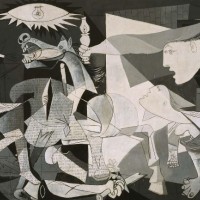
Guernica is a large oil painting by Pablo Picasso completed in 1937 in response to the bombing of Guernica during the Spanish Civil War. It is rendered in a monochrome palette of black, white, and gray and presents fractured human and animal figures across a chaotic interior space. The painting is housed in the Museo Reina Sofía in Madrid.
-
American Gothic (Grant Wood)
American Gothic is a 1930 painting by Grant Wood made in oil on beaverboard. It depicts a farmer holding a pitchfork beside a woman standing in front of a house with a Gothic-style window. The painting is in the collection of the Art Institute of Chicago.
-
Miranda (John William Waterhouse)
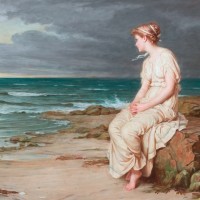
Miranda is a painting by John William Waterhouse based on the character from Shakespeare's The Tempest. It shows Miranda standing on a coastal cliff and watching a ship caught in rough seas below. Waterhouse produced versions of this subject in the early 20th century, including a 1916 painting.
-
Girl With a Pearl Earring (Johannes Vermeer)
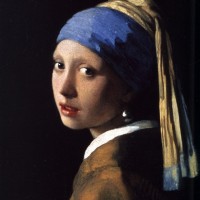
Girl With a Pearl Earring is an oil painting by Johannes Vermeer, generally dated to around 1665. It is a tronie, or character study, rather than a conventional commissioned portrait, and it shows a girl wearing an exotic dress and a large pearl earring. The painting is part of the collection of the Mauritshuis in The Hague.
-
The Lady of Shalott (John William Waterhouse)
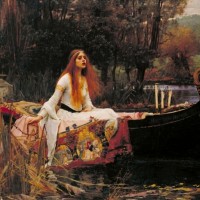
The Lady of Shalott is a painting by John William Waterhouse completed in 1888 and based on Alfred, Lord Tennyson's poem of the same name. It depicts the moment when the Lady leaves her loom and sets out in a boat, with a tapestry, candles, and autumnal details arranged around her. The painting is in the Tate Britain collection in London.
-
Apollo in the Forge of Vulcan (Diego Velázquez)
Apollo in the Forge of Vulcan is an oil-on-canvas painting by Diego Velázquez completed in 1630 during his first trip to Italy. It shows Apollo entering Vulcan's workshop to announce Venus's affair with Mars. The painting is part of the collection of the Museo del Prado in Madrid.
-
Cafe Terrace at Night (Vincent Van Gogh)
Cafe Terrace at Night is an oil painting by Vincent van Gogh completed in Arles in 1888. It depicts an outdoor café at night under a bright sky, with warm yellow light contrasting against surrounding blue tones. The painting is in the Kröller-Müller Museum in Otterlo, the Netherlands.
-
The Great Wave of Kanagawa (Katsushika Hokusai)
The Great Wave of Kanagawa is a woodblock print by Katsushika Hokusai published in the early 1830s, most commonly dated around 1831. It is part of the series Thirty-six Views of Mount Fuji and shows a large wave towering over boats with Mount Fuji visible in the background. The work is one of the best-known examples of Japanese ukiyo-e art.
-
The Creation of Adam (Michelangelo)
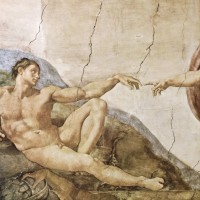
The Creation of Adam is a fresco by Michelangelo painted around 1511 on the ceiling of the Sistine Chapel in Vatican City. It illustrates the biblical scene from Genesis in which God reaches out to give life to Adam. The image is one section of Michelangelo's larger ceiling program commissioned by Pope Julius II.
-
Sistine Chapel Ceiling (Michelangelo)
Sistine Chapel Ceiling is the ceiling fresco cycle painted by Michelangelo between 1508 and 1512 in the Sistine Chapel in Vatican City. It includes scenes from the Book of Genesis along with prophets, sibyls, ignudi, and other biblical figures. The project was commissioned by Pope Julius II.
-
The Marriage of the Virgin (Raphael)
The Marriage of the Virgin is an oil painting by Raphael completed in 1504. It depicts the marriage ceremony of Mary and Joseph in front of a centrally planned temple, with figures arranged in a balanced perspective composition. The painting is housed in the Pinacoteca di Brera in Milan.
-
The Son of Man (René Magritte)
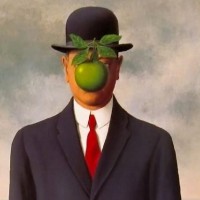
The Son of Man is an oil painting by René Magritte created in 1964. It shows a man in an overcoat and bowler hat standing before a wall, with his face largely obscured by a hovering green apple. The work is one of Magritte's most widely reproduced images.
I like this. Very simple and understated portrait of a gentleman wearing a bowler hat and an overcoat.
-
Liberty Leading the People (Eugène Delacroix)