Top 10 Most Shocking Celebrity Falls From Grace of All Time
-
Bill Cosby
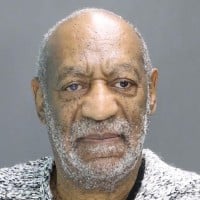
Bill Cosby's downfall was especially shocking because his public identity had been built around trust, morality, family, and respectability. Through The Cosby Show, stand-up comedy, children's entertainment, philanthropy, and decades of television appearances, he became known as "America's Dad." He was also one of the most prominent Black entertainers in American history and was frequently presented as a model of discipline and achievement.
That image began to collapse when numerous women accused Cosby of sexual assault, often describing encounters in which they said he drugged or incapacitated them. Cosby repeatedly denied the allegations, but public opinion changed dramatically after previously sealed deposition testimony became public. In that testimony, he acknowledged obtaining Quaaludes for women with whom he intended to have sex. The allegations became a major turning point in the #MeToo era because they involved a celebrity many viewers had regarded as almost morally untouchable.
In 2018, Cosby was convicted in Pennsylvania of three counts of aggravated indecent assault involving Andrea Constand and sentenced to three to ten years in prison. In 2021, however, the Pennsylvania Supreme Court overturned the conviction and ordered his release, ruling that a previous prosecutor's public decision not to charge him had induced Cosby to give potentially incriminating testimony in a civil case. The court's decision was procedural and did not resolve the broader public accusations against him. His legacy therefore remains defined by a jarring contradiction: one of the most trusted figures in American entertainment became associated with allegations and courtroom proceedings involving sexual violence and abuse of power.
-
Ian Watkins
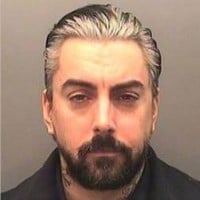
Ian Watkins' downfall was one of the most horrifying collapses in music history because he had been the frontman of Lostprophets, a successful Welsh rock band that sold millions of albums and developed a substantial international following. Lostprophets achieved major commercial success with albums such as Start Something and Liberation Transmission, toured widely, and performed at prominent festivals. Watkins was known publicly as the band's charismatic lead singer and became one of the most recognizable figures in the British alternative-rock scene.
That image began to disintegrate in 2012 when Watkins was arrested after police investigating drug offenses discovered evidence connected to child sexual abuse. The investigation uncovered communications and digital material that prosecutors said demonstrated a sustained pattern of predatory behavior. Watkins initially denied the charges, but in November 2013, he pleaded guilty to 13 offenses, including the attempted rape and sexual assault of a child under 13, conspiring to rape a child, and multiple offenses involving the creation or possession of abusive images.
The crimes were particularly shocking because prosecutors said Watkins had used his fame, access, and influence to manipulate people around him. The case also involved two mothers who pleaded guilty to offenses involving their own children. Authorities described Watkins as the central figure in a network of abuse, while the sentencing judge said he had exercised a "corrupting influence" and posed a significant danger to the public. The details were so disturbing that the judge said the case had "plumbed new depths of depravity."
Watkins was sentenced at Cardiff Crown Court to 35 years: 29 years in prison followed by six years on extended licence. He was also classified as a dangerous offender. Lostprophets disbanded following his arrest, and the remaining members publicly condemned him. They later formed a new band, No Devotion, with another vocalist, making a clear separation between the group's music and Watkins' crimes.
Unlike scandals involving ambiguous allegations or disputed evidence, Watkins' collapse followed guilty pleas and a lengthy criminal sentence. His career, reputation, and musical legacy effectively ended when the charges became public. In October 2025, while serving his sentence at HMP Wakefield, Watkins died after being attacked in prison. Two men were subsequently charged with murder, but their trial ended in May 2026 when the jury was discharged for legal reasons. The case remains one of the starkest examples of a successful musician's celebrity status being used as part of a pattern of exploitation and abuse.
-
O.J. Simpson
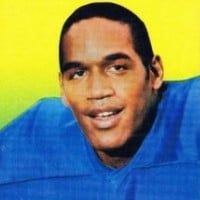
O.J. Simpson's downfall remains one of the most dramatic in modern celebrity history because he had seemingly achieved everything: a Heisman Trophy, a record-setting NFL career, Hall of Fame status, acting roles, lucrative advertising contracts, and a remarkably popular public persona. He was not merely famous. He was viewed as a symbol of Black achievement who had successfully crossed into mainstream American celebrity culture.
That image collapsed in June 1994 when Simpson's former wife, Nicole Brown Simpson, and her friend Ronald Goldman were murdered outside Brown's Los Angeles condominium. Simpson became the central suspect, and his televised low-speed pursuit in a white Ford Bronco became one of the most recognizable live-news events in American history. His 1995 murder trial, later dubbed the "trial of the century," captivated the country for months and exposed the public to evidence involving domestic abuse, blood, DNA, gloves, police conduct, and race.
Simpson was acquitted of the criminal charges in 1995, but the legal and reputational consequences did not end there. In a separate civil trial, a jury found him liable for the wrongful deaths of Brown and Goldman and ordered him to pay $33.5 million to their families. More than a decade later, Simpson was convicted of armed robbery and kidnapping after leading a group of men into a Las Vegas hotel room to recover sports memorabilia. He was sentenced to up to 33 years in prison and served nine years before being paroled in 2017. The contrast between the beloved athlete of the 1960s and 1970s and the defendant, civilly liable party, and convicted felon of later years made his fall virtually unparalleled.
-
Harvey Weinstein
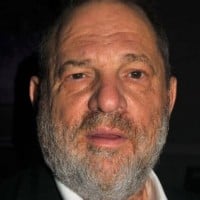
Harvey Weinstein's fall from grace was extraordinary because his power did not come primarily from being in front of the camera. He was one of Hollywood's most influential producers, a co-founder of Miramax and later the Weinstein Company, and a force behind numerous Oscar-winning films. For decades, he occupied a position in which actors, directors, agents, journalists, and executives often depended on his approval.
In 2017, extensive investigations brought forward numerous allegations of sexual harassment, sexual assault, and rape involving women who said Weinstein had used his professional power to pressure, threaten, or manipulate them. The allegations described a recurring pattern: meetings framed as career opportunities, private hotel-room encounters, intimidation, and professional retaliation. The revelations helped ignite the modern #MeToo movement, transforming what might once have been treated as isolated entertainment-industry gossip into a global discussion about institutional protection, workplace abuse, and the imbalance of power between famous executives and aspiring performers.
Weinstein was convicted in New York in 2020 and sentenced to 23 years in prison. That conviction was overturned in 2024 because New York's highest court found that the trial judge had improperly allowed testimony concerning allegations that were not part of the charged crimes. The ruling did not declare Weinstein innocent or prevent a retrial. In 2025, a retrial again produced a conviction on one criminal-sex-act charge, while other counts resulted in an acquittal or a deadlocked jury. He received a 15-year sentence in September 2026 for that conviction. He also received a separate 16-year sentence in California after a rape conviction, but that sentence was overturned in June 2026, with the conviction upheld and resentencing ordered. His collapse was shocking not only because of the criminal cases but also because it exposed how one producer's influence had allegedly been sustained by an entire professional ecosystem.
-
R. Kelly
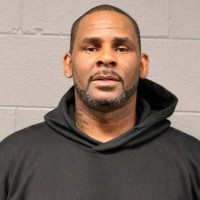
R. Kelly's rise and collapse unfolded over a much longer period than many other celebrity scandals. He was one of the most successful R&B singers and songwriters of his generation, responsible for major hits, acclaimed albums, and influential work with other performers. His commercial success gave him enormous access to aspiring singers and young fans.
Allegations concerning sexual misconduct followed Kelly for decades, including accusations involving underage girls, coercion, abuse, and the creation of sexually explicit recordings. His marriage to the 15-year-old singer Aaliyah in 1994, when Kelly was 27, became an especially troubling part of his history. Although that marriage was later annulled, it illustrated the unusually permissive environment surrounding Kelly's personal and professional behavior.
The most significant public turning point came with the documentary series Surviving R. Kelly, which brought renewed attention to accounts from women who described prolonged emotional, sexual, and physical abuse. Record-label support and planned performances collapsed, while prosecutors pursued federal cases. In 2021, a Brooklyn federal jury convicted Kelly on racketeering and Mann Act charges involving the exploitation and interstate transportation of women and girls. He was sentenced to 30 years in prison in 2022. A separate federal trial in Chicago produced convictions related to child sexual abuse imagery. The shock lies in the distance between Kelly's public persona as a romantic, emotionally expressive music star and the prosecutors' successful depiction of an organized pattern of exploitation enabled by fame, money, employees, and loyal associates.
-
Lance Armstrong

Lance Armstrong's fall was one of the most devastating in sports because his reputation had been built not only on winning but also on survival. After overcoming testicular cancer, Armstrong returned to professional cycling and became the first rider to win the Tour de France seven consecutive times, from 1999 through 2005. His success turned him into a global symbol of courage, perseverance, and hope for cancer survivors.
For years, Armstrong aggressively denied allegations that he had used performance-enhancing drugs. He challenged journalists and former teammates who questioned him, threatened legal action, and cultivated the image of an athlete who had triumphed through extraordinary discipline. His Livestrong foundation amplified that reputation, making him appear to represent something larger than sport.
In 2012, the U.S. Anti-Doping Agency concluded that Armstrong had participated in a sophisticated doping program involving performance-enhancing drugs and blood manipulation. He was banned for life, and all of his results from August 1998 onward were erased, including his seven Tour de France victories and an Olympic medal. In 2013, Armstrong admitted during a televised interview with Oprah Winfrey that he had used banned substances and blood transfusions. The admission was shocking because it not only invalidated his sporting achievements but also undermined years of denials and attacks on people who had accused him. Few celebrity collapses have involved the systematic removal of nearly an entire career from the official record.
-
Tiger Woods

Tiger Woods' 2009 scandal was a classic example of a carefully constructed public image collapsing almost overnight. At the time, Woods was not simply a dominant golfer. He was one of the most recognizable and commercially valuable athletes in the world. He had won major championships, held the world number-one ranking for long periods, and served as the polished public face of brands such as Nike, Accenture, Gillette, Gatorade, and Buick.
His image combined athletic excellence with an apparently stable family life. That image began to unravel after reports of an extramarital affair appeared in late 2009. Two days later, Woods crashed his SUV outside his Florida home in the early morning. The unusual circumstances surrounding the crash intensified media scrutiny, and additional women subsequently came forward claiming to have had affairs with him.
Woods eventually acknowledged his infidelity, apologized publicly, took an indefinite break from professional golf, entered treatment, and divorced his wife, Elin Nordegren. Several major sponsors ended or suspended their relationships with him, and his name became associated in the public imagination with cheating and scandal rather than golf alone. The impact was particularly dramatic because Woods had been marketed as disciplined, controlled, family-oriented, and nearly invulnerable. His later return to elite golf, including his 2019 Masters victory, made the story partly a comeback, but it did not restore the unblemished "perfect champion" image that had existed before 2009.
-
Roscoe "Fatty" Arbuckle

Roscoe "Fatty" Arbuckle's fall from grace demonstrates that celebrity scandals are not a modern phenomenon. In the early 1920s, Arbuckle was one of the biggest stars in silent cinema. He was a hugely successful comedian, a major box-office attraction, and an important figure in the development of screen comedy. His nickname and physical appearance were central to his brand, but his popularity extended far beyond a single character or film series.
In 1921, actress Virginia Rappe became seriously ill after a party in San Francisco at which Arbuckle was present. She died several days later, and Arbuckle was accused of raping her and causing her death. The resulting trial became an enormous national scandal, amplified by sensational newspaper coverage and moral panic surrounding Hollywood parties, alcohol, and sexual behavior.
Arbuckle was tried three times and ultimately acquitted. The jury in the third trial even issued a formal apology, concluding that he had been subjected to a grave injustice. Legally, he had been cleared, but the damage to his career was profound. His films were banned or withdrawn, his reputation was devastated, and his name remained synonymous with scandal for decades. Arbuckle's case is particularly tragic because it shows that acquittal did not necessarily restore a celebrity's standing once public suspicion and sensational media coverage had taken hold. His fall was not the result of a conviction, but his career never recovered its former scale.
The most revealing pattern across these cases is that the larger the public image, the more devastating the collapse tends to be. Celebrities who project perfection, moral authority, family values, athletic purity, or professional control often experience the sharpest reversals when their private conduct contradicts the identity they sold to the public.
-
Paula Deen

Paula Deen's collapse was shocking because her entire career depended on the warmth and familiarity of her public image. She rose from running a small catering business to becoming one of America's most recognizable television chefs. Her Food Network programs, cookbooks, restaurants, cookware, retail products, and endorsement deals turned her into a major lifestyle brand associated with Southern hospitality, family traditions, and a cheerful, folksy personality.
Her reputation unraveled in 2013 after a former employee filed a lawsuit alleging racial and sexual discrimination involving Deen and her brother. During a deposition connected to the lawsuit, Deen acknowledged that she had used a racial slur in the past. The deposition also included disturbing testimony about a "plantation-style" wedding and her discussion of having Black servers dressed in a manner associated with slavery. Deen argued that she was describing attitudes from an earlier period and denied intending to demean anyone, but the comments produced immediate public outrage.
The professional consequences were swift. Food Network announced that it would not renew her contract, effectively ending the relationship that had made her a household name. Retailers and corporate partners, including Walmart, Target, Home Depot, QVC, Smithfield Foods, Caesars Entertainment, and major publishers, also cut ties with her or suspended partnerships. Her cookbooks and branded products disappeared from many stores, and her carefully cultivated image as a harmless, beloved Southern grandmother was replaced by a national debate about racism, workplace culture, and whether public apologies were sufficient.
Deen's career did not disappear completely. She continued operating businesses, making appearances, publishing material, and rebuilding a more limited commercial presence. However, she never returned to the level of mainstream cultural dominance she enjoyed before 2013. Her downfall remains a classic example of how quickly an empire built around personal image can collapse when a celebrity's private statements appear to contradict the values being sold to the public.
-
Jared Fogle

Jared Fogle's fall was among the most disturbing because his public image was based on health, self-improvement, and trust. He became famous as the smiling "Subway Guy" after claiming that he had lost more than 200 pounds by eating Subway sandwiches and walking regularly. The campaign turned him into one of the most recognizable advertising personalities in the United States.
Fogle's story was presented as an inspirational transformation. He appeared in hundreds of advertisements and at school and community events, corporate promotions, and public-health discussions. Subway credited his campaign with helping drive enormous growth, and his identity became inseparable from the company's brand.
That image collapsed in 2015 when federal investigators raided his home and arrested him. Fogle later pleaded guilty to traveling across state lines to engage in commercial sex with minors and to receiving and distributing child sexual abuse material. His case also involved material supplied by Russell Taylor, who had worked with Fogle's charitable foundation and was separately prosecuted.
Fogle was sentenced to 188 months (15 years and eight months) in federal prison, ordered to pay a $175,000 fine, provide $1.4 million in restitution to victims, and serve lifetime supervised release. Subway immediately severed its relationship with him and removed his image from its advertising and website. The shock came from the extreme contradiction between the wholesome public spokesman who had represented weight loss and family-friendly health messaging and the criminal conduct established in federal court.