Top 10 Greatest French Persons
-
Louis Pasteur
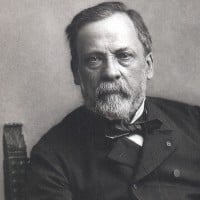
Louis Pasteur was a French chemist, pharmacist, and microbiologist renowned for his discoveries involving vaccination, microbial fermentation, and pasteurization. He developed vaccines for rabies and anthrax and founded the Pasteur Institute in Paris. Pasteur's work laid the foundation for modern microbiology... read more
Our milk is pasteurized, and obviously it's named after him.
-
Jeanne d'Arc
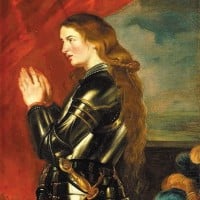
Joan of Arc, nicknamed "The Maid of Orléans," is considered a heroine of France for her role in the final phase of the Hundred Years' War. She claimed visions of saints including St. Michael the Archangel, St. Catherine of Alexandria, and St. Margaret of Antioch, who urged her to lead French forces against... read more
Jeanne d'Arc (Joan of Arc in English) depicted on horseback in an illustration from a 1505 manuscript.
-
René Descartes
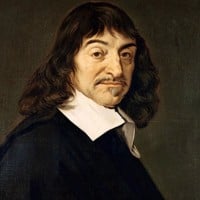
René Descartes was a French philosopher, mathematician, and scientist who developed analytic geometry, linking the previously separate fields of geometry and algebra. He is also known for his philosophical statement, Cogito, ergo sum, or I think, therefore I am. Descartes is often regarded as a foundational... read more
Notable ideas:
Cogito ergo sum, method of doubt, method of normals, Cartesian coordinate system, Cartesian dualism, ontological argument for the existence of God, mathesis universalis. Folium of Descartes.
-
Napoléon Bonaparte
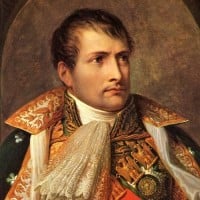
Napoléon Bonaparte (August 15, 1769 - May 5, 1821) was a French military and political leader who rose to prominence during the French Revolution. He became Emperor of the French in 1804 and led successive military campaigns across Europe. His Napoleonic Code and administrative reforms continue to influence... read more
France has a stereotype of being portrayed as cowardly, mostly because of World War II, yet Napoleon stands against that and shows how well France can do on the battlefield.
-
Pierre Curie
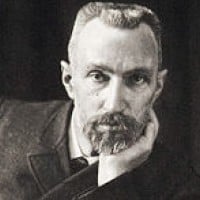
Pierre Curie was a French physicist and chemist who pioneered research in crystallography, magnetism, piezoelectricity, and radioactivity. He shared the 1903 Nobel Prize in Physics with his wife, Marie Curie, and Henri Becquerel for their work on radioactivity. His contributions helped establish radioactivity... read more
A physicist, pioneer in crystallography, magnetism, piezoelectricity, and radioactivity. He received the Nobel Prize in Physics in 1903.
-
Charles de Gaulle
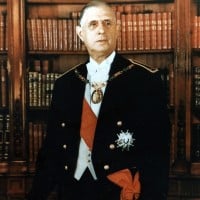
Charles André Joseph Marie de Gaulle (November 22, 1890 - November 9, 1970) was a French general and statesman. He was the leader of Free France from 1940 to 1944 and served as head of the Provisional Government of the French Republic from 1944 to 1946.... read more
-
Édith Piaf
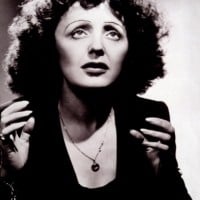
Édith Piaf was a French cabaret singer, songwriter, and actress who became widely regarded as France's national chanteuse and one of the country's greatest international stars. Her signature songs include La Vie en Rose, Non, je ne regrette rien, and Hymne à l'amour. Piaf's music and life have continued... read more
Songs: Je Ne Regrette Rien (No Regrets), La Vie en Rose, Hymne à l'amour, Milord, Rien de Rien
-
Gustave Eiffel
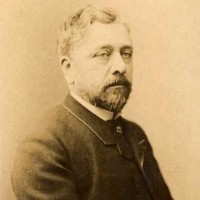
Alexandre Gustave Eiffel was a French civil engineer. A graduate of the École Centrale des Arts et Manufactures, he made his name through various bridges for the French railway network, most famously the Garabit viaduct. He is best known for the Eiffel Tower, built for the 1889 Universal Exposition in... read more
A civil engineer and architect, best known for:
1. the world-famous Eiffel Tower in Paris, built for the 1889 Universal Exposition
2. his contribution to building the Statue of Liberty in New York
3. various bridges for the French railway network, most famously the Garabit viaduct
4. important contributions in the fields of meteorology and aerodynamics
-
Honoré de Balzac
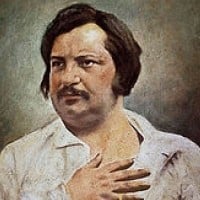
Honoré de Balzac (May 20, 1799 - August 18, 1850) was a French novelist and playwright. His novel sequence La Comédie Humaine, which presents a comprehensive panorama of post-Napoleonic French life, is widely regarded as his magnum opus.... read more
One of the greatest novelists of all time.
-
Frédéric Joliot-Curie
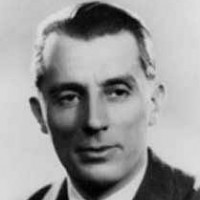
Jean Frédéric Joliot-Curie was a French physicist and chemist and the husband of Irène Joliot-Curie, with whom he was jointly awarded the 1935 Nobel Prize in Chemistry for their discovery of induced radioactivity. He and Irène also helped found the Orsay Faculty of Sciences, now part of Paris-Saclay... read more
Awards - Nobel Prize for Chemistry (1935).
-
?
Cardinal Richelieu
-
?
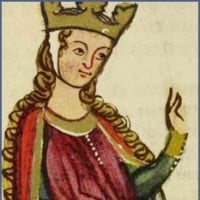
Eleanor of Aquitaine
-
Jules Verne
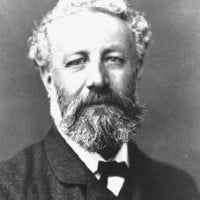
Jules Gabriel Verne was a French novelist, poet, and playwright who is best known for his adventure novels and significant influence on the development of science fiction. His most famous works include Twenty Thousand Leagues Under the Sea, Journey to the Center of the Earth, and Around the World in... read more
A novelist, poet, and playwright best known for his adventure novels and his profound influence on the literary genre of science fiction. He's one of the fathers of science fiction, a title also given to H. G. Wells and Hugo Gernsback.
Verne is the second most-translated author in the world since 1979, ranking between the English-language writers Agatha Christie and William Shakespeare.
-
Voltaire
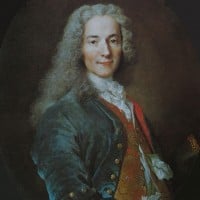
François-Marie Arouet, known by his pen name Voltaire, was born on November 21, 1694, and died on May 30, 1778. He was a French Enlightenment writer, historian, satirist, and philosopher who became famous for his sharp wit, his criticism of Christianity, particularly the Catholic Church, and his strong... read more
Tremendous writer, philosopher, and overall genius.
-
Victor Hugo
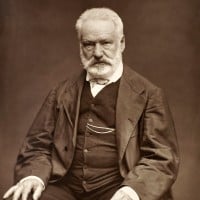
Victor-Marie Hugo (26 February 1802 - 22 May 1885) was a French poet, novelist, dramatist, and politician associated with the Romantic movement. Hugo is considered one of the greatest and best-known French writers.
Outside France, his most famous works are the novels Les Misérables (1862) and... read more
I have to vote for him. Was he a great poet? Yes. Was he an incredibly talented writer? Yes.
Was he one of the most audacious politicians and one of the most profoundly humanitarian persons ever? Yes. He got into trouble for speaking the truth about 19th century France. He was exiled. But he was right. His fight was worth it. I wish he could have seen France now and appreciate the progress. Rest in peace.
Poet, novelist, and dramatist of the Romantic movement.
-
Georges Bizet
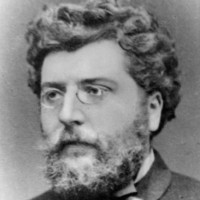
Georges Bizet, registered at birth as Alexandre César Léopold Bizet, was a French composer of the Romantic era. He's best known for his opera Carmen, which has become one of the most frequently performed operas worldwide. Bizet's innovative harmonies and orchestration influenced later composers and helped... read more
-
Claude Monet
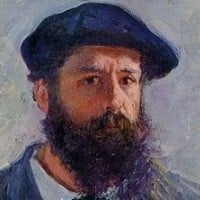
Oscar-Claude Monet was a founder of French Impressionist painting and one of the movement's most consistent and prolific practitioners. His work expressed his perceptions of nature, especially through plein-air landscape painting. His series paintings, including haystacks, Rouen Cathedral, and water... read more
He was a founder of French Impressionist painting. Even the term "Impressionism" was derived from the title of his painting "Impression, Sunrise" (Impression, soleil levant).
The image is his self-portrait.
-
Coco Chanel
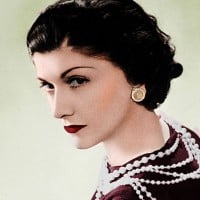
Gabrielle Bonheur "Coco" Chanel was a French fashion designer and the founder of the Chanel brand. She is widely credited with revolutionizing women's fashion in the early 20th century by introducing more casual styles that replaced the more restrictive garments of the time. Chanel's legacy continues... read more
-
Jean Michel Jarre
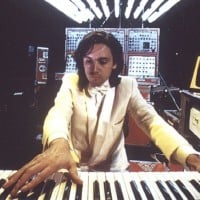
Jean-Michel André Jarre is a French composer, performer, and record producer. He is a pioneer in the electronic, ambient, and new-age music genres. Jarre is also known for organizing spectacular outdoor concerts that feature his music along with laser displays, large projections, and fireworks.
This guy performed at one of the largest concerts ever, with 3,500,000 people in Moscow, Russia, in 1997.
-
Paul Cézanne
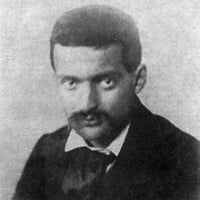
Paul Cézanne was a French Post-Impressionist painter whose work helped bridge the artistic traditions of the 19th century and the modern art movements of the 20th century. He is often referred to as the father of modern art. Cézanne's influence is evident in the work of artists such as Picasso and Matisse... read more
-
Auguste Renoir
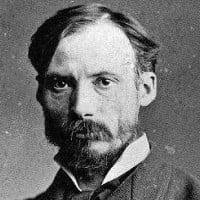
Pierre-Auguste Renoir was a French artist who played a leading role in the development of Impressionism. Celebrating beauty, especially feminine sensuality, he has been described as "the final representative of a tradition running directly from Rubens to Watteau."
-
Blaise Pascal
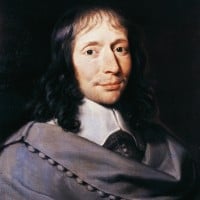
Blaise Pascal (19 June 1623-19 August 1662) was a French mathematician, physicist, inventor, writer, and Catholic theologian. He was a child prodigy educated by his father, a tax official in Rouen. Pascal's earliest work was in the natural and applied sciences, where he made important contributions to... read more
-
Claude Debussy
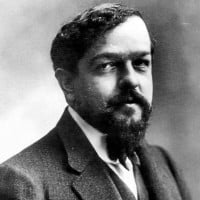
Claude Debussy was a French composer often regarded as a central figure in the transition to modern classical music. He is sometimes associated with Impressionism, although he rejected the label. Debussy's innovative use of harmony and texture influenced many 20th-century composers.
The greatest composer to have ever lived.
-
Gerard Depardieu

Gérard Xavier Marcel Depardieu is a French actor. He received acclaim for his performances in The Last Metro, for which he won the César Award for Best Actor, Police (1985), which earned him the Volpi Cup for Best Actor, and Jean de Florette (1986). His role in Cyrano de Bergerac (1990) earned him the... read more
-
Guy de Maupassant
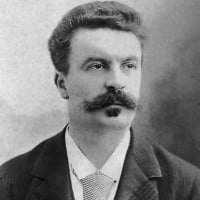
Henri René Albert Guy de Maupassant (August 5, 1850 - July 6, 1893) was a French author widely regarded as a master of the short story. He was a leading figure in the naturalist literary movement and often portrayed human lives, social forces, and personal destinies with disillusionment and a somber... read more
-
Isabelle Adjani

-
Hector Berlioz
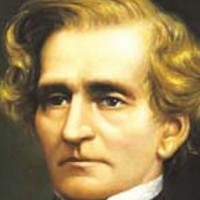
Hector Berlioz was a French Romantic composer best known for his compositions Symphonie fantastique and Grande messe des morts (Requiem). He was a major influence on the development of orchestration and program music in the 19th century. Berlioz was also an accomplished conductor and music critic.