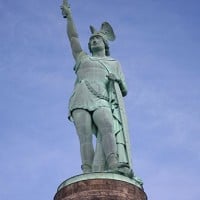
Top 10 Greatest Unifiers In History
In this list, a unifier in history is someone who united their country during a time of war or disunity. It consists mostly of kings and emperors, although there may be at least one dictator.
-
Qin Shi Huang
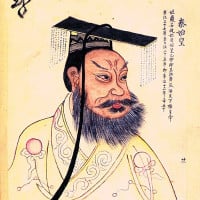
The original unifier, Qin Shi Huangdi conquered the six kingdoms and thus created China.
-
Kamehameha I
Through military conquest and diplomacy, this big Kahuna united the Hawaiian Islands as a kingdom in 1810.
-
Tewodros II
While not the first Emperor of Ethiopia, Tewodros did bring an end to the Zemene Mesafint in 1855, uniting a historically divided country.
-
Oda Nobunaga

Oda Nobunaga was a powerful daimyō of Japan in the late 16th century who attempted to unify the country during the late Sengoku period. He is regarded as one of the three unifiers of Japan, alongside Toyotomi Hideyoshi and Tokugawa Ieyasu.... read more
-
Liu Bang
-
Constantine
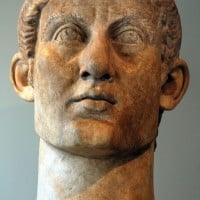
This guy basically did the same thing in 324 AD, except the empire had been divided into four parts.
-
Aurelian
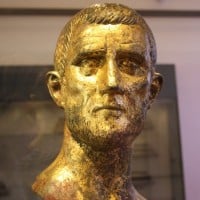
Yet another Roman emperor, this one brought the powerful Palmyrene Empire and Gallic Empire to their knees in 273-74 AD.
-
Augustus Caesar
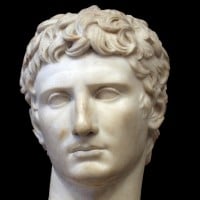
The first Emperor of Rome, Augustus united the east and west under his rule and created the greatest empire the world has ever known.
-
Otto von Bismarck
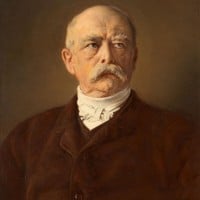
Otto Eduard Leopold, Prince of Bismarck and Duke of Lauenburg, was a conservative Prussian statesman who had a major influence on German and European affairs from the 1860s to 1890. He orchestrated a series of wars that unified the German states into a single empire under Prussian control while excluding... read more
"Not through speeches and majority decisions will the great questions of the day be decided. That was the great mistake of 1848 and 1849, but by iron and blood."
United the German states into a current world power.
Unified the German states with swift accuracy.
-
Abraham Lincoln
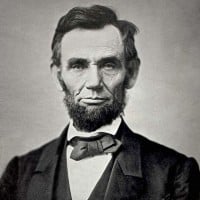
Abraham Lincoln (February 12, 1809 to April 15, 1865) was an American lawyer and statesman who served as the 16th president of the United States from 1861 until his assassination in 1865. Lincoln led the nation through the American Civil War and succeeded in preserving the Union, abolishing slavery,... read more
-
?
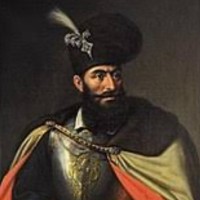
Michael the Brave
-
?
Julius Caesar
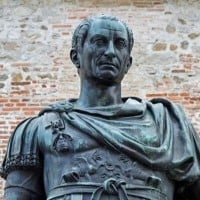
Gaius Julius Caesar (July 12 or 13, 100 BC - March 15, 44 BC), commonly known as Julius Caesar, was a Roman politician, military general, and author. He played a critical role in the transformation of the Roman Republic into the Roman Empire. His writings, military campaigns, and political reforms had... read more
-
Philip II of Macedon
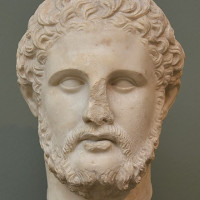
Although he is generally overlooked in history, King Philip of Macedon achieved what many people thought was impossible in 338 BC. He united the Greek city-states under one king.
-
George Washington
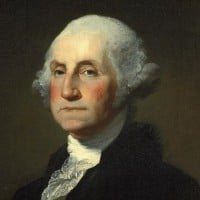
George Washington (February 22, 1732 - December 14, 1799) was the first president of the United States, serving from 1789 to 1797. He led the Continental Army to victory in the American Revolutionary War and presided over the Constitutional Convention of 1787, helping to shape the U.S. Constitution and... read more
Funny how he's number 13, as he arguably united the 13 colonies.
-
Mobutu Sese Seko
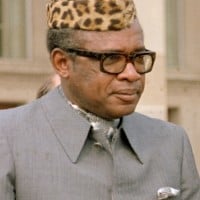
-
Martin Luther King Jr.
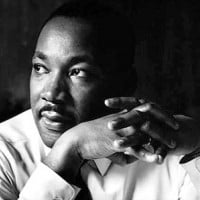
Martin Luther King Jr. (born Michael King Jr., January 15, 1929 - April 4, 1968) was an African American minister and a pioneering civil rights leader. From 1955 until his assassination in 1968, he was the most visible spokesperson for the civil rights movement. King is best known for leading nonviolent... read more
-
Mahatma Gandhi
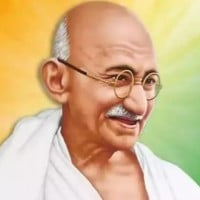
Mohandas Karamchand Gandhi was the preeminent leader of the Indian independence movement in British-ruled India.
He's widely known for his philosophy of nonviolent resistance, or satyagraha, which helped lead India to independence in 1947. Gandhi's methods and beliefs influenced civil rights movements... read more
-
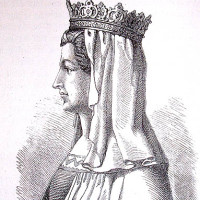
Margaret I of Denmark
-
Victor Emmanuel II
King Victor Emmanuel was the king of Sardinia-Piedmont, and under his rule, Italy was unified. He also employed Giuseppe Garibaldi and his Red Shirts to conquer the Two Sicilies, and his other armies were able to push the pope back from the Papal States and into the walls of the Vatican.
-
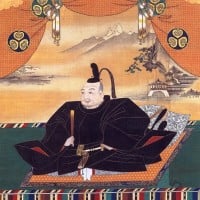
Tokugawa Ieyasu
-
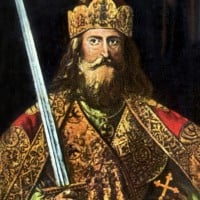
Charlemagne
-
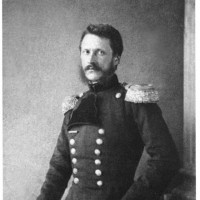
Alexandru Ioan Cuza
-
Arminius