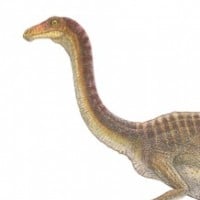
Top 10 Best Herbivore Dinosaurs
-
Triceratops
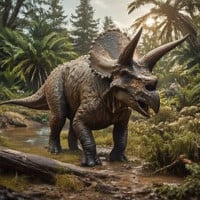
Triceratops is a genus of herbivorous ceratopsid dinosaur that first appeared during the late Maastrichtian stage of the Late Cretaceous period, about 68 million years ago in what is now North America. It is known for its large bony frill and three distinct facial horns. Triceratops was one of the last... read more
My favorite since I was a toddler!
-
Ankylosaurus
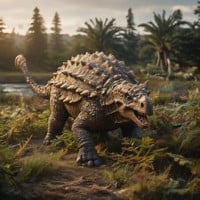
Ankylosaurus is a genus of armored dinosaur known for its distinctive club-like tail and body covered in bony plates. Fossils have been found in geological formations from the Late Cretaceous Period, approximately 68 to 66 million years ago, in western North America. This places it among the last non-avian... read more
Ankylosaurus tail club is powerful enough to brake the bones of a Tyrannusaurus Rex, and could probably kill it in a direct hit to the skull. The armour is over powered so the only way to kill this tank was to flip it over.
I think they are the best dinosaur ever.
Ankylosaurus, stegosaurus, and sinoceratops are my favorite.
-
Stegosaurus
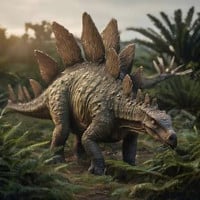
Stegosaurus is a type of armored dinosaur. Its fossil remains have been found in rocks dating to the Late Jurassic period, between 155 and 150 million years ago, in the western United States and Portugal. It is known for the distinctive double row of kite-shaped plates along its back and its spiked tail... read more
A strike from their tail could seriously injure or even kill an attacker. It's also big and bulky. The huge plates on it's back are for display and intimidation.
-
Therizinosaurus
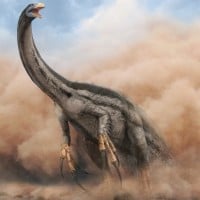
Therizinosaurus is a genus of giant therizinosaurid dinosaurs that lived in what is now Mongolia during the Late Cretaceous period, around 70 million years ago. It was discovered in the Nemegt Formation and is especially known for its extremely long claws, the longest known claws of any land animal.... read more
The first part of this dinosaur found was its 3 foot long claw. Therizinosaurus is also a relatively fast runner. A Therizinosaurus can take out a pack of daspletosaurus BY ITSELF
I'm pretty sure it's an omnivore.Fun fact, Therizinosaurus had 3 foot long claws!
-
Diplodocus
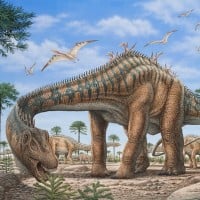
Diplodocus is a genus of diplodocid sauropod dinosaurs whose fossils were first discovered in 1877 by S. W. Williston. It lived during the Late Jurassic period, about 154 to 152 million years ago, in what is now North America. Diplodocus is known for its long neck and tail, and it was one of the longest... read more
-
Pachycephalosaurus
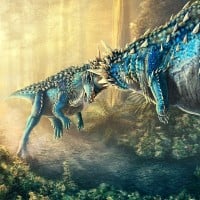
Pachycephalosaurus is a genus of pachycephalosaurid dinosaur that lived during the Late Cretaceous period. Fossils of this genus have been found in western North America, including Montana, South Dakota, Wyoming, and Alberta. It is best known for its thick, dome-shaped skull, which may have been used... read more
-
Brachiosaurus
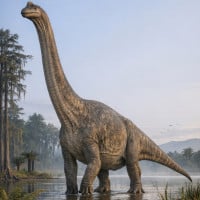
Brachiosaurus is a genus of sauropod dinosaur that lived in North America during the Late Jurassic, around 154 to 153 million years ago. Its long neck allowed it to reach vegetation high in trees. Its forelimbs were longer than its hind limbs, giving it a giraffe-like stance.
-
Iguanadon
It's so powerful that it can thrash it's enemies with it's claws and can walk on two legs
-
Kentrosaurus
-
Parasaurolophus
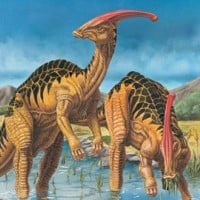
Parasaurolophus is a genus of herbivorous hadrosaurid dinosaurs that lived in North America during the Late Cretaceous Period, approximately 76.5 to 74.5 million years ago. It is known for its long, backward-curving cranial crest, which may have been used for visual display or sound production. Fossils... read more
Scream when in danger; trying to make their opponent deaf, goofy ones
-
?
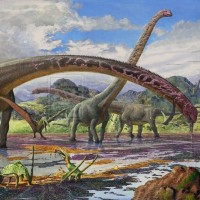
Mamenchisaurus
-
?
Huayangosaurus
-
Amargasaurus
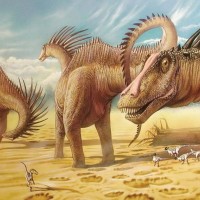
Native to what is now Argentina, Amargasaurus was a sauropod dinosaur from the Early Cretaceous period. It had distinctive elongated neural spines along its neck and back, which may have been used for display or defense. Unlike many other sauropods, Amargasaurus was relatively small, measuring about... read more
-
Torosaurus
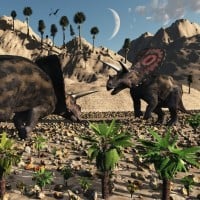
Torosaurus is a genus of herbivorous ceratopsian dinosaur that lived during the late Maastrichtian age of the Late Cretaceous period, approximately 68 to 66 million years ago. Fossils have been found across the Western Interior of North America, from Saskatchewan to Texas. It possessed one of the largest... read more
-
Apatosaurus
-
Argentinosaurus
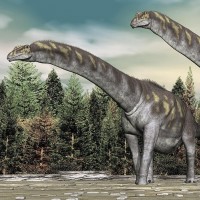
Argentinosaurus is a genus of giant titanosaur sauropod dinosaur from the Late Cretaceous period. It is known from fragmentary remains discovered in the Huincul Formation of Neuquén Province, Argentina. The first fossil was found in 1987 by rancher Guillermo Heredia, and the dinosaur was formally named... read more
-
Stygimoloch
-
Seismosaurus
-
Saltasaurus
-
Dreadnoughtus Schrani
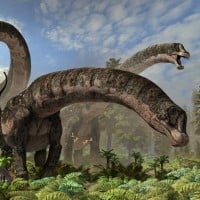
Finally, we found a complete fossil! From a sauropod!
-
Alangasaurus
-
Amphicoelias Fragillimus
-
Sauroposeidon
-
Shunosaurus
-
Camarasaurus
-
Dracorex
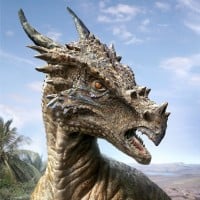
Dracorex was named as a genus of pachycephalosaurid dinosaur from the Late Cretaceous of North America, although it is now commonly regarded as a juvenile form of Pachycephalosaurus. The only named species, Dracorex hogwartsia, was discovered in South Dakota and named in honor of the Harry Potter series... read more
-
Gallimimus