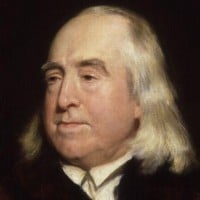
Top 10 Western Philosophers
Philosophy can be highly complicated. Nonetheless, it presents a wide range of varying thoughts that continue to be embraced today.
Although some thinkers on this list may not have ideas that remain prominent today, their contributions helped reshape thought in their time.
These individuals are among the greatest thinkers in politics, religion, science, and mathematics to have come from the Western, or Occidental, world.
-
Socrates
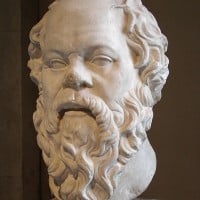
Socrates, who lived from approximately 470 to 399 BCE, was a classical Greek philosopher credited as one of the founders of Western philosophy. He is also regarded as the first moral philosopher in the Western ethical tradition. Although he wrote no works himself, his ideas are known through the dialogues... read more
He was the man who founded Western philosophy, so of course he's here. Although he has no written works, his ideas were spread around through his pupils, especially Plato. He developed the Socratic method and established the limitations of human knowledge.
The founder of philosophy as we know it in the Western world deserves credit for bringing about a new age of thought.
Socrates, the ideal thinker. He questioned everything.
-
Plato
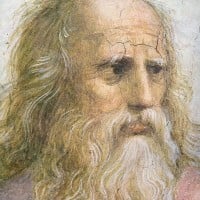
Plato was a philosopher in Classical Greece and the founder of the Academy in Athens, one of the earliest institutions of higher learning in the Western world. He was a student of Socrates and the teacher of Aristotle. His works, written in the form of dialogues, have had a lasting influence on Western... read more
Established the Academy of Athens, mentored Aristotle, and developed the theory of a constantly changing world. The total impact of his work is immeasurable.
Along with Socrates, this philosopher created the categories of thought that our modern world has built itself around until perhaps the 20th century.
In my opinion, he is way ahead of his time if you look at his quotes!
-
Karl Marx
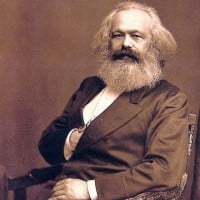
Karl Marx (5 May 1818-14 March 1883) was a German philosopher, critic of political economy, economist, historian, political theorist, journalist, and socialist revolutionary. His best-known works are the 1848 pamphlet The Communist Manifesto, co-written with Friedrich Engels, and the three-volume Das... read more
The man who exposed capitalism for the scam it is. Even though the communist movements were destroyed by Stalinist betrayal in the 20th century, Marx's analysis of capitalism and vision for a classless future society are still as relevant as ever.
A man who exposed the inequalities of social class and called for a classless system, known as socialism. The idea of socialism was ultimately adopted by such nations as Soviet Russia and China.
-
Aristotle
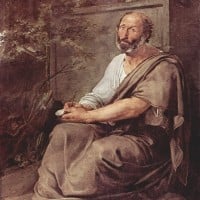
Aristotle was a Greek philosopher and scientist born in the city of Stagira, Chalkidice, on the northern periphery of Classical Greece. He was a student of Plato and later became the tutor of Alexander the Great. Aristotle's writings covered a wide range of subjects, including physics, biology, metaphysics... read more
His works, albeit severely outdated, had a lasting effect on the thinking of others for centuries. They covered many different topics that no other could have at the time.
A continuation of the Platonic tradition, Aristotle's ideas are essentially the assumptions that modern man makes about the world without realizing the source.
His Nicomachean Ethics is the ethics of common sense and also the only moral philosophy that is sound, practical, and undogmatic.
-
Rene Descartes
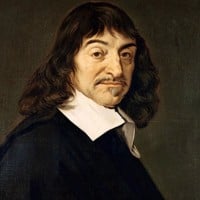
René Descartes was a French philosopher, mathematician, and scientist who developed analytic geometry, linking the previously separate fields of geometry and algebra. He is also known for his philosophical statement, Cogito, ergo sum, or I think, therefore I am. Descartes is often regarded as a foundational... read more
A massive influence on the Scientific Revolution that gave rise to ideas to be known for sure and discarding those that can't be fully confirmed.
This philosopher brought philosophy into the modern age and explored the depths of consciousness.
-
Jean-Jacques Rousseau
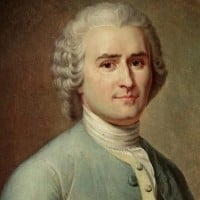
Jean-Jacques Rousseau was a philosopher of the Enlightenment era. Known for his work on political philosophy and education, his writings, including The Social Contract and Emile, explored ideas such as popular sovereignty, the general will, individual freedom, and education.... read more
A philosopher and a musical composer. His beliefs on the right to rule brought upon the separation of church and state, as well as the French Revolution.
-
Voltaire
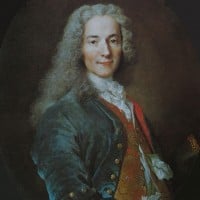
François-Marie Arouet, known by his pen name Voltaire, was born on November 21, 1694, and died on May 30, 1778. He was a French Enlightenment writer, historian, satirist, and philosopher who became famous for his sharp wit, his criticism of Christianity, particularly the Catholic Church, and his strong... read more
Highly critical of Christianity, Voltaire advocated for the freedom of religion and separation of church and state. He became a key figure during the period of Enlightenment.
-
David Hume
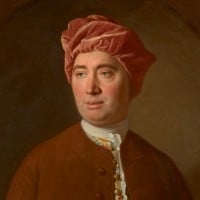
He is one of the modern philosophers with the strongest arguments, and his writings exude a coolness that is lacking in the entire philosophical canon.
Formulated problems of self, identity, and knowledge better than any early modern philosopher before him.
-
Friedrich Nietzsche
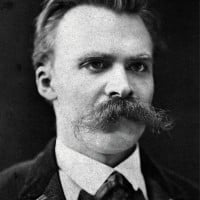
Friedrich Wilhelm Nietzsche was a German philosopher, cultural critic, poet, and classical philologist whose work has exerted a profound influence on Western philosophy and modern intellectual history. He is best known for concepts such as the will to power, the Übermensch, and the declaration that God... read more
Famous for his nihilism, Nietzsche was also known for his ideas of seeing things through multiple perspectives, especially good and evil.
Ushered in the postmodern world out of the religious era of Plato and Thomas Aquinas and removed the shackles on the dogmatic world.
-
John Locke
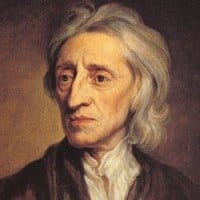
John Locke FRS (1632-1704) was an English philosopher and physician widely regarded as one of the most influential Enlightenment thinkers and known as the "Father of Liberalism." His works, such as Two Treatises of Government and An Essay Concerning Human Understanding, helped lay the foundations for... read more
A man who gained prominence during the Enlightenment period, Locke influenced the idea of natural rights and the social contract theory. Locke's beliefs had an impact on the signing of the Declaration of Independence later on.
He is known to many Americans as the man who influenced our early government.
Influence on Classical Liberalism. The ideology that the founding fathers and the revolutionaries of France supported.
-
?
G.K. Chesterton
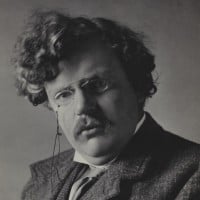
Gilbert Keith Chesterton KCSG (May 29, 1874 - June 14, 1936) was an English author, philosopher, Christian apologist, and literary and art critic. Chesterton created the fictional priest-detective Father Brown and wrote extensively on apologetics, including works such as Orthodoxy and The Everlasting... read more
Chesterton argued eloquently against all the toxic trends that took over our era: materialism, moral relativism, and spineless agnosticism.
-
?
C.S. Lewis
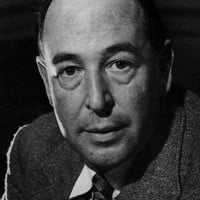
Clive Staples Lewis (November 29, 1898 - November 22, 1963) was a British novelist, poet, academic, medievalist, literary critic, essayist, lay theologian, broadcaster, lecturer, and Christian apologist.
He held academic positions at the University of Oxford, where he was a fellow and tutor in... read more
-
Baruch Spinoza
-
Immanuel Kant
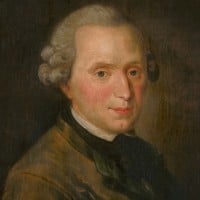
Immanuel Kant (born Emanuel Kant. 22 April 1724-12 February 1804) was a German philosopher and one of the central figures of the Enlightenment.
Born in Konigsberg (then part of East Prussia, now Kaliningrad, Russia), Kant's comprehensive and systematic works in epistemology, metaphysics, ethics... read more
-
Thomas Hobbes
-
John Stuart Mill
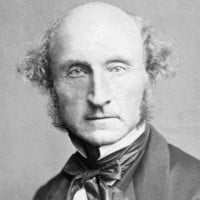
Mill advocated for the limitations of government and the protection of individual rights. He saw history as a battleground between liberty and authority and created a basis for social justice (no, not the kind of social justice you think of nowadays) and human rights.
-
Democritus
-
Ludwig Wittgenstein
-
Alice Miller
-
Ludwig Feuerbach
-
Henry David Thoreau
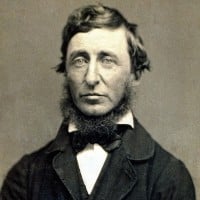
-
John Dewey
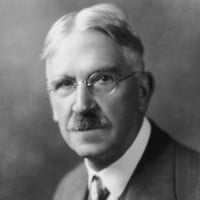
-
St. Augustine
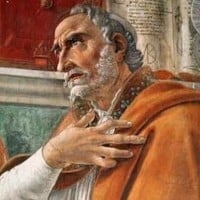
Apart from Jesus and St. Paul, he is the most influential figure in Christianity. He is also a great writer and philosopher who can be read by non-religious people.
-
Thomas Aquinas
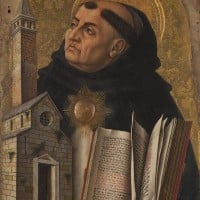
He systematized and synthesized the philosophy of Aristotle with Revelation, proving that faith and reason are not contradictory. His work still serves as a basis of Catholic theology. Much of his work utilizes the mean between extremes that typified Aristotle, and following in his footsteps helped avoid the problems and errors of modern and contemporary times.
-
Jean-Paul Sartre
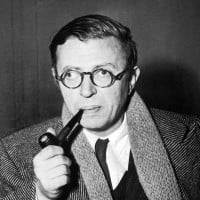
Jean-Paul Charles Aymard Sartre, born on June 21, 1905, and died on April 15, 1980, was a French philosopher, playwright, and novelist. He was one of the leading figures in existentialist thought and a major voice in 20th-century literature and political activism. Sartre declined the 1964 Nobel Prize... read more
-
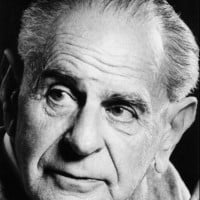
Karl Popper
-
Jeremy Bentham