Top 10 Coolest Elements of the Periodic Table
The periodic table is full of rule-breakers. Some melt when your hand gets warm, some glow, some fuel stars, and some seem like they were invented by a sci-fi writer who got hold of a chemistry textbook.
What makes an element feel cool to you can come from all kinds of places. It might be the way it looks, the strange things it does under the right conditions, the role it plays in technology, or the sheer fact that nature somehow made it at all. One square on that table can hold a liquid metal, a gas used in deep cold research, or a substance tied to magnets, medicine, or nuclear energy.
This list is your chance to back the elements that make chemistry feel less like homework and more like a collection of natural oddities with actual uses. Vote for the ones you think earn the title, and see which parts of the periodic table other people think deserve a lot more attention than they usually get.
-
Bismuth (83)
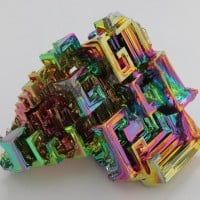
Bismuth is a brittle post-transition metal with atomic number 83 and a low thermal conductivity for a metal. It is commonly used in medicines, cosmetics, and low-melting alloys, and its crystals often show a rainbow oxide layer when formed in air.
Technically, Bismuth is a character from Steven Universe, but in that case, I believe it's actually a personification of the hopper crystals that are often associated with elemental bismuth. These crystals tend to be multicolored and form a unique "staircase" structure.
Chemically speaking, bismuth, on the other hand, is a chemical element with atomic number 83 and the atomic symbol Bi on the Periodic Table. It's a heavy, gray "ordinary metal" that is relatively more benign than its companions on the table, such as lead and polonium, which are both well known to be dangerous for humans. I'm not an expert on bismuth, so I can't say this with certainty, but I hope I gave you an accurate representation of what it is.
Then again, though, I'm not going to lie, the hopper crystals bismuth can form look pretty rad.
-
Carbon (6)
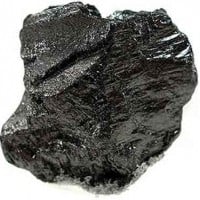
Carbon is the element with atomic number 6 and forms the basis of all known life on Earth. It occurs in allotropes including diamond, graphite, graphene, and fullerenes, each with different physical properties.
So important to life, we nor anything would be here without it. It has 4 electrons in its outer shell, which just gives it so much potential for bonding, and life absolutely took full advantage of that.
Silicon could technically fill its role theoretically, but silicon has nowhere near as many amazing forms. Steel, diamonds, graphite, and coal would not exist without this beautiful element.
Carbon is usually black like pencil and charcoal but can form a transparent and expensive thing like a diamond. Ridiculous, right?
-
Gallium (31)
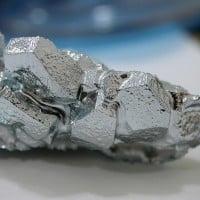
Gallium is a soft metal with atomic number 31 that melts at about 29.76 degrees Celsius, so it can liquefy in a warm hand. It is used in semiconductors such as gallium arsenide and gallium nitride for electronics, LEDs, and solar cells.
Gallium is just better than mercury. It may not be a liquid at room temperature, but it's even cooler because it melts in your hand. Besides, if melting in your hand doesn't cut it for you and you really want a metal that is a liquid at room temperature, you can easily make Galinstan from 70% gallium, 20% indium, and 10% tin, which is a liquid at room temperature. Furthermore, neither gallium nor Galinstan will give me kidney problems or brain damage when I handle it, so that's a bonus.
Gallium is not toxic, so mercury glazers can go ahead and have mercury poisoning. I will take a slightly higher melting point, thank you.
-
Mercury (80)
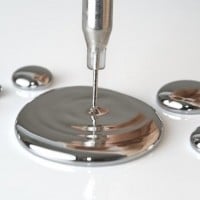
Mercury is a dense metallic element with atomic number 80 and is liquid at standard room temperature. It has been used in thermometers, barometers, switches, and fluorescent lamps, though many applications have declined because of its toxicity.
Hands down, way more interesting than gallium. It's really dense and is completely liquid at room temperature. It's the only metal and one of the only two elements liquid at room temperature. It was known to the ancients and was used (and is still used) in a wide array of applications. You would not have fluorescent lamps without mercury, and up until very recently, it was used in thermometers, tilt switches, batteries, dental fillings, gold mining, and so on. It is amazing.
Mercury is cool. It's a liquid element and liquid metal at room temperature. It is very dense, which means some other metals can float on its surface, which is cool. However, I have one small complaint: it will give me kidney problems and brain damage. Unfortunately, I'm going to have to say that, whilst Mercury is cool, gallium is just better.
-
Helium (2)

Helium is a noble gas with atomic number 2 and has the lowest boiling point of any element. It is used in cryogenics, leak detection, pressurizing systems, and lifting gas for balloons and airships.
Helium is fascinating stuff. Helium-4 becomes superfluid at 2-3K, one of the greatest quantum effects there is. It was discovered in the spectrum of the Sun, which is also cool. The only element with a boiling point below absolute zero. And what fun we all have when we inhale it.
Helium is the most fascinating element there is. You simply cannot argue.
P.S. It also goes to show that Physics is better than Chemistry.
Helium is a chemical element with the symbol He and atomic number 2. Helium is a colorless, tasteless, and odorless gas. Helium is the second most common element in the Universe (after hydrogen), making up around 24% of its mass. How cool is that?
-
Gold (79)
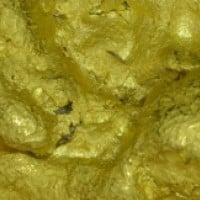
Gold is a transition metal with atomic number 79 known for its resistance to corrosion and high electrical conductivity. It is used in jewelry, coinage, electronics, and dentistry, and it can be hammered into extremely thin sheets.
It's a bad picture here, but it's beautiful, and drove humanity forward.
It gives you so much wealth. Hey, who doesn't like money, eh?
-
Neodymium (60)
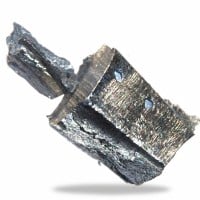
Neodymium is a lanthanide with atomic number 60 and is one of the rare earth elements. It is a key component in powerful permanent magnets used in wind turbines, electric motors, headphones, and hard drives.
Neodymium is used in super strong magnets. Also, I think the name is cool.
-
Technetium (43)
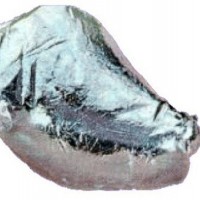
Technetium is the element with atomic number 43 and was the first element produced artificially. All of its isotopes are radioactive, and technetium-99m is widely used in medical imaging procedures.
This element does more within 24 hours, with a half-life of 6 hours, than some stable elements do in their entire careers, such as neon.
Its 99m isotope helps scan the human body and save lives. It is a short but meaningful experience and deserves to be this high up.
More than once every second, a medical procedure is done using Technetium. And while I could definitely say more, I won't for the sake of brevity.
The odd man out. Everything around it isn't radioactive, but it is.
-
Cesium (55)
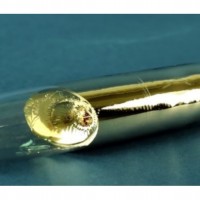
Cesium is an alkali metal with atomic number 55 that reacts vigorously with water and ignites easily in air. It is used in atomic clocks, drilling fluids, and photoelectric cells because of its physical and electronic properties.
- Used in atomic clocks and its isotope is used as a definition of a second.
- Softest metal.
- Most "Electropositive" element.
- Has a mostly blue spectrum or flame test.
- Terrific explosion in water.
- Used in infrared materials.
- One of the components for the smallest spacecraft!
What else do you want?
Cesium is an element characterized as an alkali metal and has the atomic number of 55. It is used to help drill oil and make vacuum tubes. The most common everyday use for cesium is with the GPS on your cell phone.
Cesium clocks is the more accurate term for atomic clocks because cesium is used in these clocks. It also has a gold/silver color.
-
Francium (87)
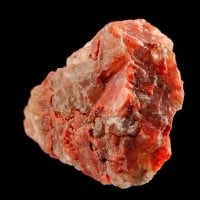
Francium is an extremely rare alkali metal with atomic number 87 and is highly radioactive. Only tiny amounts occur naturally as a decay product of actinium, and its short half-life makes detailed study difficult.
The best element by far for epic-ness. It's so cool that we don't know what it looks like because it evaporates itself, being the most radioactive element in nature.
Based on the trends in the alkali metals, francium might be a red-colored liquid metal, more red than copper. Its flame might be rose red too, very fitting given it's named after a romance country.
It's also a mad lad of an element, so much so that it killed who discovered it. Perey thought this element could diagnose cancer, but it ended up giving her cancer due to its carcinogenic nature.
Really reactive with water. Unfortunately, it lasts too short to find out.
-
?
Bromine (35)
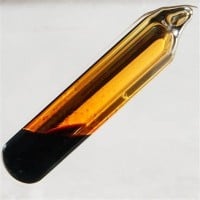
Liquid at room temperature (everyone loves liquid elements).
What's more is that it's a toxic black liquid with red fumes coming off of it. It looks like the blood of some Eldritch horror.
-
?
Zinc (30)
-
Uranium (92)
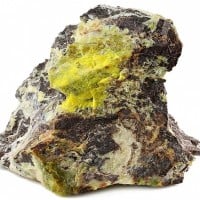
Uranium is a heavy radioactive metal with atomic number 92 and is the highest-numbered element found in significant natural quantities. Its isotopes, especially uranium-235, are used as fuel in nuclear reactors and have also been used in nuclear weapons.
This and plutonium were used to make nuclear bombs and power plants.
You can own some, but just not too much.
-
Holmium (67)
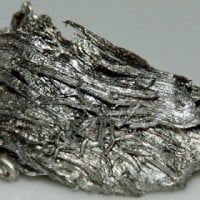
Holmium is a lanthanide with atomic number 67 and has one of the highest magnetic moments of any element. It is used in certain lasers, nuclear control materials, and specialized magnets and glass colorants.
Uses of Holmium:
As a result of its special magnetic properties, holmium is used in alloys for the production of magnets and as a flux concentrator for high magnetic fields. Holmia (holmium oxide) is used as a yellow or red coloring for glass and cubic zirconia.
Holmium has the highest magnetic strength of all elements. Who doesn't like magnets?
-
Tungsten (74)
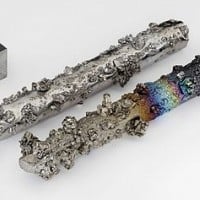
Tungsten is a transition metal with atomic number 74 and has the highest melting point of any pure metal. It is used in cutting tools, electrical contacts, heating elements, and dense metal alloys because of its hardness and heat resistance.
Tungsten rules. It has a nice grey color and is pretty heavy. Also, tungsten carbide is in no way harder than diamond.
It's heavy, it's dense, and someone left a glowing review on a cube of it on Amazon. What more could you need in life?
Has the highest melting and boiling points of all elements and is essential for light bulbs. How cool is Tungsten?!
-
Astatine (85)
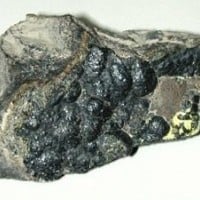
Astatine is a highly radioactive halogen with atomic number 85 and is one of the rarest naturally occurring elements in Earth's crust. It is produced during the decay of heavier elements, and its short-lived isotopes have limited its practical applications and detailed study.
Overall, a fun element. I love its name, its placement, and all halogens. It's the rarest naturally occurring element, the decay product of two amazing elements, and it's still radioactive, which I love.
It's the most "balanced" element, in my opinion, and what I mean by that is it is almost impossibly perfect. Everything I want out of an element is here.
In my opinion, Astatine must be number 1. It belongs to the same group as that of Halogens like Fluorine, Chlorine, Bromine, and Iodine, but is completely different from them. It is extremely radioactive and is a product of nuclear decay. Only 31 grams of Astatine are known to be present in the Earth.
-
Iridium (77)
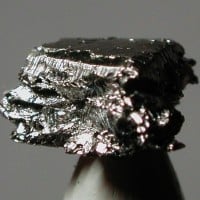
Iridium is a very dense and corrosion-resistant transition metal with atomic number 77. It is used in spark plugs, crucibles, electrical components, and alloys designed to withstand extreme heat and chemical attack.
A very interesting metal. It isn't naturally present on Earth, so if it is discovered, it is a sign of a meteorite strike.
This is the second densest metal and cannot be corroded even at 2000 degrees Celsius.
-
Iron (26)
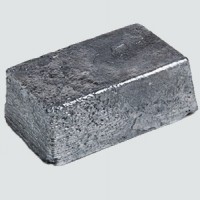
Iron is a transition metal with atomic number 26 and is the main component of steel. It is essential for blood oxygen transport in many organisms and is also one of the most widely used structural metals in industry.
Classic, necessary in Minecraft, and makes me think about pumping iron.
-
Arsenic (33)
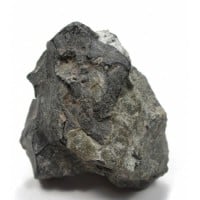
Arsenic is a metalloid with atomic number 33 that occurs in several allotropes, with gray arsenic being the most stable form. It has been used in wood preservatives, pesticides, and semiconductor materials, although many uses are restricted due to toxicity.
Silicon is a chemical element with the symbol Si and atomic number 14. It is a hard, brittle crystalline solid with a blue-grey metallic lustre, and is a tetravalent metalloid and semiconductor.
While it's known for its dark past, a compound of arsenic, Gallium Arsenide, is used in the most efficient solar panels.
Very interesting and poisonous element. Killed many people throughout history but also took care of pests.
-
Xenon (54)
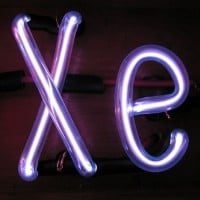
Xenon is a noble gas with atomic number 54 that is colorless, dense, and present in trace amounts in Earth's atmosphere. It is used in flash lamps, ion propulsion systems, anesthetic research, and high-intensity discharge lamps.
Xenon is cool because it is very unreactive. Xenon is used in certain specialized light sources. It produces a beautiful blue glow when excited by an electrical discharge.
Xenon lamps have applications as high-speed electronic flash bulbs used by photographers, sunbed lamps, and bactericidal lamps used in food preparation and processing.
My favorite noble gas, it glows violet and anything in nature that's violet like that is exquisite. It also can form compounds unlike most other noble gases.
Coolest name too, sounds like an alien substance.
-
Hydrogen (1)

Hydrogen is the lightest element, has atomic number 1, and is the most abundant element in the universe. It is used in ammonia production, petroleum refining, fuel cells, and as a rocket propellant when combined with oxygen.
Hydrogen starts with the best letter and is the first element. An entire system is based on its concentration, pH, giving rise to acidity and basicity. All of which are based on whether a molecule donates or accepts H+. Oh, and H+ is basically just a proton. No wonder it is attracted to other atoms with all their juicy electrons.
And talk about romantic. One of the strongest acceptors of H+ is, in fact, hydride, H-. Two hydrogen atoms can always find their way back to each other. An even better love story than...
Forms common molecules with most non-metals, ranging from hydrogen fluoride to borane, including some of the most important chemicals: water, ammonia, and methane.
Did you know three atoms can share two electrons? Well, hydrogen can. Three hydrogen atoms and two electrons form a trihydrogen cation. It's in the game.
But hydrogen reacts with oxygen to form nasty pollutants just like other compounds. Oh wait, the only gas produced from the combustion of hydrogen is water. That's not so bad, I guess. Although it is a greenhouse gas in the atmosphere, guess we will have to drink it then.
So yeah. Let's be real. Hydrogen is the best element. Now all we have to do is find a nice carbon or oxygen atom to bond it with, and then our little hydrogen atom will have a friend for the rest of its days.
-
Osmium (76)
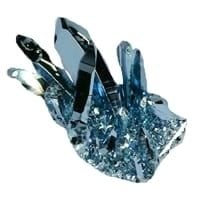
Osmium is a transition metal with atomic number 76 and is one of the densest naturally occurring elements. It is used in hard wear-resistant alloys, electrical contacts, and fountain pen tips, and osmium tetroxide is used in microscopy and chemical synthesis.
Osmium looks like a mana shard from some fantasy RPG, but instead of giving you more mana, it will just form osmium tetroxide, which is super poisonous.
Heavy, looks cool, rare, poisonous. Just generally has a lot of cool stuff going for it.
-
Dubnium (105)
Dubnium is a synthetic transactinide element with atomic number 105 and does not occur naturally. It has only been produced in particle accelerators, and its isotopes decay rapidly through radioactive processes.
-
Silicon (14)
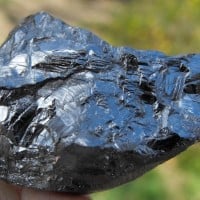
Silicon is a metalloid with atomic number 14 and is a major component of Earth's crust in minerals such as quartz and feldspar. It is widely used in semiconductors, solar cells, glass, ceramics, and silicones.
This should be way higher up. Without silicon semiconductors, this list would not be possible.
Oh, what would you do without glass? Glass is 75 percent made of SiO2.
-
Chlorine (17)
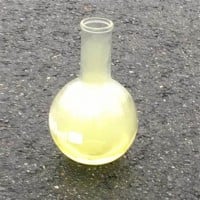
Chlorine is a halogen with atomic number 17 and exists as a yellow-green gas under standard conditions. It is used in water disinfection, bleach production, plastics manufacturing, and many industrial chemical processes.
A poisonous substance that can be used as a cleaner in swimming pools. This is also what bleach is made from.
Chlorine. It keeps pools clean, and Twenty One Pilots wrote a song about it.
Toxic, yet essential to life. And it's a lovely shade of green!
-
Neon (10)

Neon is a noble gas with atomic number 10 and is present in trace amounts in Earth's atmosphere. It is used in lighting, high-voltage indicators, and cryogenic applications, and it emits a reddish-orange glow in electrical discharge tubes.
The most amazing element. It should be in the top 3 at least. The symbol of my vision of the future.
Pretty and awesome element. Who doesn't like its red-orange glow?
-
Oxygen (8)
Oxygen is the element with atomic number 8 and makes up a large portion of Earth's atmosphere, oceans, and crust through compounds. It is essential for aerobic respiration and is used in medicine, steelmaking, welding, and rocket propulsion.
In my opinion, oxygen is the best element because without oxygen, we wouldn't be able to breathe.
Oxygen is very cool, but not as cool as liquid oxygen.
More Info
What makes something an element?
An element is a pure substance made of only one kind of atom. What sets one element apart from another is the number of protons in the nucleus, which is called the atomic number.
Can an element be broken down into a simpler substance?
Not by ordinary chemical means. You can combine elements into compounds or separate them from mixtures, but the element itself stays the same unless its atoms are changed in a nuclear process.
What is the periodic table?
The periodic table is a chart that organizes all known chemical elements by atomic number. It groups elements in a way that helps show patterns in their structure and behavior, so it is basically chemistry's master organizer.
Why are elements placed in rows and columns on the periodic table?
The rows, called periods, show how many electron shells an atom has. The columns, called groups, place together elements that often have similar chemical properties because they have similar outer electron arrangements.
Why is the periodic table useful?
It gives you a fast way to compare elements and predict how they might behave in reactions. Once you know where an element sits, you can often get a rough idea of its size, reactivity, bonding habits, and whether it acts more like a metal, nonmetal, or something in between.