Top 10 Best Religions
Religion has shaped civilizations, inspired art, guided laws, comforted the grieving, and given millions of people a framework for understanding life, death, and everything in between. For some, religion is about faith in a higher power. For others, it is about discipline, community, tradition, or a moral code that helps make sense of a chaotic world. However people approach it, religion remains one of the most powerful forces in human history, touching everything from personal identity to global culture.
Of course, asking which religion is the best is bound to stir up strong opinions. This is not exactly a topic where everyone calmly nods, shakes hands, and agrees to call it a tie. Different religions emphasize different truths, values, and ways of living, and people often connect most deeply with the one that speaks to their own experiences and beliefs. That is what makes a list like this interesting. It is not just a ranking of religions. It is a snapshot of what voters admire most in faith, whether that means peace, devotion, wisdom, compassion, tradition, or a sense of spiritual meaning.
-
Hinduism
Hinduism is a diverse religious tradition that developed in South Asia and includes a wide range of beliefs, practices, and philosophical schools. Important texts associated with it include the Vedas, the Upanishads, the Mahabharata, the Ramayana, and the Bhagavad Gita. Concepts often found in Hindu thought include dharma, karma, samsara, and moksha, along with worship directed toward deities such as Vishnu, Shiva, and Devi.
Hinduism is the only religion where we can't trace the root of its origin or when it began because it is so deep and ancient. It is considered the first civilized and cultured religion in the world. Other religions came later, detected us, looted our valuable books of knowledge, gold, and destroyed our scientifically built monuments.
If you ask me what is in Hinduism, I would respond by saying that what other religions lack is found in Hinduism. Hinduism was the first religion to explain the true meaning of GOD. GOD is an abbreviation for GENERATOR, ORGANIZER, and DESTROYER. In Hinduism, this concept was already known through Lord Brahma as the Generator, Lord Vishnu as the Organizer, and Lord Shiva as the Destroyer. We may call these concepts by other names now, but this same idea existed in Hinduism long before the world began learning English.
Even Sanskrit is considered the most suitable language for computer software, according to a report in Forbes magazine in July 1987. Additionally, Ayurveda is the first known school of medicine, and Sushruta, known as the Father of Surgery, performed the first surgeries. Paracetamol still runs with the help of Indian medicinal plants, which are based on Hindu knowledge. After the invasion of India, the world benefited from many of its inventions, showcasing the true worth of Hinduism. It wouldn't be wrong to call Hinduism a religion beyond science.
You may ask why we haven't invaded other countries in the last 10,000 years. The answer is simple: we had everything - peace, health, wealth, and all that a human needs to live happily within himself. There was no need for us to become looters. If other religions had everything, then why did they loot us? We would have been superhumans if we had not been attacked by others. As peace lovers, we even find it painful to attack a real enemy.
-
Sikhism
Sikhism is a monotheistic religion that began in the Punjab region in the late 15th century through the teachings of Guru Nanak and the nine Gurus who followed him. Its central scripture is the Guru Granth Sahib, which is regarded as the eternal Guru in Sikh tradition. Core practices include prayer, community service, and participation in the gurdwara, where congregational worship and the communal meal called langar take place.
It's the most recent religion. That's why its teachings are more related to modern times without any superstitions, fasting, or idol worship. Sikhism promotes women's equality and rejects the belief that a certain God belongs to a certain people. It also refutes caste and prejudice. All humans are the same, and it's not what religions people follow, but more importantly, the way of life they live through truth and honesty, which has more value towards salvation.
Unfortunately, many cultural beliefs have become incorrectly intertwined within its true teachings. Otherwise, it could become a worldwide major religion. The principal belief is that there is no Hindu, Muslim, Christian, or Jew. All are under the same laws. All are God's people. All people are the same. It's their outward appearances that make them different. Universal brotherhood: 'God is the God of no religion.'
-
Buddhism

Buddhism originated in ancient India with the teachings of Siddhartha Gautama, who is known as the Buddha. It teaches that suffering is linked to craving and ignorance, and that liberation can be pursued through the Four Noble Truths and the Noble Eightfold Path. Major traditions include Theravada, Mahayana, and Vajrayana, each with its own texts, rituals, and historical development.
Actually, Buddhism is not a religion. It's actually a vision. It tells us the great truth that rules the whole universe, the concept of cause and its result. There is no other vision that gives such a beautiful idea. No god takes part, no actual influence to follow this vision. It's free to everyone, and you can feel it if you like.
If you go by what the Buddha found, surely you can understand what is the actual truth inside our lives. It's more scientific and even deeper. But other religions are more populated today just because of their rules and fears. In Buddhism, we don't have them. This vision is for intelligent people to think. Buddha gave freedom to Buddhists with peace and harmony for everyone, ensuring the right of perfect living for every human and animal.
-
Islam
Islam is an Abrahamic monotheistic religion centered on belief in one God, called Allah in Arabic, and the prophethood of Muhammad. Its holy book is the Quran, and its major branches include Sunni and Shia Islam. Religious life commonly includes the Five Pillars, which are the declaration of faith, prayer, almsgiving, fasting during Ramadan, and pilgrimage to Mecca for those able to undertake it.
Thank you for the everlasting life, Allah. You have given us so much. We praise you and adore you for all the good and gracious things you have done for us. Oh Allah, give blessings to our true Prophet Mohammed (peace be upon him).
Allah, I don't know how to thank you. You are too perfect. Some Muslims may have let you down, and some may have been good. Oh Allah, please forgive everyone and help the poor and the people around me. You are the Creator, the Sustainer, and the One who has power over all.
We believe that if someone hits you, you should stay calm and be good to them. We don't care if we get hurt. We only care that our Lord, the High Master (Allah), is happy. And to make Him happy, we have to stay calm, relax, and pray to Him at regular times.
So, please, whether you are a Muslim or a non-Muslim, try to understand and consider joining our religion. If you don't want to, you don't have to. Allah has given us all the knowledge to choose our options. So, choose carefully which religion you think is right. I am not forcing you to choose. I just want to inform you. Don't get me wrong, because I don't think there is anything wrong with my religion, Islam. I just want you to know that Islam means peace, and that's what the world needs - peace. Thank you.
-
Christianity

Christianity is an Abrahamic religion based on the life, teachings, death, and resurrection of Jesus Christ. Its sacred scripture is the Bible, which consists of the Old Testament and the New Testament. Major branches include Catholicism, Eastern Orthodoxy, and Protestantism, and central beliefs commonly include salvation, worship of God, and the significance of Jesus as the Messiah.
A lot of religions preach and present themselves as better than the rest, but in practice, they still dwell in ancient practices and have not evolved. Most of them do not even acknowledge their dark ages and are ignorant of how globalization has made the world one big family. Practicing Christians are open about their past and have moved on. The church has made amendments and has progressed, unlike most religions, where they still stick to medieval or pre-medieval mindsets.
Christianity is based on a few simple principles, and unlike most religions, it does not impose restrictions that make its followers fanatical. It is the message of love and compassion. I vote for Christianity, as I believe in the message and way of life. Following closely to Christianity would be Buddhism and Hinduism.
-
Jainism
Jainism is an ancient Indian religion that teaches nonviolence, self-discipline, and liberation of the soul from the cycle of rebirth. It traces its tradition through a line of spiritual teachers called Tirthankaras, with Mahavira regarded as the 24th Tirthankara in the current time cycle. Key principles include ahimsa, aparigraha, and anekantavada, which relate to non-harm, non-attachment, and the complexity of truth.
Jainism is a religion of non-violence. It promotes peace in the world. But more importantly, it promotes peace within the self. It's the path that emphasizes the search for truth. It's logical and asks us to be logical. Nothing should be believed blindly.
It's about self-discipline and training. A path to achieve true happiness, which cannot be found in this material world.
It itself says that no religion should be tagged as the 'best'. And that a person needn't follow a religion to be a good person.
This is the oldest living religion. It's a spiritual path. No god is there who created us, and we ourselves are responsible for better or worse.
-
Shaivism
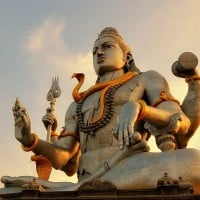
Shaivism is a major tradition within Hinduism that centers worship on Shiva as the supreme deity. It includes multiple schools of theology and practice, with important scriptures including the Agamas and Shaiva texts associated with various regional traditions. Ritual worship, meditation, ascetic disciplines, and temple practices have all played significant roles in its historical development.
I follow this religion. It gives me a relaxing feeling when I think about Shiv and his help to everyone who is doing good.
He also helps those who are bad in order to maintain balance in the world and sustain the life cycle.
When you meditate just to follow Shiv (the oldest god on Earth - no birth known, no family to belong to, etc.), it brings a profound sense of peace. Even Muslims follow a concept similar to Shiv (Nirakar - without size or face). They worship the Moon, which is also a symbol of Shiv, as it rests on his forehead.
I suggest everyone learn about Shiv, think about Shiv, and follow something like Shiv. You will feel amazing changes in your life and find peace in your mind.
-
Hare Krishna (ISKCON)
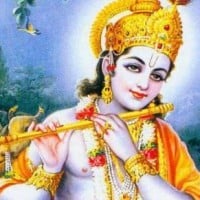
Hare Krishna (ISKCON) is a religious movement formally known as the International Society for Krishna Consciousness, founded in 1966 by A. C. Bhaktivedanta Swami Prabhupada. It belongs to the Gaudiya Vaishnava tradition of Hinduism and centers devotion on Krishna as the Supreme God. Common practices include chanting the Hare Krishna mantra, studying texts such as the Bhagavad Gita and Srimad Bhagavatam, and participating in temple worship and vegetarian food offerings.
I have been searching for the path of happiness which can give me happiness forever without ending within a short time or without depending on any mortal thing. I got to know that the path is only to chant the holy name of God as- Hare Krishna Hare Krishna, Krishna Krishna Hare Hare. Hare Rama Hare Rama, Rama Rama Hare Hare.
The continuous chanting gives the ultimate bliss, happiness, and extreme satisfaction to the devotee. The art of chanting can be learned under the short guidance of Hare Krishna devotees. The founder of ISKCON has written many books on Krishna Consciousness, and the science of self-realization is explained, which is as per ancient Indian literature. Hare Krishna. Arun Sharma, Gurgaon, India.
-
Judaism
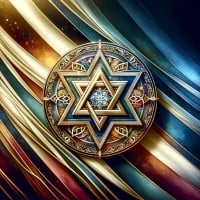
Judaism is an Abrahamic religion rooted in the covenantal relationship between God and the people of Israel. Its foundational texts include the Torah, along with other writings in the Tanakh and interpretive traditions such as the Talmud. Jewish religious life includes observance of commandments, Sabbath practices, festivals such as Passover and Yom Kippur, and communal worship in the synagogue.
The happiest religion because its fundamental principle is to love thy neighbor as thyself, regardless of his religion. One need not be Jewish to go to heaven. Just obey seven universal laws, like not killing, not stealing, not being cruel to animals, etc.
Its adherents have gone on to the most amazing accomplishments: a huge percentage of Nobel prizes, violin virtuosos, chess champions, billionaires, philanthropists. We love each and every human being with all our heart. We thank God for His goodness and that He grants us health, family, and prosperity. Saying thank you is our most important value, whether to humans or to God. Our second most important value is to constantly study and learn more. We are forbidden to say a bad word about anybody, even if true, unless for a valid purpose like when seeking info about a business partnership or a match for marriage.
-
Vaishnavism
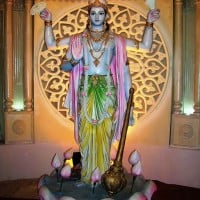
Vaishnavism is a major branch of Hinduism devoted to Vishnu and his avatars, especially Krishna and Rama. Its traditions draw on texts such as the Vedas, the Bhagavad Gita, the Bhagavata Purana, and the Ramayana. Religious practice commonly includes temple worship, recitation of divine names, observance of festivals, and forms of devotional service known as bhakti.
This path of Hinduism instructs us to worship by looking after Balkrishna as our own child. The relationship between a mother and a child is the purest, without any selfish motive. We simply enjoy looking after our own child without any expectations. The idea is to dedicate our life to Him just because we love Him, not for fulfilling our wishes in return for our prayers.
Dedication, trust, and love for Him are the most important emotions to develop a positive attitude in our life. Moreover, a Vaishnava who feels happy by caring for Him will be so intrigued that he/she will achieve a state of satisfaction. Will there be any space for unhappiness? Nah. Happiness is contagious, and most Vaishnavas achieve this state.
-
?
Druze

A syncretic Abrahamic religion that incorporates dharmic spiritualism and Greek philosophy.
-
?
Luoism

A Chinese salvationist religion in which the absolute principle of the universe is the central focus of worship, and eschatology centers on the Three Suns, each with a different Buddha to save humanity.
-
Catholicism

Catholicism is the largest branch of Christianity and is led by the pope, the bishop of Rome. It teaches that scripture and sacred tradition together transmit the faith, and it recognizes seven sacraments including baptism and the Eucharist. The Catholic Church has a global structure of dioceses, clergy, religious orders, and lay members, with Vatican City serving as the administrative center of the Holy See.
Catholicism mostly deals with the belief that there is one eternal, everlasting, and loving God who rules over all of space and time and created everything in the physical and spiritual world. It also teaches that humanity is the child of God and that God Himself sent His second form, the Son, to die to relieve humans of eternal damnation. It focuses on various virtues one is to possess to please God and teaches that there is life after death in the form of heaven, hell, limbo, and purgatory.
Being a Catholic means that you are a child of God, and we are all equal. No being is higher than another. It also means that we should be kind and caring, and that you should also teach others to do the same.
You don't have to pray five times a day just to please Him. Okay, He would like you to pray to Him, but don't do it just for the sake of it. Do it honestly and have faith while doing it. If you don't do those things, praying that way is useless. It is NOT the proper way to pray.
Also, while at Mass, try to sing the songs. Singing to God counts as twice praying. Dancing and singing for God is even better. Let's just say that He likes it.
-
Spiritualism
Spiritualism is a religious movement that developed prominently in the 19th century and is based on the belief that communication with the spirits of the dead is possible. It became associated with mediums, séances, and public demonstrations of spirit contact, especially in the United States and Britain. Many Spiritualist groups also emphasize the continuity of the soul after death, moral progress, and personal responsibility.
Saints, prophets, gurus, masihas (whatever name people associate with them), whenever they come into this world via miracles or normal ways like us, they come in a form like us. They come from the higher levels with a message from the Almighty to come back home from this creation.
People full of ego compare their teachings with the religion they were born and brought up in and start being enemies and torturing them. Time passes, and other people make it another religion. Actually, no religion is made without a living master. Fortunate are those who learn to love a living form of God. Unfortunates will never believe that the Creator can come in human form. Think! This is the only form that can teach us humans. Spirituality is the only true way to travel inward back to home, leaving behind color, caste, and religion.
-
Scientology

Scientology is a religious movement founded by L. Ron Hubbard in the 20th century. Its teachings are presented in works such as Dianetics and describe spiritual development through auditing and progression across defined levels. The Church of Scientology teaches that humans are immortal spiritual beings called thetans and that spiritual advancement involves addressing the effects of past experiences and increasing personal awareness.
There is no religion other than Scientology that is able to save your life once a day or once a week. I've seen so many profound changes in so little time, and it is all standard. This means the wins and cognitions some get will be reached by others too, but at the same time, it is totally individual. Only the method used and the states aimed at are the same. The personal realizations are always very unique.
Scientology offers some things that no other religion offers. For example, if you don't get the aimed result, there is automatically a correction unit that makes sure everything went well and brings in order whatever was not perfect. It corrects itself permanently from occurring errors.
Where do you find that? Imagine a person going to tell his sins to a priest. At the end, the person is still not relieved. Well, in Scientology, if the relief doesn't happen, it means something went wrong, and it's going to be looked at until the parishioner gets relieved. Whatever it takes. That is absolutely unique.
-
Digambara Jainism
Jainism is not only one of the oldest religions in the world, but it is the most scientific religion. It does not believe in the concept of God. According to Jain philosophy, the world is not created by any God. There is no God who maintains and destroys this world as per his or her desire. We are responsible for our actions.
Jainism never supports killing any living organism, whether it is smaller or bigger. It believes in ultimate nonviolence and multidimensional thinking. In a nutshell, Jainism is an ancient but modern religion.
Best religion in the world because Digambar saints protect every organism in the world. They live and let others live.
-
Swaminarayan Hinduism
Swaminarayan Hinduism is a Hindu tradition founded in the early 19th century through the teachings of Swaminarayan, also known as Sahajanand Swami. It teaches devotion to God, ethical living, and disciplined religious practice within a Vaishnava framework. Its followers use scriptures such as the Shikshapatri and the Vachanamrut, and many belong to organizations with temple-centered worship and structured devotional communities.
Swaminarayan is one part of Hinduism.
The Supreme Godhead is what Swaminarayan represents. He is the avatar of all avatars and what Purna, or complete, Purushottam is all about. He resides in His abode called Akshardham. There could be no better evidence of His supremacy than the fact that all that He professed was none other than the cream of the Upanishads, Puranas, and avatar Lord Krishna's very own Gita. The Swaminarayan religion emanates from all that is humanitarian and advocates not merely following one's own religion at birth but also respecting, not necessarily accepting, all religions. The Swaminarayan religion is not merely a religion. It is a way of life.
-
Zoroastrianism
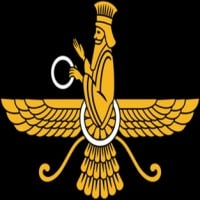
Zoroastrianism is an ancient Iranian religion associated with the teachings of the prophet Zoroaster, also known as Zarathustra. Its sacred texts include the Avesta, and its theology emphasizes the cosmic struggle between truth and falsehood. Important elements of the tradition include reverence for fire, ethical conduct expressed through good thoughts, good words, and good deeds, and belief in judgment after death.
I like Zoroastrianism because Zarathustra never claimed that he is a prophet and his words are from God, unlike other prophets. He sought God through his wisdom. In Zoroastrianism, men and women are equal, and each person is free to choose his or her path based on his or her wisdom and righteousness. Zarathustra: (good thoughts, good deeds, good words)
This is one of the oldest religions. The Zoroastrian traders and astrologers found the brightest star where Jesus was. I believe Zoroastrianism to be on top.
-
Taoism

Taoism is a Chinese religious and philosophical tradition associated with texts such as the Tao Te Ching and the Zhuangzi. It emphasizes living in harmony with the Tao, a foundational principle understood as the way or order underlying existence. Religious Taoism includes rituals, priesthoods, temples, meditation practices, and beliefs concerning longevity, cosmology, and spiritual transformation.
The religious texts in this religion originated from ancient wise men and not from God. But I find these texts to be far superior (logically, humanely, and intellectually) to any religious text that has come from God.
Why is man more intelligent than the Jewish, Christian, and Muslim God? The first main religious book, The Dao De Jing/The Tao Te Ching, is short, concise, and carries far more information that will both benefit you and make you a better person for society than any of the Jewish, Christian, and Muslim books.
If you want a good Daoist book collection, I recommend The Taoist Classics translated by Thomas Cleary.
-
New Age

New Age is a broad spiritual movement that incorporates beliefs and practices from multiple religious, metaphysical, and esoteric traditions. It became especially visible in the late 20th century and often includes ideas about spiritual transformation, holistic healing, meditation, and alternative understandings of consciousness. Because it is decentralized, it has no single founder, central authority, or universally accepted set of scriptures.
Sikhism is the best religion in the world. Let me explain why:
1. Men and women are treated equally in Sikhism, unlike in Islam, where the life of a woman is often considered a curse.
2. In Sikhism, all women are free to wear what they choose, pray alongside men on the same platform, pursue education, work like men, and perform all religious rites.
3. We believe in one God, and in Sikhism, a man can have only one wife, and a woman can have only one husband, unlike Islam.
4. Men in Sikhism are not allowed to force or beat women, whereas in Islam, a man can force and beat his wife.
5. Sikhism teaches respect for all religions, nature, animals, and women, while Islam teaches killing non-Muslims.
6. In Sikhism, everyone is allowed in any Gurudwara without questions about caste or creed. Non-Muslims are not allowed in mosques or Mecca in Islam, as non-Muslims are called kafirs and are taught to be killed according to the Quran.
7. In any Gurudwara, you can participate in langar where people of all religions sit together on the same platform, unlike other religions.
8. Sikhs are known to be true fighters - bold, humorous, and proud citizens of any country they reside in. We serve our countries in the best possible way.
-
Ravidassia
Ravidassia is a religion centered on the teachings of Guru Ravidas, a devotional poet and saint from North India. It developed as a distinct religious identity among followers who give central importance to his hymns and spiritual message. Its places of worship are known as deras or gurudwaras in some contexts, and its scripture includes the Amritbani Guru Ravidass Ji.
It is the most beautiful religion, which believes in the equality of mankind, men and women, and doesn't believe in unnecessary rituals. Its main principles include respecting all other religions and leading a virtuous life.
The religion teaches that human beings have all the power within themselves to achieve the ultimate. There is no need for any ritualism in a religion, and the Almighty can be achieved by anybody through love, devotion, and brotherhood.
Ravidassia prays for a just society devoid of fear, greed, and inequality, where everybody lives as a free human being.
-
Jediism

Jediism is a modern belief movement inspired by ideas and symbols drawn from the Star Wars franchise. It is generally centered on ethical codes, personal discipline, and the concept of the Force as interpreted by its adherents. Organized expressions of Jediism vary, and some groups function as informal communities while others present themselves as religious organizations.
Jediism is a modern-day religion of modern-day principles. It respects human life and equality and allows its followers to go down their own path. It preaches calmness, patience, being mindful of your emotions, and doing good for those around you, amongst many other great things!
Organized religion is just a way for man to explain what is beyond his understanding. Jediism fulfills that need without the false pretense of being believable. My vote goes here.
There is no emotion. There is peace.
There is no ignorance. There is knowledge.
There is no passion. There is serenity.
There is no chaos. There is harmony.
There is no death. There is the Force.
-
Wicca

Wicca is a modern pagan religion that emerged in the 20th century and is often associated with ritual practice, seasonal observances, and reverence for nature. Many forms of Wicca involve worship of a Goddess and a God, though beliefs and structures differ across traditions. Common features include ritual circles, festival celebrations such as Sabbats, and magical workings performed within a religious framework.
Wiccans do not believe in Satan. We believe in God (in a way), but also a Goddess. We connect with nature. We put out love. We believe in karma. We believe in spells, but only for good.
Using spells (basically prayers and offerings, in comparison) for evil is not good at all, and we forbid it. The pentacle/pentagram has five points on the star - the top point represents the creator(s) and the bottom four represent the four basic elements. Satanists put the top point at the bottom, representing that the elements are stronger than the creator. We put the top point on top because the creator(s) are stronger than the elements.
Hope this cleared up some common misconceptions about Wicca.
-
Sunni Islam
Being a Muslim, I say the Quran has all the ingredients for how one can lead a life in totality. It has solutions to all worldly problems.
I say all religions teach one and only one thing: how their followers should lead their lives. No religion teaches you hatred. Basically, all religion is pure. It is we who are the worst followers. We, the people in this world, do everything against all our religions and blame the same on the religion. All this is happening due to greed and our own vested interests.
Please, all should learn to respect each other's religious sentiments. After all, each one of us will be answerable for our own deeds.
We need to exercise religious tolerance. We need to be better humans, as we all have to face our respective gods and will be held accountable on the day of judgment.
Regards, Mohammed Afzal.
-
Shinto

Shinto is the indigenous religious tradition of Japan and is centered on reverence for kami, which are sacred beings or presences associated with nature, places, and ancestors. Its practices include shrine worship, purification rites, offerings, and seasonal festivals. Shinto has no single founder and developed through long-standing ritual and mythological traditions recorded in texts such as the Kojiki and Nihon Shoki.
Very cool, pretty chill, has some cool lore, and torii gates go hard. It's pretty different from other religions in how there isn't a strict doctrine to stick by like Christianity and Islam. Although, it's practically region-locked to Japan.
A faith based on nature and life, and unlike Christianity, isn't strict. It doesn't focus as much on your afterlife and offers other amazing stuff! Too bad this religion is pretty much nonexistent outside of Japan...
The religion guides us to peace and forbids the eating of cats and dogs. It guides us to positivity.
-
Satanism

Satanism is a term used for religious or philosophical movements that employ Satan as a central symbol, figure, or interpretive framework. Forms of Satanism differ significantly, with some traditions treating Satan as a literal being and others using Satan as a metaphor for individualism, dissent, or nonconformity. Modern organized expressions include the Church of Satan, founded by Anton LaVey in 1966, and later groups with distinct beliefs and practices.
I believe Satanism is the best religion because it looks at the world logically and objectively. Satanism is also the only religion that embraces humans as carnal creatures instead of punishing us for being carnal beings. If people would stop believing everything in the media, they would see that Satanists are not malicious, mean, or devil worshippers. We do not even believe in a devil. The devil is just a symbol for what we stand for.
The sheer number of people who don't understand what Satanism actually is is astounding. We do not "worship" Satan. We worship the self. We promote self-reliance, confidence, and individuality. Satan is a symbol that stands for these traits, not a deity to be revered. "Satan" is human nature. There are, of course, other religions that fall under "Satanism," but realistically, most of them don't call themselves that.
-
Confucianism

Confucianism is a tradition based on the teachings of Confucius and later interpreters that developed in China. It emphasizes moral cultivation, social harmony, filial piety, and proper conduct in human relationships. Its important texts include works such as the Analects, the Five Classics, and the Four Books.
Confucianism is like a cross between philosophy and religion. The philosophical aspects are about focusing on the world and the here and now, rather than otherworldly things that are outside of our awareness, let alone our reach. The secular is the sacred. It is where our focus should be, and it is here that we seek to live a life of virtue towards ourselves and others.
Yet, it has religious aspects such as holy days. It can accommodate different views of divinity, from theist to pantheist or atheist, as historical Confucians with these different views have existed.
Why is this so low? To be honest, it's more peaceful than Christianity.
More Info
What makes a religion "the best" to different people?
That depends on what a person is actually looking for. Some people judge a religion by how much peace, purpose, and comfort it brings to daily life. Others care more about moral teachings, a sense of community, spiritual experience, or how clearly a religion answers major questions about suffering, death, and what it means to live well.
For one person, the "best" religion might be the one that feels closest to God. For another, it might be the one with the strongest ethical code, the richest traditions, or the most welcoming community. For many people, the best religion is simply the one that helps them become more disciplined, compassionate, honest, and grounded. In that sense, the word best often says as much about the individual as it does about the religion itself.
How do religions differ in their views on God, gods, or the absence of a deity?
Religions vary widely in how they understand the divine. Some are monotheistic, meaning they believe in one supreme God. Judaism, Christianity, Islam, and Sikhism fall into this category. These faiths generally teach that God is the creator and ultimate source of truth, justice, and moral order.
Other religions approach the divine differently. Many forms of Hinduism include belief in multiple deities, though those beliefs can also connect to the idea of one ultimate spiritual reality. Buddhism is often described as nontheistic because it does not center on a creator God, focusing instead on personal transformation and liberation from suffering. Taoism can also be difficult to place into a simple category because it includes both philosophical teachings and religious traditions involving deities. These differences show that religions do not all ask the same questions in the same way, even when they are all trying to explain life, meaning, and the universe.
What are the oldest major religions still practiced today?
Hinduism is widely regarded as the oldest religion still practiced today, with roots stretching back thousands of years. It developed over a very long period of time and remains one of the largest religions in the world. Because of its age and continuous tradition, it is usually the first religion mentioned in discussions about the oldest living faiths.
Other ancient religions still practiced today include Judaism, Jainism, Buddhism, and Zoroastrianism. Some of these religions have fewer followers than they once did, while others grew into major global traditions. Together, they show how religious ideas can survive across centuries, shaping cultures, laws, philosophy, and daily life long after their beginnings in the ancient world.
Which religions place the strongest emphasis on peace and nonviolence?
Jainism is often considered the religion most strongly associated with nonviolence. Its principle of ahimsa, or non-harm, is central to both belief and daily practice, extending not only to other people but also to animals and other living beings. This makes nonviolence one of the clearest defining features of the religion.
Nonviolence is also highly important in Buddhism and Hinduism, where compassion, self-control, and reducing harm are major spiritual ideals. In addition, many followers of Christianity, Sikhism, and other faiths place a strong emphasis on peace, mercy, and reconciliation. While religions may differ in how they express these values, many of the world's major faiths teach that peace is a sign of spiritual maturity and moral strength.
Can someone be a good person without following any religion at all?
Yes. A person does not need to belong to a religion to care about right and wrong, treat others with dignity, or live by a serious moral code. Moral behavior can grow out of empathy, conscience, philosophy, culture, family values, and personal responsibility just as much as it can grow out of faith.
In everyday life, goodness is usually measured through actions rather than labels. Honesty, kindness, generosity, patience, and respect can be practiced by religious people and nonreligious people alike. Religion can be a powerful guide for moral living, but it is not the only path that can lead someone to become a thoughtful and decent human being.