Top 10 NFL Coaches Who Were Overachieving Cerebral Players
This list celebrates head coaches who reached the highest levels of the sport through football intellect and grit rather than by relying on elite physical gifts. As players, these individuals may not have been the fastest, strongest, or highest-drafted, but they leveraged a deep understanding of the game to carve out careers at the college or professional level.
Their success on the sideline is a testament to the idea that some of the most brilliant strategic minds are often forged through overcoming physical limitations.
This ranking considers a coach's entire body of work, weighing championship victories and win-loss records alongside their lasting impact on the sport. This includes their influence on offensive or defensive schemes, the success of their coaching trees, and their ability to fundamentally change a franchise's culture and fortunes.
It's a tribute to the overachievers who proved that a sharp mind is one of the most powerful tools in football.
-
Bill Belichick
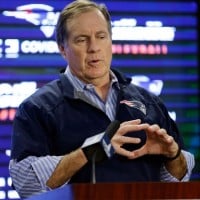
As a player, Bill Belichick was an undersized center and tight end at Wesleyan University, a Division III school, never coming close to an NFL career. This humble start forced him to master the strategic side of football, a foundation that led to arguably the greatest coaching career in NFL history. With the New England Patriots, he built a dynasty that spanned two decades, winning six Super Bowls and establishing a culture of discipline and intelligence known as The Patriot Way. His coaching tree is extensive, and his defensive schemes have influenced the league for generations, making him a prime example of a cerebral player turned coaching legend.
-
Tony Dungy
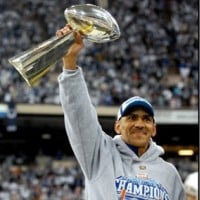
Tony Dungy went undrafted in 1977 after a college career as a quarterback for Minnesota. He transitioned to safety for the Pittsburgh Steelers, where his intelligence allowed him to carve out a role and win a Super Bowl. As a coach, he transformed the Tampa Bay Buccaneers from a perennial loser into a contender and later led the Indianapolis Colts to a Super Bowl XLI victory, becoming the first African American head coach to do so. Dungy's legacy is defined by his influential Tampa 2 defense and his calm, mentorship-focused leadership style.
-
Andy Reid
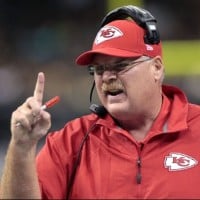
Andy Reid played offensive tackle at BYU from 1978 to 1980 but was never a high-profile NFL prospect. His coaching career, however, has been anything but quiet. He has consistently produced some of the most innovative and high-powered offenses in the league with both the Philadelphia Eagles and the Kansas City Chiefs. Reid has won three Super Bowls as a head coach and developed a massive coaching tree, demonstrating an immense impact that far surpasses his modest playing days.
-
Mike Tomlin
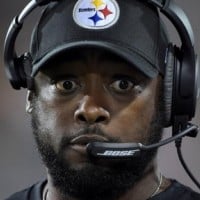
An all-conference wide receiver at William & Mary, Mike Tomlin was a standout player at the college level but didn't possess the elite physical traits to make it in the NFL. He immediately transitioned to coaching, quickly rising through the ranks. As the head coach of the Pittsburgh Steelers, he has become known for his remarkable consistency, never posting a losing season in his long tenure. His leadership and ability to connect with players have made him one of the most respected and successful coaches in the modern era.
-
Doug Pederson
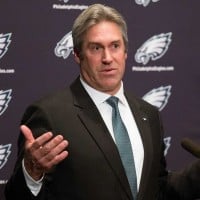
Doug Pederson entered the NFL as an undrafted free agent quarterback in 1991. He spent the majority of his 13-year career as a backup, most notably behind Brett Favre in Green Bay, where he won Super Bowl XXXI as a player. This role required immense mental preparation, a skill that served him well as head coach of the Philadelphia Eagles, whom he led to a memorable victory in Super Bowl LII. His career is a classic example of a coach on the field who translated that intelligence into sideline success.
-
Sean McVay
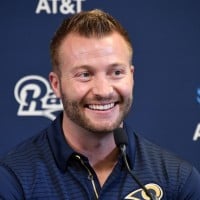
At 5'10" and 187 lbs, Sean McVay was a tough but undersized wide receiver at Miami (OH) from 2004-2007, where he had a modest college career. His playing days were quickly overshadowed by his meteoric rise as a coach. Becoming the youngest head coach in modern NFL history, he revitalized the Los Angeles Rams with his innovative offensive schemes, leading them to a Super Bowl LVI victory. McVay's story is a powerful testament to how a brilliant football mind can compensate for a lack of elite physical attributes.
-
Mike McDaniel
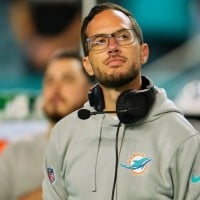
Mike McDaniel's playing career was limited to being a wide receiver at Yale, where his physical stature wasn't suited for the professional level. His journey began with a coaching internship, demonstrating a relentless dedication to the craft. He is now celebrated as one of the league's most creative offensive minds, turning the Miami Dolphins into a formidable offensive force. His success illustrates that a deep understanding of scheme and strategy can be more valuable than a decorated playing career.
-
Kyle Shanahan
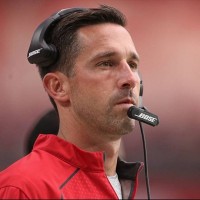
As the son of a legendary coach, Kyle Shanahan grew up around the game. He played wide receiver at the University of Texas but didn't have a notable playing career himself. Instead, he channeled his deep knowledge of the sport into coaching, where he has become widely regarded as one of the most brilliant offensive strategists in the NFL. He has led the San Francisco 49ers to multiple NFC Championships and Super Bowl appearances, building a dominant and complex rushing attack that has become his signature.
-
Dan Campbell
Dan Campbell was a tough, blocking tight end who carved out a decade-long NFL career through grit and determination rather than elite athleticism. He was a respected locker-room leader, a quality that has defined his coaching career. As head coach of the Detroit Lions, he has engineered a remarkable cultural turnaround, transforming the team into a hard-nosed contender that mirrors his own playing style. His impact goes beyond wins, demonstrating how a player's intangible qualities can be the foundation for coaching success.
-
Kevin O'Connell
Kevin O'Connell was a third-round draft pick who had a journeyman career as an NFL quarterback, never quite establishing himself as a long-term starter. This experience, however, gave him a deep understanding of offensive systems from multiple perspectives. As a head coach, he has applied that knowledge with great success, leading the Minnesota Vikings with a modern, player-friendly approach. His ability to connect with and develop quarterbacks is a direct result of his own experiences under center.