Top 10 Greatest Civilizations of All Time
Human history is not exactly known for keeping things tidy. Cities rise, borders shift, armies get dramatic, and someone always decides the world needs one more monument that requires moving several million tons of stone. As you look through these civilizations, you are not just comparing old maps and dusty museum labels. You are weighing invention, endurance, culture, conquest, philosophy, law, architecture, and the strange human urge to build something enormous just because future generations might stare at it and say, "How did they pull that off?"
This list lets you decide which civilizations deserve the highest praise. Some changed how people govern. Others transformed science, religion, trade, language, engineering, or art. Some lasted for centuries. Some burned brightly for a shorter stretch but still altered the direction of history. Cast your vote for the civilizations you think shaped the world most profoundly, and feel free to argue your case. History has survived plagues, invasions, collapsing empires, and middle school textbooks. It can handle a few strong opinions.
-
Roman Empire (27 BC - 1453 AD)
The Roman Empire was renowned for its extensive network of roads, monumental architecture like the Colosseum, and a legal system that influences modern law. It played a crucial role in the spread of Christianity and left a lasting impact on Western civilization through its cultural, political, and military achievements.
If Rome had not fallen, we might be thousands of years more advanced. We probably would have had the industrial revolution around 500 AD.
Rome is truly one of the greatest examples of a great civilization. Their technological advancements and adeptness in conquering made them one of the most superior empires Europe, probably the world, has ever seen. It is truly a shame that Rome fell, one of the greatest tragedies in all of humanity. If Rome had not adopted Christianity and had somehow been able to conquer the barbarians, we could have skipped the medieval and renaissance eras. We wouldn't have had the Black Plague in Europe because Rome was already so advanced in medicine. Who knows how clean they would have been in future years?
Though it is difficult not to compare Rome easily to Greece, with Greece's own artistic and scientific advancement as well as the great Macedonian empire, they were not nearly as influential or contiguous as the amazing and marveling Romans. Easily under my list of favorite and personal greatest civilizations of all time.
-
Ancient Egypt (3150 BC - 30 BC)
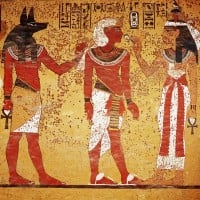
Ancient Egypt is celebrated for its monumental pyramids, sophisticated hieroglyphs, and the Nile River's vital role in its agriculture and economy. This civilization was distinguished by its advanced understanding of mathematics and impressive architectural achievements. It also had a rich religious culture centered around deities and the afterlife.
The ancient Egyptian civilization's power didn't depend on its military strength as most other ancient civilizations did.
Great advances in engineering, medicine, and astronomy were achieved by the ancient Egyptians. The enormous Giza pyramids, standing in place for 5,000 years, prove the superior ability of ancient Egyptians in engineering and astronomy.
In addition, the ancient Egyptians showed unparalleled mercy toward their enemies compared with other civilizations in the ancient era.
The power of the ancient Egyptian civilization didn't depend on its military might, unlike most other ancient civilizations. Great advances in engineering, medicine, and astronomy were achieved by the ancient Egyptians.
The enormous Giza pyramids, standing in their place for over 5000 years, prove the superior ability of ancient Egyptians in engineering and astronomy. In addition, the ancient Egyptians showed unparalleled mercy towards their enemies compared to other civilizations in the ancient era.
-
Greek Empire (800 BC - 600 AD)
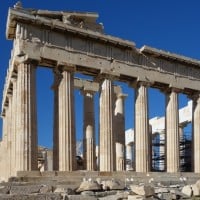
The Greek world was a cradle of Western civilization, known for its contributions to philosophy, science, and the arts. It consisted of city-states like Athens and Sparta, each with its unique governance and culture. The Greeks made significant advancements in democracy, theater, and philosophy.
Russia is known as the Third Rome, but who was the second? The answer is, of course, the Byzantine Empire (the Greek part of the Roman Empire). Although the Byzantine Empire was known as the Second Rome, this designation had nothing to do with the empire's greatness and power. Just stop to think - if that were the case, then Rome should have been known as the Second Greece.
In fact, the Byzantine Empire was called the Second Rome because its emperors were the successors of the Roman emperors. Then, the Tsars of Russia became the successors of the Byzantine emperors.
Rome copied Greece a lot. But if they hadn't, much of Greek culture would have been lost.
The toughest warriors were Greek, as were the smartest philosophers, mathematicians, scientists, astronomers, inventors, and playwrights. Although we may not be the oldest civilization or have conquered the most land (we still conquered a ton), we made the most contributions to the world by far. The Latin alphabet comes from the Greek one, and 51.87% of words in the English language are derived from Greek.
-
British Empire (1583 AD - 1997 AD)
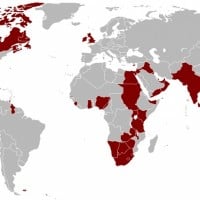
The British Empire was the largest empire in history, known for its global influence and colonization. It played a major role in spreading the English language, legal systems, and parliamentary democracy. The empire also shaped international trade, politics, and culture in lasting ways.
No single civilization has conquered and dominated as much of the world as the British Empire did during the Colonial Era. Their geopolitical influence and power were felt on every continent except South America. Not only were they the most powerful empire, but they arguably advanced humanity more than any other civilization.
They significantly contributed to technology, biology, physics, chemistry, political philosophy, economics, trade, industry, transportation, education, literature, architecture, and countless other invaluable contributions to humanity. The Industrial Revolution started in Great Britain. Their ideas, inventions, and Christian religion spread across the world, and today we see British influence in every first world country as a direct result of the sustained excellence of the British Empire.
-
The United States (1776 AD - Present)

The United States is known for its significant influence in global politics, culture, and technology. It was founded on principles of democracy and freedom and has been a leader in scientific innovation and cultural trends. The nation has played a pivotal role in major global events such as the World Wars and the Cold War.
It's not like I'm saying America is perfect or sits on the pedestal of highest success in all categories. It has and had its faults. The thing is, we don't lead in any category other than defense spending, percent of incarcerated citizens, and people who believe in Christ. Other countries have followed our model and have the liberties and rights we proclaimed in our founding. We are not the freest nation on earth anymore. We like to regulate everything. So, people can reasonably say we aren't the best.
But we are the States. There is pride in being the 900-pound gorilla because we do have a force of a military. Since our inception until the '70s, we did nothing but advance in all fields. We are a very young nation, but we represent the democratic republic world. Other nations on here have failed, and America isn't failing yet. We just aren't the undisputed best in the world right now. I vote America for the future could be bright with the right footing, and the past is great.
-
Chinese Empire (221 BC - 1912 AD)
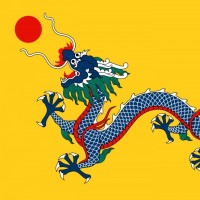
The Chinese Empire was characterized by its long-lasting dynastic rule, significant inventions like gunpowder, papermaking, and printing, and the construction of the Great Wall. It was a center for art, culture, and philosophy, with Confucianism playing a central role. The Silk Road was crucial in facilitating trade and cultural exchange.
It is true that Rome, Egypt, Greece, and all the other empires mentioned contributed greatly to our world as a whole. However, when it comes down to it, China was one of the greatest civilizations of all time.
If it were not for China, many of the inventions that made these other civilizations so great would never have existed. For example, without China, our world would not have gunpowder, paper (far superior to simple papyrus), printing, compasses, silk cultivation, and literally thousands of inventions that changed our world dramatically.
In addition, China is one of the oldest known civilizations and outlasted many of the civilizations listed above. When these characteristics are combined, you get an empire that is hard to beat. Just pointing out the facts.
-
Islamic Golden Age (750 AD - 1258 AD)
During the Islamic Golden Age, there were groundbreaking advancements in mathematics, astronomy, medicine, and philosophy. The period saw the establishment of the House of Wisdom in Baghdad, a center for learning and translation. It was a time of flourishing arts, science, and cultural exchange across the Islamic world.
One of the greatest and most underrated civilizations of all time is the Islamic Golden Age. They made significant contributions in science, mathematics, astronomy, and much more. Without people like Ibn al-Haytham or Abu Nasr Al-Farabi, and many others, the world would not be as advanced as it is today.
A lot of people try to undermine their achievements by pointing out that they started off by translating and learning from older civilizations, levying false accusations of "plagiarism". However, learning from past knowledge is a universal process. Even Sir Isaac Newton said, "If I have seen further than others, it's by standing on the shoulders of giants." The Islamic Golden Age made their own contributions as well, which is often overlooked by detractors.
In any case, haters are going to hate. I'm proud of what my ancestors have achieved.
-
Mayan Empire (2000 BC - 1697 AD)
The Mayan Empire developed a sophisticated hieroglyphic script, the only fully developed writing system in the pre-Columbian Americas, and made major advancements in astronomy and mathematics. The Maya built impressive stone cities and temples and developed highly accurate calendrical systems. Their cultural achievements continue to be studied today.
The Mayan Empire was great because of their astronomy and mathematics. It was also remarkable because they achieved what they did without any other empires around them to get ideas from, unlike the Eastern civilizations who benefitted from empires all around them.
Plus, they invented the wheel in the Americas. Archaeologists discovered toys with wheels on them at a Mayan excavation site. The Maya just didn't need the wheel because they could do things just as easily, unlike other civilizations who couldn't survive without it. To the Mayans, they were mere toys.
All the other civilizations named had the benefit of building off of other civilizations. Geography, proximity, and conquest or trade gave them the benefit of using the best ideas of others. They were all aided by other cultures, particularly the Romans, British, Americans, Greeks, and Chinese.
The Meso-Americans, however, were relatively isolated. All of their great achievements are theirs alone. They didn't have the benefit of a vast number of cultures clustered in a relatively small area to draw from. That is absolutely admirable.
-
Mongol Empire (1206 AD - 1368 AD)
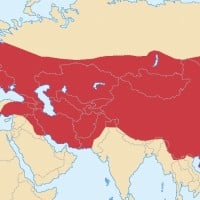
The Mongol Empire, under the leadership of Genghis Khan, became the largest contiguous empire in history, known for its military prowess and the establishment of a vast trade network across the Eurasian continent. This empire was instrumental in connecting the East and West through the Silk Road, facilitating cultural and technological exchanges. It also implemented a unique code of law known as the Yassa.
The Mongols might have been perceived as barbaric, but their power during their reign and their influence even today is astounding. They were essential in the development and improvement of trade, for example, reopening the Silk Road. They also encouraged migration and moved people around their empire to help advance it. It was the first real experiment of interconnection and a 'global village,' which allowed modern globalization to take place.
They also helped to spread ideas, culture, and inventions, such as Chinese gunpowder to Europe. In fact, they are so influential that their effects can even be seen now. One in 200 people are descended from Genghis Khan. You don't see that anywhere else.
-
Persian Empire (550 BC - 651 AD)
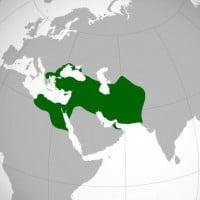
The Persian Empire was known for its tolerance and respect for the cultures of its conquered lands. It had an efficient administrative system and an extensive road network. The empire's influence on art, architecture, and religion extended far beyond its borders.
What makes ancient Persia (Achaemenid) unique in the list of all civilizations?
It was the largest multicultural civilization in ancient times that was free of slavery. Men and women were treated with equal rights and values. No other civilization to this day, in that vast range, has been able to achieve this. Neither Rome, nor Greece, nor Egypt, and not even current Europe or America, have been able to build their empires from the ground up without slavery, without free choice of religion, and without equality between men and women. Fortunately, we no longer have slavery. However, it took nearly 2,400 years, as we progressed into the modern era, until this form of slavery was banned in almost the entire world (since the 19th century). Nevertheless, modern civilization is built on unequal rights and slavery.
It is curious to think that as we were progressing into the modern era, we were also getting closer to the human rights of the ancient empire of the Achaemenids.
As Cyrus the Great declared in the first charter of human rights (circa 500 BC):
"Now that I put the crown of the kingdom of Persia on, I announce that I will respect the traditions, customs, and religions of the nations of my empire and never let any of my governors and subordinates look down on or insult them. I will impose my monarchy on no nation. Each is free to accept it, and if any one of them rejects it, I never resolve on war to reign. I will never let anyone oppress any others, and if it occurs, I will take back his or her rights and penalize the oppressor. I will never let anyone take possession of movable and landed properties of others by force or without compensation. Until I am alive, I prevent unpaid, forced labor. Today, I announce that everyone is free to choose a religion. People are free to live in all regions and take up a job, provided that they never violate others' rights. No one can be penalized for his or her relatives' faults. I prevent slavery, and... read more
-
?
Swiss Confederation (1291 AD - Present)

The Swiss Confederation, formed in 1291, is known for its long standing tradition of neutrality and its unique direct democracy system. Switzerland has been a center for international diplomacy and is home to various international organizations. It is also renowned for innovations in banking, watchmaking, and high quality craftsmanship.
-
?
Australia (1901 AD - Present)

Australia, since its federation in 1901, has developed into a significant global player known for its diverse culture, strong economy, and prominent role in international affairs, particularly in the Asia Pacific region. It has a rich Indigenous history and a unique ecosystem that has contributed significantly to scientific research, particularly in ecology and conservation. Australia continues to play an important role in regional diplomacy and environmental stewardship.
-
Ottoman Empire (1299 AD - 1923 AD)

The Ottoman Empire was a major Mediterranean and Middle Eastern power known for architectural achievements such as the Hagia Sophia and military innovations. It played an important role in the histories of Southeast Europe, Western Asia, and North Africa. The empire was also a thriving center for Islamic culture and the arts.
The Ottoman Empire was the only empire to show that Islam can be unified with Western values. Furthermore, it had control over the Middle East and Eastern Europe, despite being in constant proxy wars with the greatest nations and empires, such as the British Empire, the Italian Empire, France, and the Russian Empire.
I would call the Ottoman Empire the only dynasty that could bring lasting order and peace to Europe and the Middle East. What a shame the Ottoman Empire ended in such a manner when it had great potential and was good at diplomatic relations.
"Pax Ottomana" gives us clues about how powerfully peaceful the Ottomans were. In 1453, the new age began with "The Conquest of Istanbul." They proved that the world can be ruled equally in peace, regardless of race, religion, and beliefs.
The downfall came with the French Revolution, the Industrial Revolution, geographical discoveries, and incompetent technological developments. Nowadays, the Ottoman system sounds like a utopia.
-
Chola Dynasty (350 BC - 1279 AD)
The Chola Dynasty was a major power in South India and the Indian Ocean region. It was known for its naval strength, extensive trade networks, and monumental temple architecture such as the Brihadeeswarar Temple. The Cholas supported Tamil literature and culture, which flourished under their rule.
The Cholas represented an outward-looking power, rather than an insular, inward-looking one like the regimes before its advent. It spread its writ and influence deep into South East Asia and built magnificent temples. Well deserving of being among the greatest civilizations the world has seen.
I think there is a 1,000-year-old temple in Tamil Nadu. I can't believe that it is still completely intact, yet they don't even have to maintain it too much. Meanwhile, many Greek structures have already been practically destroyed.
-
Mughal Empire (1526 AD - 1857 AD)
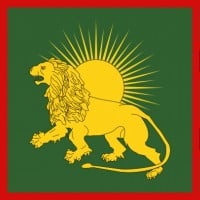
The Mughal Empire is celebrated for its architectural masterpieces such as the Taj Mahal and its rich artistic and culinary traditions. It encouraged religious tolerance and the blending of Hindu and Muslim cultures, creating a distinctive Indo-Persian heritage. The empire's artistic and architectural legacy remains influential.
No, the Sultanate Empire was better than the Mughal Empire. At least they knew how to rule. The business of that time was the best. The Mughals didn't rule well. They were reckless about their kingdoms. Yes, they built the Taj Mahal. But I also heard that Shah Jahan cut off the workers' hands. However, that's not the only issue.
During their time, art was so highly praised that the average economy was downgraded. It caused war between Hindus and Muslims. And overall, it cost them their kingdom.
By the way, they couldn't rule until the end of the 18th century. By that time, they were already powerless. They just held the title. They were probably the people who were lying in bed and making self-portraits.
-
France (1789 AD - Present)

France, since the French Revolution, has been an influential global power known for its contributions to democracy, philosophy, and the arts. It shaped world history through its cultural achievements and historical global presence. Modern France is celebrated for its cuisine, fashion, and ongoing commitment to human rights.
-
Assyrian Empire (1920 BC - 609 BC)
The Assyrian Empire was known for its powerful military, advanced engineering, and extensive libraries. It developed a highly organized central government and made significant contributions to Mesopotamian art and architecture. Nineveh, its capital, was one of the most prominent cities of the ancient world.
Assyrian and Sumerian civilizations brought many advanced methods to our current era. Without Mesopotamia, we would not have known writing and law.
Assyrians may have been despotic and violent, but they had a beautiful culture. As already stated here, they had a most prestigious library and university. They also had beautiful art. When the Babylonians and Persians came along, they made deals and remained semi-autonomous.
The Empire that built the first library and university also thought of the Pythagorean Theorem, truly the empire of knowledge.
-
Aztec Empire (1428 AD - 1521 AD)
The Aztec Empire was known for its complex social structure, impressive architectural achievements such as Tenochtitlan, and advances in mathematics and astronomy. It had a strong military tradition and a rich religious life centered on gods like Quetzalcoatl and Huitzilopochtli. Its cultural and scientific contributions continue to be studied today.
When the Aztecs arrived on Tenochtitlan Island, it was unsustainable as a settlement. They built a series of dams that we still do not fully understand, which allowed them to control the lake's water level. This enabled them to construct an extensive irrigation system, reclaiming the no longer flooded marshland to build farms. They also invented a water filtration system that provided perfectly safe nourishment.
In addition, they designed a complex network of canals across the island, floating agricultural colonies, a fertilization system, and magnificent public architecture. However, after the Spanish destroyed this system, it was not until the 1920s that scientists solved the city's flooding problem, and they achieved this only by draining the entire lake.
-
Byzantine Empire (330 AD - 1453 AD)
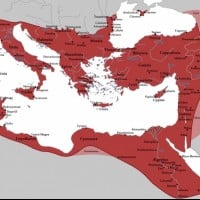
The Byzantine Empire preserved Roman and Greek traditions, shaped Orthodox Christianity, and thrived from its capital, Constantinople. It became a center of art and scholarship and contributed significantly to Western law, religion, and culture. Its influence continues through art, theology, and architecture.
Constantinople was the most beautiful city in the world until it fell to the barbarians of the east, the savage people that stole its history. I will never forget May 29, 1453. The city will be Greek again.
It's ridiculous to rank the USA well above the Byzantine Empire, which was a Greek Empire. It's also highly inaccurate. The notion that Americans think they have the best civilization in the world is misguided.
The East Roman Empire survived for one thousand years. They left an immense heritage behind. Their architecture and science developments were the cutting edge of those times. Today, Anatolia and especially Istanbul are full of their magical memorials. "Pax Romana" represents their development and peace.
-
Phoenicia (1200 BC - 539 BC)
Phoenicia was a maritime trading culture that spread across the Mediterranean and developed one of the earliest alphabets. Its skilled seafarers were known for producing purple dye and trading cedar wood. Phoenician influence extended across the Mediterranean and North Africa.
Most underrated and advanced civilization. They invented the modern alphabet that we are using now in Byblos, Lebanon. First and best traders ever.
First to arrive on the American continent. Best maritime ever. The purple dye of Tyre became more expensive than gold. The continent of Europe got its name from the Phoenician Queen Europa.
They invented a practical alphabet, which was the mother to the vast majority of modern alphabets around the world. The Phoenicians also invented the boat and were the first to navigate around Africa.
-
Soviet Union (1917 AD - 1991 AD)
The Soviet Union, a socialist state formed after the Russian Revolution, became a global superpower with significant influence in world politics, space exploration, and military affairs. It played a central role in World War II and the Cold War and made major contributions to science, including early space technology. The Soviet era was also known for its distinctive art, architecture, and complex political structure.
To be honest, I think it's funny that this civilization isn't one of the top 10s. I'm not Russian or a citizen of any former Soviet republic, and I'm not a communist either, but seriously, look at what they achieved! After being destroyed by the Second World War, the Soviet Union rose from the ruins and eventually became powerful enough to be a fair rival of the United States.
Yes, it collapsed. But it collapsed because of its own problems, not some invasion or intervention from another civilization. Again, I'm not pro-Soviet or a communist. I was born in a nation that is a member of NATO. But I can't deny the fact that the USSR was one of the most powerful civilizations in the world. If it didn't collapse and continued to exist, the United States would have lost its world domination.
-
Kingdom of Scotland (843 AD - 1707 AD)

The Kingdom of Scotland had a distinct cultural identity and contributed significantly to literature, law, and education. It played an important role in European medieval politics and was known for its clan culture and feudal system. The kingdom left a lasting impact on the cultural and political landscape of the British Isles.
-
Qing Dynasty (1644 AD - 1912 AD)
The Qing Dynasty was the last imperial dynasty of China, known for its territorial expansion, cultural refinement, and the establishment of many of the borders associated with China today. It saw significant developments in the arts, philosophy, and policies that shaped the empire's social structure. The dynasty experienced long periods of stability and prosperity before ending after internal conflict and foreign pressure.
It was powerful and extremely large. The dynasty was fairly stable, with a flourishing economy. It wasn't the high point of Chinese civilization, but it was still extremely prosperous and powerful.
These guys were better than Scotland. They were larger, but they died out quickly.
-
Sumer Civilization (5th Millennium BC - 3rd Millennium BC)
The Sumer Civilization, located in Mesopotamia, is known as one of the world's earliest civilizations. It introduced the first writing system, cuneiform, and made contributions in mathematics, astronomy, and law. The Sumerians are also credited with building some of the earliest known cities, such as Uruk and Ur.
How can one of the earliest civilizations, especially one that invented a major part of fundamental technology, be included so low?
History begins with the invention of writing.
-
Portuguese Empire (1415 AD - 1999 AD)
The Portuguese Empire was one of the earliest and longest-lasting colonial empires, with territories in Africa, Asia, and South America. Renowned for maritime exploration and the creation of a global trade network, it played a crucial role in the Age of Discovery. Its cultural and linguistic legacy remains particularly strong in Brazil and parts of Africa and Asia.
Portugal forged the first global empire, which helped set in motion 500 years of Western expansion and the forces of globalisation that now shape the world. It created a new route to India for the spice trade into Europe, with Vasco da Gama at the helm, which revolutionized trade in Europe. They were the first Europeans to trade with the Japanese.
Portuguese is spoken widely globally today, from Brazil to Angola to parts of East Asia, leaving a cultural mark globally.
The first European worldwide empire.
-
Etruscan Civilization (768 BC - 264 BC)
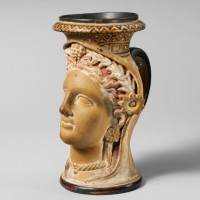
The Etruscan Civilization in what is now Italy was known for its rich mineral resources, unique language, and early influence on Roman culture. The Etruscans were skilled in metallurgy, art, and urban planning, leaving a lasting legacy in areas like Tuscany and Umbria. They contributed to the cultural and architectural development of the region.
-
Indus Valley Civilization (3300 BC - 1300 BC)
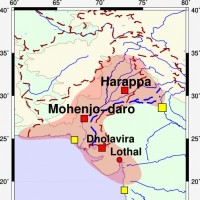
The Indus Valley Civilization was known for advanced urban planning, with well-designed cities such as Harappa and Mohenjo-Daro as well as an early writing system. It achieved remarkable developments in metallurgy, pottery, and sanitation. It remains one of the world's earliest urban civilizations alongside Egypt and Mesopotamia.
This is one of the best civilizations. It had the best drainage system and the best bathrooms or toilets. The Indus Valley people built granaries where they kept their grains.
The skilled jewelers used to make jewelry with gold. They made statues with clay, bronze, and silver. They made high-quality pottery, including bowls, wheeled carts, wells, raised mounds, and windows for houses. In history, I like to study the Indus Valley civilization.
The Indus Valley was arguably the most advanced civilization and nation of its time. It had sewers that were unrivaled until the Roman Empire. The social conditions were comparable to Sumeria and superior to Ancient Egypt and Babylon.
It began a long line of Hindu/Indian Subcontinent cultures and civilizations, including the Maurya Empire and the Mughal Empire. It is unknown how it was governed, but some suggest it could have had a primitive form of democracy.