Top 10 Most Evil Demons
Here is a list of the most evil and wicked demons in all of history. If there's any I missed, feel free to add them (ones from religion and mythology are allowed).
-
The Devil
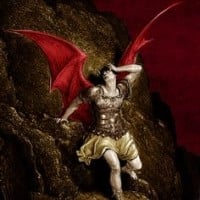
The Devil is a central figure in Christian theology representing evil and opposition to God. The concept developed from earlier Jewish ideas of Satan as an adversary or accuser. In later tradition, the Devil is depicted as a fallen angel who tempts humans toward sin.
Satan is the biggest, most evil monster in all of existence and history. By the way, I heard that some people say that Leviathan is the same as Satan, but people started thinking that they were the same kinds so in reality, Leviathan is like one of Satan's top soldiers or something.
By the way, I heard that Lucifer is Satan's cousin, and Beelzebub is also related to him. They form the Triumvirate of Hell (I would suggest looking up the word).
You all knew this would be number 1. He is the absolute most evil thing in all of existence and is the ruler of Hell. He is known by many names and is recognized as an evil force in the Abrahamic religions.
-
Baphomet
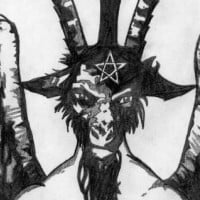
Baphomet is a symbolic figure that became prominent in medieval accusations against the Knights Templar. Its modern image was popularized by nineteenth-century occultist Éliphas Lévi. The figure combines human and animal features and is often interpreted symbolically rather than as a literal demon.
More of a term/symbolic icon but whatever (it's also my profile pic). It originated in the 14th century as a supposed figure of worship of the Knights Templar. It is often depicted as a hermaphroditic person with wings and a goat's head.
-
Zozo
Zozo is a name associated with a purported demonic entity in modern paranormal folklore. It is commonly linked to alleged Ouija board experiences reported since the late twentieth century. The figure does not appear in classical demonological texts.
Zozo, the Minotaur of Hell, is a six-horned Minotaur who wears a necklace of skulls from their victims and has skeletal tattoos and markings all over their body. With a forked tongue and three tails, Zozo is the alpha bull.
This Minotaur shapeshifts into anyone and anything and serves as the gatekeeper of Hell and the Underworld.
-
Beelzebub
Beelzebub originated as a Philistine deity known as Baal-Zebub. In later Jewish and Christian writings, the name became associated with a high-ranking demon. It is frequently equated with Satan or portrayed as a prince of demons.
Has a devil put aside for me, for me, for me!
Beelzebub, the Glutton King, Dark Lord of the Demons of Gluttony and the Great Devourer.
-
Azazel

Azazel appears in ancient Hebrew texts as a figure associated with wilderness and ritual impurity. In the Book of Enoch, Azazel is described as a fallen angel who taught forbidden knowledge. The name is also linked to the scapegoat ritual in Leviticus.
One of the most popular Jewish demons, Azazel is considered a very evil spirit in Judaism and the leader of a certain class of demons that reside in the desert. In Greek mythology, Azazel is represented as the scapegoat. According to Islam, he is a fallen angel who was once one of the highest-ranked angels of Allah.
-
Asmodeus
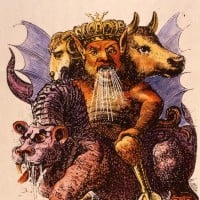
Asmodeus has roots in Persian mythology as a destructive spirit. He appears in the Book of Tobit as a demon linked to lust. Later traditions depict him as a king within Hell's hierarchy.
Asmodeus, in Jewish legend, is the king of demons. According to the apocryphal book of Tobit, Asmodeus, smitten with love for Sarah, the daughter of Raguel, killed her seven successive husbands on their wedding night.
He is one of the most evil demons ever.
-
Valac

Valac is a demon listed in early modern grimoires such as the Ars Goetia. He is described as a president of Hell who commands legions of spirits. Traditional accounts associate him with revealing hidden treasures and serpents.
One of the scariest demons I have ever seen.
This demon is in the film The Nun along with Insidious. It's the scariest demon other than it.
Its real name is Valek. Someone else mentioned this, but I just want to say that his real form is that of a child, and he has a pet dragon, although I don't know the name of it. He is also third in charge of hell.
-
Leviathan
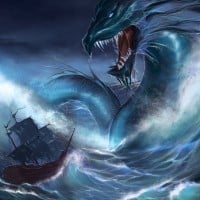
Leviathan is a massive sea creature described in ancient Near Eastern and biblical texts. It symbolizes chaos and untamable power in Hebrew scripture. Later demonology sometimes reinterprets Leviathan as a demonic entity representing envy.
Leviathan's new appearance:
Leviathan is a giant, reptilian female humanoid creature with the lower half of her body fused to the forehead of a colossal sea serpent, and she can tower over a city with great ease. Her humanoid half has four long arms with large forearms and claw-like hands. Her body is covered in dark green scales. Her face is white with a third eye on her forehead, her eyes have a black sclera, green iris, and split pupils, fin-like ears, two horns, and razor-sharp teeth.
Her sea serpent half has an extremely long serpentine body, six green eyes, a massive mouth with large razor-sharp fangs, ten fin-like wings, and a three-pronged fin on both sides of its head.
-
Astaroth

Astaroth is derived from the ancient Near Eastern goddess Astarte. In demonological tradition, Astaroth is portrayed as a male demon with high rank. Texts often associate him with knowledge and past events.
-
Lamashtu

Lamashtu is a female demon from ancient Mesopotamian mythology. She was believed to harm pregnant women and infants. Amulets and incantations were commonly used for protection against her.
A demon in Sumerian/Mesopotamian mythology. She is known for infamous acts such as menacing pregnant women, eating infants, infesting rivers, and killing crops. She also performs many other heinous acts.
The most menacing of all and the origin of all evil.
-
?
Angra Mainyu
Angra Mainyu is the destructive spirit in Zoroastrianism. He represents chaos and evil in opposition to the beneficent spirit Ahura Mazda. The concept is central to Zoroastrian dualistic cosmology.
-
?
Lilith
Lilith originates from ancient Mesopotamian mythological figures. In later Jewish folklore, she is depicted as a night demon associated with childbirth dangers. Medieval texts expanded her role as an independent and supernatural being.
Since shes married to the devil himself, she has to be more dangerous...
-
Malphas
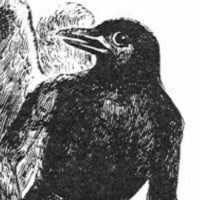
Malphas is a demon described in Renaissance-era grimoires. He is often depicted as a crow or raven. Traditional descriptions assign him roles related to construction and strategic planning.
Malphas, a high-ranking demon of Hell, is second in command behind Satan and commands forty legions of demons. He has the power to reveal your desires and destroy them. He offers "good" familiar spirits to deceive you and will betray you, but only after accepting your blood sacrifice.
-
Abaddon
Abaddon appears in biblical literature as a place of destruction or the abyss. In the Book of Revelation, Abaddon is personified as an angel of the bottomless pit. The name is associated with ruin and annihilation.
He is the Angel of Death. He literally kills everyone. He is also known as Apollyon. How is an angel who kills everyone not at the top? Death is what everyone fears.
-
Alastor
Alastor originates from Greek mythology as a spirit of vengeance. The term was later adopted into demonological writings as a proper name. It generally signifies retribution rather than a single unified character.
-
Mara
Mara appears in Buddhist tradition as a being who tempts and obstructs enlightenment. He is associated with desire, death, and rebirth. The figure symbolizes internal and external obstacles to spiritual awakening.
-
Ravana
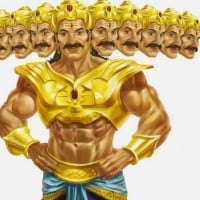
Ravana is a central antagonist in the Hindu epic Ramayana. He is depicted as a rakshasa king with great power and knowledge. Despite his demonic classification, he is also portrayed as a learned ruler and devotee of Shiva.
One of the most powerful demon lords and considered the most favored devotee of Lord Shiva.
-
Abyzou
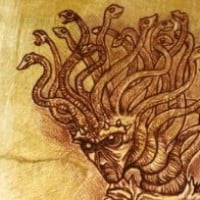
Abyzou is a female demon referenced in ancient Mediterranean folklore. She was believed to cause miscarriages and infant mortality. Protective charms often included names meant to ward her off.
A Jewish demon who is responsible for any miscarriages. She herself is infertile, so she proceeds to kill children out of jealousy.
-
Abraxas
Abraxas appears in Gnostic belief systems as a cosmological figure. The name was used on engraved gems during the early centuries CE. It represents a complex fusion of divine and demonic attributes.
-
Belphegor
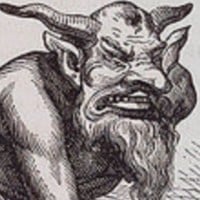
Belphegor originated as a deity worshiped in ancient Moab. Later Christian demonology reclassified the figure as a demon associated with sloth. The name appears in various medieval texts describing infernal hierarchies.
-
Vapula
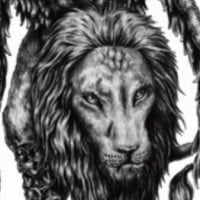
Vapula is a demon listed in the Ars Goetia. He is associated with teaching mechanical and scientific skills. Descriptions portray him as a duke commanding numerous spirits.
Vapula is recognized in Christian tales as one of the highest-ranking demons of Hell. According to demonology, he is the grand duke of Hell and commands numerous legions. He has taught them the art of deceiving human souls. He is often depicted with the body of a lion and the head and wings of an eagle.
-
Agares
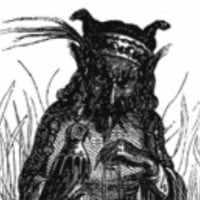
Agares is a demon featured in several classical grimoires. He is said to hold a ducal rank in Hell. Traditional accounts link him to languages, movement, and authority.
This demon causes "those who run to stand still." He is also known for controlling earthquakes. Agares teaches many languages, focusing especially on profanities and ethnic slurs. He is believed to be the ruler of the eastern zone of Hell and commands 31 legions of demons.
-
Pazuzu
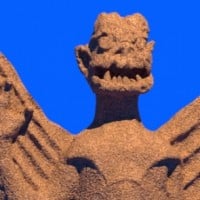
Pazuzu is a demon from Assyrian and Babylonian mythology associated with wind and storms. Despite his fearsome nature, he was also invoked for protection against other demons. Amulets bearing his image were widely used in ancient Mesopotamia.
Many know Pazuzu as the demon who possessed the little girl in The Exorcist. In ancient Mesopotamian beliefs, he was the king of the demons of the wind, brother of Humbaba, and son of the god Hanbi. He also represented the southwestern wind, which brings storms and drought.
-
Mammon
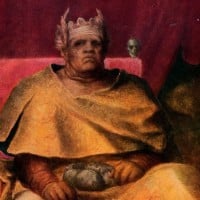
Mammon is a term used in biblical texts to personify wealth and material greed. Later tradition reinterpreted Mammon as a demon. The name represents the corrupting influence of riches.
-
Rangda
Rangda is a demon queen in Balinese mythology. She represents chaos and destruction in traditional dance and folklore. Rangda is often contrasted with Barong, a protective spirit.