Top 10 Egyptian Gods and Goddesses
-
Anubis
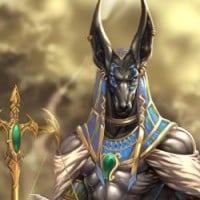
Anubis was an ancient Egyptian god associated with mummification, funerary rites, and the protection of the dead. He was commonly depicted as a jackal or as a man with the head of a jackal. In Egyptian belief, Anubis guided souls and oversaw the weighing of the heart in the afterlife.
Anubis is the god of embalming and the dead. He has the head of a jackal. Jackals were often seen in cemeteries so people thought that Anubis watched over the dead. Anubis was the God who embalmed Osiris after he was killed by Set.
Since he is the god of death, he can always build an army of the dead, so he will be impossible to destroy. Most Egyptians die at 40 years old, so there are more and more soldiers coming in!
This guy is basically the Egyptian version of the grim reaper. Plus, he can summon an army of mummies and mummify the other gods so they can't touch him. They put him as the strongest god in Smite for a reason, you know.
-
Ra
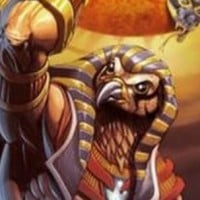
Ra was the Egyptian sun god and one of the most important deities in the ancient Egyptian pantheon. He was usually shown with a falcon's head topped by a solar disk. Egyptian texts describe Ra as traveling across the sky by day and through the underworld by night.
Ra is considered to be the most powerful god. He could kill us if he wanted to as he controls the sun. He was said to be a match or stronger than Apophis, who was very powerful that no other god could defeat.
In the Kane Chronicles, it is told that with the power of Ra they only had a chance to defeat Apophis.
Ra is just pure awesomeness. He fights Apophis and just in case Apophis swallows him, then he just BLOWS the poor guy up. Plus, if he wants, then he could destroy the Earth by coming very close to us. Don't anger him or we'll all die.
-
Isis
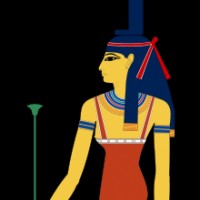
Isis was a major Egyptian goddess linked with magic, motherhood, healing, and kingship. She was the wife of Osiris and the mother of Horus in the central myth cycle of ancient Egypt. Her worship spread beyond Egypt and continued across parts of the Greek and Roman worlds.
I remember being so young I used to be in love with Egyptian mythology. I even thought I had some Egyptian pharaohs' blood, but it turned out I had blood from West Africa. I even like the book series The Kane Chronicles and my favorite show was Tutenstein. Anyway, Isis has to be my favorite Egyptian Goddess.
She brings Osiris back to life when her brother Set killed him. Isis is my Egyptian goddess.
How is Isis ranked so high? She should be past number ten. I know she can use trickery but consider this scenario: Put her and some random god like Horus into an arena. Next thing you know, Isis is in 100 pieces. Why do you guys think she is so powerful?
-
Osiris
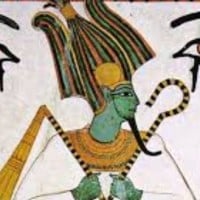
Osiris was an Egyptian god of the dead, rebirth, and the afterlife. According to myth, he was killed by his brother Set and restored through the actions of Isis. He became the ruler of the underworld and a symbol of resurrection in Egyptian religion.
There are different stories about all these gods. In some stories, Isis was his wife, in others, his sister. Osiris can be mean and strict but think about how important he is. He has to judge thousands of spirits each day!
Without him, people would live forever.
-
Set
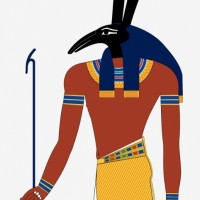
Set was an ancient Egyptian god associated with deserts, storms, disorder, and violence. He played a central role in the myth in which he killed Osiris and later fought Horus. Egyptian art often portrays him with the head of the unusual and not fully identified Set animal.
Literally, if Osiris, the king, can fall for his trick then you know he's a tricky customer. Also, he is the god of chaos, and I love all of the evil gods from any mythology.
He could make all of the gods die by starting a war. The god of evil could kill Ra and Horus at the same time. He is more powerful than Anubis too.
The God of Evil, ok, that just got an 80% chance of me loving him. What else? Oh yeah, he's the only god with the head of a non-real animal. 100% now!
-
Horus
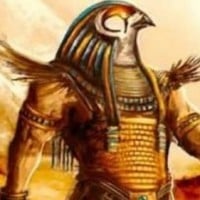
Horus was an Egyptian god connected with kingship, the sky, and divine protection. He was often represented as a falcon or as a man with a falcon's head. Egyptian rulers were closely associated with Horus, who was regarded as a protector of the pharaoh.
Horus is my hero. He avenged his father's death and became the warrior king of Egypt, always placing the well-being of others above his own.
A badass in my opinion. Plus, if you read the Kane Chronicles by Rick Riordan, he was pretty cool in it.
Horus is incredible. Have you seen the power he has as a god of revenge? He's the best.
-
Thoth
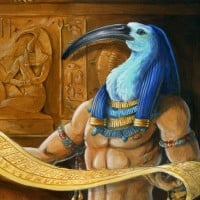
Thoth was the Egyptian god of writing, knowledge, wisdom, and the moon. He was commonly depicted as an ibis-headed man or as a baboon. Ancient Egyptians credited him with recording judgments and assisting the gods with language and measurement.
Originally a moon god, Thoth (or Djehuti) played an important role within the pantheon of Egyptian gods. He was known to be the god of magic, knowledge, wisdom, and writing, among a number of other aspects. He was often coined as the creator of hieroglyphics, contributing to his status also as the scribe of the gods.
He is also often associated with the progression of science, as well as architecture, including the pyramids. Together with Ma'at (the goddess of order and justice), he recorded the weight of a deceased person's soul against Ma'at's Feather of Truth, which determined the fate of the person's afterlife.
He is also often compared to the Greco-Roman god Hermes/Mercury, being considered one and the same, and has been associated with Hermes Trismegistus, the progenitor of Hermeticism.
-
Bastet
Bastet was an Egyptian goddess associated with the home, protection, fertility, and cats. She was usually shown as a woman with the head of a cat or as a lioness in earlier periods. Her main cult center was at Bubastis in the Nile Delta.
Cats were considered the most sacred animal of all in Egypt. Plus, given their cuteness, we should be worshipping them still!
Bastet is the cat-headed goddess of the home and family. We all know by now that her other name is Bast, right?
Bastet was a goddess in ancient Egyptian religion, worshiped as early as the 2nd Dynasty (2890 B.C.E.). As Bast, she was the goddess of warfare in Lower Egypt, the Nile River delta region, before the unification of the cultures of ancient Egypt.
Her name is also translated as Baast, Ubaste, and Baset.
-
Sehkmet
Sekhmet was an Egyptian goddess associated with war, plague, and healing. She was usually depicted as a woman with the head of a lioness and a solar disk on her head. Sekhmet was connected with the destructive power of the sun and also with protective and curative rituals.
She's a feisty one. Love her personality. Sekhmet really does live up to her representation as the lion goddess of vengeance.
-
Ptah
Ptah was an Egyptian creator god closely connected with craftsmen, builders, and artisans. He was especially worshiped at Memphis, where he held a central place in local theology. Artistic representations usually show him as a mummiform man holding a staff that combines several symbolic elements.
Chief god of Memphis, depicted in the form of a green mummy.
-
?
Ammit
Ammit was a demon-like being in Egyptian religion associated with the judgment of the dead. She was described as having parts of a crocodile, lion, and hippopotamus, three feared animals in ancient Egypt. In funerary belief, Ammit consumed the hearts of those who failed the weighing of the heart.
-
?
Neith
Neith was an ancient Egyptian goddess linked with war, hunting, weaving, and creation. She was one of the oldest deities in the Egyptian pantheon and had an important cult center at Sais in the Nile Delta. Egyptian representations often show her wearing the Red Crown or bearing crossed arrows and shields.
-
Sobek
Sobek was an Egyptian god associated with crocodiles, the Nile, fertility, and military strength. He was typically represented as a crocodile or as a man with a crocodile's head. His worship was especially prominent in regions where crocodiles were part of the local environment.
He should be the best really because he made the Nile River. Egyptians wouldn't be alive without him. Plus, he makes crops grow fertile and he is a crocodile.
He is the crocodile god of strength and Anubis's half-brother. I'm really fond of his military prowess.
Guys! He's a crocodile. No more needs to be said really. Don't we all agree? You just can't beat crocodiles.
-
Nut
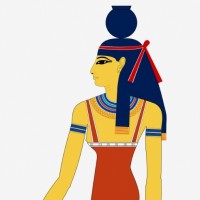
Nut was the Egyptian goddess of the sky and was often depicted arching over the earth. She was regarded as the mother of several major deities, including Osiris, Isis, Set, and Nephthys. Egyptian cosmology described the sun as passing through her body each night before being reborn at dawn.
-
Nephthys
Nephthys was an ancient Egyptian goddess associated with mourning, funerary rites, and protection. She was the sister of Isis, Osiris, and Set, and she appears in major mythological accounts surrounding death and rebirth. Egyptian art commonly shows her as a woman wearing hieroglyphic symbols of her name on her head.
Nephthys is so awesome! She is so nice and helpful, and controls rivers and water. So epic, right?!
-
Amun
Amun was a major Egyptian god whose name is often translated as "the hidden one." He rose to prominence at Thebes and later became closely linked with Ra as Amun-Ra. During the New Kingdom, he was one of the central deities of Egyptian state religion.
Actually, I like that Amun is 16th as his name means hidden. So, he's hidden from people but for sure he's the most powerful and important on all lists possible. He was the first god that became close to a monotheistic God or Allah. He inspired Greek mythology which inspired Roman one. Amun is the GOD.
Although he just started as god of the unknown and air.
Amun-Ra is the equivalent of Zeus in Greek mythology. He is the Top Dog, the Big Cheese, the Main Man, the God of Gods.
-
Hathor
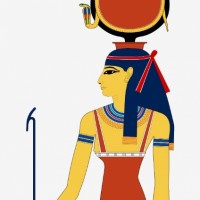
Hathor was an Egyptian goddess linked with love, music, joy, motherhood, and the sky. She was depicted as a cow, a woman with cow horns, or a woman wearing a sun disk between horns. Hathor also had an important role in funerary belief as a goddess who welcomed the dead.
Hathor is underrated! She is the beautiful goddess of joy, women, and everything about femininity. She is one of the most important and powerful deities among the Ennead. She's Horus' wife after all.
-
Maat
Maat was the Egyptian goddess and principle of truth, justice, balance, and cosmic order. She was often shown as a woman with an ostrich feather on her head, and the feather itself became her symbol. In the afterlife judgment, the heart of the deceased was weighed against the feather of Maat.
Ma'at is the goddess of justice and order, as we all know. But did you know that her sacred animal is the ostrich? Well, now you know.
Ma'at is the goddess of order and justice, plus the pharaohs worship her most, so why only the rank of nine?
Maat is the goddess of truth, order, and justice.
-
Geb
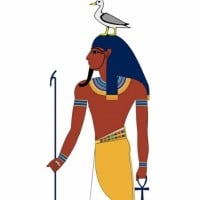
Geb was the Egyptian god of the earth and was paired with Nut, the sky goddess, in Egyptian cosmology. He was commonly portrayed as a man lying beneath Nut, sometimes with green skin or vegetation imagery. Mythological traditions identify Geb as the father of Osiris, Isis, Set, and Nephthys.
Geb is the god of earth and livestock. Need I say more? Also, he's the ruler of earth.
-
Apophis
Apophis, also called Apep, was a serpent deity associated with chaos, darkness, and opposition to cosmic order. Egyptian religious texts describe him as the enemy of Ra during the sun god's nightly journey through the underworld. Rituals and spells were used to symbolically defeat Apophis and preserve order.
He existed before even Ra and is the embodiment of total chaos.
-
Khonsu
Khonsu was an Egyptian moon god linked with time, healing, and the passage of the night sky. He was part of the Theban triad alongside Amun and Mut. Temple inscriptions and later traditions also connect Khonsu with the power to drive out illness and hostile spirits.
He was once considered an evil god of the moon because he was said to have devoured some deities in the Egyptian pantheon. However, over time, that reputation was erased. I've always felt connected to the moon at certain times.
-
Khepri
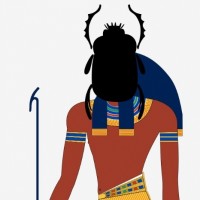
Khepri was an Egyptian solar deity linked with the rising sun, renewal, and transformation. He was represented by the scarab beetle, an animal connected in Egyptian thought with emergence and rebirth. Religious texts identify Khepri as a form of the sun during its morning appearance.
-
Tefnut
Tefnut was an Egyptian goddess associated with moisture, humidity, and the life-giving aspects of water. In creation traditions, she was paired with Shu, the god of air, and together they produced Geb and Nut. She was often depicted as a lioness-headed woman in religious imagery.
She is amazing because she controls the moon and other cool things.
-
Bes
Bes was an Egyptian protective deity associated with childbirth, households, music, and the defense of families from harmful forces. Unlike many Egyptian gods, he was commonly shown full-face rather than in profile. His image appears on household objects, amulets, and furniture used in daily life.
Why is he last? Bes is so much better than Sobek or Khonsu. Please, read the Kane Chronicles.
-
Montu
Montu was an Egyptian god of war who came to prominence in the region of Thebes. He was frequently depicted as a falcon-headed man wearing a solar disk and plumes. Egyptian kings sometimes associated themselves with Montu to emphasize military strength and victory.
-
Nefertem
Nefertem was an Egyptian god associated with the lotus flower, perfume, and the first light of creation. He was connected particularly with Memphis and was sometimes regarded as the son of Ptah and Sekhmet. Artistic depictions often show him with a lotus blossom on his head.
Because the water-lily flower opens at sunrise, Nefertem was associated with the rising sun. Nefertem was believed to help Ra by passing him the sun. In one myth, he was shown healing Ra's wounds as he aged with a water-lily. The lotus later became a sacred symbol of Egypt.
He was sometimes shown as a lion-headed god because of his mother, Sekhmet. That gave him the role of a war god. He later received the role of protector and guardian of Upper and Lower Egypt. He was later known as the "Restrainer of the Two Lands."
-
Nemty
Nemty was an Egyptian deity connected with ferrying and was sometimes associated with travel across water. He appears in Egyptian mythological texts in varying roles, including episodes involving divine conflict. Surviving references to Nemty are more limited than those for many major Egyptian gods.