Top 10 Most Important Mathematics Subjects Taught in Schools
Mathematics is the universal language of science, technology, engineering, and finance, providing the logical framework through which humans understand patterns, solve problems, and model the world around them. From the basic arithmetic learned in elementary school to the abstract structures studied by professional mathematicians, mathematics develops rigorous thinking, precise reasoning, and problem-solving skills that transfer across every domain of human knowledge and activity.
This list ranks the top mathematics subjects taught in schools and universities around the world, from foundational disciplines every student encounters to specialized fields that power modern science, technology, and economic life. Note that while subjects like algebra, geometry, and statistics appear in virtually every school curriculum, more advanced fields like topology, number theory, and mathematical logic are primarily taught at the university level or in specialized programs. Whether you're a student deciding which mathematics courses to pursue, a teacher looking for curriculum perspective, or simply someone curious about the landscape of mathematical knowledge, this list covers the full range from elementary to advanced.
Vote for your favorite mathematics subject or add one we missed.
-
Algebra
Algebra is the gateway subject that transforms mathematics from arithmetic calculation into genuine abstract reasoning. Where arithmetic asks what is three plus five, algebra asks what value of x makes x plus five equal eight, introducing the concept of the unknown quantity and the systematic methods for finding it. That shift from concrete numbers to abstract symbols and relationships is one of the most important intellectual transitions in a student's mathematical education. Algebra underlies virtually every advanced mathematical subject, appears constantly in science, engineering, economics, and computer science, and develops the logical thinking skills that transfer across domains far beyond mathematics itself. Students who master algebra have access to the entire landscape of quantitative reasoning that shapes modern professional and intellectual life.
-
Geometry
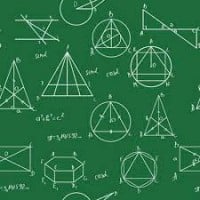
Geometry is one of the oldest branches of mathematics, studied systematically by ancient Greeks who recognized that spatial relationships could be understood through pure logical reasoning rather than physical measurement. It examines the properties and relationships of points, lines, angles, surfaces, and solids, developing both spatial intuition and the capacity for rigorous deductive proof. Euclidean geometry introduces students to the axiomatic method, where complex results are derived step by step from simple assumptions using nothing but logic, which is one of the most powerful intellectual tools mathematics has produced. Beyond its theoretical foundations, geometry has immediate practical applications in architecture, engineering, computer graphics, navigation, and physics, making it one of the most broadly useful mathematical subjects in the curriculum.
-
Statistics and Probability
Statistics and probability are the mathematical tools for reasoning under uncertainty, which makes them among the most practically important subjects in the entire mathematics curriculum. Probability theory quantifies the likelihood of outcomes in random processes, from coin flips to quantum mechanical events, and provides the foundation for statistical inference. Statistics then provides the methods for collecting, analyzing, and interpreting data to draw conclusions about populations from samples, test hypotheses against evidence, and make decisions under uncertainty. Every scientific study, every medical trial, every public opinion poll, every financial risk assessment, and every machine learning algorithm depends on statistical reasoning. In an era of big data, where quantitative claims saturate public discourse, statistical literacy is as essential for informed citizenship as reading comprehension.
-
Calculus
Calculus is arguably the most powerful mathematical tool ever developed for understanding the physical world, providing the mathematical language for describing change, motion, and accumulation. Differential calculus examines rates of change, answering questions like how fast this object is moving at this precise instant or how quickly this population is growing right now. Integral calculus examines accumulation, answering questions like how much total distance this object has traveled or what the total area under this curve is.
Together, differential and integral calculus, unified by the fundamental theorem of calculus, provide the mathematical foundation for classical mechanics, electromagnetism, thermodynamics, fluid dynamics, and virtually every other branch of physics and engineering. It is also essential for economics, biology, and computer science, making it one of the most consequential mathematical developments in human intellectual history.
-
Trigonometry
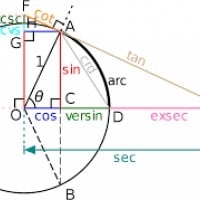
Trigonometry studies the relationships between angles and sides in triangles and the periodic functions that arise from those relationships, particularly sine, cosine, and tangent. It originated in astronomy and navigation, where calculating distances and angles from limited measurements was essential for practical survival, and it remains deeply practical today in engineering, physics, architecture, and signal processing. The trigonometric functions also reveal a profound connection between geometry, algebra, and complex numbers through Euler's formula, one of the most celebrated equations in all of mathematics. Trigonometry is also the foundation for Fourier analysis, which decomposes complex signals into combinations of simple periodic functions and underlies everything from audio compression to medical imaging to wireless communications.
-
Number Theory
Number Theory is the branch of pure mathematics devoted to studying the properties of integers, particularly the natural numbers. It asks deceptively simple questions like which numbers are prime, how many prime numbers exist, and whether every even number greater than two is the sum of two primes, the last of which remains one of the most famous unsolved problems in all of mathematics known as Goldbach's conjecture. Despite dealing with objects as familiar as whole numbers, number theory produces results of extraordinary depth and difficulty that have fascinated mathematicians for millennia. It also has surprising modern applications in cryptography, including systems where the difficulty of factoring large numbers into their prime components helps secure digital communication, making number theory simultaneously one of the purest and most practically consequential branches of mathematics.
-
Linear Algebra
Linear Algebra is the mathematics of vectors, matrices, and linear transformations, providing the computational and theoretical foundation for an extraordinary range of modern applications. It might seem abstract when first encountered, but linear algebra is the engine underneath computer graphics, machine learning, quantum mechanics, engineering simulations, economic modeling, and data compression. Every time a recommendation algorithm suggests a movie, every time a search engine ranks results, and every time a medical imaging system reconstructs a scan from raw data, linear algebra is doing the essential mathematical work. It is also theoretically elegant, revealing deep structural patterns in mathematics through concepts like eigenvalues, vector spaces, and linear independence that appear throughout advanced mathematics and physics.
-
Discrete Mathematics
Discrete Mathematics covers mathematical structures that are fundamentally countable and separate rather than continuous, including logic, set theory, combinatorics, graph theory, and number theory. It is the mathematical foundation of computer science, providing the theoretical basis for algorithms, data structures, cryptography, network analysis, and formal verification of software correctness. Where calculus deals with smooth, continuous change, discrete mathematics deals with distinct, separate objects and the relationships between them, which maps directly onto how computers process information in discrete binary steps. Students who study discrete mathematics gain the mathematical maturity needed for advanced computer science and develop combinatorial reasoning skills valuable across mathematics, science, and engineering.
-
Differential Equations
Differential equations are equations that relate functions to their derivatives, describing how quantities change in relation to each other over time or space. They are the primary mathematical language of the natural sciences, expressing the laws of physics, chemistry, biology, and engineering in precise quantitative form. Newton's laws of motion, Maxwell's equations of electromagnetism, the Schrödinger equation of quantum mechanics, the equations of fluid dynamics, the models of population growth and epidemic spread, and the pricing formulas of financial derivatives are all expressed as differential equations. Solving a differential equation means finding the function that satisfies the relationship it describes, which reveals how a physical system evolves over time from given initial conditions. Mastering differential equations opens access to the quantitative modeling that underlies all of modern science and engineering.
-
Mathematical Logic and Foundations
Mathematical Logic examines the formal systems of reasoning that underlie all of mathematics, studying proof theory, model theory, set theory, and computability theory. It asks the deepest questions mathematics can ask about itself, including what can be proved within a given formal system, whether mathematics is consistent and complete, and what problems can, in principle, be solved by computation.
Gödel's incompleteness theorems, which proved that any sufficiently powerful formal system contains true statements that cannot be proved within that system, are among the most profound and unsettling results in the history of human thought. Turing's work on computability, which defined the theoretical limits of what computers can calculate, emerged directly from mathematical logic and launched the theoretical foundations of computer science. Studying mathematical logic develops the most rigorous form of abstract reasoning available in the mathematics curriculum.