Top 10 Most Important Science Subjects Taught in Schools
Science is one of the most essential areas of study in modern education, giving students the tools to understand the natural world, ask meaningful questions, and think critically about evidence and data. From the smallest subatomic particles to the vast expanse of the universe, science covers an extraordinary range of phenomena that shape everything from medicine and technology to climate and daily life.
This list ranks the top science subjects taught in schools and universities around the world, from foundational disciplines every student encounters to specialized fields that open up a deeper understanding of how the natural world works. Note that while subjects like biology, chemistry, and physics appear in virtually every school curriculum, more specialized fields like neuroscience and biochemistry are primarily taught at the university level or in advanced programs.
Whether you're a student deciding which science classes to pursue, a teacher looking for curriculum ideas, or simply someone curious about which scientific fields have the greatest impact on human knowledge and society, this list covers the full landscape.
Science is not just a collection of facts to memorize. It is a way of thinking, a method for testing ideas against reality, and a framework for solving problems that matter. Every subject on this list contributes something unique to that broader scientific enterprise.
Vote for your favorite science subject, or add one we missed.
-
Biology
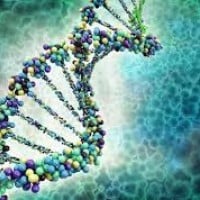
Biology is the study of life itself, making it arguably the most personally relevant science subject for any student. It covers everything from the molecular machinery inside individual cells to the complex ecosystems that span entire continents.
Understanding biology means understanding how your own body works, how diseases develop and spread, how organisms evolve over time, and how living things interact with their environment. The subject branches into genetics, ecology, microbiology, anatomy, physiology, and dozens of other specializations, each revealing something profound about the living world. In an era of genetic engineering, pandemics, and environmental crisis, biological literacy has never been more important for informed citizens and future professionals alike.
-
Chemistry

Chemistry is the central science, sitting at the intersection of physics and biology and providing the molecular foundation for understanding both. It explains why materials behave the way they do, how reactions transform one substance into another, and what holds matter together at the atomic level.
Chemistry is also intensely practical. It underlies medicine, food production, manufacturing, environmental science, and materials technology. Every pharmaceutical drug, every synthetic material, and every industrial process involves chemistry at its core. Students who study chemistry develop not just scientific knowledge, but also laboratory skills, quantitative reasoning, and the ability to think systematically about cause and effect at the molecular scale.
-
Physics

Physics is the most fundamental of the natural sciences, concerned with the basic laws that govern matter, energy, space, and time. From Newton's laws of motion to Einstein's theory of relativity to quantum mechanics, physics has produced some of the most intellectually stunning ideas in human history.
Physics explains how objects move, how forces interact, how electricity and magnetism work, how light behaves, and how the universe itself began and evolved. It is also the engine behind most modern technology. Computers, smartphones, satellites, medical imaging, and nuclear energy all depend on physical principles discovered through centuries of scientific inquiry. Studying physics develops rigorous mathematical thinking and a deep appreciation for the elegance of natural law.
-
Earth Science

Earth Science covers the physical processes that shape our planet, including geology, meteorology, oceanography, and astronomy. It explains how mountains form, why earthquakes and volcanoes occur, how weather patterns develop, how ocean currents influence climate, and how the solar system formed billions of years ago.
Earth Science is increasingly important in the context of climate change, natural disasters, and resource management. Understanding how the Earth system works as an interconnected whole is essential for making informed decisions about energy, land use, and environmental policy. It is also one of the most visually spectacular sciences, connecting students to landscapes, weather, and celestial phenomena they can observe directly.
-
Environmental Science

Environmental Science sits at the intersection of biology, chemistry, earth science, and social science, examining how human activity affects the natural world and how natural systems, in turn, affect human society. It covers topics like climate change, deforestation, pollution, biodiversity loss, water scarcity, and sustainable development.
Environmental Science is unique among school subjects in its direct relevance to the defining challenges of the 21st century. Students who study it develop not just scientific knowledge, but also the ability to evaluate trade-offs between economic development and ecological sustainability. It is a subject that demands both rigorous analysis and genuine ethical engagement with questions about responsibility toward future generations.
-
Astronomy

Astronomy is the science of the universe beyond Earth, covering planets, stars, galaxies, black holes, dark matter, and the origin and fate of the cosmos itself. It is one of the oldest sciences, practiced by ancient civilizations who used the stars for navigation, agriculture, and timekeeping, and one of the most modern, driven by space telescopes, particle accelerators, and gravitational wave detectors that reveal phenomena no human eye can directly observe.
Studying astronomy develops a profound sense of perspective. The universe is approximately 13.8 billion years old and contains hundreds of billions of galaxies, each with hundreds of billions of stars. Understanding even a fraction of that picture changes how you think about time, scale, and the place of humanity in the cosmos.
-
Geology

Geology is the science of the solid Earth, studying its composition, structure, physical properties, and the processes that have shaped it over billions of years. It explains how rocks form and transform through the rock cycle, how plate tectonics drives the movement of continents and the formation of mountains and ocean basins, how volcanoes and earthquakes occur, and how erosion and deposition create landscapes over geological time.
Geology is also an economically vital science underlying the extraction of fossil fuels, minerals, and groundwater. Understanding geology is essential for assessing natural hazards like landslides and volcanic eruptions and for evaluating the long-term storage of nuclear waste and carbon dioxide. It provides the deep time perspective needed to understand Earth as a dynamic system constantly changing on timescales that dwarf human history.
-
Neuroscience

Neuroscience is the study of the nervous system and the brain, one of the most complex structures in the known universe. It sits at the intersection of biology, chemistry, psychology, and medicine, examining how neurons communicate, how neural circuits produce behavior, how the brain develops from infancy to adulthood, and how neurological disorders like Alzheimer's, Parkinson's, and depression arise and might be treated.
Neuroscience is advancing rapidly thanks to new imaging technologies that allow scientists to observe brain activity in real time and new genetic tools that reveal the molecular basis of neural function. Understanding the brain is arguably the greatest scientific challenge remaining, and neuroscience is the field taking it on directly.
-
Biochemistry

Biochemistry bridges biology and chemistry by studying the chemical processes that occur within living organisms. It explains how enzymes catalyze reactions, how DNA is replicated and repaired, how proteins fold into functional shapes, how cells produce and use energy, and how metabolic pathways sustain life.
Biochemistry is the molecular foundation of medicine, nutrition, pharmacology, and biotechnology. Understanding biochemistry is essential for developing drugs, diagnosing diseases at the molecular level, and engineering microorganisms for industrial and medical applications. It is one of the most intellectually demanding science subjects, but also one of the most rewarding because it reveals the elegant chemical logic underlying all of life.
-
Botany
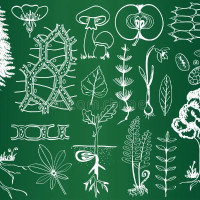
Botany is the scientific study of plants, covering their structure, growth, reproduction, metabolism, evolution, and ecology. Despite being less glamorous than zoology in popular culture, plants are the foundation of virtually every terrestrial ecosystem and the ultimate source of almost all food, oxygen, and many medicines that humans depend on.
Botany examines everything from the molecular machinery of photosynthesis to the ecological relationships between plants and their pollinators, from the genetics of crop improvement to the medicinal chemistry of plant-derived compounds. As climate change alters growing conditions worldwide and food security becomes an increasing global concern, botanical science is more important than ever for developing resilient crops and understanding how plant communities will respond to a changing world.