Top 10 Most Important Social Studies Subjects Taught in Schools
Social studies is one of the broadest subject areas in education, covering everything from ancient civilizations to modern governments, from personal finance to world geography. It helps students understand the world they live in, the societies that shaped it, and the forces that continue to change it today.
This list ranks the top social studies subjects taught in schools around the world, from foundational topics every student encounters to specialized fields that open up deeper understanding of human society and history. Note that while subjects like world history, geography, and civics appear in virtually every school curriculum, more specialized fields like anthropology, demography, and urban studies are primarily taught at the university level or in advanced programs. Whether you're a student trying to figure out which social studies classes to take, a teacher looking for curriculum inspiration, or just someone curious about what social studies actually covers, this list breaks it down.
Each subject on this list plays a unique role in developing informed, thoughtful citizens who can think critically about the world around them.
Vote for your favorite social studies subject or add one we missed.
-
World History

World History is the foundation of everything else in social studies. Once you understand how ancient civilizations rose and fell, how trade routes connected cultures that never met face to face, and how revolutions reshaped entire continents, everything else in the modern world starts making more sense. It's easy to dismiss history as memorizing dates, but the real value is understanding cause and effect on a massive scale. Why did World War I start? Why did the Roman Empire collapse? World History answers the questions that explain why the world looks the way it does today.
-
Geography

Geography is one of the most underrated subjects in school. Most people think it's just memorizing capitals and drawing maps, but it goes so much deeper than that. Physical geography explains why certain civilizations developed near rivers, why some regions are wealthy in natural resources while others struggle, and why climate patterns determine what crops people grow and how they live. Human geography then connects those physical realities to culture, migration, and politics.
Once you study geography seriously, you start seeing the world completely differently. Every news story about conflict, trade, or climate has a geographic explanation underneath it.
-
Civics and Government
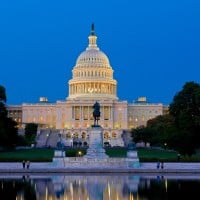
Civics might be the most practically important subject in social studies because it directly affects your daily life, whether you realize it or not. Understanding how laws are made, how the branches of government check each other's power, and what rights you actually have as a citizen gives you tools that matter in the real world. Too many people feel powerless in the face of political decisions, but that feeling often comes from not understanding how the system actually works.
Civics changes that. It explains the voting process, how local government affects your neighborhood, and what the Constitution actually says, rather than what people assume it says.
-
Economics

Economics is the social studies subject that most directly follows you into adult life. Understanding supply and demand, inflation, interest rates, and how markets work gives you a framework for making smarter financial decisions and understanding why prices rise, why jobs disappear in certain industries, and why some countries are wealthy while others struggle.
Personal finance is a subset of economics that schools often neglect, but it covers budgeting, debt, investing, and saving, skills every adult needs. Once you understand basic economic principles, you start seeing them everywhere, from why your grocery bill changes to why gas prices fluctuate to how government spending affects everyday life.
-
American History
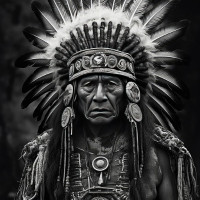
American History is more complex and contested than most textbooks suggest, which is exactly what makes it worth studying deeply. The founding of the nation, the contradictions between its stated ideals and the reality of slavery, the Civil War and Reconstruction, the labor movement, the World Wars, the Civil Rights Movement, and the social changes of the late 20th century all connect in ways that still shape American society today.
Understanding American History isn't just about patriotism or criticism. It's about having the context to understand current debates about race, inequality, immigration, and democracy. You can't understand where America is going without knowing where it has been.
-
Sociology
Sociology opens your eyes to things you had always noticed but never had language to describe. Why do people behave differently in groups than they do alone? Why do social norms vary so dramatically between cultures? How do institutions like schools, families, and governments shape individual behavior without people even realizing it?
Sociology provides a framework for understanding these patterns, and once you have that framework, you start seeing social dynamics everywhere. It's also one of the most relevant subjects for understanding contemporary issues like inequality, systemic discrimination, and social change because it gives you tools to analyze society critically rather than just accepting it at face value.
-
Archaeology
Archaeology recovers and interprets the material remains of past human societies, reconstructing how people lived, worked, traded, and organized themselves long before written records existed. Through careful excavation and analysis of artifacts, structures, and organic remains, archaeologists have revealed the complexity of prehistoric societies, traced the origins of agriculture and urbanization, and discovered civilizations that had been entirely forgotten by history.
Archaeology is increasingly sophisticated technologically, using satellite imaging, ground-penetrating radar, DNA analysis of ancient remains, and isotopic analysis of food and water sources to extract information from physical evidence with extraordinary precision. It connects the deep human past to the present in tangible ways that written history alone cannot achieve.
-
Cultural Studies
Cultural Studies teaches something that's increasingly important in a connected world: the ability to understand and respect perspectives that are different from your own. Every culture has its own logic, its own values, and its own way of making sense of the world. Studying different cultures doesn't mean you have to agree with every practice or belief, but it does mean you develop the intellectual humility to recognize that your own cultural assumptions aren't universal truths. That kind of perspective-taking is genuinely useful whether you're traveling, working with people from different backgrounds, or simply trying to understand why people think and behave the way they do.
-
Anthropology
Anthropology is fascinating because it takes the longest possible view of human existence. While history might go back a few thousand years, anthropology goes back hundreds of thousands, asking fundamental questions about where humans came from, how language developed, why different societies organize themselves differently, and what remains constant across all human cultures regardless of time and place.
Archaeological anthropology pieces together ancient civilizations from physical artifacts. Cultural anthropology studies living societies. Biological anthropology connects human behavior to our evolutionary past. Together they answer the biggest question of all, what does it mean to be human, from every possible angle.
-
Current Events
Current Events is the subject that makes everything else in social studies feel alive and relevant. History, economics, civics, and geography stop being abstract when you connect them to what's happening in the news right now. A story about inflation connects to economics. A conflict in a foreign country connects to geography and world history. A new law connects to civics.
Studying current events also develops one of the most valuable skills a student can have, media literacy. Learning to evaluate sources, identify bias, distinguish between fact and opinion, and understand why different outlets cover the same story differently is essential in an era where information and misinformation compete for attention constantly.