Top 10 Weirdest Alternatives to Santa Claus from Around the World
We all know the stalker in red clothes with a white beard, but in many different nations, there are other figures who visit your house.
Seeing as I made this list on Christmas Eve Eve, it seems kind of fitting to go through the alternatives from various cultures.
-
Jul Nisse (Scandinavia)
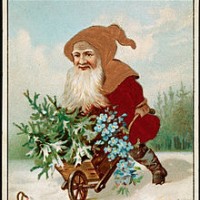
Jul Nisse is a Scandinavian gnome who wears farmer clothing and a red hat. Unlike Santa Claus, Jul Nisse has a wife and a couple of kids. Scandinavians tend to decorate their homes with dolls of this gnome and his wife, as well as many kids. There are no specifics regarding how many children Jul Nisse has.
While Santa Claus gets cookies and milk, Jul Nisse gets porridge with a chunk of butter in it. Sorry, but dude, that sounds gross. Gotta hand the better taste buds to Santa.
We usually call it "Tomten" here, which is the same name used for Santa as well. I believe the name "Tomten" derives from "Tomt," which is the Swedish word for backyard or lawn.
-
Krampus (Austria, Germany, and other Alpine countries)
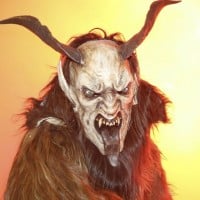
This is the demonic Santa, basically.
-
La Befana (Italy)
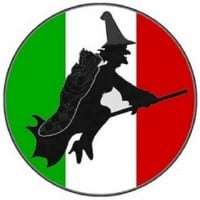
In Italy, kids get their presents from a witch who goes by that name. She apparently gave some advice to the three wise men and has been filled with the Christmas spirit since. She flies around on her broom, giving Italian children their gifts on Christmas.
If you thought Jul Nisse was weird, well, kids in Italy are supposed to leave her a glass of wine because she's an alcoholic.
-
Belsnickel (Germany and Pennsylvania Dutch communities)
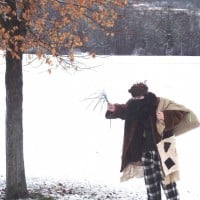
Belsnickel is Germany's Santa Claus, and he's actually a crotchety man dressed in crummy brown clothes. He makes children recite poems, prayers, and even math equations.
Belsnickel rewards good children with candy and cakes and whips bad kiddos, giving them a firm warning that they can change their ways before the arrival of Saint Nicholas. I don't know about you, but I'd just disregard this guy and wait for Saint Nicholas. Child abuse is bad.
-
Christkind (Germany, Austria, Switzerland)
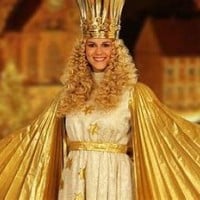
Christkind or Christkindl is actually the harbinger of gifts to many nations in most of Europe, such as Hungary, Switzerland, and Portugal. It originated as Martin Luther's alternative to Saint Nicholas.
As the name suggests, this is supposed to be the pre-incarnate Christ, although Christkind is often depicted as a blonde woman with gold wings for some reason.
-
Sinterklaas (Netherlands and Belgium)
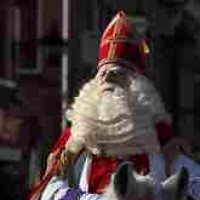
-
The Three Wise Men (Spain and Latin America)
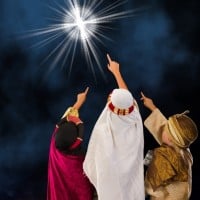
The Three Wise Men are kind of the weird alternative to Jesus for Spain and Mexico. Much like the idea that Jesus would be the guy bringing kids their presents, the Three Wise Men as an alternative to Jesus and Santa Claus is very flawed logic.
Why do I say this? Because they were mortal men and died hundreds of years ago, so the idea that they'd still be hanging around in the present day... No, that just doesn't work for me.
-
Joulupukki (Finland)
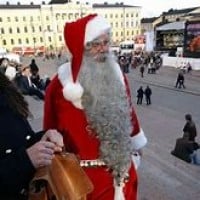
Pronounced "Joel-lew-poo-key," the Finnish equivalent to Santa, Joulupukki, literally means "Christmas goat." He started out more as a hybrid between a satyr and a scarecrow.
Much like the rest of this list, this weird thing came to good kids with gifts but was much more inhumane to kids than Santa. Joulupukki would actually beat bad kids. While modern Joulupukki looks more like Santa Claus, he's still kind of weird because the Finnish have him living in Finland. He's even a tourist trap.
-
Zwart Piet (Netherlands and Belgium)
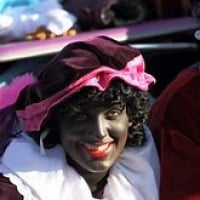
Zwart Piet, which translates to "Black Pete," is actually of Norse origin. Long story short, he had a couple of helpers who would listen through chimneys like Zwart Piet did, and they would report the behavior of mortals to Odin to let him know who was good and who was bad.
Naturally, the fact that Zwart Piet is black became a problem in recent years.
-
Ded Moroz (Russia)
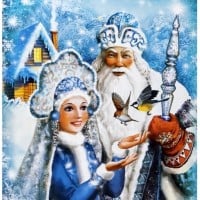
This is cool, man! In fact, it is not really correct to call him the "Russian Santa Claus." His image comes from ancient pagan beliefs. We don't celebrate Christmas in Russia, so he is the guy who brings gifts on New Year's Eve.
It is also necessary to mention his constant companion, Snegurochka (Snow Maiden), who is his granddaughter. These two were the main fairytale characters during the New Year celebrations in the Soviet Union and today in Russia.
Before I get into details, this is pronounced like "Die-douche co-mar-os." This is the Russian Santa Claus. Once America established our Santa Claus in the 1930s, Russia naturally created a cooler version in response: taller, thinner, with a longer beard, and so on.
He does the same things as Santa Claus, just in a cooler way. A good example is that Дед Мороз's sleigh is pulled by horses.
-
?
Jólasveinar (Iceland)
-
?
Tió de Nadal (Catalonia, Spain)
-
Jesus (Latin America)
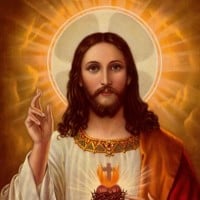
No, this is not a troll item. In some predominantly Catholic nations, such as Spain or Mexico, the concept of Santa Claus is considered blasphemous, so they have Jesus Christ Himself giving kids their presents.
I am sorry, but this is flawed logic. If He brought children gifts, technically speaking, the Second Coming would have happened long ago. It's also blasphemous that He'd be held in high regard as the Savior but also as the Man who gives you a rifle, violent movies, and other things He'd never want you to touch.
-
Odin (Norse mythology)

Odin Borson is a fictional character from Marvel Comics, where he is portrayed as the All-Father, the king of Asgard, and the father of Thor. He is the husband of Frigga and is known for his immense wisdom, magical power, and command of the Odinforce.... read more
Yes, Odin and Jesus alike are considered alternatives to Santa Claus. We know that he was the chief god in Norse Mythology.
Apparently, on the night of the Winter Solstice, Yule, Odin would ride through the sky on his eight-legged horse, Sleipnir, and judge the good and evil, leaving gifts for good children in their shoes. Sound familiar to anybody?
-
Père Fouettard (France and parts of Belgium)